Trier Cruise Port
Zurlaubener Ufer River Cruise Pier


Trier, Germany Port
UN/LOCODE DETRI Port of call Homeport
Trier Cruise Port Location
| Port Details | |
|---|---|
| Country | Germany |
| UN/LOCODE | DETRI |
| Contact | |
| Address | Zurlaubener Ufer, 54292 Trier, Germany |
| Port phone | +49 651 978080 |
| Website | www.trier-info.de |
| Geography | |
| Coordinates | 49.75140, 6.63120 |
| Accessibility | |
| Accessible | Limited |
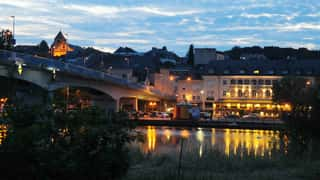
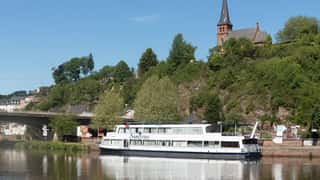
The primary river cruise moorings at Trier sit along the Zurlaubener Ufer, a flat 12-minute walk from the Porta Nigra gate via Ascoli-Piceno-Straße. Located in the Moselle Valley in southwestern Germany, Trier serves as a critical anchor for any Moselle River itinerary. You are visiting Germany's oldest city, founded by the Romans in 16 BC, and the density of UNESCO World Heritage sites here is higher than in almost any other northern European port. From your ship, you are just 50 km (31 miles) from Luxembourg City and approximately 125 km (78 miles) southwest of the confluence in Koblenz. Most travelers expect a small village atmosphere, but Trier is a functioning university city of 110,000 people. Keep in mind that while the city center is pedestrian-friendly, the Roman Imperial Baths and the Amphitheater are situated on the outer edge of the historic core, requiring significant walking or a taxi. Travelers often report that trying to see all eight UNESCO sites in a single afternoon leads to exhaustion rather than enjoyment. This destination rewards those who focus on the Roman architectural core but punishes those who underestimate the distance between the northern gate and the southern baths. Expect a day of profound history, excellent Riesling, and significant cobblestone navigation.
Trier — Port Overview
History
Trier’s significance was cemented in 16 BC when it was founded as Augusta Treverorum, named after Emperor Augustus. By the late 3rd century AD, it had become one of the four capitals of the Roman Empire, earning the title 'Roma Secunda' or the Second Rome. This was the seat of Constantine the Great, and the massive scale of the Aula Palatina (Constantine Basilica), built around 310 AD, remains the largest single-room structure preserved from Roman times. The city’s survival through the Middle Ages was tied to its status as an Archbishopric; the Electors of Trier were among the most powerful figures in the Holy Roman Empire. This ecclesiastical power is visible today in the Trier Cathedral, which began construction in the 4th century and houses the Holy Robe, said to be the seamless garment of Jesus. A darker historical layer involves the witch trials of the late 16th century, one of the largest such events in Europe. Today, you will see these layers literally stacked: medieval houses built directly into Roman ruins. The Porta Nigra itself only survived because a Greek hermit, Simeon, lived in it, leading to its conversion into a church and saving it from being quarried for stone. You can still see the original Roman stonemason marks on the massive blocks today.
The Verdict
At Trier, the people who do best are the ones who arrive with a plan and the flexibility to adapt it. This guide has been fact-checked by J. Richard and the Waterways Cruise editorial team. Excursions that guarantee a return to the ship can be tailored to your mobility, interests, and pace, so missing departure is never a concern. Travelers often have varied preferences for their day ashore.
Things to Do & See in Trier
| Attraction | Type | Address | Phone | Hours | Website | Admission |
|---|---|---|---|---|---|---|
| Porta Nigra | Historical Site | Porta-Nigra-Platz, 54290 Trier | +49 651 978080 | Daily 09:00-18:00 | trier-info.de | EUR €4.00 |
| Trier Cathedral (Dom St. Peter) | Historical Site | Domstein, 54290 Trier | +49 651 9790790 | Daily 06:30-18:00 (Check for mass times) | dominformation.de | Free |
| Constantine Basilica (Aula Palatina) | Landmark | Konstantinplatz 10, 54290 Trier | +49 651 170790 | Mon-Sat 10:00-18:00, Sun 12:00-18:00 | ekkt.de | Free |
| Imperial Baths (Kaiserthermen) | Historical Site | Weimarer Allee 2, 54290 Trier | +49 651 44262 | Daily 09:00-18:00 | trier-info.de | EUR €4.00 |
| Amphitheater | Historical Site | Olewiger Str. 25, 54295 Trier | +49 651 73010 | Daily 09:00-18:00 | trier-info.de | EUR €4.00 |
Porta Nigra · Historical Site
EUR €4.00The Porta Nigra (Black Gate) is the largest Roman city gate north of the Alps and the undisputed symbol of Trier. Built around 170 AD, it stands as a testament to the might of the Roman Empire. The name came later, in the Middle Ages, as the light-colored sandstone weathered and darkened into its current charcoal hue. When you stand before it, you are looking at nearly 2,000 years of survival. It only exists today because the Greek monk Simeon lived here as a hermit; upon his death, it was consecrated as a church, which prevented the locals from using it as a stone quarry. Inside, you can see the fascinating transition from a defensive military gate to a place of worship. It is best to pay the small fee to enter; walking through the 'chisel-marked' galleries provides a visceral sense of Roman scale that you simply can't get from the street. It is the perfect starting point for your day because it anchors the city's original Roman layout.
Porta-Nigra-Platz, 54290 Trier ·+49 651 978080 ·Daily 09:00-18:00 ·www.trier-info.de
Trier Cathedral (Dom St. Peter) · Historical Site
FreeTrier Cathedral is a fortress of faith, built over the palace of Empress Helena, the mother of Constantine. It is a dense layering of architecture—Roman brickwork forms the foundation, Romanesque arches define the nave, and Baroque flourishes decorate the altars. Travelers often remark that it feels more like a lived-in history book than a church. The atmosphere is heavy with incense and antiquity. While the Holy Robe (the seamless garment of Christ) is tucked away in a climate-controlled shrine and rarely seen, the Cathedral itself is the relic. The Treasury (Domschatz) is arguably the most important in Germany, containing the 'Holy Nail' from the True Cross and the 'Andrew Altar,' a masterpiece of Ottonian goldsmithing. Spend at least 15 minutes in the Cloister; the view of the Cathedral towers framed by the garden is the most peaceful experience in the city center. It remains a functioning place of worship, so remember to remove hats and maintain silence.
Domstein, 54290 Trier ·+49 651 9790790 ·Daily 06:30-18:00 (Check for mass times) ·www.dominformation.de
Constantine Basilica (Aula Palatina) · Landmark
FreeThis was the throne hall of Emperor Constantine. When it was built around 310 AD, it was intended to intimidate. It succeeded. It is the largest single-room structure preserved from the ancient world, and the fact that it has no internal columns to support its massive weight is a feat that still baffles modern visitors. The red brick exterior is deceptively simple, but the interior is all about light and height. Though it is now a Protestant church, the 'spirit' of the building remains Roman. The lack of decoration actually serves to focus your attention on the architecture itself—the massive 30-meter high ceiling and the semi-circular apse where the Emperor once sat. Standing in the center and looking up, you can truly feel the transition from the pagan Roman Empire to the Christian era. It is a quick but essential stop that provides the best sense of Trier’s importance as a former world capital.
Konstantinplatz 10, 54290 Trier ·+49 651 170790 ·Mon-Sat 10:00-18:00, Sun 12:00-18:00 ·www.ekkt.de
Imperial Baths (Kaiserthermen) · Historical Site
EUR €4.00The Imperial Baths were designed to be one of the largest bath complexes in the Roman Empire. They were a statement of imperial vanity that was never actually used for bathing; they were repurposed as a palace and later a fortress. Today, the massive 19-meter high walls of the caldarium (hot bath) remain a dominant part of the city skyline. The true highlight here is the extensive network of underground service tunnels. You can walk through the passages where slaves once worked to maintain the underfloor heating systems. It is remarkably cool underground even on the hottest summer days. The site is sprawling and gives a better sense of a Roman city's 'footprint' than the Porta Nigra. Consider taking the time to read the placards; the engineering required to move such volumes of water is staggering. This is a stop for those who enjoy 'uncovering' history rather than just seeing a finished monument.
Weimarer Allee 2, 54290 Trier ·+49 651 44262 ·Daily 09:00-18:00 ·www.trier-info.de
Amphitheater · Historical Site
EUR €4.00Trier’s Amphitheater was built in the 2nd century AD and could hold 20,000 spectators. It was built into the side of a hill, which saved on masonry costs—a clever Roman efficiency. While much of the stone was looted over the centuries for other buildings, the overall shape and 'vibe' of the arena remain intact. You can stand in the center where gladiators once fought and look up at the grassy tiers where the citizens of 'Roma Secunda' cheered. The most fascinating part is the cellar (the 'hyposcaenium') where you can still see the original Roman water drainage system and the remains of the mechanical hoists. It is much quieter than the Porta Nigra, often with only a handful of visitors. However, because it is the furthest site from the Moselle River docks, it is the one most cruise passengers skip. It is only recommended for true Roman history enthusiasts; for casual visitors, the time is better spent in the city center.
Olewiger Str. 25, 54295 Trier ·+49 651 73010 ·Daily 09:00-18:00 ·www.trier-info.de
Eating & Drinking in Trier
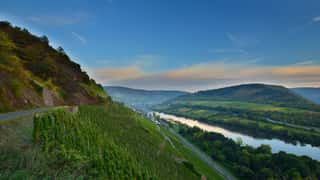
The culinary identity of Trier is a marriage of French refinement and German heartiness, heavily influenced by its proximity to the Moselle River vineyards. The regional specialty is 'Trierer Gefüllte'—large potato dumplings stuffed with a mixture of liver sausage and leeks, usually served in a creamy bacon sauce. You will also find 'Riesling-Süppchen', a velvety cream soup made from the local white wine. Speaking of wine, the Moselle Riesling is the undisputed king here. Look for wines labeled 'Kabinett' or 'Spätlese' for the classic off-dry style that defines the region. For a non-alcoholic specialty, try 'Viez'—the local hard apple cider, though be warned it is very dry and often served mixed with sparkling water (Viez-Schorle). Locals avoid the generic beer halls and instead flock to 'Straußwirtschaften', temporary wine taverns where growers sell their own production directly. You’ll find the genuine versions in the Olewig district, a short taxi ride from the center.
| Place | Address | Phone | Hours | Website | Price range |
|---|---|---|---|---|---|
| Kartoffel Restaurant Kiste | Fahrstraße 13-14, 54290 Trier | +49 651 44040 | Daily 11:30-22:00 | die-kiste.de | €18.00–€28.00 (~$21.00–$32.00 USD) |
| Weinstube Palais Kesselstatt | Liebfrauenstraße 10, 54290 Trier | +49 651 41178 | Tue-Sat 12:00-22:00 | weinstube-kesselstatt.de | €25.00–€40.00 (~$29.00–$46.00 USD) |
| Oechsle Wein- und Fischhaus | Palaststraße 5-7, 54290 Trier | +49 651 9917555 | Mon-Sat 11:00-20:00 | oechsle-trier.de | €8.00–€15.00 per glass (~$9.00–$17.25 USD) |
Kartoffel Restaurant Kiste
€18.00–€28.00 (~$21.00–$32.00 USD)The name means 'The Box', and it is an institution for potato lovers. The menu is a love letter to the humble tuber, prepared in dozens of traditional ways. It is cozy, rustic, and the portions are massive. Order the 'Gefüllte' for the most authentic taste of the region. The service is brisk but friendly, and the Riesling list is surprisingly sophisticated. It can get loud, so it’s not for those seeking a quiet romantic dinner.
Fahrstraße 13-14, 54290 Trier ·+49 651 44040 ·Daily 11:30-22:00
Weinstube Palais Kesselstatt
€25.00–€40.00 (~$29.00–$46.00 USD)Located in a Baroque palace courtyard, this is the most atmospheric place for lunch. The food is refined Rhineland cuisine—lighter than the standard pub fare but still deeply rooted in local ingredients. The wine list comes from their own world-class estate. If the weather is nice, the courtyard is the best seat in the city. One honest limitation: reservations are strictly required for the courtyard during lunch hours.
Liebfrauenstraße 10, 54290 Trier ·+49 651 41178 ·Tue-Sat 12:00-22:00
Oechsle Wein- und Fischhaus
€8.00–€15.00 per glass (~$9.00–$17.25 USD)This is where to go for a serious education in Moselle Riesling. The staff are experts and will help you understand the difference between slate-grown and limestone-grown wines. It's the perfect stop for a mid-afternoon glass. They also serve excellent local oysters and seafood snacks. It is a 'no-fuss' but high-quality environment.
Palaststraße 5-7, 54290 Trier ·+49 651 9917555 ·Mon-Sat 11:00-20:00
Getting There & Around
Once you leave the Moselle River bank, the city is best explored on foot. The historic core is largely a car-free pedestrian zone. For those wishing to visit the outlying Roman sites like the Amphitheater, the 'City-Bus' (Line 81) is reliable, costing €2.40 (~$2.80 USD) for a single trip. A 'Tagesticket' (Day Ticket) for one person costs €6.20 (~$7.15 USD) and is available at machines at major stops or via the 'VRT' app. Uber does not operate in Trier; however, the local taxi app 'Taxi Trier' is efficient. Taxis are heavily regulated and use meters; a cross-town trip rarely exceeds €15.00 (~$17.25 USD). Biking is popular along the Moselle River paths, and 'Velo Trier' near the station offers rentals, but cycling in the crowded pedestrian center is discouraged and often prohibited during peak hours. One navigation tip: look for the brass Roman-style plaques in the sidewalk; they mark the 'City Walk' route that connects all major UNESCO sites.
Itineraries & Sample Walks
4-Hour Shore Excursion in Trier
Porta Nigra
9:00 AM (60 min)
The world's best-preserved Roman city gate. Built around 170 AD without mortar—only iron clamps hold the massive sandstone blocks together. Most visitors just look from the outside; pay the fee to climb to the upper galleries for a strategic view of the city's Roman layout.
- Walk east from the Zurlaubener Ufer docks along Ascoli-Piceno-Straße.
- Entry: €4.00 ($4.60)
- Look for the Greek inscriptions in the stone—they remain from the gate's time as a monastery.
Trier Cathedral (Dom St. Peter)
10:15 AM (45 min)
The oldest cathedral in Germany. Its walls contain Roman masonry, Romanesque arches, and Gothic vaults. It is a visual timeline of European history. Don't miss the 'Domstein' outside the entrance—a massive Roman column section that children (and adults) slide down for luck.
- Walk south down Simeonstraße to the Hauptmarkt, then turn left.
- Entry: Free (Free)
- Visit the Cloister; it is the quietest spot in the city and offers a unique perspective on the spire.
Constantine Basilica (Aula Palatina)
11:15 AM (30 min)
A massive brick throne hall built for Emperor Constantine. It is a staggering engineering feat with no supporting pillars. The sheer scale makes people whisper instinctively. It now serves as a Protestant church.
- A 5-minute walk south from the Cathedral.
- Entry: Free (Free)
- The windows are smaller at the far end—a Roman trick of perspective to make the hall look even longer.
Lunch Recommendation
Weinstube Kesselstatt
It is located in a historic palace courtyard directly across from the Cathedral. It serves local Moselle estate wines that are vastly superior to the generic house wines found in the market square cafes.
Order: Riesling-Süppchen (Riesling cream soup), Trierer Gefüllte (Stuffed potato dumplings)
Liebfrauenstraße 10, 54290 Trier
Cost: €25.00–€35.00 (~$29.00–$40.00 USD)
8-Hour Full Day Experience in Trier
Porta Nigra & Cathedral
9:00 AM (120 min)
Follow the 4-hour core route for these two primary landmarks.
- Walk from pier
- Entry: €4.00 ($4.60)
- Arrive at the Cathedral right at 9:00 AM to avoid the large tour groups that arrive by 10:30 AM.
Electoral Palace and Gardens
11:30 AM (45 min)
Admire one of the most beautiful Rococo palaces in the world. The pink-and-gold facade sits directly against the red brick Basilica—a jarring but beautiful contrast of eras.
- Walk 2 minutes from Basilica
- Entry: Free (Free)
- Walk to the southern end of the gardens for the best 'palace-meets-Roman-ruin' photo.
Imperial Baths (Kaiserthermen)
1:30 PM (75 min)
Explore the underground heating tunnels. These baths were meant to be the largest in the empire but were never finished. The subterranean passages are vast and eerily cool.
- 10-minute walk through the gardens
- Entry: €4.00 ($4.60)
- Bring a small flashlight; some corners of the tunnels are dimly lit even in daytime.
Amphitheater
3:00 PM (45 min)
The arena where 20,000 Romans watched gladiatorial games. You can stand on the floor and go into the cellars where the animals and prisoners were kept.
- 10-minute walk from Imperial Baths
- Entry: €4.00 ($4.60)
- Don't bother if you have seen the Colosseum in Rome; spend the time in a winery instead.
Getting back to the ship
To ensure a safe return, you should leave the Hauptmarkt area no later than 45 minutes before your ship’s all-aboard time. This allows for a leisurely 15-minute walk plus a 30-minute buffer. If you are at the further Roman sites (Imperial Baths or Amphitheater), you must leave at least 60 minutes prior or take a taxi, which takes 8-10 minutes and costs roughly €12.00 (~$13.80 USD). Public transit is not reliable for a tight return window. If you miss the ship, contact the Port Authority or the ship’s emergency number immediately. Be aware that the next Moselle River stop is often Bernkastel-Kues, which is 60 km away and costs roughly €90.00 (~$103.50 USD) by taxi.
Weather & Best Time to Visit Trier
Weather & What to Pack
Cruise season: April through October, plus Christmas Market calls in December
May-Sept: 18°C–24°C (64°F–75°F). Rainfall is moderate but consistent, often appearing as quick afternoon showers.
What to wear: Layering is essential even in summer. A lightweight waterproof jacket is a necessity as Moselle Valley weather shifts rapidly. For footwear, do not wear thin-soled sandals or heels; the historic cobblestones require sturdy, cushioned walking shoes or supportive sneakers. Sun protection is vital for the exposed Roman sites. In December, heavy wool coats and thermal layers are required for the Christmas Markets.
Weather risks: Low water levels on the Moselle in late summer can occasionally force ships to dock further downstream in Pfalzel, adding transit time.
Early autumn (September) is the most pleasant, with the vineyards turning gold and stable, dry weather.
| Season | Conditions | Hazards | Affected areas | Visitor advice |
|---|---|---|---|---|
| Summer (June–August) | Warm and occasionally humid with temperatures averaging 24°C (75°F), but heat waves can push past 32°C (90°F). | The exposed Roman ruins, particularly the Imperial Baths and the Amphitheater, offer almost zero shade. Dehydration is a frequent issue for seniors exploring these stone-heavy sites. | Kaiserthermen (Imperial Baths), Amphitheater, and the Hauptmarkt. | Visit the Roman ruins before 11:00 AM. Wear high-SPF sunscreen and carry a refillable water bottle; the stone surfaces radiate intense heat. |
| Autumn (September–October) | The harvest season. Generally crisp with temperatures between 10°C (50°F) and 18°C (64°F) and frequent morning mist. | Wet fallen leaves on the steep, mossy steps of the Roman ruins and the uneven cobblestones of the Cathedral square. | Porta Nigra steps, Cathedral cloister, and the paths in the Palace Gardens. | Wear shoes with significant rubber grip. This is the busiest time for wine tourism; book lunch reservations at least 48 hours in advance. |
Practical Information
Cultural etiquette
Locals in Trier are conservative but friendly. A firm handshake with direct eye contact is the standard greeting. In restaurants, don't wait to be seated in casual spots; look for a table and ask 'Ist hier noch frei?' (Is this seat free?). Meals are social events; splitting a large 'Flammkuchen' (flatbread) is common. Photography is generally allowed in the Cathedral and Basilica, but never during a service, and flash is strictly prohibited. When queueing for the Porta Nigra, locals follow a strict first-come, first-served rule; pushing is considered very offensive. Tipping is not as aggressive as in the US; 5–10% is standard, usually rounded up to the nearest euro and given directly to the server. A common mistake cruise passengers make is assuming everyone speaks fluent English. While many do, starting with a polite 'Guten Tag' or 'Sprechen Sie Englisch?' goes a long way. Also, be aware that most shops close strictly at 6:00 PM or 8:00 PM and are completely closed on Sundays.
Mistakes to Avoid
| Mistake |
|---|
Spending the first hour at the pier cafes instead of heading to the Porta Nigra. |
Underestimating the walk to the Amphitheater. |
Visiting the Cathedral during a Sunday morning mass. |
Assuming all Roman sites are part of one ticket. |
Practical tips
Trier is a cash-friendly city. While major museums and restaurants accept credit cards, smaller cafes and wine taverns often insist on 'EC-Karte' (German debit) or cash. Always carry at least €50.00 in cash for small purchases. Tipping is a modest round-up of about 10%. To earn goodwill, use these phrases: 'Guten Tag' (Good day), 'Danke' (Thank you), 'Bitte' (Please), 'Ein Viertel Riesling, bitte' (A quarter-liter of Riesling, please), and 'Auf Wiedersehen' (Goodbye). Scams are rare, but be cautious of 'petition signers' near the Porta Nigra who may use the distraction for pickpocketing. The dress code for the Cathedral is 'shoulders and knees covered.' The best strategy for crowd avoidance is to visit the Roman sites before 10:30 AM or after 3:00 PM when the largest bus tours have moved on. One final tip: if you need a taxi back to the ship, go to the rank at the Porta Nigra; calling one to a side street in the pedestrian zone is almost impossible.
Cruise Lines Visiting Trier
Port of Call




Embarkation / Disembarkation
Why Book With Waterways Cruise?
Four decades of expertise, one dedicated advisor, and every detail handled, from your front door to the gangway and back.
Personal Service — Your Own Cruise Concierge
Tailor-Made — 100% Custom-Built
Expertise — 40+ Years in Travel
Price Watch — Book With Total Confidence
Signature Sailings
All Cruise Lines at Trier (A–Z)
Nearby Ports




FAQ — Trier
Can I see all the Roman sites in Trier in one day?
Technically yes, but it is a marathon. To see all eight UNESCO sites, you will cover over 8 km (5 miles) on foot. It is a good idea to focus on the 'Big Three': the Porta Nigra, the Cathedral, and the Imperial Baths. This takes roughly 5 hours at a comfortable pace.
Is there a lot of uphill walking in Trier?
No, the city center and the walk from the Moselle River docks are remarkably flat. The only 'climb' you will encounter is the stairs inside the Porta Nigra or the walk up the hill to the Amphitheater. The rest of the Roman circuit is level, though cobblestones make the effort feel greater.
What is the best thing to buy in Trier?
Moselle Riesling is the premier purchase. A bottle from a top estate like Maximin Grünhaus or Schloss Lieser will cost €18.00–€25.00 (~$21.00–$29.00 USD). Most shops will bubble-wrap these for travel if you ask for 'Versandverpackung'.
Do I need Euros or can I use US Dollars?
You must have Euros. US Dollars are not accepted anywhere in Trier. While most shops accept Visa or Mastercard for purchases over €10.00, small cafes, public restrooms, and taxi drivers often require cash.
Is the Karl Marx House worth visiting?
Only if you are a history student. It is a 15-minute walk from the Hauptmarkt and takes about 60 minutes to tour. For most cruise guests with only 6-8 hours, the Roman sites offer much higher visual and historical impact.
Where can I get a good view of the river and the city?
The upper galleries of the Porta Nigra offer the best city view. For a river view, walk across the Römerbrücke (Roman Bridge), which is the oldest bridge in Germany, still using its original 2nd-century stone pilings.
Is Trier safe for solo travelers?
Extremely safe. It is a quiet university city. The only minor risk is pickpocketing in the crowded Hauptmarkt during the Christmas Market season.
How far is the train station from the cruise docks?
Trier Hauptbahnhof is 2.2 km (1.4 miles) from the Zurlaubener Ufer docks. It is a 25-30 minute walk or a €12.00 (~$13.80 USD) taxi ride.
Can I do a wine tasting without a reservation?
Yes, several 'Vinotheks' like Oechsle in the city center allow walk-ins for flights. However, for a full estate tour in the Olewig district, you should book 48 hours in advance.
What happens if my ship docks in Pfalzel instead of the city?
Your cruise line will almost certainly provide a shuttle bus. If not, a taxi will take 15 minutes and cost roughly €18.00 (~$20.75 USD). Do not attempt to walk from Pfalzel; it is an industrial route and too far for a port call window.
Fact-checked and co-written by J. Richard, Founder, Waterways Cruise, with the Waterways Cruise Content Team.
Published May 19, 2026 · Last updated November 2, 2026
This guide is researched and reviewed by our editorial team, but prices, hours, and availability change often. Confirm current details directly with venues, excursion operators, and your cruise line before you travel.