Galápagos Cruise Port
Muelle de Pasajeros de Puerto Ayora


Galápagos, Ecuador Port
UN/LOCODE ECGPS Port of call
Galápagos Cruise Port Location
| Port Details | |
|---|---|
| Country | Ecuador |
| UN/LOCODE | ECGPS |
| Contact | |
| Address | Avenida Charles Darwin y Seymour, Puerto Ayora, Isla Santa Cruz, Galápagos |
| Port phone | +593 5-252-6128 |
| Website | www.galapagos.gob.ec |
| Geography | |
| Coordinates | -0.64120, -90.35140 |
| Accessibility | |
| Accessible | Limited |
The main passenger pier at Puerto Ayora is a 5-minute panga ride from the anchored vessels, and you will pay exactly $1.00 USD per person to local water taxi drivers for each one-way transfer. Located in the central Galapagos archipelago on Santa Cruz Island, this is the busiest hub in the Pacific Ocean for expedition travelers. While the town is walkable, the best experiences—like the giant tortoise reserves—require a 30-minute taxi ride into the humid highlands. Significant humidity and intense equatorial sun should be expected; a day here without a high-SPF shirt and a wide-brimmed hat can negatively impact a trip. This destination is 1,000 km (620 miles) west of mainland Ecuador, roughly a 2-hour flight from either Quito or Guayaquil. As a premier ocean cruise port, it serves specialized expedition vessels that adhere to strict environmental protocols. Be aware that most visitors underestimate the walking distance to Tortuga Bay, which is a 2.5 km (1.5 miles) trek each way from the town center. This port rewards the early riser who heads to the highlands before the clouds burn off and punishes the unprepared traveler who treats the equatorial heat with indifference.
Galápagos — Port Overview
History
Puerto Ayora rose to prominence long after Charles Darwin’s 1835 visit aboard the HMS Beagle, which forever linked these islands to the theory of evolution. While the archipelago was officially annexed by Ecuador in 1832, Santa Cruz Island remained largely unsettled until the early 20th century when European settlers, primarily from Norway and Germany, arrived in the 1920s and 30s to attempt agriculture and fishing. The town is named after Isidro Ayora, the President of Ecuador from 1926 to 1931. A pivotal moment occurred in 1959, the centenary of 'On the Origin of Species,' when the Ecuadorian government declared 97% of the islands' land area a National Park. This was followed by the establishment of the Charles Darwin Research Station in 1964, which transformed Puerto Ayora from a tiny fishing village into a global center for scientific research and conservation. Today, you can see the legacy of this conservation effort at the Fausto Llerena Breeding Center, where the successful repatriation of giant tortoises—once nearly extinct due to 19th-century whaling—is a visible testament to the work begun six decades ago. The strategic significance of the Pacific Ocean waters here remains paramount, now protected as one of the world's largest marine reserves.
The Verdict
The clients who get the most from a Galapagos port call are those who embrace the rugged, unscripted nature of these islands. This guide has been fact-checked by J. Richard and the Waterways Cruise editorial team. Excursions that guarantee a return to the ship can be tailored to your mobility, interests, and pace, so missing departure is never a concern. No two travelers want the same experience in this 'living laboratory' of evolution.
Things to Do & See in Galápagos
| Attraction | Type | Address | Phone | Hours | Website | Admission |
|---|---|---|---|---|---|---|
| Charles Darwin Research Station | Historical Site | Av. Charles Darwin s/n, Puerto Ayora | +593 5-252-6146 | Daily 8:00 AM – 5:30 PM | darwinfoundation.org | USD $10.00 USD |
| Tortuga Bay | Natural Feature | Southwest of Puerto Ayora center | 6:00 AM – 6:00 PM | galapagos.gob.ec | Free |
Charles Darwin Research Station · Historical Site
USD $10.00 USDThis is the operational heart of Galapagos conservation. You are here to see the giant tortoise breeding program, where hatchlings from different islands are raised until they are large enough to survive the introduction of invasive species back home. The consensus among visitors is that the new 'Route of the Tortoise' provides the best education on how humans and nature are attempting to co-exist. You will see tortoises at various stages of growth, from the 'golf ball' sized infants to the heavy-set adults. The station is not just a museum; it's a working laboratory. Look for the researchers in blue shirts who are often happy to explain their current work with land iguanas. You will come away with a profound sense of scale—of both time and the effort required to save a species. You will find that the morning feeding sessions provide the best photography opportunities as the tortoises are surprisingly fast when lettuce is involved.
Av. Charles Darwin s/n, Puerto Ayora ·+593 5-252-6146 ·Daily 8:00 AM – 5:30 PM ·www.darwinfoundation.org
Tortuga Bay · Natural Feature
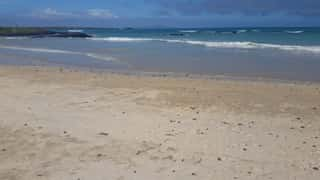
FreeConsistently ranked as one of the world's most beautiful beaches, Tortuga Bay is a pristine expanse of powdery white sand. You'll likely spot marine iguanas sunning themselves on the rocks and blue-footed boobies diving into the Pacific Ocean just offshore. It's a sanctuary of silence—save for the crashing waves of Playa Brava. Because of the 45-minute trek required to get here, it never feels overcrowded. Once you arrive at the first beach, continue walking to the end to find the mangrove-fringed Playa Mansa, where the water is like a lake. Most guides quote a walking time of 30 minutes, but a comfortable pace for a cruise traveler will likely take exactly 45. There are no vendors here, meaning you must carry everything in and everything out. It is the ultimate Galapagos beach experience, but it punishes the poorly hydrated. This is where you see the islands in their most raw, uncommercialized state.
Southwest of Puerto Ayora center ·6:00 AM – 6:00 PM ·www.galapagos.gob.ec
Eating & Drinking in Galápagos
The local culinary identity is defined by the bounty of the Pacific Ocean. While 'Ceviche' is the national dish of Ecuador, the Galapagos version often features 'Canchachalagua,' a local mollusk with a texture similar to abalone. For a true local experience, head to 'Los Kioskos' on Calle Binford at night; it's a street that shuts down to traffic and fills with plastic tables where locals eat whole grilled fish (Brujo) for $15.00 USD. What tourists expect is high-end 'International' cuisine, but the reality is that the best food is found in these simple, open-air settings. Drink the local coffee—Galapagos coffee is world-renowned because the volcanic soil and low altitude create a unique, low-acid bean. Most guides suggest the mass-produced brands, but look for '1835 Coffee Lab' for the genuine artisanal version.
| Place | Address | Phone | Hours | Website | Price range |
|---|---|---|---|---|---|
| Almar Seafood & Grill | Av. Charles Darwin y Punta Estrada, Puerto Ayora | +593 5-252-6562 | 12:00 PM – 10:00 PM | galapagoshabitat.com | $30.00–$50.00 USD |
| The Bongo Bar | Av. Charles Darwin and Islas Plazas, Puerto Ayora | +593 99-354-1522 | 5:00 PM – Late | $8.00–$12.00 USD |
Almar Seafood & Grill
$30.00–$50.00 USDThis is the best spot for a long, celebratory lunch. The deck extends over Academy Bay, and if you look down, you will likely see black-tip reef sharks patrolling the mangroves. Order the grilled lobster—it is local and incredibly fresh. The service is the most professional in town, and they understand the 'back-to-ship' urgency of cruise guests. One honest limitation: it can be windy, so bring a light layer.
Av. Charles Darwin y Punta Estrada, Puerto Ayora ·+593 5-252-6562 ·12:00 PM – 10:00 PM
The Bongo Bar
$8.00–$12.00 USDLocated on the second floor with a view of the harbor, this is where the islands' diving community gathers. It's the best place for a sundowner after a day in the Highlands. The music is great, the beer is cold, and the vibe is quintessentially Galapagos—unpretentious and welcoming.
Av. Charles Darwin and Islas Plazas, Puerto Ayora ·+593 99-354-1522 ·5:00 PM – Late
Getting There & Around
Once you step off the panga, Puerto Ayora is highly walkable. The main thoroughfare, Avenida Charles Darwin, is where you will find 90% of the shops and restaurants. For anything beyond the town limits, you must use the local taxi fleet—distinguishable as white Toyota Hilux pickup trucks. These have a fixed rate of $1.50 USD within town, and $5.00 USD to Bellavista. The ride to the Highlands consistently takes 25–30 minutes and costs $25.00–$35.00 USD for a half-day hire including wait time. Uber does not operate here. Bike rentals are available for $15.00–$20.00 USD (~$15.00–$20.00 USD) per day, but be warned: the road to the highlands is a steep, unrelenting climb that is not suitable for casual riders. A navigational tip most miss: use the 'Muelle Gus Angermeyer' for water taxis to the west side (Angermeyer Point), which is a separate pier from the main passenger pier.
Itineraries & Sample Walks
4-Hour Shore Excursion in Galápagos
Charles Darwin Research Station
9:00 AM (90 min)
See the tortoise breeding center and the world-famous Lonesome George exhibit. The interpretation center offers the best overview of the islands' geological history. Most visitors walk past the 'hidden' beach at the end of the station path—don't miss it.
- 15-minute walk east from the main pier along the waterfront. (Free)
- Entry: $10.00 USD ($10.00 USD)
- Arrive at 9:00 AM sharp to see the tortoises being fed; they are much more active then.
Puerto Ayora Fish Market
11:00 AM (30 min)
Watch sea lions and pelicans wait for scraps from the morning's catch. It's a chaotic, sensory experience that shows the real Puerto Ayora. You can buy a fresh lobster tail here for roughly $15.00 USD (~$15.00 USD) and have it cooked nearby.
- 10-minute walk back toward town. (Free)
- Entry: Free (Free)
- Stand on the left side of the cleaning tables for the best view of the sea lions without getting splashed.
Lunch Recommendation
Almar Seafood & Grill
It sits directly over the water, allowing you to watch reef sharks swim below while you dine, beating the crowded street stalls of Los Kioskos.
Order: Grilled Galápagos Lobster, Octopus Carpaccio
Av. Charles Darwin y Punta Estrada, Puerto Ayora
Cost: $45.00 USD
8-Hour Full Day Experience in Galápagos
El Chato Tortoise Reserve
8:30 AM (120 min)
Walk among wild giant tortoises in their natural habitat. The reserve also features massive underground lava tunnels that you can walk through. It is cooler and wetter here than at the coast.
- 30-minute taxi ride from the main pier. ($30.00 USD round trip)
- Entry: $10.00 USD ($10.00 USD)
- Ask your taxi driver to bring rubber boots (botas de caucho); most reserves provide them, but having your own is more comfortable if you are picky about fit.
Getting back to the ship
To ensure a safe return, you should be back at the Municipal Pier at least 45 minutes before your ship's 'All Aboard' time. If you are in the Highlands, leave no later than 90 minutes before departure to account for potential traffic or taxi delays. A water taxi back to your vessel takes 5 minutes and costs $1.00 USD. If you are running late, contact the port captain at +593 5-252-6128. Be warned: expedition ships in the Galapagos follow strict departure windows set by the National Park; they will rarely hold for late passengers. Missing the ship means a costly 2-hour flight back to the mainland from Baltra Airport at your own expense.
Weather & Best Time to Visit Galápagos
Weather & What to Pack
Cruise season: Year-round; peak season is December to June.
22°C–31°C (72°F–88°F). Humidity is always high. Rainfall is heavy in February–April but usually short-lived.
What to wear: Lightweight, moisture-wicking fabrics are non-negotiable. The UV index regularly hits 11+; a long-sleeved SPF 50+ shirt should be worn. Closed-toe shoes with good grip are essential for the volcanic rock paths. A wide-brimmed hat with a chin strap is necessary for the wind on the Pacific Ocean panga rides.
Weather risks: Occasional 'Garúa' mist in the highlands can make trails dangerously muddy and slippery for those without hiking boots.
The transition months of May and November offer the best balance of clear water and manageable temperatures.
| Season | Conditions | Hazards | Affected areas | Visitor advice |
|---|---|---|---|---|
| Warm and Wet (January–May) | Intermittent heavy rains, high humidity, and temperatures averaging 30°C (86°F). | Volcanic rock paths to Tortuga Bay become exceptionally slick when wet. High humidity increases the risk of heat exhaustion. | Tortuga Bay trail, Las Grietas steps, and the unpaved highland paths. | Wear sandals with high-traction soles like Teva or Chaco for town, but switch to breathable hiking shoes for trails. Hike before 9:00 AM. |
| Cool and Dry / Garúa (June–December) | Overcast skies, mist in the highlands, and cooler Pacific Ocean breezes with temps around 22°C (72°F). | The highland roads near Bellavista can develop thick fog, reducing visibility for those renting bicycles or walking. | The main road to the Highlands and the Los Gemelos craters. | A light windbreaker or rain shell is essential for the highlands. Expect choppy water on panga transfers; keep electronics in dry bags. |
Practical Information
Cultural etiquette
Locals in Puerto Ayora are exceptionally polite and expect the same. A simple 'Buenos días' or 'Buenas tardes' when entering a shop or taxi is the standard convention. While tipping in restaurants is around 10% (often already included as a 'service' charge), tipping your Naturalist Guide is a distinct gesture; $10.00–$15.00 USD per person per day is the standard for high-quality service. Do not photograph locals or their children without asking '¿Puedo tomar una foto?'. One common misunderstanding: cruise passengers often try to touch or feed the sea lions at the fish market. This is not only culturally offensive but a violation of National Park rules that carry heavy fines. The '2-meter rule' for wildlife applies to the town just as much as the trails. Queueing is generally relaxed but respectful; do not cut the line at the water taxi pier, as this is the locals' primary commute route.
Mistakes to Avoid
| Mistake |
|---|
Waiting until midday to visit the Charles Darwin Research Station. |
Thinking you can 'do' Tortuga Bay in 90 minutes. |
Paying more than $1.00 USD for a water taxi. |
Practical tips
Ecuador uses the US Dollar, so Americans will find it seamless. However, small bills ($1, $5, $10) are essential for water taxis and market stalls. Credit cards are accepted in major restaurants but expect a 5-22% surcharge in smaller shops. Five essential phrases: 'Panga' (small boat), '¿Cuánto cuesta?' (how much?), 'Agua sin gas' (still water), 'La cuenta, por favor' (the bill), and 'Gracias' (thank you). Scams are rare, but 'freelance guides' at the pier may offer unauthorized tours; always ensure your guide has a Galapagos National Park badge. The sun is your biggest threat; the burn time takes just 15 minutes at midday. Apply SPF 50+ before you leave the ship. Most visitors make the mistake of wearing flip-flops to the Highlands; the terrain is too uneven and muddy for open shoes.
Why Book With Waterways Cruise?
Four decades of expertise, one dedicated advisor, and every detail handled, from your front door to the gangway and back.
Personal Service — Your Own Cruise Concierge
Tailor-Made — 100% Custom-Built
Expertise — 40+ Years in Travel
Price Watch — Book With Total Confidence
Signature Sailings
All Cruise Lines at Galápagos (A–Z)
Nearby Ports




FAQ — Galápagos
Are there ATMs in Puerto Ayora?
Yes, there are three main ATMs located along Avenida Charles Darwin within a 5-minute walk of the pier. You will notice that Banco del Pacífico is the most reliable for foreign cards. Be aware that these machines often run out of cash on Sunday afternoons or during local festivals. Most dispense a maximum of $200.00 USD per transaction. Consider carrying at least $100.00 USD in small denominations from your ship for water taxis and tipping before you attempt to use a local ATM.
Can I use my cell phone in the Galapagos?
Coverage in Puerto Ayora is generally good for basic calls and texting, but data speeds are notoriously slow, often dropping to 3G levels. Once you leave the town limits for the Highlands or go to Tortuga Bay, signal strength vanishes completely. Do not rely on cloud-based maps for navigation; download offline maps before disembarking. Most cafes offer 'Free Wi-Fi,' but it is often slower than a basic cellular connection. Satellite communication needs can be coordinated through local operators for urgent needs.
Is the water safe to drink in Puerto Ayora?
No. Tap water in the Galapagos is not potable and should not even be used for brushing teeth if you have a sensitive stomach. Always use bottled or purified water. Most high-end restaurants and the Charles Darwin Research Station provide purified water refill stations. A 1-liter bottle in town costs approximately $2.00 USD. To minimize plastic waste, bring a sturdy reusable bottle from your ship and refill it at verified stations. This is a critical rule for protecting the local ecosystem.
What is the '2-meter rule' for animals?
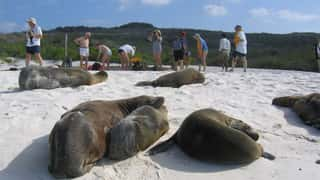
Galapagos National Park regulations strictly require all visitors to maintain a distance of at least 2 meters (6.5 feet) from all wildlife at all times. This applies to the sea lions on the town's benches just as much as the tortoises in the wild. Animals here are famously fearless, and they may approach you; if they do, you must back away. Touching or feeding animals can result in immediate expulsion from the park and heavy fines. These strict conservation measures are supported to ensure the wildlife remains truly wild for future generations.
Fact-checked and co-written by J. Richard, Founder, Waterways Cruise, with the Waterways Cruise Content Team.
Published May 19, 2026 · Last updated November 2, 2026
This guide is researched and reviewed by our editorial team, but prices, hours, and availability change often. Confirm current details directly with venues, excursion operators, and your cruise line before you travel.