Zurich, Switzerland Cruise from Basel to Amsterdam — 15 Days

14 nights · Zurich, Switzerland · River cruise · Departs Basel (Switzerland) · Visiting Breisach am Rhein, Kehl-Strasbourg, Heidelberg, Rudesheim am Rhein, Monheim am Rhein, Dusseldorf, Utrecht, Amsterdam, Hellevoetsluis, Ghent, Brussels, Antwerp, Dordrecht, Kinderdijk · Aboard AmaWaterways on the AmaSerena

AmaWaterways logo

Waterways

This river cruise sails the Rhine and Scheldt, departing Basel.

  1. Rhine →
  2. Scheldt →
  3. Rhine
Cruise lineAmaWaterways
ShipAmaSerena
Duration14 nights
Port calls15
Departures1 sailings
Year built2015
Guests161
Cabins85
Crew49
Length135 m
Beam12 m
Cruising speed11.0 kn
  1. Day 1

    Basel, Switzerland

    Basel sits where Switzerland meets France and Germany, with the Rhine running through its centre. A short walk from the river leads to the red-sandstone Rathaus and Münster, whose terraces open across the rooftops. The city rewards unhurried exploring, from medieval lanes in the Old Town to galleries and renowned art collections. Cross the river by ferry, or use Basel’s efficient trams to reach museums, cafés and the lively Marktplatz.

  2. Day 2

    Breisach am Rhein, Germany

    Breisach rewards a short walk uphill: its old town gathers around St. Stephen’s Minster, above the Rhine. Inside, the minster’s carved altar and medieval murals offer a close encounter with Upper Rhine art. Across the river lies Alsace; inland, the Kaiserstuhl’s volcanic slopes are known for vineyards and distinctive wines. Allow time for the compact center and its river views; Breisach makes a rewarding pause between Freiburg and Colmar.

  3. Day 3

    Kehl-Strasbourg, Germany

    Strasbourg rewards visitors with a rare blend of French elegance and German character. Its historic center, the Grande Île, is a UNESCO World Heritage site, threaded with canals and half-timbered houses. At its heart, Strasbourg Cathedral rises above the old streets, its pink sandstone façade a masterpiece of Gothic architecture. Take time for a table of Alsatian cooking, where French technique meets hearty regional tradition. Then follow the riverfront lanes and discover a city shaped by centuries on Europe’s border.

  4. Day 4

    Heidelberg, Germany

    Few German cities make history feel as immediate as Heidelberg. Set beside the Neckar, its old town gathers around the market square and the Church of the Holy Spirit. Cross the Old Bridge for views of the red sandstone castle, rising above the rooftops. Founded in 1386, Heidelberg University gives the city an enduring scholarly spirit. Walk the Philosopher’s Way for a wider view, then linger over the cafés and lanes below.

    • Land Tour (Land Tour)
    • Land Tour (Land Tour)
    • Land Tour (Land Tour)
    • Land Tour (Land Tour)
  5. Day 5

    Rudesheim am Rhein, Germany

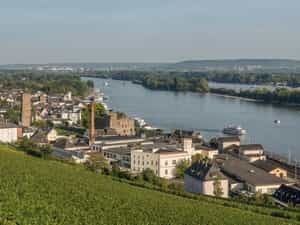
    Rüdesheim is a rewarding first stop on the Rhine, with vineyards climbing steep slopes above the water. It stands at the southern gateway to the UNESCO-listed Upper Middle Rhine Valley, famed for castles and dramatic river scenery. Explore the old lanes and Drosselgasse, then take the cable car through the vines to the Niederwald Monument. From its hilltop setting, the Rhine spreads below in a view worth lingering over.

    • River Cruising (River Cruising)
  6. Day 6

    Monheim am Rhein, Germany

    Monheim am Rhein lies between Düsseldorf and Cologne, offering a quieter landing on one of Europe’s busiest waterways. Its compact centre rewards an unhurried walk, with cafés, riverside paths and the town’s famous Gänseliesel fountain. For deeper history, visit Haus Bürgel, a Roman fort within the UNESCO-listed Lower German Limes. Nearby Zons preserves medieval walls and towers across the river.

  7. Day 6

    Dusseldorf, Germany

    Düsseldorf pairs a handsome Rhine setting with a modern, distinctly German edge. From the riverfront, the Altstadt’s narrow lanes lead to historic churches, intimate squares and traditional breweries serving Altbier. Nearby, Königsallee offers elegant boutiques beneath a canopy of trees, while the city’s acclaimed art museums reward a slower afternoon. Come ashore ready to walk: Düsseldorf’s highlights sit close together, and the Rhine is never far from view.

  8. Day 7

    Utrecht, Netherlands

    Utrecht pairs a lively university-city atmosphere with one of the Netherlands’ most distinctive historic centers. At its heart, the 14th-century Oudegracht runs past wharf cellars now occupied by cafés, shops and restaurants. Look up to the Dom Tower, the country’s tallest church tower, and explore the nearby cathedral cloister. Compact streets, canal-level terraces and fine museums make Utrecht especially rewarding on foot.

  9. Day 7

    Amsterdam, Netherlands

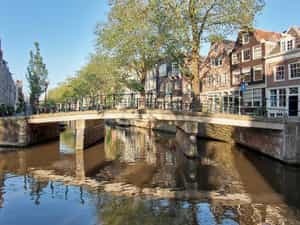
    Amsterdam pairs world-class museums with the everyday pleasure of canal-side life. Its Golden Age houses, narrow waterways and lively markets make the city rewarding well beyond its famous sights. Visit the Rijksmuseum for Dutch masters, then explore the canal belt on foot or by boat. Leave time for a neighbourhood café: in Amsterdam, the best discoveries often come between the landmarks.

  10. Day 9

    Utrecht, Netherlands

    Utrecht pairs a lively university-city atmosphere with one of the Netherlands’ most distinctive historic centers. At its heart, the 14th-century Oudegracht runs past wharf cellars now occupied by cafés, shops and restaurants. Look up to the Dom Tower, the country’s tallest church tower, and explore the nearby cathedral cloister. Compact streets, canal-level terraces and fine museums make Utrecht especially rewarding on foot.

  11. Day 10

    Hellevoetsluis, Netherlands

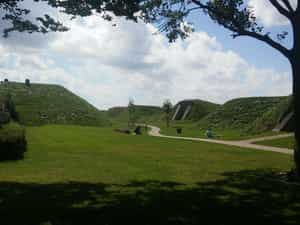
    Hellevoetsluis sits on the Haringvliet, its old harbour framed by the works of a Dutch naval stronghold. For centuries, it served as an important base for the Netherlands’ fleet. Visit Dry Dock Jan Blanken, begun in 1806 and among the country’s oldest surviving dry docks. Along the waterfront, open views across the Haringvliet reveal the town’s enduring maritime character.

  12. Day 11

    Ghent, Belgium

    Step ashore in Ghent and find a Flemish city that feels lived-in, not preserved for show. Canals frame guildhalls and Gothic towers, while cafés keep the historic centre in motion. At the Graslei, old warehouses line the Leie; nearby, St Bavo’s Cathedral holds the celebrated Ghent Altarpiece. Visit Gravensteen, a 12th-century castle, then explore the lanes on foot. Compact and rewarding, Ghent offers art, architecture and an easy taste of Belgian life.

  13. Day 12

    Brussels, Belgium

    Brussels rewards visitors who look beyond its reputation as Europe’s political capital. At the Grand-Place, gilded guildhalls frame one of the continent’s most beautiful squares. Nearby, the Magritte Museum reveals the Belgian surrealist’s wit, while Art Nouveau façades reward an unhurried walk. Make time for lunch: moules-frites, crisp Belgian fries, or a freshly made waffle. The city’s cafés and chocolate makers offer good reason to linger between sights.

  14. Day 13

    Antwerp, Belgium

    Antwerp pairs a major working port with a rewarding historic center. At the Cathedral of Our Lady, Rubens’s paintings share space with centuries of Gothic stonework. Nearby, the Grote Markt frames guild houses and the ornate City Hall, with cafés offering an easy pause between visits. The Museum aan de Stroom explores Antwerp’s history and its enduring relationship with the river. Make time for a meal; Antwerp’s food culture is as compelling as its maritime heritage.

  15. Day 14

    Dordrecht, Netherlands

    Dordrecht’s historic centre sits on an island where the Oude Maas, Noord and Beneden Merwede meet. The city received its charter in 1220 and grew rich on trade, leaving handsome merchant houses along its harbours. Walk past the leaning Grote Kerk, explore the Dordrechts Museum, then pause beside the water as working ships pass. For a change of scene, National Park De Biesbosch lies just beyond town, its waterways best explored by boat.

  16. Day 14

    Kinderdijk, Netherlands

    Kinderdijk is where the Dutch fight against water becomes unmistakably visible. Nineteen historic windmills stand among canals and green fields, built in the eighteenth century to drain the Alblasserwaard polder. Recognised by UNESCO, this working landscape rewards a slow walk beside the waterways. Selected mills open as museums, revealing how generations kept farmland dry. Arrive by waterbus from Rotterdam for a memorable approach, then explore at your own pace.

  17. Day 15

    Amsterdam, Netherlands

    Amsterdam pairs world-class museums with the everyday pleasure of canal-side life. Its Golden Age houses, narrow waterways and lively markets make the city rewarding well beyond its famous sights. Visit the Rijksmuseum for Dutch masters, then explore the canal belt on foot or by boat. Leave time for a neighbourhood café: in Amsterdam, the best discoveries often come between the landmarks.

AmaSerena Cruises

Published August 22, 2026
Last updated October 3, 2026
Author: J. Richard


Cruise Disclosure

Good to know: Prices are quoted per person based on double occupancy and include all applicable taxes and fees. Availability and prices can change quickly, so please continue through the booking process to confirm the latest availability and pricing before you pay.

We work hard to make sure everything on this website is accurate and up to date. However, some information may be incomplete or inaccurate, including details supplied by third parties or otherwise outside our control, and we cannot be held responsible for such errors. We work with 41 cruise line operators, that are providing cruises on 585 ships visiting 1,731 ports across 7,194 unique cruises, creating 13,822 itineraries. This is a great deal of data to continually update daily from our suppliers. If a pricing error, misrepresentation, or omission occurs, we reserve the right to adjust the pricing, correct the information, or cancel or decline any booking made in error, with notice to you. Thank you for your understanding!