Italy Cruise from Civitavecchia to Trieste — 15 Days

14 nights · Italy · Departs Civitavecchia-Rome (Italy) · Visiting Salerno, Catania, Valletta, Katakolon, Heraklion, Paros Island, Piraeus-Athens, Mykonos Island, Kefalonia Island, Corfu Island, Bar Montenegro, Split, Zadar, Trieste · Aboard Oceania Cruises on the Oceania Sonata

Oceania Cruises logo
Cruise lineOceania Cruises
ShipOceania Sonata
Duration14 nights
Port calls15
Departures1 sailings
From fare$11,549 per person
Year built2027
Guests1606
Cabins669
Crew855
Length255 m
Beam32 m
Cruising speed20.0 kn
  1. Day 1

    Civitavecchia-Rome, Italy

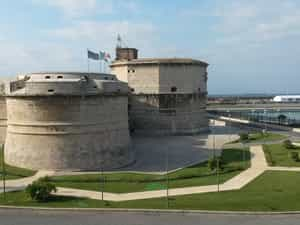
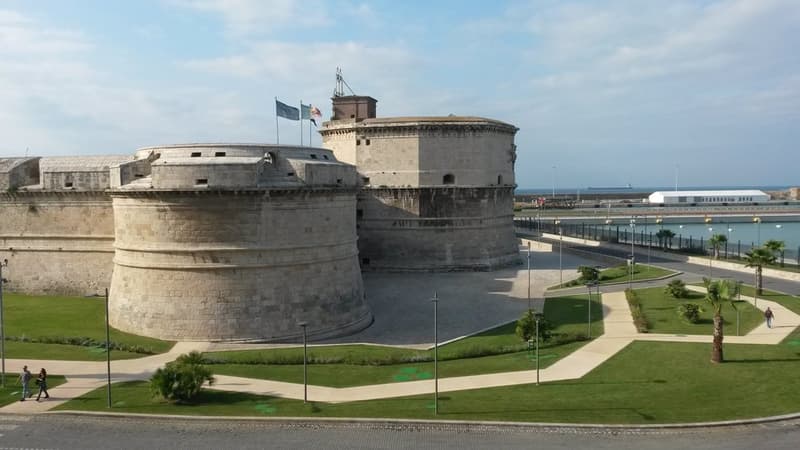
    Your ship docks at Civitavecchia, Rome’s seaport, about 50 miles northwest of the capital. Rome’s great monuments are within reach, but the port town rewards a closer look. Walk the waterfront to Forte Michelangelo, a 16th-century fortress begun under Pope Julius II; explore the old streets and market. Prefer a quieter day? The town’s seafront and nearby beaches offer an easy change of pace. Choose Rome for art and antiquity, or Civitavecchia for coastal life beyond the terminal.

  2. Day 2

    Salerno, Italy

    Salerno puts southern Italy within easy reach, with ferries and roads leading toward the Amalfi Coast. Yet the city rewards a closer look: its old lanes gather around the handsome Duomo di San Matteo. Inside, bronze doors and a richly decorated crypt recall Salerno’s medieval importance as a center of learning. Climb to Arechi Castle for broad views across the Gulf, or venture inland to the Greek temples at Paestum.

  3. Day 3

    Catania, Italy

    Mount Etna sets the scale in Catania, where black lava stone gives the Sicilian city a character unlike any other. Rebuilt after the 1693 earthquake, its Baroque heart is part of the UNESCO-listed Val di Noto. Begin at Piazza del Duomo, then follow Via Etnea toward cafés, churches and views of the volcano. At La Pescheria, the fish market, Sicily’s daily life is on full display, best sampled before lunch.

  4. Day 4

    Valletta, Malta

    Valletta makes a powerful first impression, its honey-coloured walls rising above Grand Harbour. Founded by the Knights of St John in 1566, Malta’s compact capital rewards exploration on foot. Enter St John’s Co-Cathedral for Caravaggio’s monumental paintings, then follow Republic Street to cafés, palaces and the Upper Barrakka Gardens. From the terraces, watch ferries cross the harbour and look towards the Three Cities. Allow time for steep lanes and quiet side streets.

  5. Day 5

    Katakolon, Greece

    Katakolon is a compact seaside port on the western Peloponnese, with cafés and shops lining its waterfront. Most visitors come for ancient Olympia, about 35 kilometres inland and readily reached by road. There, the sanctuary, archaeological museum and ancient stadium bring the story of the Olympic Games into focus. Back in Katakolon, allow time for a stroll along the harbour before returning to your ship.

  6. Day 6

    Heraklion, Greece

    Heraklion is Crete’s capital, with treasures beyond its city walls. At Knossos, about five kilometres south, palace ruins reveal the scale of Minoan life. The Heraklion Archaeological Museum brings that world into focus through frescoes, jewellery and its celebrated Snake Goddess figurines. In town, Venetian walls and the harbour’s Koules fortress frame cafés, markets and a lively waterfront. Crete’s olive oil, local cheeses and generous island cooking reward a pause between visits.

  7. Day 7

    Paros Island, Greece

    Your first glimpse of Paros is its whitewashed capital, Parikia, gathered around a sheltered harbour in the Cyclades. Walk to Panagia Ekatontapiliani, one of Greece’s most important early Christian monuments. Then choose your pleasure: Naoussa’s fishing harbour and lanes, or a swim at an island beach. Paros is also known for the fine marble prized by sculptors across the ancient world.

  8. Day 8

    Piraeus-Athens, Greece

    Piraeus is Athens’ working harbour, not a resort port—and that is its appeal. From here, the capital’s ancient landmarks are within reach, while the waterfront keeps its own busy, distinctly Greek character. Visit the Archaeological Museum of Piraeus, then linger over grilled fish in Mikrolimano, a small harbour lined with tavernas. Metro connections make central Athens straightforward. Or stay near the water and watch ferries depart for the islands.

  9. Day 9

    Mykonos Island, Greece

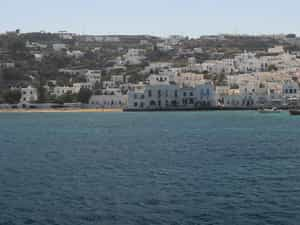
    Mykonos rewards an early start: whitewashed lanes, blue-domed churches and waterfront cafés are quieter before the cruise crowds arrive. In Little Venice, old captains’ houses lean over the Aegean, while the island’s windmills stand above the harbor. Beyond town, beaches range from lively Psarou to the broad sands of Elia. Take a short boat ride to Delos, where ancient sanctuaries and marble streets mark one of Greece’s great archaeological sites.

  10. Day 10

    Kefalonia Island, Greece

    Your first view of Kefalonia may be Argostoli, a working harbor framed by hills and the Ionian Sea. From here, roads lead to traditional villages, the underground lake at Melissani, and the sweeping shore of Myrtos Beach. Argostoli merits a pause for its palm-lined waterfront, lively market, and loggerhead turtles that forage in the harbor. Choose one excursion rather than rushing the island; winding roads make distances longer than the map suggests.

  11. Day 11

    Corfu Island, Greece

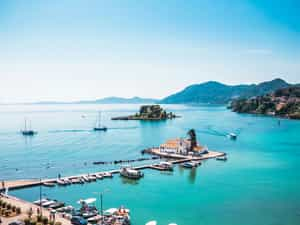
    Corfu rewards visitors who look beyond the beach resorts. Its Old Town, a UNESCO World Heritage site, bears the marks of centuries of Venetian rule. Walk the arcaded Liston, then climb to the Old Fortress for views across the rooftops and Ionian Sea. Beyond town, cypress-lined roads lead to Paleokastritsa’s coves, while the Achilleion palace recalls an imperial past. Allow time for lunch; Corfiot cooking pairs Ionian seafood with Italian and Greek influences.

  12. Day 12

    Bar Montenegro, Montenegro

    Bar is Montenegro’s working seaport, but its greatest stories lie a few kilometres inland. At Stari Bar, stone lanes climb beneath Mount Rumija to the ruins of a medieval fortress, churches and Ottoman-era buildings. Then meet the Old Olive Tree, believed to be more than 2,000 years old, before returning to the coast. Bar rewards those who look beyond the quay. Montenegro’s southern Adriatic opens here in a vivid mix of history, mountain scenery and salt air.

  13. Day 13

    Split, Croatia

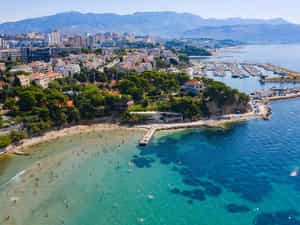
    Split is Croatia’s second-largest city, but its heart feels remarkably intimate. Inside Diocletian’s Palace, Roman walls frame cafés, shops and homes. The cathedral and Peristyle recall the emperor’s former residence. Walk the Riva for views across the harbor and its working waterfront. Then climb Marjan Hill for a broad panorama of red roofs and Adriatic islands. Few ports make history so easy to enter on foot.

  14. Day 14

    Zadar, Croatia

    Zadar pairs a compact old town with a clear Adriatic setting. Roman streets, Venetian gates and medieval churches tell the story of a city shaped by centuries of trade. On the seafront, the Sea Organ turns waves into music through stone pipes. Nearby, the Sun Salutation gathers solar energy and shines after dark. Beyond the walls, Nin’s salt pans and the island-dotted coast reward a closer look.

  15. Day 15

    Trieste, Italy

    Trieste rewards travellers who look beyond the waterfront. At the head of the Adriatic, this Italian city carries the marks of centuries under Habsburg rule. Start in Piazza Unità d’Italia, one of Europe’s largest seafront squares, opening directly onto the sea. Visit Miramare Castle, built for Archduke Ferdinand Maximilian, then order espresso in a city shaped by its coffee trade. Trieste is compact and cosmopolitan, with a Roman theatre and grand cafés recalling its Central European past.

Oceania Sonata Cruises

Published September 20, 2026
Last updated October 3, 2026
Author: J. Richard


Cruise Disclosure

Good to know: Prices are quoted per person based on double occupancy and include all applicable taxes and fees. Availability and prices can change quickly, so please continue through the booking process to confirm the latest availability and pricing before you pay.

We work hard to make sure everything on this website is accurate and up to date. However, some information may be incomplete or inaccurate, including details supplied by third parties or otherwise outside our control, and we cannot be held responsible for such errors. We work with 41 cruise line operators, that are providing cruises on 585 ships visiting 1,731 ports across 7,194 unique cruises, creating 13,822 itineraries. This is a great deal of data to continually update daily from our suppliers. If a pricing error, misrepresentation, or omission occurs, we reserve the right to adjust the pricing, correct the information, or cancel or decline any booking made in error, with notice to you. Thank you for your understanding!