Waterways
This river cruise sails the Douro, departing Madrid.
| Cruise line | Uniworld |
|---|---|
| Ship | SS Sao Gabriel |
| Duration | 19 nights |
| Port calls | 14 |
| Departures | 11 sailings |
| Year built | 2021 |
| Guests | 98 |
| Cabins | 50 |
| Crew | 37 |
| Length | 80 m |
| Beam | 11 m |
| Cruising speed | 10.0 kn |
19 nights · Spain · River cruise · Departs Madrid (Spain) · Visiting Barcelona, Valencia, Cordoba, Seville, Lisbon, Porto-Leixoes, Entre-os-Rios, Regua, Pocinho, Vega de Terron-Salamanca, Barca d'Alva, Pinhao, Porto Antigo · Aboard Uniworld on the SS Sao Gabriel

Image courtesy of Uniworld ©
This river cruise sails the Douro, departing Madrid.
| Cruise line | Uniworld |
|---|---|
| Ship | SS Sao Gabriel |
| Duration | 19 nights |
| Port calls | 14 |
| Departures | 11 sailings |
| Year built | 2021 |
| Guests | 98 |
| Cabins | 50 |
| Crew | 37 |
| Length | 80 m |
| Beam | 11 m |
| Cruising speed | 10.0 kn |
Madrid is a city of grand boulevards, intimate plazas and late-night energy. The Prado holds masterpieces by Velázquez, Goya and El Greco, while the Reina Sofía brings Picasso’s *Guernica* into sharp focus. For a quieter hour, walk beneath the trees of Retiro Park or browse the shops and cafés of Salamanca. Then linger over roast lamb, tapas at a lively market or churros dipped in thick chocolate.
Barcelona is a Mediterranean port city built on Roman foundations, with Gothic lanes and striking modernist architecture. La Rambla runs from Plaça de Catalunya towards the waterfront and the old town. Gaudí’s Sagrada Família and Park Güell show the city at its most distinctive. Set aside time for a market lunch and a walk through El Born, where medieval streets meet lively cafés. Barcelona’s beaches offer a welcome pause between visits.
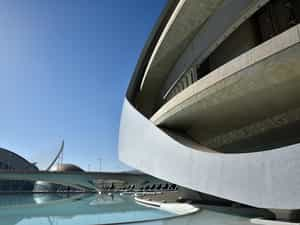
Valencia rewards travellers who look beyond its waterfront. Spain’s third-largest city pairs a handsome old centre with the bold architecture of the City of Arts and Sciences. Visit the Central Market for local produce, then follow the Turia Gardens towards the coast. Paella has deep roots here; seek it in its birthplace, not merely on the menu. With efficient transport and a compact historic core, Valencia is easy to explore at your own pace.
Córdoba is one of Spain’s great historic cities, where Roman, Islamic and Christian legacies meet within a compact old town. Its centrepiece, the Mezquita-Catedral, began as a mosque in the eighth century and remains one of Europe’s most remarkable buildings. Cross the Roman Bridge for views over the Guadalquivir, then follow lanes lined with whitewashed houses and flower-filled patios. Allow time for local salmorejo and the quieter courtyards beyond the main sights.
Seville’s river port opens onto a city of Moorish courtyards, Gothic grandeur and lively streets. The cathedral and Giralda dominate the old quarter. The Alcázar’s tiled rooms and gardens reveal centuries of Islamic and Christian rule. Along the Guadalquivir, former trading warehouses recall the city’s Atlantic fortunes. Come ashore ready to walk, pause for tapas, and let the details set the pace.
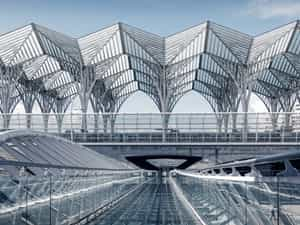
Lisbon is a city best approached with time and comfortable shoes. Its seven hills rise above the Tagus, linking tiled lanes, grand squares and viewpoints with wide river views. In Alfama, narrow streets preserve the feel of old Lisbon. In Belém, the Jerónimos Monastery and Tower recall Portugal’s age of discovery. Pause for coffee and a warm pastel de nata between sights.
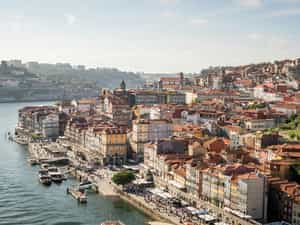
Porto is a city best approached on foot, where steep lanes descend towards the Douro and the Atlantic beyond. Across the river, Vila Nova de Gaia’s historic port-wine lodges offer tastings and views back to the old town. Between them, the Ribeira waterfront, tiled churches and iron bridges tell the story of a trading city shaped by water. Taste tawny port, then linger over market halls, intimate museums and unhurried meals.
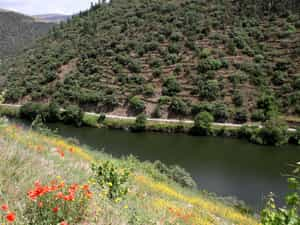
Entre-os-Rios—“between the rivers”—sits where the Tâmega meets the Douro, in Portugal’s Penafiel municipality. Here, the Douro broadens beneath wooded slopes and terraced vineyards, while river traffic keeps the landscape in motion. Come ashore for a quieter encounter with northern Portugal: village lanes, local cafés and views shaped by two waterways. Nearby Penafiel offers historic churches and manor houses, a fitting pause between Porto and the Douro wine country.
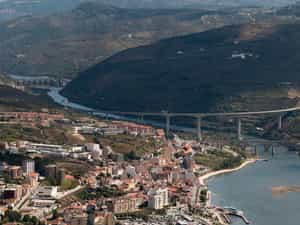
Set on the Douro’s steep, terraced banks, Peso da Régua is a gateway to Portugal’s celebrated wine country. Here, the river winds through vineyards cultivated for centuries, within the Douro Valley, a UNESCO World Heritage cultural landscape. Visit the Douro Museum to discover the region’s port and table wines, then take the historic railway along the water. Above town, vineyard estates offer tastings with sweeping valley views.
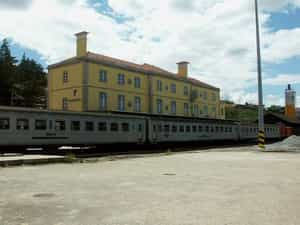
At Pocinho, the Douro’s steep vineyards give way to a quieter, more remote stretch of northern Portugal. From this small riverside village, follow the Douro railway west or head towards the Côa Valley’s prehistoric art. At the UNESCO-listed Côa Archaeological Park, open-air engravings reveal thousands of years of human history. Expect wide river views, quiet country roads and a glimpse of Portugal beyond its familiar coastal cities.
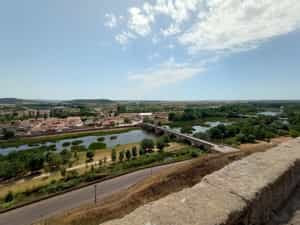
Salamanca rewards visitors with a rare concentration of Spanish history, architecture and university life. Golden sandstone glows across the old town, a UNESCO World Heritage Site, especially at sunset. Start at Plaza Mayor, then walk to the University of Salamanca, founded in 1218. Find the carved frog on its ornate façade and the shell-covered Casa de las Conchas. The city’s twin cathedrals reward a closer look, while cafés bring the lively student quarter into view.
At Portugal’s eastern edge, Barca d’Alva sits where the Douro approaches Spain, amid steep hills and terraced vineyards. This quiet river port offers a different Douro: less polished, more elemental, with olive groves, almond trees and broad skies. Follow the river through Douro International Natural Park, a protected landscape along the border. Nearby, the Côa Valley’s prehistoric rock engravings reveal thousands of years of human history. Bring time; the landscape rewards a slower pace.
Pinhão lies in Portugal’s Douro Valley, where steep vineyards descend to the river in terraces shaped over centuries. From the quay, boats follow the Douro past quintas producing celebrated Port and table wines. See the azulejo-covered railway station, then arrange a tasting at a historic estate. The reward is a close view of one of Europe’s most distinctive wine landscapes.
Set on the Douro’s steep, terraced banks, Peso da Régua is a gateway to Portugal’s celebrated wine country. Here, the river winds through vineyards cultivated for centuries, within the Douro Valley, a UNESCO World Heritage cultural landscape. Visit the Douro Museum to discover the region’s port and table wines, then take the historic railway along the water. Above town, vineyard estates offer tastings with sweeping valley views.
Porto is a city best approached on foot, where steep lanes descend towards the Douro and the Atlantic beyond. Across the river, Vila Nova de Gaia’s historic port-wine lodges offer tastings and views back to the old town. Between them, the Ribeira waterfront, tiled churches and iron bridges tell the story of a trading city shaped by water. Taste tawny port, then linger over market halls, intimate museums and unhurried meals.
Porto Antigo sits on the Douro, among steep green slopes and the river valleys of Portugal’s inland north. Use this riverside stop to explore Cinfães, a rural municipality of granite villages and wooded hills. Nearby, the Bestança valley offers clear water and walking routes through a notably unspoilt landscape. Expect a quieter, more rural Douro than the celebrated wine towns downstream; allow time for a scenic drive and lunch.
Porto is a city best approached on foot, where steep lanes descend towards the Douro and the Atlantic beyond. Across the river, Vila Nova de Gaia’s historic port-wine lodges offer tastings and views back to the old town. Between them, the Ribeira waterfront, tiled churches and iron bridges tell the story of a trading city shaped by water. Taste tawny port, then linger over market halls, intimate museums and unhurried meals.
Published August 30, 2026
Last updated October 3, 2026
Author: J. Richard
Good to know: Prices are quoted per person based on double occupancy and include all applicable taxes and fees. Availability and prices can change quickly, so please continue through the booking process to confirm the latest availability and pricing before you pay.
We work hard to make sure everything on this website is accurate and up to date. However, some information may be incomplete or inaccurate, including details supplied by third parties or otherwise outside our control, and we cannot be held responsible for such errors. We work with 41 cruise line operators, that are providing cruises on 585 ships visiting 1,731 ports across 7,194 unique cruises, creating 13,822 itineraries. This is a great deal of data to continually update daily from our suppliers. If a pricing error, misrepresentation, or omission occurs, we reserve the right to adjust the pricing, correct the information, or cancel or decline any booking made in error, with notice to you. Thank you for your understanding!