Romania Cruise from Bucharest to Amsterdam — 23 Days

22 nights · Romania · River cruise · Departs Bucharest (Romania) · Visiting Ruse, Vidin, Belgrade, Osijek, Kalocsa, Budapest, Vienna, Melk, Passau, Regensburg, Nuremberg, Bamberg, Wurzburg, Wertheim am Main, Koblenz, Cologne, Kinderdijk, Amsterdam · Aboard Viking River Cruises on the Viking Lif

Viking River Cruises logo

Waterways

This river cruise sails the Danube, Rhine-Main-Danube Canal, Main and Rhine, departing Bucharest.

  1. Danube →
  2. Rhine-Main-Danube Canal (canal) →
  3. Main →
  4. Rhine
Cruise lineViking River Cruises
ShipViking Lif
Duration22 nights
Port calls19
Departures4 sailings
Year built2014
Guests190
Cabins95
Crew50
Length135 m
Beam29 m
Cruising speed15.0 kn
  1. Days 1–2

    Bucharest, Romania

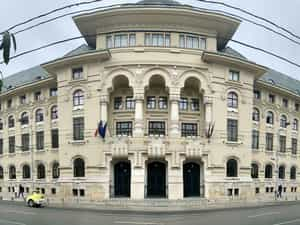
    Bucharest is Romania’s capital, where Belle Époque façades stand beside broad boulevards and stark communist-era buildings. Start along Calea Victoriei, then explore the Old Town’s lanes, churches, cafés and 19th-century landmarks. Visit the Romanian Athenaeum, a celebrated concert hall, and the Palace of Parliament, a vast monument to the communist era. Allow time for a meal: Romanian cooking pairs well with the city’s lively café culture.

  2. Day 3

    Ruse, Bulgaria

    Ruse is Bulgaria’s grand Danube city, where elegant nineteenth-century façades give the streets a distinctly European air. Start at Svoboda Square, framed by cafés and the striking Monument of Liberty, then explore the Regional Historical Museum. Ruse also makes a rewarding base for visiting the UNESCO-listed rock-hewn churches of Ivanovo, a short drive inland. After sightseeing, settle beside the river and watch the Danube carry the day downstream.

    • Land Tour (Land Tour)
  3. Day 4

    Vidin, Bulgaria

    On Bulgaria’s northwestern edge, Vidin faces Romania across the broad Danube. Begin at Baba Vida, a remarkably preserved medieval fortress whose towers command the river. In the old town, the imposing St. Dimitar Cathedral and Ottoman-era buildings reveal layers of Bulgarian history. Walk the riverside promenade as vessels pass along Europe’s great waterway. Vidin also offers a gateway to the Belogradchik Rocks, about 50 kilometres south.

  4. Day 5

    River Cruising (River Cruising)

  5. Day 6

    Belgrade, Serbia

    Belgrade stands where the Sava meets the Danube, a strategic crossroads shaped by centuries of conquest and commerce. From the riverfront, Kalemegdan Fortress commands wide views over both waterways and the city’s layered skyline. Below it, cafés, markets and pedestrian streets reveal a capital that feels energetic, not polished for visitors. Come ashore for history, strong coffee and a distinctly Balkan pace; Belgrade rewards those who explore beyond the main square.

  6. Day 7

    Osijek, Croatia

    Osijek, on the Drava River in eastern Croatia, offers a quieter, more spacious city break than the Adriatic ports. Begin in Tvrđa, its compact Baroque quarter, where cobbled lanes and Habsburg-era buildings frame cafés, museums and galleries. Follow the riverfront promenade, then look for the soaring Church of St Peter and St Paul in the modern centre. Local menus lean on freshwater fish and paprika-rich Slavonian cooking; nearby Kopački Rit offers wetlands and birdlife.

  7. Day 8

    Kalocsa, Hungary

    Kalocsa rewards a shore visit with two Hungarian essentials: paprika and a remarkable ecclesiastical heritage. Set on the Great Hungarian Plain, this compact city has been an archbishopric for nearly a thousand years. Visit the cathedral and Archbishop’s Palace, then explore the Paprika Museum to discover the spice that defines local cuisine. Colorful embroidery and painted folk art offer a glimpse of life beyond the Danube.

  8. Day 9

    Budapest, Hungary

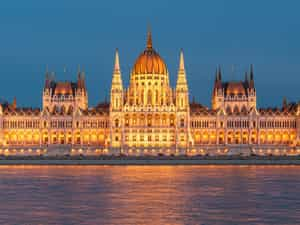
    Budapest makes a memorable arrival, with the Danube dividing hilly Buda from lively, level Pest. From the river, the Hungarian Parliament’s Gothic Revival façade commands attention, especially after dark. Cross the Chain Bridge to explore Castle Hill, or stay in Pest for cafés, markets, and celebrated thermal baths. Allow time to linger: Budapest’s pleasures are best discovered on foot, over a long lunch, and beside the water.

  9. Day 11

    Vienna, Austria

    Arrive in Vienna by river and give the city more than a passing glance. Its imperial centre rewards a slow walk, from St Stephen’s Cathedral to the grand Ringstrasse boulevards. Set aside time for Schönbrunn Palace, once the Habsburgs’ summer residence, or choose the Kunsthistorisches Museum for its remarkable collections. Then take a seat in a traditional coffeehouse; in Vienna, coffee and cake are part of the city’s daily ritual.

  10. Day 13

    Melk, Austria

    Melk stands at the western end of Austria’s Wachau, a UNESCO-listed Danube valley. Its vineyards, apricot orchards and medieval towns make the river journey especially rewarding. High above the water, Melk Abbey commands attention with its baroque church, imperial rooms and celebrated library. Founded as a Benedictine monastery in 1089, it remains active and ranks among Austria’s most memorable cultural landmarks.

  11. Day 14

    Passau, Germany

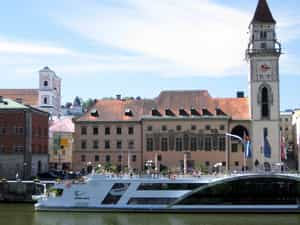
    Passau sits where the Danube, Inn and Ilz meet, their contrasting waters framing one of Bavaria’s most handsome old towns. Walk its baroque lanes to St Stephen’s Cathedral, famed for its historic organ. From the fortress of Veste Oberhaus, rooftops and rivers unfold in a memorable view. Passau rewards a leisurely call: explore on foot, pause beside the water, and watch three waterways shape the city’s character.

  12. Day 15

    Regensburg, Germany

    Regensburg rewards a day on foot, with a remarkably intact medieval centre set beside the Danube. Cross the 12th-century Stone Bridge, then follow narrow lanes to the Gothic cathedral and the Old Town Hall. Roman foundations, merchant houses and riverside cafés reveal a city shaped by two millennia of trade. The UNESCO-listed centre feels lived in, not staged, and its compact scale leaves time for a Bavarian lunch.

  13. Day 16

    Nuremberg, Germany

    Nuremberg is a city of striking contrasts, where medieval streets meet the history of twentieth-century Germany. Within its old walls, the Imperial Castle rises above timbered houses, churches and the Hauptmarkt. Visit St. Sebaldus Church, then explore the Documentation Center and former Nazi Party Rally Grounds for essential context. Allow time for local gingerbread and a walk across the Pegnitz, which divides the historic centre.

  14. Day 17

    Bamberg, Germany

    Bamberg rewards a few hours on foot, with one of Europe’s best-preserved medieval town centres. On the Regnitz River, its UNESCO-listed Old Town brings together a Romanesque cathedral, baroque façades and half-timbered lanes. See the Old Town Hall, poised on an island, and the riverside houses known as Little Venice. Finish with Rauchbier, Bamberg’s distinctive smoked beer, in a traditional brewery tavern. Seven hills surround the city, while its compact centre keeps the main sights within easy reach.

  15. Day 18

    Wurzburg, Germany

    Step ashore in Würzburg, where Franconian wine, Baroque splendour and the Main River shape a memorable day. The Würzburg Residence, a UNESCO World Heritage Site, rewards a visit for its grand staircase and Tiepolo frescoes. Cross the Old Main Bridge for views of Marienberg Fortress and vineyards climbing the surrounding slopes. Then explore the compact old town, where cafés and wine taverns offer a pause between landmarks.

  16. Day 19

    Wertheim am Main, Germany

    Wertheim stands where the Tauber meets the Main, on Baden-Württemberg’s northern edge. The compact old town rewards a slow walk among timber-framed houses and narrow lanes. Its market square recalls centuries of trade. Above it, the ruins of Wertheim Castle command broad river views. The Glass Museum traces the craft that carried Wertheim’s name beyond the valley.

  17. Day 20

    Koblenz, Germany

    Koblenz stands where the Rhine and Moselle meet, beneath the watchful gaze of the Deutsches Eck. From here, river valleys, vineyard slopes and hilltop castles make an easy day’s exploration. Ride the cable car across the Rhine to Ehrenbreitstein Fortress, whose ramparts command sweeping views. The compact old town is readily explored on foot, with cafés and riverside promenades within easy reach.

  18. Day 21

    Cologne, Germany

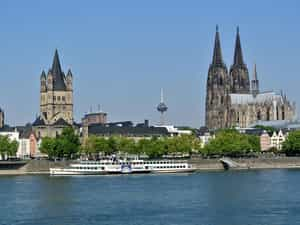
    Cologne announces itself from the Rhine with the soaring twin spires of its Gothic cathedral. Step ashore to explore a compact old town, Roman remains, and museums holding major works of art. The cathedral, a UNESCO World Heritage site, anchors the city centre. Enjoy Kölsch in a traditional brewery, then cross the river for a view of the skyline.

  19. Day 22

    Kinderdijk, Netherlands

    Kinderdijk is where the Dutch fight against water becomes unmistakably visible. Nineteen historic windmills stand among canals and green fields, built in the eighteenth century to drain the Alblasserwaard polder. Recognised by UNESCO, this working landscape rewards a slow walk beside the waterways. Selected mills open as museums, revealing how generations kept farmland dry. Arrive by waterbus from Rotterdam for a memorable approach, then explore at your own pace.

  20. Day 23

    Amsterdam, Netherlands

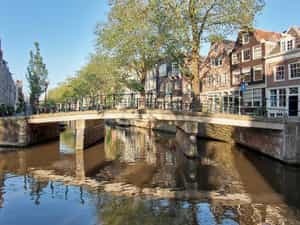
    Amsterdam pairs world-class museums with the everyday pleasure of canal-side life. Its Golden Age houses, narrow waterways and lively markets make the city rewarding well beyond its famous sights. Visit the Rijksmuseum for Dutch masters, then explore the canal belt on foot or by boat. Leave time for a neighbourhood café: in Amsterdam, the best discoveries often come between the landmarks.

Viking Lif Cruises

Published September 23, 2026
Last updated October 14, 2026
Author: J. Richard


Cruise Disclosure

Good to know: Prices are quoted per person based on double occupancy and include all applicable taxes and fees. Availability and prices can change quickly, so please continue through the booking process to confirm the latest availability and pricing before you pay.

We work hard to make sure everything on this website is accurate and up to date. However, some information may be incomplete or inaccurate, including details supplied by third parties or otherwise outside our control, and we cannot be held responsible for such errors. We work with 41 cruise line operators, that are providing cruises on 585 ships visiting 1,731 ports across 7,194 unique cruises, creating 13,822 itineraries. This is a great deal of data to continually update daily from our suppliers. If a pricing error, misrepresentation, or omission occurs, we reserve the right to adjust the pricing, correct the information, or cancel or decline any booking made in error, with notice to you. Thank you for your understanding!