Netherlands North Holland Cruise from Amsterdam to Nuremberg — 12 Days

11 nights · Netherlands North Holland · River cruise · Departs Amsterdam (Netherlands) · Visiting Cologne, Koblenz, Bernkastel-Kues, Traben-Trarbach, Cochem, Lahnstein, Rudesheim am Rhein, Frankfurt am Main, Wertheim am Main, Wurzburg, Bamberg, Nuremberg · Aboard Viva Cruises on the VIVA Moments

Viva Cruises logo

Waterways

This river cruise sails the Rhine, Moselle, Main and Rhine-Main-Danube Canal, departing Amsterdam.

  1. Rhine →
  2. Moselle →
  3. Rhine →
  4. Main →
  5. Rhine-Main-Danube Canal (canal)
Cruise lineViva Cruises
ShipVIVA Moments
Duration11 nights
Port calls13
Departures1 sailings
From fare$3,495 per person
Year built2018
Guests176
Cabins88
Crew44
Length135 m
Beam12 m
Cruising speed13.0 kn
  1. Days 1–2

    Amsterdam, Netherlands

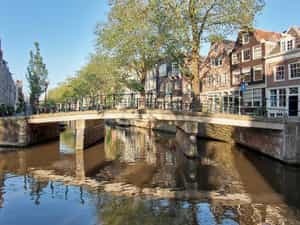
    Amsterdam pairs world-class museums with the everyday pleasure of canal-side life. Its Golden Age houses, narrow waterways and lively markets make the city rewarding well beyond its famous sights. Visit the Rijksmuseum for Dutch masters, then explore the canal belt on foot or by boat. Leave time for a neighbourhood café: in Amsterdam, the best discoveries often come between the landmarks.

  2. Day 3

    Cologne, Germany

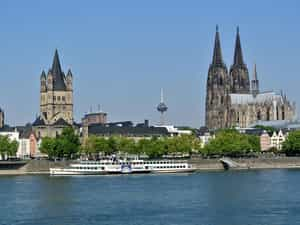
    Cologne announces itself from the Rhine with the soaring twin spires of its Gothic cathedral. Step ashore to explore a compact old town, Roman remains, and museums holding major works of art. The cathedral, a UNESCO World Heritage site, anchors the city centre. Enjoy Kölsch in a traditional brewery, then cross the river for a view of the skyline.

  3. Day 4

    Koblenz, Germany

    Koblenz stands where the Rhine and Moselle meet, beneath the watchful gaze of the Deutsches Eck. From here, river valleys, vineyard slopes and hilltop castles make an easy day’s exploration. Ride the cable car across the Rhine to Ehrenbreitstein Fortress, whose ramparts command sweeping views. The compact old town is readily explored on foot, with cafés and riverside promenades within easy reach.

  4. Day 5

    Bernkastel-Kues, Germany

    Bernkastel-Kues sits among steep Moselle vineyards, where Riesling has shaped the landscape and local life for centuries. In Bernkastel, the medieval market square gathers timber-framed houses around its 17th-century fountain, with the famously narrow Spitzhäuschen close by. Cross the river to quieter Kues, birthplace of 15th-century scholar and cardinal Nicholas of Cusa. Come ashore for a riverside stroll, a glass of crisp Moselle wine, and a town best explored on foot.

  5. Day 5

    Traben-Trarbach, Germany

    Traben-Trarbach rewards a stop with more than riverside views. The Moselle divides two towns linked by a striking 1899 bridge, designed by Berlin architect Bruno Möhring. Jugendstil façades recall the town’s prosperous wine-trading years, when its cellars ranked among Europe’s largest. Cross the river for a hillside walk to the ruins of Grevenburg, or linger over Riesling in a wine tavern. Here, history and wine are close at hand.

  6. Day 6

    Cochem, Germany

    Cochem makes a strong first impression: Reichsburg Castle crowns a vineyard-clad hill above the Moselle. Below, half-timbered houses line narrow lanes and the riverfront. The town is small enough to explore on foot, yet its setting invites a slower pace. Taste the region’s Riesling, take a boat along the river, or visit the castle for broad views over the valley. Here, the Moselle’s pleasures are close at hand.

  7. Day 7

    Lahnstein, Germany

    At the confluence of the Rhine and Lahn, Lahnstein sits just south of Koblenz. Its landmark, 13th-century Lahneck Castle, rises above the river and recalls the region’s medieval past. Explore the Upper Middle Rhine Valley, where castles, vineyards and steep riverbanks define this UNESCO-listed landscape. Back in Lahnstein, follow riverside paths or visit historic churches before returning to the water.

  8. Day 7

    Rudesheim am Rhein, Germany

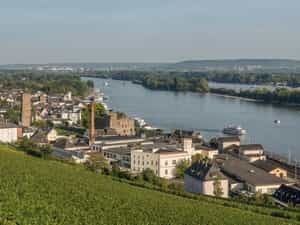
    Rüdesheim is a rewarding first stop on the Rhine, with vineyards climbing steep slopes above the water. It stands at the southern gateway to the UNESCO-listed Upper Middle Rhine Valley, famed for castles and dramatic river scenery. Explore the old lanes and Drosselgasse, then take the cable car through the vines to the Niederwald Monument. From its hilltop setting, the Rhine spreads below in a view worth lingering over.

  9. Day 8

    Frankfurt am Main, Germany

    Frankfurt am Main pairs a striking skyline with the River Main and a compact historic centre. Begin at Römerberg, where half-timbered façades frame the city’s medieval square. Then cross the river to the Städel Museum, one of Germany’s leading art museums. The city rewards a longer stay. Explore the Museumsufer and sample Apfelwein in Sachsenhausen. Here, Europe’s financial capital balances modern ambition with old-world character.

  10. Day 9

    Wertheim am Main, Germany

    Wertheim stands where the Tauber meets the Main, on Baden-Württemberg’s northern edge. The compact old town rewards a slow walk among timber-framed houses and narrow lanes. Its market square recalls centuries of trade. Above it, the ruins of Wertheim Castle command broad river views. The Glass Museum traces the craft that carried Wertheim’s name beyond the valley.

  11. Day 10

    Wurzburg, Germany

    Step ashore in Würzburg, where Franconian wine, Baroque splendour and the Main River shape a memorable day. The Würzburg Residence, a UNESCO World Heritage Site, rewards a visit for its grand staircase and Tiepolo frescoes. Cross the Old Main Bridge for views of Marienberg Fortress and vineyards climbing the surrounding slopes. Then explore the compact old town, where cafés and wine taverns offer a pause between landmarks.

  12. Day 11

    Bamberg, Germany

    Bamberg rewards a few hours on foot, with one of Europe’s best-preserved medieval town centres. On the Regnitz River, its UNESCO-listed Old Town brings together a Romanesque cathedral, baroque façades and half-timbered lanes. See the Old Town Hall, poised on an island, and the riverside houses known as Little Venice. Finish with Rauchbier, Bamberg’s distinctive smoked beer, in a traditional brewery tavern. Seven hills surround the city, while its compact centre keeps the main sights within easy reach.

  13. Day 12

    Nuremberg, Germany

    Nuremberg is a city of striking contrasts, where medieval streets meet the history of twentieth-century Germany. Within its old walls, the Imperial Castle rises above timbered houses, churches and the Hauptmarkt. Visit St. Sebaldus Church, then explore the Documentation Center and former Nazi Party Rally Grounds for essential context. Allow time for local gingerbread and a walk across the Pegnitz, which divides the historic centre.

VIVA Moments Cruises

Published September 21, 2026
Last updated October 3, 2026
Author: J. Richard


Cruise Disclosure

Good to know: Prices are quoted per person based on double occupancy and include all applicable taxes and fees. Availability and prices can change quickly, so please continue through the booking process to confirm the latest availability and pricing before you pay.

We work hard to make sure everything on this website is accurate and up to date. However, some information may be incomplete or inaccurate, including details supplied by third parties or otherwise outside our control, and we cannot be held responsible for such errors. We work with 41 cruise line operators, that are providing cruises on 585 ships visiting 1,731 ports across 7,194 unique cruises, creating 13,822 itineraries. This is a great deal of data to continually update daily from our suppliers. If a pricing error, misrepresentation, or omission occurs, we reserve the right to adjust the pricing, correct the information, or cancel or decline any booking made in error, with notice to you. Thank you for your understanding!