Germany Cruise from Stralsund to Dresden — 12 Days

11 nights · Germany · River cruise · Departs Stralsund (Germany) · Visiting Hiddensee Island, Peenemunde-Usedom, Wolgast, Szczecin, Schwedt-Oder, Hohensaaten, Eberswalde, Berlin, Potsdam, Burg bei Magdeburg, Magdeburg, Lutherstadt Wittenberg, Meissen, Dresden, Bad Schandau · Aboard Viva Cruises on the VIVA Ruby

Viva Cruises logo

Waterways

This river cruise sails the Oder and Elbe, departing Stralsund.

  1. Oder →
  2. Elbe
Cruise lineViva Cruises
ShipVIVA Ruby
Duration11 nights
Port calls16
Departures1 sailings
From fare$3,909 per person
Year built2002
Guests88
Cabins44
Crew23
Length85 m
Beam11 m
Cruising speed11.0 kn
  1. Day 1

    Stralsund, Germany

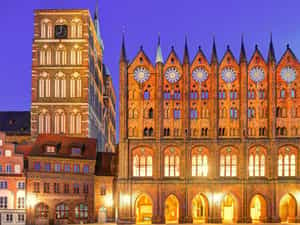
    Stralsund stands on Germany’s Baltic coast, where medieval streets meet the waters of the Strelasund. Its red-brick churches, merchants’ houses and town hall reflect the wealth of a former Hanseatic trading power. The UNESCO-listed old town rewards an unhurried walk, while the Ozeaneum brings Baltic marine life into view. Look beyond the harbor, and you’ll find a city shaped by the sea, with a direct link to Rügen Island.

  2. Day 1

    Hiddensee Island, Germany

    Private cars are not allowed on Hiddensee, a slim Baltic island reached by ferry from Rügen and the mainland. Travel here by bicycle, on foot or in a horse-drawn carriage, past heathland, dunes and quiet villages. In Kloster, visit the local museum and the grave of writer Gerhart Hauptmann. Climb to Dornbusch lighthouse for wide Baltic views, then take time for a walk along the shore.

  3. Day 2

    Peenemunde-Usedom, Germany

    Peenemünde sits at the northern tip of Usedom, beside the Peenestrom waterway. Behind its quiet waterfront lies a pivotal, unsettling chapter in modern history. The Historical-Technical Museum occupies the former power station of the wartime rocket research center. Exhibits explain how the V-2 was developed here and confront the human cost of its production and use. Come for clear-eyed history, then linger over the island’s broad skies, pine-fringed shore, and brisk Baltic air.

  4. Day 3

    Wolgast, Germany

    Wolgast rewards travelers who look beyond the beach resorts of nearby Usedom. Set beside the Peenestrom, this compact Hanseatic town is the mainland gateway to the island, reached by a striking bridge. Explore streets around St. Peter’s Church, then pause on Schlossinsel, once home to the Pomeranian dukes’ residence. The Peene harbor keeps Wolgast closely tied to its maritime setting.

  5. Day 3

    Szczecin, Poland

    Szczecin rewards travelers who look beyond Poland’s familiar capitals. Set on the Oder River, it is a historic port with broad boulevards and an easygoing waterfront. Begin at Wały Chrobrego, the riverside terrace, where grand civic buildings frame views across the working harbor. Then visit the Pomeranian Dukes’ Castle or the striking white Philharmonic, both reminders of a city rebuilt with purpose. Allow time for a café and a walk through the compact old town.

  6. Day 4

    Schwedt-Oder, Germany

    Schwedt sits beside the Oder, close to the Polish border and the Lower Oder Valley National Park. Broad floodplains, quiet waterways and seasonal birdlife offer a striking change from city sightseeing. The town reflects a complex past: wartime destruction reshaped its centre, while tobacco cultivation once brought prosperity. Come for open landscapes, local history and a rare look at Germany’s river frontier.

  7. Day 5

    Hohensaaten, Germany

    Hohensaaten sits where the Oder meets the Oder-Havel Canal, on Germany’s quiet eastern frontier with Poland. From the water, this Brandenburg village opens onto canals, wetlands and broad river skies. Nearby, the historic Niederfinow boat lifts reveal the engineering ambition behind Europe’s inland waterways. Come ashore for a quieter Germany: working waterways, open countryside and the distinctive stillness of the Oder valley.

  8. Day 5

    Eberswalde, Germany

    Eberswalde lies among Brandenburg’s forests, northeast of Berlin, beside the Finow Canal, one of Germany’s oldest artificial waterways. The former brass works now house the Family Garden, a lively reminder of the town’s industrial story. A short journey away, Chorin Abbey rewards visitors with serene grounds and memorable Brick Gothic architecture. For travellers who value regional history, wooded scenery and a gentler pace, Eberswalde makes an engaging stop.

    • Niederfinow Boat Lift (Ask Travel Agent)
  9. Day 6

    Berlin, Germany

    Berlin rewards visitors who look beyond its grand boulevards. The Brandenburg Gate, Reichstag and remnants of the Wall trace a city shaped by empire, division and reunification. Museum Island holds five major museums, while neighbourhood cafés and galleries reveal a lively present. Berlin lies inland; cruise calls marketed as Berlin generally involve a long transfer from Warnemünde. Allow time for the journey and choose your sights carefully.

  10. Day 7

    Potsdam, Germany

    Potsdam rewards visitors who look beyond Berlin. This Brandenburg capital pairs grand Prussian palaces with quiet lakes, leafy parks and streets made for an unhurried walk. At Sanssouci, Frederick the Great’s summer palace rises above terraced vineyards, while the grounds invite time to linger. The Dutch Quarter brings a different character, with red-brick gabled houses and cafés. At Cecilienhof, history turns serious: the 1945 Potsdam Conference helped shape postwar Europe.

  11. Day 8

    Burg bei Magdeburg, Germany

    Brandenburg an der Havel is a city of water, brick and deep history, about 70 kilometres west of Berlin. St Peter and Paul Cathedral stands on Dominsel, an island in the Havel. The Old Town and New Town retain distinct historic centres. Explore Gothic churches, medieval gates and quiet riverfront paths. This is a rewarding stop for travellers who prefer discovery at an unhurried pace.

  12. Day 8

    Magdeburg, Germany

    Magdeburg stands on the Elbe, where more than a thousand years of history meet a confidently modern city. Visit its Gothic cathedral, often described as Germany’s first. Otto the Great, the city’s medieval patron, is buried here. Then contrast its solemn stone with the Green Citadel, a striking Hundertwasser landmark. The compact center makes an easy day ashore, with riverside walks and cafés between sights.

  13. Day 9

    Lutherstadt Wittenberg, Germany

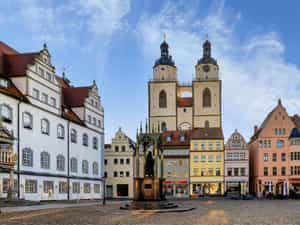
    Step ashore in Lutherstadt Wittenberg, where a small Saxon town changed the course of European history. In 1517, Martin Luther made public his Ninety-Five Theses, challenging church practice and setting the Reformation in motion. Visit the Castle Church, the town church where he preached, and Cranach’s former home and workshop. Between these landmarks, cobbled streets and Renaissance façades make Wittenberg’s past easy to explore on foot.

  14. Day 10

    Meissen, Germany

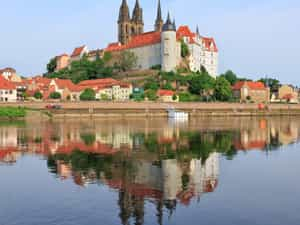
    Meissen rewards a slow walk above the Elbe. Steep lanes climb to a skyline of castle towers and cathedral spires. At Albrechtsburg, often called Germany’s first purpose-built palace, medieval rooms overlook the river and red-tiled roofs. The town’s porcelain tradition began in 1710, and the Meissen Porcelain Manufactory still lets visitors watch artisans at work. Save time for the old market square and a glass of wine from the surrounding vineyards.

  15. Day 11

    Dresden, Germany

    Dresden rewards a close look: its Baroque skyline rises above the Elbe, largely rebuilt after wartime destruction. Begin at the Frauenkirche, whose reconstructed dome anchors Neumarkt, then walk to the Zwinger’s courtyards and galleries. The Semperoper and Royal Palace sit within easy reach of the riverfront. For a broader view, cross the Augustus Bridge or take the funicular to Loschwitz. Allow time for the Old Masters Picture Gallery and a pause beside the river.

  16. Day 11

    Bad Schandau, Germany

    Bad Schandau opens onto Saxon Switzerland, where sandstone cliffs rise above the Elbe. Trails climb from town through ravines and forest to striking rock formations. Ride the historic Kirnitzschtal tram into a wooded valley, or take the 1904 elevator up to Ostrau. River cruises reveal the landscape at an unhurried pace, while the town’s spa heritage offers a quieter pause.

  17. Day 12

    Dresden, Germany

    Dresden rewards a close look: its Baroque skyline rises above the Elbe, largely rebuilt after wartime destruction. Begin at the Frauenkirche, whose reconstructed dome anchors Neumarkt, then walk to the Zwinger’s courtyards and galleries. The Semperoper and Royal Palace sit within easy reach of the riverfront. For a broader view, cross the Augustus Bridge or take the funicular to Loschwitz. Allow time for the Old Masters Picture Gallery and a pause beside the river.

VIVA Ruby Cruises

Published September 3, 2026
Last updated October 3, 2026
Author: J. Richard


Cruise Disclosure

Good to know: Prices are quoted per person based on double occupancy and include all applicable taxes and fees. Availability and prices can change quickly, so please continue through the booking process to confirm the latest availability and pricing before you pay.

We work hard to make sure everything on this website is accurate and up to date. However, some information may be incomplete or inaccurate, including details supplied by third parties or otherwise outside our control, and we cannot be held responsible for such errors. We work with 41 cruise line operators, that are providing cruises on 585 ships visiting 1,731 ports across 7,194 unique cruises, creating 13,822 itineraries. This is a great deal of data to continually update daily from our suppliers. If a pricing error, misrepresentation, or omission occurs, we reserve the right to adjust the pricing, correct the information, or cancel or decline any booking made in error, with notice to you. Thank you for your understanding!