Angola Cruise Ports & Cruise Guide
Total 1
This page is an overview of the 1 cruise ports in Angola, covering ocean cruises. Cruises start and end at Luanda. 6 cruise ships visit Angola across 1 ports. See live sailings and availability on the Angola cruises page.

Angola is southern Africa's wild card: an Atlantic nation of raw urban energy, colonial fortresses, thundering waterfalls, and some of the continent's emptiest desert coastline. Cruise access is still emerging, with no mainstream line offering a dependable 2026 program; travelers arrive on expedition or repositioning sailings, or on overland extensions. For the self-reliant American reader seeking milestone travel without being herded, Angola rewards patience with an Africa that has not yet been smoothed into postcards.
Country facts
History
Angola's past is deep and painful. Before the Portuguese, the Kongo, Ndongo, and Matamba kingdoms shaped the region. From the late 15th century, Portuguese slavers turned the coast into one of the Atlantic world's largest sources of enslaved people. Colonial rule lasted until 1975, followed by a 27-year civil war that ended in 2002. The country has since rebuilt around oil, but inequality and memory remain close to the surface.
The civil war is not ancient history. Many Angolans over 40 carry its scars. Visitors should approach war-related sites with humility, avoid casual comments about 'being here too late', and let local guides tell the story.
Culture
Afro-Portuguese, Atlantic-facing, young, and resilient; music and football are powerful common ground.
Music: Kizomba, semba, kuduro, and rebita; Luanda is one of Africa's most inventive music cities.
Signature landscape: Kalandula Falls on the Lucala River, one of Africa's great waterfalls by volume.
Cuisine
- muamba de galinha (chicken palm-oil stew)
- calulu (dried fish, okra, and vegetable stew)
- funge (cassava porridge)
- pão de milho (corn bread)
- frango piri-piri
- fresh tropical fruit
- Cuca beer
- capuca (traditional fermented drink)
Architecture & heritage
- São Miguel Fortress (Luanda)
- Mbanza Kongo, UNESCO World Heritage site
- Tchitundu-Hulu rock carvings in Namibe
- colonial-era architecture in Benguela and Lobito
- Palácio de Ferro (Luanda)
Tips for American travellers
- Portuguese is essential; English is not widely spoken outside hotels
- Pay in kwanzas or card; US dollars are not accepted on the street
- Use hotel-arranged drivers or licensed guides; don't hail street taxis
- Visa is required; start early with an Angola consulate or official e-visa portal
- Avoid casual political talk about the war; listen more than ask
- Dress modestly outside beach and city areas
- Schedule malaria prophylaxis and yellow fever vaccination
- Never photograph military, police, government buildings, or people without permission
Major cities & destinations
Luanda Capital city and principal cruise gateway
A sprawling Atlantic capital of more than 8 million people, Luanda mixes restored colonial landmarks, post-war high-rises, bayfront promenades, and a nonstop African street life. It feels like Rio before the tourist polish.
Main entry port for Angola. Cruise ships use the commercial port or anchor in the bay; the city is the hub for any pre- or post-cruise program.
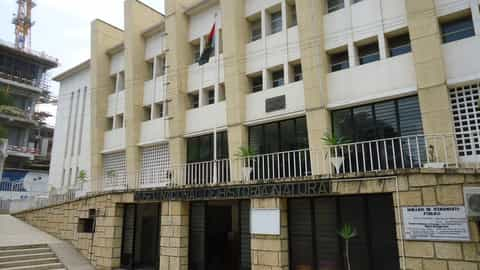
Fortaleza de São Miguel Museu Nacional da Escravatura Museu Nacional de História Natural Palácio de Ferro Avenida 4 de Fevereiro waterfront Ilha do CaboLobito & Benguela Twin port cities on the central coast
Two faded-port beauties: Lobito's curved natural bay and Benguela's colonial grid. Less chaotic than Luanda, with working harbor atmosphere, railway history, and access to the highlands.
Lobito is the better deep-water anchorage; Benguela lies about 30 minutes inland by road. Expedition ships occasionally call or tender here.
Lobito bay and Restinga Peninsula Benguela Railway terminal Museu Regional de Benguela Igreja de São Felipe Praia Morena / Caotinha beaches Baía AzulNamibe (Moçâmedes) Coastal town and desert gateway
The Namib Desert reaches the Atlantic here in dramatic red cliffs, lonely beaches, and surreal baobabs. It is one of the most otherworldly stretches of coastline on Earth.
Expedition ships may anchor offshore or use the small commercial pier; the town is the staging point for desert excursions.
Namibe town center Praia das Miragens Iona National Park Tchitundu-Hulu rock carvings Serra da Leba viewpoint Welwitschia mirabilis sitesCabinda Exclave port and rainforest enclave
A separate province north of the Congo River, Cabinda is culturally distinct, forested, and virtually unknown to tourism. It offers Atlantic beaches and the Mayombe rainforest.
Rarely a port of call; ships pass this coast en route to the Congo. Expedition calls require advance clearance.
Mayombe Forest Chiloango river and beaches Cabinda city market Museu Regional de Cabinda Fútila beach Cacongo historic settlementHuambo Central highlands city (overland extension)
High on the cool Planalto, Huambo is a rebuilt provincial capital with mountain views, railway heritage, and the green heart of Angola.
No port; reached by road or rail from Lobito and Benguela. Best as a two-night pre- or post-cruise extension.
Huambo Cathedral Museu Regional do Huambo Casa do Governo and colonial government buildings Morro do Moco base, Angola's highest mountain Cubal railway bridges and tunnels Alto Hama highlandsLubango Highlands city (overland extension)
A leafy city in the Huíla highlands, famous for the Tundavala Gap, a 30-metre Cristo Rei statue, and the hair-raising Serra da Leba road.
No port; reached from Namibe over the Serra da Leba pass or by road from Lobito or Luanda.
Tundavala Gap Cristo Rei statue Serra da Leba viewpoint Museu Regional da Huíla Nossa Senhora do Monte chapel Mukuti village craft marketMalanje & Kalandula Falls Northern highlands destination (overland extension)
Kalandula Falls, one of Africa's greatest waterfalls by volume, anchors a quiet region of giant baobabs, black rock fortresses, and the Kwanza River headwaters.
No port; best reached from Luanda by road or small plane, usually as a pre- or post-cruise add-on.
Kalandula Falls Pungo Andongo (Pedras Negras) Museu Regional de Malanje Kwanza River Malanje cathedral Giant baobab grovesCruise ports of call
Angola's cruise calendar is not a fixed season; it is a patchwork of expedition calls, world-cruise segments, and private yacht itineraries. Luanda, Lobito, and Namibe are the most plausible ports, with Cabinda a rare expedition possibility. Port infrastructure is commercial rather than passenger-oriented, so every call requires flexibility.
- Cape-to-Congo Expedition: one-way or long-segment sailings linking Cape Town, Namibia, Angola, and the Gulf of Guinea islands.
- Namib & Angola Coast: a slower coastal voyage focused on desert landscapes, colonial towns, and the meeting of Atlantic and Namib.
Luanda route_family_one
The principal maritime gateway. Port infrastructure is freight-oriented; cruise vessels may anchor in Luanda Bay or use a commercial berth with security and logistics support.
Best for: Colonial fortresses, museums, urban energy, and a first-time Angola orientation.
Lobito route_family_one
Lobito's sheltered bay is Angola's most natural cruise anchorage. The twin city of Benguela lies a short drive away and offers a colonial core without Luanda's traffic.
Best for: Working-harbor atmosphere, colonial architecture, seafood, and rail history.
Namibe route_family_two
A small desert port on the edge of the Namib. The town's pale colonial houses face an Atlantic that is cold, rich, and dramatic.
Best for: Desert landscapes, rock art, flamingo wetlands, and empty beaches.
Cabinda route_family_one
The oil-rich exclave north of the Congo River. Tourism infrastructure is minimal, but the Mayombe rainforest and undeveloped beaches reward the flexible traveler.
Best for: True off-the-grid coast, rainforest, and a cultural contrast with Luanda.
Soyo, at the mouth of the Congo River, appears in some expedition route notes as a pilotage or excursion point but has no dedicated cruise infrastructure. Most Angola sailings are one-way between Cape Town or Walvis Bay and São Tomé or the Gulf of Guinea islands, so expect a true expedition rhythm rather than a port-intensive cruise.
All cruise ports in Angola
Ships visiting by type: 6 ocean
Showing 1 port in Angola
River cruises & routes
There is no established river-cruise product on Angola's Kwanza or Cunene rivers. Shoals, waterfalls, and lack of docking infrastructure keep the rivers in the domain of small-boat day trips and overland extensions. Ocean cruise itineraries use the coast; the rivers are best seen by land-based excursions.
| Route | Length | Countries | Highlights |
|---|---|---|---|
| Cape Town to Luanda Expedition | 12–18 days | South Africa, Namibia, Angola | Namib coast, Iona and Namibe desert, Lobito colonial twin cities, Luanda's fortresses and bay |
| Luanda to São Tomé & Príncipe | 8–12 days | Angola, São Tomé & Príncipe | Luanda museums, Cabinda coast, Congo River outflow, island beaches and colonial roças |
| Angola Highlands Overland Extension | 5–7 days | Angola | Kalandula Falls, Malanje, Huambo, Lubango, Tundavala Gap, Serra da Leba |
Season: May–October (dry season) is the best window: cooler days, clearer skies, and easier overland travel. November–April brings heat and rain in the north; the Namibe coast can be foggy and rough at sea.
Cruise lines visiting Angola
As of 9 September 2026, no major cruise line has published a dependable 2026 program with confirmed Angola port calls. Angola is a destination for expedition and repositioning voyages, not scheduled ocean cruising. The market is thin and schedules change annually.
Do not book an Angola cruise on the strength of an old brochure. Work with an expedition specialist and ask for the current ship's clearance list; Luanda, Lobito, and Namibe may appear on Cape Town–São Tomé or world-cruise segments, but confirm directly before planning flights.
Planning & advice
Angola is the opposite of a herded cruise stop. It offers a real frontier: Atlantic Africa with Portuguese soul, postwar optimism, and no curated souvenir stalls. This reader is likely well-traveled, and ready to trade comfort for authenticity. Angola delivers that trade honestly — with bureaucracy, bumpy roads, and brilliant rewards.
For the American traveller
- Visa first: U.S. citizens need an Angola visa; rules have shifted between paper visas and e-visa systems. Start with the Angolan consulate or official e-visa portal, and expect to show travel dates, accommodation, and sometimes a letter of invitation.
- Health prep: Yellow fever vaccination is required; malaria prophylaxis is strongly recommended. Pack a basic medical kit; quality healthcare is limited outside Luanda.
- Safety in Luanda: Traffic is chaotic and petty crime occurs in crowds. Do not walk alone after dark; use a hotel-arranged driver or licensed guide.
- Photography etiquette: Ask before photographing people; never photograph military, police, government buildings, or infrastructure.
- Money: The Angolan kwanza (AOA) is the only widely accepted currency. Cards work in upscale hotels and shops, but markets and taxis need cash. Exchange at official counters and keep small notes.
- Language: Portuguese is essential. English is not common outside the oil industry and upscale hotels. Learn a dozen Portuguese phrases.
- Patience: Flights, roads, and port formalities run on 'Africa time'. Build slack into every plan and treat delays as part of the experience.
Excursion planning
- Choose one region per visit: coast, highlands, or north. Trying to see Kalandula Falls and Namibe in the same short trip means too much time on rough roads.
- In Luanda, book a licensed guide and allow 90 minutes of traffic cushion for any airport-to-port transfer.
- For Namibe and Iona National Park, use a 4x4 with a local guide and confirm park permits in advance; distances look short on paper but desert tracks are slow.
- Kalandula Falls is best as an overnight in Malanje, not a rushed day trip from Luanda.
- Serra da Leba is stunning but steep; hire a driver rather than self-driving, especially in fog or rain.
- Ask your cruise operator whether it has a local shorex partner. Most ships do not have standing Angola contracts, so independent vetted guides are often the only option.
The verdict
Go now, before the world catches on — but go on its terms. Book a small expedition ship or a land-based extension, stay in the dry season, and let Angola's rough edges become the memories.
Sources
- CIA — Angola - The World Factbook (accessed 2026-09-09)
- Encyclopaedia Britannica — Angola (accessed 2026-09-09)
- U.S. Department of State — Angola International Travel Information (accessed 2026-09-09)
- Lonely Planet — Angola (accessed 2026-09-09)
- UNESCO World Heritage Centre — Mbanza Kongo, Vestiges of the Capital of the former Kingdom of Kongo (accessed 2026-09-09)