Austria Cruise Ports & Cruise Guide
Total 13
- Lower Austria
- Salzburg
- Vienna
This page is an overview of the 13 cruise ports in Austria, covering river cruises. Cruises start and end at Vienna, Weißenkirchen in der Wachau, Ybbs an der Donau. 104 cruise ships visit Austria across 13 ports. See live sailings and availability on the Austria cruises page.


Austria is the cultural and scenic heart of European river cruising. The Danube crosses the country for roughly 350 kilometers, passing through Linz, the terraced vineyards of the Wachau, the Baroque abbey at Melk, the fairy-tale mooring at Dürnstein, and the imperial capital Vienna. The result is a compact, visually stunning, and safe destination where a traveler can experience Alpine grandeur, Habsburg history, wine-country calm, and world-class music without changing hotels every night. For the milestone American traveler who dislikes being herded, Austria offers flexible excursions, easy independent exploration, and a relaxed pace along one of the world's most beautiful river landscapes.
Country facts
History
Austria's history is the story of a small Alpine republic that once ruled a vast multi-ethnic empire. From the Celtic kingdom of Noricum and the Roman frontier, through the Babenberg and Habsburg dynasties, Austria became the center of European diplomacy and culture. The twentieth century brought collapse, annexation, war, and a painful reckoning. Today's Austria is a prosperous, neutral, tourism-driven democracy with a deep layer of imperial heritage and a living contemporary cultural scene.
Austria's official postwar 'victim theory' long obscured the breadth of Austrian participation in Nazi crimes. Since the 1990s, the country has officially acknowledged this history, with memorials in Vienna and critical historical exhibitions in Linz. A Danube itinerary that includes Linz offers a quiet but honest opportunity to confront that complexity.
Culture
Austrian identity blends Habsburg civility, Catholic tradition, Alpine self-reliance, and a love of nature and music. Coffeehouse culture is UNESCO-listed intangible heritage, and social interaction follows a warm but formal rhythm: greet with 'Grüß Gott,' address strangers as 'Sie,' and never rush a Melange.
Music: Austria is the soundtrack of Western classical music. Mozart, Haydn, Schubert, Bruckner, Mahler, and the Strauss family all worked here, and the Vienna Philharmonic remains one of the world's great orchestras. A night at the Vienna State Opera, the Musikverein, or a Mozart concert is as essential as the Danube itself.
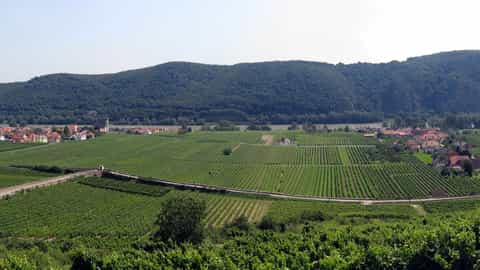
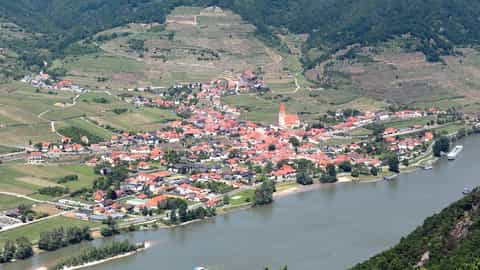
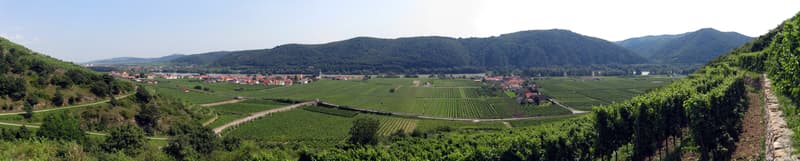
Signature landscape: The Eastern Alps define western and southern Austria, but for river cruisers the signature natural feature is the Wachau Valley: 36 kilometers of terraced vineyards, apricot orchards, forested hills, and ruined castles between Melk and Krems, recognized as a UNESCO cultural landscape.
Cuisine
- Wiener Schnitzel – breaded and fried veal or pork cutlet, traditionally served with potato salad.
- Tafelspitz – boiled beef with horseradish, apple sauce, and root vegetables.
- Apfelstrudel – warm apple strudel with cinnamon, raisins, and powdered sugar.
- Sachertorte – dense chocolate cake with apricot jam, born in Vienna's Hotel Sacher.
- Kaiserschmarrn – shredded caramelized pancake with plum compote.
- Knödel – savory or sweet dumplings, including potato, bread, or apricot varieties.
Architecture & heritage
- Baroque abbeys at Melk, Göttweig, and Klosterneuburg
- Habsburg imperial palaces: Schönbrunn, Belvedere, and the Hofburg
- Ringstrasse boulevard and its historicist public buildings
- Vienna Secession and Art Nouveau works by Otto Wagner and Gustav Klimt
- Alpine village architecture with onion-domed churches
- Wachau terraced vineyards, stone walls, and medieval town gates
Tips for American travellers
- Use 'Grüß Gott' as a greeting in Austria; 'Servus' is a friendly goodbye.
- Coffee is an experience, not a to-go cup; order a Melange and sit.
- Sunday closures are common; plan shopping ahead.
- Cash is still useful in small shops and for restroom fees, though cards are accepted in cities.
- Tap water in Vienna and most Austrian towns is potable.
- Austrians do not confuse Austria with Australia, and they appreciate visitors who do not either.
Major cities & destinations
Vienna Capital city
Imperial palaces, world-class museums, coffeehouse culture, and a vibrant contemporary scene make Vienna one of Europe's most rewarding capital cities.
Austria's most important Danube port. Most itineraries overnight here and use Vienna as a start, end, or gateway to Bratislava and Budapest.
Schönbrunn Palace & gardens Belvedere Palace (Klimt's The Kiss) St. Stephen's Cathedral Hofburg Imperial Palace Kunsthistorisches Museum Ringstrasse boulevard Prater & Riesenrad Vienna State OperaSalzburg Alpine cultural city
Mozart's birthplace, a magnificent Baroque Altstadt, and a fortress perched above a river make Salzburg an essential cultural pilgrimage.
Not a river port. Salzburg is reached by overland excursion from Linz, or more comfortably as a pre/post-cruise extension via Munich or Salzburg airport.
Festung Hohensalzburg Getreidegasse & Mozart birthplace Salzburg Cathedral Mirabell Palace & Gardens Hellbrunn Palace & trick fountains Mönchsberg lift and city viewpointsInnsbruck Tyrolean capital
An Alpine capital framed by the Nordkette mountain range, with Habsburg architecture and a dynamic outdoor culture.
Land extension from Munich, Salzburg, or Vienna; not on a river route.
Goldenes Dachl Hofburg & Hofkirche Bergisel Ski Jump Nordkette cable car (Hungerburgbahn) Ambras Castle Maria-Theresien-StraßeGraz Provincial capital & UNESCO old town
Austria's best-preserved historic center, a UNESCO City of Design, and a food-and-wine capital that few American travelers have discovered.
Not a Danube port. Graz is an easy rail extension from Vienna and a fine way to see a less touristy Austria.
Schlossberg & Clock Tower Kunsthaus Graz (the friendly alien) Murinsel Graz Cathedral & Mausoleum Landeszeughaus armory Eggenberg PalaceLinz Danube port city
A bold industrial past transformed into contemporary art and media culture; Linz is also an honest gateway to understanding 20th-century Austrian history.
The main Austrian stop after Passau. Ships dock near the center, with the Hauptplatz about a ten-minute walk away.
Hauptplatz & Trinity Column Ars Electronica Center Lentos Art Museum Mariendom (New Cathedral) Pöstlingberg mountain & pilgrimage church BrucknerhausMelk Danube riverside town
Melk Abbey rises above the Danube like a golden Baroque ark; the old town and riverfront are a perfect half-day introduction to the Wachau.
One of the Danube's most consistent Austrian ports, used by nearly every river cruise line sailing the route.
Melk Abbey (Stift Melk) Abbey Library & Marble Hall Melk old town Donauradweg (Danube bike path) Schallermühle & riverfront promenadeDürnstein Wachau village mooring
A postcard-perfect village of a blue Baroque tower, medieval castle ruins, and terraced apricot orchards.
One of the Danube's most photographed moorings. Ships often stay long enough for passengers to hike to the ruins or taste local wine.
Dürnstein Blue Church (Augustinian Priory) Kuenringer Castle ruins Stadtmauer & vineyards Danube promenade Weissenkirchen and Teisenhoferhof nearbyKrems UNESCO gateway river town
Medieval streets, contemporary art galleries, wine taverns, and the gateway to the entire Wachau wine region.
A common Austrian port on Passau–Vienna itineraries, with easy walking access from the ship to the old town.
Steiner Tor gate Kunsthalle Krems Gozzoburg Piaristenkirche Dominikanerkirche Kremser wine tavernsGrein Historic small river town
A quiet, unpolished Danube town with Austria's oldest private theater, handsome Biedermeier houses, and dramatic views of the Strudengau gorge.
A less common Austrian mooring used by some ships navigating the narrow, fast-flowing Strudengau section.
Greinburg Castle Stadtpfarrkirche & main square Greiner Theater Danube promenade Strudengau viewpointsHallstatt World Heritage village
The iconic lake-and-mountain village that has become a global symbol of Alpine beauty, with a salt-mining heritage dating back thousands of years.
Not a river port. Reached by overland excursion from Salzburg, Linz, or Vienna, usually as a full-day trip.
Hallstatt salt mine Hallstatt Skywalk viewpoint Marktplatz & lakeside Bone House (Beinhaus) Catholic Church & cemetery Dachstein Ice Cave and Skywalk (seasonal)Wachau Valley UNESCO cultural landscape
The 36-kilometer stretch of Danube between Melk and Krems is the scenic soul of Austria: terraced vineyards, apricot orchards, Baroque abbeys, and castle ruins.
The most beautiful river passage in Austria, usually sailed during daylight with commentary from the onboard cruise director.
Stift Göttweig Aggstein Castle ruins Spitz & Weissenkirchen vineyards Willendorf Venus site Strudengau gorge east of GreinCruise ports of call
Austria's Danube runs from the German border near Passau through Linz, the Wachau, and Vienna before crossing into Slovakia. Ships dock in the center of Vienna, at municipal quays in Linz, at village landings in the Wachau, and occasionally at smaller towns such as Grein. Because Austria is in the Schengen area, domestic Danube sailings involve no border formalities.
- Danube Classic: Passau–Vienna–Budapest, with Austrian calls at Linz, Grein, Melk, Dürnstein or Krems, and Vienna.
- Nuremberg–Vienna–Budapest and Bavarian–Austrian Danube, which adds Regensburg, Passau, and often a longer Wachau transit before Vienna.
Vienna Danube Classic: Passau–Vienna–Budapest; also Vienna–Budapest and Vienna–Passau loops
Vienna is Austria's only true capital river port. Ships typically moor at the Reichsbrücke/Handelskai area, with the historic center a short shuttle ride or taxi away. The riverfront is modern, while the Imperial core is walkable and vast.
Best for: First-time visitors, music lovers, imperial history, evening concerts, independent exploring.
Operators: AmaWaterways, A-Rosa River Cruises, Avalon Waterways, CroisiEurope, Emerald Cruises, Lueftner Cruises, Nicko Cruises, Riviera Travel, Scenic Luxury Cruises, Tauck River Cruising, Uniworld Boutique River Cruise Collection, Viking River Cruises
Linz Danube Classic: Passau–Budapest; Nuremberg–Budapest
Linz is a working port with a modern cultural quarter. The Hauptplatz is about a ten-minute walk from the docking area, and the city is a common base for Salzburg excursions.
Best for: Contemporary art, industrial heritage, honest engagement with 20th-century history, day trips.
Operators: AmaWaterways, A-Rosa River Cruises, Avalon Waterways, CroisiEurope, Emerald Cruises, Lueftner Cruises, Nicko Cruises, Riviera Travel, Scenic Luxury Cruises, Tauck River Cruising, Uniworld Boutique River Cruise Collection, Viking River Cruises
Krems Wachau segment: Passau–Vienna; Vienna–Budapest loops; Nuremberg–Budapest
Krems sits at the eastern end of the Wachau, with ships docking close to the old town and the medieval Steiner Tor gate. The wine village of Dürnstein is a short sail or bike ride away.
Best for: Wine, medieval streets, contemporary art galleries, cycling.
Operators: AmaWaterways, A-Rosa River Cruises, Avalon Waterways, CroisiEurope, Emerald Cruises, Lueftner Cruises, Nicko Cruises, Riviera Travel, Scenic Luxury Cruises, Tauck River Cruising, Uniworld Boutique River Cruise Collection, Viking River Cruises
Melk Danube Classic: Passau–Budapest; Wachau loops
The landing is at the foot of the abbey hill, with a path leading up through the old town to Stift Melk. Ships usually stop for a half day, which is enough for the abbey and a short walk.
Best for: Baroque architecture, the Wachau entrance, gentle walks, cycling.
Operators: AmaWaterways, A-Rosa River Cruises, Avalon Waterways, CroisiEurope, Emerald Cruises, Lueftner Cruises, Nicko Cruises, Riviera Travel, Scenic Luxury Cruises, Tauck River Cruising, Uniworld Boutique River Cruise Collection, Viking River Cruises
Dürnstein Wachau segment: Passau–Vienna; Vienna–Budapest loops
A small landing below the blue tower. Passengers can walk up to the castle ruins in 20 to 30 minutes. The village is compact, car-free, and surrounded by vineyards.
Best for: Postcard views, castle ruins, wine tasting, romantic afternoon.
Operators: AmaWaterways, A-Rosa River Cruises, Avalon Waterways, CroisiEurope, Emerald Cruises, Lueftner Cruises, Nicko Cruises, Riviera Travel, Scenic Luxury Cruises, Tauck River Cruising, Uniworld Boutique River Cruise Collection, Viking River Cruises
Grein Strudengau side stretch; some Passau–Vienna or Nuremberg–Vienna itineraries
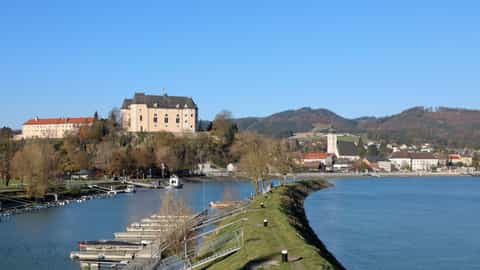
Grein is a quiet, unpolished Danube town near the Strudengau rapids. It is a less common stop, valued by travelers who prefer authenticity to souvenir shops.
Best for: Slow travelers, theater lovers, river navigation enthusiasts, small-group tours.
Operators: AmaWaterways, A-Rosa River Cruises, Avalon Waterways, CroisiEurope, Emerald Cruises, Lueftner Cruises, Nicko Cruises, Riviera Travel, Scenic Luxury Cruises, Tauck River Cruising, Uniworld Boutique River Cruise Collection, Viking River Cruises
Other possible Austrian Danube moorings include Ybbs an der Donau, Spitz, Weissenkirchen, and Klosterneuburg. They are typically used by smaller or boutique ships, or as evening anchoring spots, and are not profiled separately here.
All cruise ports in Austria
Ships visiting by type: 104 river
Showing 13 ports in Austria








River cruises & routes
Austria's river cruising is almost synonymous with the Danube. Ships enter from Passau in Germany, sail through Linz, the Wachau, and Vienna, and continue to Bratislava or Budapest. Some itineraries turn around in Vienna. The Wachau UNESCO stretch between Melk and Krems is the scenic highlight of any European river journey, and a few long routes use the Main-Danube Canal to connect the Rhine and the Black Sea through Austria.
| Route | Length | Countries | Highlights |
|---|---|---|---|
| Passau–Budapest (Classic Danube) | 8 days / 7 nights | Germany, Austria, Slovakia, Hungary | Linz, Melk, Dürnstein or Krems, Vienna, Bratislava, Budapest |
| Nuremberg–Budapest (Danube Canal & Wachau) | 10 days / 9 nights | Germany, Austria, Slovakia, Hungary | Regensburg, Passau, Linz, Melk, Vienna, Bratislava, Budapest |
| Vienna Round Trip with Wachau Focus | 6 days / 5 nights | Austria (with optional Bratislava call) | Vienna, Melk, Dürnstein, Krems, optional Bratislava |
Season: March through January; peak season is April through October. Late spring (May–June) and early autumn (September–October) offer the best combination of mild weather, vineyard color, and smaller crowds. Christmas market cruises run from late November through December.
Cruise lines visiting Austria
Austria is served by virtually every major river cruise line operating in Europe. They differ in included amenities, excursion style, ship size, and on-board atmosphere. Most sail the Passau–Budapest corridor; some include Vienna as a turnaround. Booking through a trusted travel advisor is often the best way to match the line to a traveler's preferred pace.
AmaWaterways
Danube itineraries from Passau to Budapest, Vienna to Budapest, and Christmas Market cruises.
Ships: AmaMagna, AmaLucia, AmaSerena
A-Rosa River Cruises
Danube sailings with a casual, active, and family-friendly style.
Ships: A-Rosa Luna, A-Rosa Stella
Avalon Waterways
Danube and Grand Danube itineraries with open-air balconies and flexible excursions.
Ships: Avalon Envision, Avalon Illumination
CroisiEurope
European-run Danube cruises from Passau, Vienna, and Budapest, often with French or multilingual ambiance.
Ships: MS Beethoven
Emerald Cruises
Danube cruises with included excursions and an active Discovery program.
Ships: Emerald Dawn, Emerald Sun
Lueftner Cruises
Danube and Wachau itineraries popular with German-speaking and international guests.
Ships: Amadeus Silver II, Amadeus Cara
Nicko Cruises
Danube sailings with a comfortable, mid-priced European style.
Ships: Spirit of the Danube
Riviera Travel
British-run Danube cruises emphasizing value, included excursions, and relaxed pacing.
Ships: MS Thomas Hardy
Scenic Luxury Cruises
All-inclusive luxury Danube cruises with private butler service and personalized excursions.
Ships: Scenic Ruby, Scenic Amber
Tauck River Cruising
Upmarket Danube itineraries with shore excursions, gratuities, and some meals included.
Ships: Tauck Inspire, Tauck Grace
Uniworld Boutique River Cruise Collection
Boutique, design-forward Danube cruises with all-inclusive amenities.
Ships: River Empress
Viking River Cruises
The most widely marketed Danube itineraries, including Passau–Budapest and Vienna–Budapest voyages.
Ships: Viking Astrild, Viking Egil
Most river cruise operators in Austria are part of the same global booking market, but style varies: all-inclusive luxury is offered by Scenic, Tauck, and Uniworld; contemporary value by Avalon, A-Rosa, and Emerald; and classic European intimacy by Lueftner, Nicko, and Riviera Travel. Per-port operator lists match the master list above.
Planning & advice
This reader is at a stage of life where travel should feel expansive, not exhausting. Austria delivers exactly that: the Danube's gentle pace, a wine terrace for the afternoon, an orchestra for the evening, and no need to move hotels every night. It is safe, legible, and genuinely grand without being intimidating.
For the American traveller
- Choose a ship with flexible excursion groups: small-group, independent, and slow-walking options are standard on most lines.
- You are not being herded. You can opt out of any excursion and stay aboard; sailing through the Wachau from the sundeck is often better than any coach tour.
- Ask about docking distances and shuttle buses. Vienna's Handelskai is not central; some lines provide shuttles, others make the center a short walk away.
- Do not overpack. River ship cabins are compact and some line have soft-sided luggage limits. Laundry service is available but expensive.
- Keep your passport accessible. Although Schengen area rules apply, excursions to Bratislava or Budapest cross international borders.
- If you have mobility concerns, contact the line before booking. Dürnstein and Melk involve hills and cobblestones.
Excursion planning
- Book one shore excursion per port and leave time to sit in a coffeehouse, wander a wine tavern, or simply watch the river.
- For the Wachau, choose a morning sail if possible; the light is better, the river is calmer, and the sun is behind the vineyards.
- Take the e-bike option if you cycle occasionally. The Donauradweg is flat, well-marked, and extremely rewarding.
- At Melk, visit the abbey before the midday tour buses. At Dürnstein, hike to the castle ruins early.
- In Vienna, consider an evening concert rather than a daytime museum rush; the city is magical after dark.
- Do not book a full-day Salzburg excursion from Linz unless you are comfortable with a long coach round trip. An independent rail trip from Vienna is easier and less rushed.
The verdict
Austria is the beating heart of a Danube cruise. It gives the milestone traveler a compact world of imperial palaces, vineyard-covered valleys, fairy-tale villages, and world-class music, all with a civilized rhythm that rewards both planned excursions and unhurried wandering. For a first visit or a return journey, Austria is the most rewarding single-country addition to any European river itinerary.
Sources
- Encyclopaedia Britannica — Austria (accessed 2026-09-09)
- CIA World Factbook — Austria (accessed 2026-09-09)
- Austrian National Tourist Office — Austria.info – Official Travel Guide (accessed 2026-09-09)
- Vienna Tourist Board — Official Vienna City Travel Guide (accessed 2026-09-09)
- Wachau Tourism — Wachau Nibelungengau Strudengau (accessed 2026-09-09)
- Salzburg Tourism — Visit Salzburg (accessed 2026-09-09)
- UNESCO World Heritage Centre — Wachau Cultural Landscape (accessed 2026-09-09)
- Vienna Philharmonic — Official Website (accessed 2026-09-09)