China Cruise Ports & Cruise Guide
Total 5
This page is an overview of the 5 cruise ports in China, covering ocean cruises. Cruises start and end at Tianjin, Dalian, Sanya. 21 cruise ships visit China across 5 ports. See live sailings and availability on the China cruises page.


China is a monumental cruise destination: ocean homeports in Shanghai, Tianjin, Hong Kong, and Shenzhen connect to Japan, Korea, Vietnam, and Taiwan, while Yangtze River cruises traverse the dramatic Three Gorges. The country's ancient wonders—the Great Wall, Forbidden City, and Terracotta Army—are unmatched anywhere. Travel requires a visa, a VPN for internet access, and patience with organized touring, but the rewards are profound for milestone travelers.
Country facts
History
China's recorded history spans more than 3,000 years. After imperial dynasties, the 1911 revolution established a republic; civil war led to the People's Republic in 1949. Market reforms since 1978 transformed China into the world's second-largest economy. For travelers, the layers of ancient and modern China are visible in every city.
China is an authoritarian state with strict controls on speech, press, and the internet. Visitors should expect censorship (VPN required for Google, Facebook, Instagram, WhatsApp), surveillance, and restrictions in Tibet and Xinjiang. Human-rights concerns are well documented. Travel is generally safe and organized, but independent political activity is not tolerated. The government's zero-COVID policy ended in early 2023, but entry rules can change quickly.
Culture
Chinese identity is rooted in a continuous written language, Confucian values, family loyalty, and pride in ancient achievements. Regional identities are strong; Cantonese, Shanghainese, and Sichuanese cultures differ sharply. For visitors, the 'Middle Kingdom' sense of civilizational uniqueness is palpable.
Music: Traditional opera (Peking opera, Cantonese opera), guzheng and erhu instrumental music, folk songs; modern C-pop and rock; a thriving classical music scene in major cities.
Cuisine
- Peking duck (Beijing): crispy skin, pancakes, hoisin sauce
- Dim sum (Hong Kong/Guangzhou): steamed dumplings, buns, rice rolls
- Sichuan hotpot (Chengdu/Chongqing): numbing chili broth, raw ingredients cooked at table
- Xi'an noodles and roujiamo: hand-pulled noodles, lamb stew, 'Chinese burger'
- Shanghai xiaolongbao: soup dumplings
- Cantonese roast goose and congee
Tips for American travellers
- Visa required for most U.S. citizens; apply well in advance; passport must be valid 6+ months; some cities offer 144-hour visa-free transit for certain nationalities.
- Download a reliable VPN before arrival; Google, Facebook, Instagram, WhatsApp, and many news sites are blocked.
- Mobile payments (Alipay/WeChat Pay) are ubiquitous; carry some cash for small vendors; international credit cards accepted in upscale hotels and some stores.
- Tipping is not customary; hotels and tour companies may add service charges.
- Learn basic Mandarin phrases; English signage exists at major tourist sites but is limited elsewhere.
- Air quality can be poor in winter; bring masks if sensitive.
- Bargaining is common in markets but not in shops; be polite.
- Drink bottled or boiled water; avoid tap water; street food is generally safe if hot and freshly cooked.
- Public restrooms may not have toilet paper; carry tissues.
- Respect rules at temples and historical sites; no flash photography where prohibited.
Major cities & destinations
Beijing Capital city
China's political and cultural heart, home to the Forbidden City, Temple of Heaven, and the Great Wall.
Gateway via Tianjin port for ocean cruises; not a river port but essential pre/post extension.
Forbidden City Great Wall (Mutianyu/Badaling) Temple of Heaven Summer Palace HutongsShanghai Metropolis
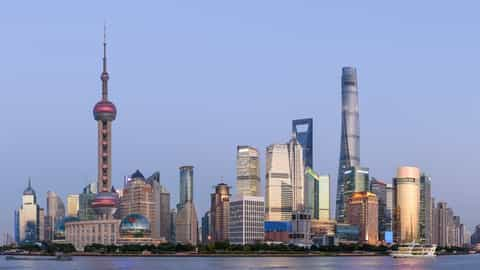
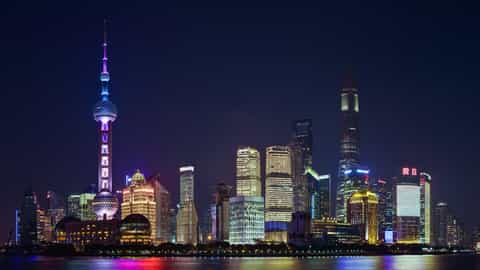
China's most dynamic city, blending colonial Bund architecture with futuristic Pudong skyscrapers.
Busiest ocean cruise homeport; Wusongkou International Cruise Terminal; some Yangtze itineraries end here.
The Bund Yu Garden Shanghai Tower Nanjing Road French ConcessionXi'an Ancient capital
Home of the Terracotta Army and the starting point of the Silk Road.
Not a cruise port; popular pre/post extension for Yangtze or ocean cruises.
Terracotta Army City Wall Muslim Quarter Big Wild Goose PagodaChengdu Panda & cuisine hub
Giant pandas, Sichuan opera, and some of China's boldest cuisine.
Not a cruise port; often paired with Chongqing for Yangtze cruises.
Giant Panda Breeding Research Base Leshan Giant Buddha Jinli Street Sichuan Opera HouseChongqing River cruise gateway
A dramatic mountain city where the Yangtze and Jialing rivers meet.
Main embarkation port for Yangtze Three Gorges cruises.
Ciqikou Old Town Hongya Cave Yangtze River cableway Three Gorges MuseumGuilin/Yangshuo Karst landscape
Iconic limestone peaks, the Li River, and rural scenery that has inspired Chinese painting for centuries.
Li River cruise between Guilin and Yangshuo; often combined with Yangtze river cruise itineraries.
Li River Reed Flute Cave Longji Rice Terraces West StreetHong Kong Special Administrative Region
A world-class harbor city with Cantonese culture, skyline views, and exceptional dining.
Kai Tak Cruise Terminal and Ocean Terminal; homeport for Southeast Asia and Japan cruises.
Victoria Harbour Victoria Peak Big Buddha Temple Street Night Market Star FerryGuangzhou Cantonese cultural hub
A historic trade city with Cantonese cuisine, colonial architecture, and the Pearl River.
Nansha Cruise Home Port; cruises to Southeast Asia and Vietnam.
Canton Tower Shamian Island Chen Clan Ancestral Hall Pearl River night cruiseHangzhou Lake & tea city
West Lake, Longjing tea fields, and classical Chinese gardens.
Near Shanghai; often a pre/post extension for ocean or Yangtze cruises.
West Lake Lingyin Temple Longjing tea fields Grand CanalSanya Tropical resort
China's answer to a tropical beach getaway, on Hainan Island.
Port for coastal cruises and domestic resort itineraries.
Yalong Bay Tianya Haijiao Nanshan TempleCruise ports of call
China's ocean cruise activity centers on Shanghai, Tianjin, Hong Kong, Shenzhen, and Guangzhou. Homeport itineraries typically loop to Japan, South Korea, Taiwan, Vietnam, and the Philippines. The cruise season is strongest from spring through autumn, with many ships repositioning to Southeast Asia or Australia in winter.
- Japan & South Korea loops from Shanghai, Tianjin, and Qingdao
- Southeast Asia & Vietnam from Hong Kong, Shenzhen, and Guangzhou
Shanghai Japan & South Korea loops, China coastal, occasional longer Asia
China's busiest cruise hub, located at Wusongkou in Baoshan district, about 25 km from the city center; also Shanghai Port International Cruise Terminal near downtown for smaller ships.
Best for: First-time cruisers, families, combining with Shanghai sights
Operators: Royal Caribbean, MSC Cruises, Costa Cruises, Celebrity Cruises, Princess Cruises, Holland America Line, Norwegian Cruise Line
Tianjin Japan & South Korea loops, China coastal
Located in Tianjin Binhai New Area, about 2.5 hours by car or high-speed rail from Beijing; serves as Beijing's cruise gateway.
Best for: Travelers combining an ocean cruise with Beijing landmarks
Operators: Royal Caribbean, Costa Cruises, MSC Cruises, Celebrity Cruises
Hong Kong Southeast Asia, Vietnam, Philippines, Taiwan, Japan; China coastal
Kai Tak on the former airport runway offers spectacular harbor views; Ocean Terminal at Tsim Sha Tsui serves smaller ships.
Best for: Sophisticated travelers, food lovers, combining cruise with Hong Kong/Macau
Operators: Royal Caribbean, Celebrity Cruises, Princess Cruises, Holland America Line, Norwegian Cruise Line, MSC Cruises, Costa Cruises
Xiamen Taiwan, Japan, Southeast Asia, China coastal
Historic port city on the Taiwan Strait; cruise terminal near the Gulangyu Island ferry.
Best for: Relaxed pace, colonial architecture, Taiwanese connections
Operators: Costa Cruises, Royal Caribbean, Celebrity Cruises, MSC Cruises
Shenzhen Southeast Asia, Vietnam, Japan, China coastal
Modern terminal in Shekou, Nanshan district; convenient to Hong Kong and Guangzhou via ferry or high-speed rail.
Best for: Tech-savvy travelers, gateway to the Pearl River Delta
Operators: MSC Cruises, Costa Cruises, Royal Caribbean, Celebrity Cruises
Guangzhou Southeast Asia, Vietnam, Philippines, China coastal
Nansha terminal in southern Guangzhou; also Pearl River cruises from the city center.
Best for: Cantonese cuisine, historic trade city
Operators: Costa Cruises, MSC Cruises, Royal Caribbean
Qingdao Japan, South Korea, China coastal
German-influenced port city on the Yellow Sea; famous for beer and seaside promenades.
Best for: Summer cruising, beer lovers
Operators: Costa Cruises, Royal Caribbean, Celebrity Cruises
Dalian Japan, South Korea, China coastal
Northern port city in Liaoning; Russian and Japanese architectural influences.
Best for: Scenic coastline, seafood
Operators: Costa Cruises, Royal Caribbean
All cruise ports in China
Ships visiting by type: 21 ocean 2 expedition

River cruises & routes
The Yangtze River is China's classic cruise route, especially the Three Gorges section between Chongqing and Yichang. Ships are smaller, often with balconies, and pass through dramatic gorges, ancient towns, and the Three Gorges Dam. Some itineraries extend downstream to Wuhan, Nanjing, and Shanghai, but the core experience is the upper Yangtze.
| Route | Length | Countries | Highlights |
|---|---|---|---|
| Chongqing to Yichang (downstream) | 4 nights | China | Chongqing embarkation, Fengdu Ghost City, Qutang Gorge, Wu Gorge, Shennong Stream small boat, Xiling Gorge, Three Gorges Dam, Yichang disembarkation |
| Yichang to Chongqing (upstream) | 5 nights | China | Reverse of downstream; includes Three Gorges Dam before the gorges; more time to adjust to the slower upstream pace |
| Chongqing to Shanghai (extended) | 10-14 nights | China | Passes through Wuhan, Yellow Crane Tower, Nanjing, Yangzhou, ends in Shanghai; less common, often on premium ships or charters |
Season: March–November is best; April–May and September–October have mild weather and clear views. Summer is hot and humid with higher water; winter is cold and foggy but cheaper. Ships operate year-round, but some sailings pause during Chinese New Year.
Cruise lines visiting China
China is served by international ocean lines homeporting in Shanghai, Tianjin, Hong Kong, and Shenzhen, plus dedicated Yangtze river operators. International river lines are limited; most Yangtze ships are operated by Chinese companies or Viking's China fleet.
Royal Caribbean International
Japan/Korea loops from Shanghai and Tianjin; occasional Southeast Asia from Hong Kong
Ships: Spectrum of the Seas, Ovation of the Seas, Quantum of the Seas
MSC Cruises
Japan/Korea from Shanghai; Southeast Asia from Shenzhen and Hong Kong
Ships: MSC Bellissima, MSC Splendida, MSC Magnifica
Costa Cruises
Japan/Korea from Shanghai and Tianjin; Southeast Asia from Guangzhou and Hong Kong
Ships: Costa Serena, Costa Deliziosa, Costa Firenze
Celebrity Cruises
Asia itineraries including China, Japan, Vietnam, and Thailand
Ships: Celebrity Solstice, Celebrity Millennium
Princess Cruises
Japan/Korea from Shanghai; Asia cruises from Hong Kong
Ships: Majestic Princess, Diamond Princess
Holland America Line
Asia and China coastal itineraries; world cruise segments
Ships: Westerdam, Volendam, Noordam
Norwegian Cruise Line
Japan/Korea from Shanghai and Tianjin; Asia from Hong Kong
Ships: Norwegian Joy, Norwegian Spirit
Viking Cruises (river)
Yangtze River between Chongqing and Yichang, with extensions
Ships: Viking Emerald, Viking Yangtze
Century Cruises (river)
Yangtze Three Gorges between Chongqing and Yichang
Ships: Century Legend, Century Paragon, Century Glory
Victoria Cruises (river)
Yangtze Three Gorges
Ships: Victoria Anna, Victoria Jenna, Victoria Sabrina, Victoria Queen, Victoria Empress
President Cruises (river)
Yangtze Three Gorges
Ships: President No. 1, President No. 2, President No. 3, President No. 5, President No. 6, President No. 7, President No. 8
Ocean cruise season in China is strongest May–October; many ships reposition to Australia or Southeast Asia in winter. River cruise ships are smaller and often include shore excursions in the fare. Book through a travel advisor familiar with China logistics.
Planning & advice
China offers a once-in-a-lifetime combination of ancient wonders, modern megacities, and dramatic river scenery. For milestone travelers, a Yangtze cruise plus Beijing, Xi'an, and Shanghai is a classic bucket-list itinerary. Ocean cruises from Shanghai or Hong Kong add Japan, Korea, and Vietnam without constant packing. Be prepared for cultural differences, internet restrictions, and a more structured touring style; the payoff is extraordinary.
For the American traveller
- Passport must be valid at least 6 months beyond entry; a visa is required for most U.S. citizens. Apply at a Chinese embassy or consulate; processing can take 1-2 weeks. Some cities offer 144-hour visa-free transit for certain nationalities with an onward ticket.
- Entry rules can change quickly; check the U.S. State Department and Chinese embassy before booking.
- Health: no mandatory COVID vaccination currently, but requirements can change. Consider travel insurance with medical evacuation.
- Internet: Google, Facebook, Instagram, WhatsApp, Twitter, and many news sites are blocked. Install a reliable VPN before departure; free VPNs often fail.
- Money: Alipay and WeChat Pay are dominant; link international cards. Some ATMs accept Visa/Mastercard; carry small RMB for taxis and markets.
- Language: English is not widely spoken outside hotels and major attractions; download an offline translation app before you go.
- Tipping is not expected; some tour guides may appreciate small gifts, but it is not required.
- Cultural etiquette: remove shoes in homes; avoid public displays of affection; be respectful at temples; use both hands to give or receive cards.
- Safety: China has low violent crime; petty theft occurs in tourist areas. Avoid political discussions and do not photograph military or government buildings.
- Air quality: monitor AQI; bring N95 masks if sensitive; hotels often have air purifiers.
- Food and water: drink bottled or boiled water; avoid raw vegetables and ice in street stalls; carry hand sanitizer.
Excursion planning
- Book shore excursions through the cruise line for first-time visits; they handle visas, language, and logistics. Independent tours are possible in Hong Kong and Shanghai but require planning.
- In Beijing, choose the Mutianyu section of the Great Wall over Badaling for fewer crowds; consider a private driver for flexibility.
- Yangtze river cruises include shore excursions; some, like Shennong Stream and Three Gorges Dam, require physical activity. Choose a cabin with a balcony for the best views.
- Allow pre- and post-cruise days in embarkation cities; flight delays and traffic are common.
- Pack for variable weather; river gorges can be cool even in summer. Comfortable walking shoes are essential.
- Use high-speed rail between Beijing, Shanghai, Xi'an, and Chengdu; it is efficient and comfortable, but book tickets via a travel agent or app.
- For Hong Kong, U.S. citizens do not need a visa for 90 days; but if entering mainland China from Hong Kong, a Chinese visa is required.
The verdict
Recommended for adventurous, culturally curious travelers who accept organized touring and logistical friction. Best experienced as a cruise-based itinerary—Yangtze or coastal—with pre- and post-cruise hotel stays. Not ideal for travelers seeking independent spontaneity, unrestricted internet, or political openness.
Sources
- CIA World Factbook — China (accessed 2026-09-09)
- Encyclopaedia Britannica — China (accessed 2026-09-09)
- U.S. Department of State — China International Travel Information (accessed 2026-09-09)
- Royal Caribbean International — China Cruises (accessed 2026-09-09)
- Viking River Cruises — China River Cruises (accessed 2026-09-09)
- TravelChinaGuide — Yangtze River Cruise Guide (accessed 2026-09-09)
- Hong Kong Tourism Board — Cruises in Hong Kong (accessed 2026-09-09)
- China National Tourist Office — Travel to China (accessed 2026-09-09)