Cook Islands Cruise Ports & Cruise Guide
Total 3
This page is an overview of the 3 cruise ports in Cook Islands, covering ocean cruises. 23 cruise ships visit Cook Islands across 3 ports. See live sailings and availability on the Cook Islands cruises page.


The Cook Islands offer a rare, unhurried slice of Polynesia for milestone travellers who want to feel far away without feeling managed. There are no mega-ships, no pier-side souvenir villages, and no crowded tenders to disgorge thousands of passengers. Instead, small expedition and luxury cruise lines visit a handful of islands, anchoring in turquoise lagoons and relying on local boats and local guides. Rarotonga provides cultural context, Aitutaki delivers one of the world's most beautiful lagoons, and less-visited islands like Atiu and Mangaia reward travellers who are curious, mobile, and comfortable with the unexpected.
Country facts
History
The Cook Islands were settled by Polynesian voyagers around 1,000 years ago, experienced European contact and Christianisation in the 18th and 19th centuries, became a British protectorate in 1888, and were annexed to New Zealand in 1901. Since 1965 the islands have been self-governing in free association with New Zealand, with their own citizenship and control over most internal affairs.
This is not a simple resort history. Missionaries and colonial administrators suppressed aspects of Cook Islands Māori culture, and the wider Pacific suffered from blackbirding and forced-labour schemes. Many Cook Islanders left for New Zealand, creating a diaspora larger than the resident population. Economic dependence on tourism and New Zealand aid is real, and climate change is a serious threat to low-lying atolls.
Culture
Cook Islands Māori culture is an Eastern Polynesian tradition with deep connections to Aotearoa New Zealand, Tahiti, and Samoa. Family, village, church, and land remain central. The Māori language is spoken by many residents, and cultural revival is visible in dance, weaving, and voyaging stories.
Music: Drum-driven pate ensembles, ukulele, string-band harmonies, and gospel choir music are everywhere. Traditional chants and contemporary Pacific pop both thrive.
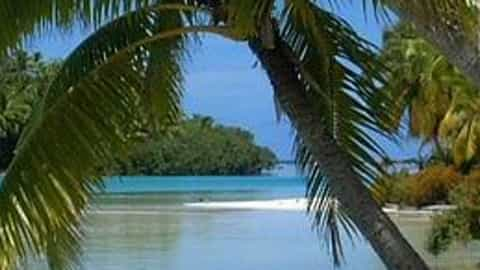
Signature landscape: Aitutaki's vast turquoise lagoon—a calm, multi-shaded expanse of water ringed by coral motu and framed by volcanic peaks.
Cuisine
- Ika mata — raw reef fish cured in lime and coconut cream
- Rukau — taro leaves cooked in coconut milk
- Umu-cooked pork, fish, and root vegetables
- Fresh tropical fruit — pawpaw, mango, pineapple, banana, coconut
- Taro, breadfruit, kumara, and taro chips
- Atiu coffee, locally grown and roasted
Architecture & heritage
- 19th-century Cook Islands Christian Church (CICC) buildings
- Avarua's colonial-era stores and the Para O Tane Palace
- Traditional marae (ceremonial stone platforms and sites)
- Tivaevae quilting and woven pareu (cloth and mats)
Tips for American travellers
- Sunday is sacred and quiet: dress modestly, avoid loud activities, and do not expect shops or tours to operate normally.
- Book inter-island flights and boat transfers well in advance; weather can cancel them at short notice.
- Use reef-safe sunscreen, wear a rash guard, and never stand on coral; lagoon life is fragile.
- Tipping is not customary; a sincere thank-you, a small gift, or a donation to a village project is more appropriate.
- Expect 'island time': schedules are flexible, and patience is part of the experience.
- Carry New Zealand dollars in cash; smaller islands and local stalls may not accept cards.
Major cities & destinations
Rarotonga Main island and cruise hub
The largest and most developed island, circled by a coastal ring road and fringed by a reef. Avarua, the capital, offers museums, markets, and churches, while the interior rises into rainforest-covered volcanic peaks.
Primary port of call for most itineraries. Ships anchor offshore and tender passengers to Avatiu Harbour, near Avarua; the port is walkable and easy for independent exploration.
Avarua Harbour and town Cook Islands National Museum Cook Islands Christian Church (CICC) in Avarua Punanga Nui Market Muri Lagoon and its four motu Te Rua Manga (The Needle) lookoutAitutaki Lagoon island and secondary cruise call
Home to one of the world's most photogenic lagoons, Aitutaki is a place of impossibly blue water, palm-fringed motu, and relaxed village life. It is the classic South Pacific postcard made real.
Small-ship and expedition vessels anchor in the lagoon or off Arutanga Wharf; passengers transfer by tender or local boat. The lagoon is the main excursion venue.
Aitutaki Lagoon and One Foot Island (Tapuaetai) Arutanga Wharf and village Aitutaki Marine Research Centre Honeymoon Island and Moturakau Aitutaki CICC church Ancient marae sitesAtiu Raised makatea island
For travellers who want wild, unpolished Cook Islands: limestone caves, endemic kopeka swiftlets, coffee plantations, and a strong, independent community. Atiu feels a century away from resort life.
Occasional expedition shore call with no dock; landings are by small boat with local guidance. Not on standard round-trip cruise rotations.
Anatakitaki Cave and the kopeka swiftlet Atiu Coffee Plantation Taunganui Harbour Atiu's white-sand and rocky beaches Marae and village churchesMangaia Oldest volcanic island
The least-visited of the main Southern Cook Islands, Mangaia has dramatic makatea cliffs, freshwater caves, and deep Polynesian history. It is the right destination for independent-minded travellers who want to earn their discoveries.
Rare expedition call; anchoring depends on weather and local approval. Shore excursions are led by islanders rather than cruise-line staff.
Lake Tiriara, a brackish inland lake Kauvaira Cave Mangaia's makatea cliffs and coastal platforms Oneroa village CICC church in OneroaCruise ports of call
Cruising in the Cook Islands is expedition and small-ship cruising, not mega-ship cruising. There are no large deep-water cruise terminals; nearly every call involves anchoring and tendering. Weather is the deciding factor, and itineraries can change with little notice. The rewards are uncrowded lagoons, genuine village hospitality, and shore experiences arranged by local operators.
- Society Islands ↔ Southern Cook Islands — 10- to 14-night loops from Tahiti or Papeete to Moorea, Bora Bora, and sometimes Raiatea, then Rarotonga and Aitutaki.
- Longer South Pacific expedition voyages from New Zealand, Fiji, or French Polynesia that include remote atolls such as Palmerston, Manihiki, or Penrhyn, as well as the Southern Cooks.
Rarotonga route_family_one
The main cruise gateway. Vessels anchor off Avarua or Avatiu and tender passengers ashore. Avatiu Harbour is small, with a working wharf and a short walk into Avarua's shops, restaurants, and cultural sites.
Best for: First-time visitors, cultural walking, reef-protected snorkelling, and independent exploration.
Operators: Paul Gauguin Cruises, Windstar Cruises, Ponant, Oceania Cruises, Heritage Expeditions
Aitutaki route_family_one
Cruise ships anchor in or near Aitutaki's lagoon and tender passengers to Arutanga Wharf or a white-sand landing. The lagoon's protected water usually allows for excursions even when ocean swells are strong.
Best for: Lagoon cruising, snorkelling, sandbar picnics, and the iconic One Foot Island experience.
Operators: Paul Gauguin Cruises, Windstar Cruises, Ponant, Heritage Expeditions
Atiu route_family_two
Atiu has no harbour for cruise ships. Vessels anchor offshore and land passengers by inflatable boat at Taunganui Harbour or another sheltered point. Local guides are essential and often meet the ship personally.
Best for: Caves, birdlife, coffee plantation visits, and authentic village culture away from any tourist infrastructure.
Operators: Ponant, Heritage Expeditions
Palmerston route_family_two
Palmerston is one of the most isolated inhabited atolls in the world, with a small community descended from an English settler and Polynesian wives. Expedition ships may call when seas allow, offering an unforgettable glimpse of subsistence island life.
Best for: Genuine remoteness, island community interaction, wild ocean scenery, and snorkelling in unspoiled water.
Operators: Heritage Expeditions
Avatiu Harbour (Rarotonga) and Arutanga (Aitutaki) are the only regularly used cruise landing points. All other Cook Islands calls are expedition-style landings from inflatable boats or local craft. There are no cruise piers, no port shopping complexes, and no guaranteed schedules in rough weather.
All cruise ports in Cook Islands
Ships visiting by type: 21 ocean 3 expedition
Showing 3 ports in Cook Islands

River cruises & routes
The Cook Islands are not a river-cruise destination: there are no navigable rivers and no riverboats. This section is included to explain that the only cruising here is expedition-style, open-ocean small-ship sailing, usually combined with French Polynesia.
| Route | Length | Countries | Highlights |
|---|---|---|---|
| Tahiti (Papeete) – Moorea – Bora Bora – Aitutaki – Rarotonga | 11–14 | French Polynesia & Cook Islands | Volcanic peaks, coral gardens, lagoon snorkelling, Polynesian culture, and open-sea passages on a small expedition ship. |
Season: May–October is the drier, cooler, and safer cruising season; November–April is the wet/cyclone season, and many expedition lines reposition or omit the Cook Islands.
Cruise lines visiting Cook Islands
No major mass-market line keeps a ship based in the Cook Islands. Cruise calls are offered by luxury and expedition lines as part of South Pacific itineraries, usually in combination with French Polynesia. Schedules change year to year, so travellers should verify with the cruise line before booking.
Paul Gauguin Cruises
Tahiti–Society Islands–Cook Islands voyages on select departures.
Ships: The Gauguin
Ponant
Luxury expedition itineraries across French Polynesia and the wider South Pacific, with occasional Cook Islands calls.
Oceania Cruises
Occasional world-cruise and Grand Voyage segments that call at Rarotonga.
Heritage Expeditions
Remote Pacific expedition cruises, including possible landings in the Southern and Northern Cook Islands.
Ships: Heritage Adventurer
Only small and mid-size ships call here. Tenders, Zodiacs, and local whale boats are the standard transfer; passengers with limited mobility should check tender accessibility carefully before booking.
Planning & advice
Milestone travellers who fear being herded will find the Cook Islands a deliberate antidote to crowd-based tourism. There is no pier-side commercial strip, no mass-market tendering operation, and no sense of being processed. The reward is a slower, more personal encounter with Polynesian culture and some of the most beautiful lagoon water on earth.
For the American traveller
- Check current entry requirements with Cook Islands Immigration before travel; U.S. citizens generally receive a 31-day visitor permit on arrival, but the rules can change and an online travel declaration may be required.
- Medical facilities are limited, especially outside Rarotonga; bring prescription medications and arrange travel insurance that includes medical evacuation.
- Carry New Zealand dollars in cash. Cards are accepted at larger hotels, restaurants, and tour operators on Rarotonga and Aitutaki, but not on remote islands.
- Mobile data exists on Rarotonga and Aitutaki but is patchy elsewhere; download maps and reading material before you arrive.
- Respect the marine environment: use reef-safe sunscreen, do not touch coral, and take all rubbish back to the ship.
- Cyclone season runs November–April; be flexible with cruise itineraries and travel insurance.
Excursion planning
- Book shore excursions through the ship's concierge when possible; local operators on small islands can be limited and may not hold space for walk-ups.
- Pack water shoes, sun protection, a dry bag, and a light rain jacket; tender landings may be wet and uneven.
- Schedule water activities in the morning, before afternoon trade winds build.
- Expect active, uneven terrain on Atiu and Mangaia; those excursions are not suitable for wheelchairs or travellers with serious mobility limitations.
- Ask before taking photographs of people, especially in villages and churches, and always remove your hat when entering a church.
- Treat Sunday as a quiet day: no fishing, no loud beach parties, and modest clothing in public spaces.
The verdict
For the right traveller, the Cook Islands are the ideal milestone destination: uncrowded, visually extraordinary, and culturally rich, but best visited on a small ship with flexible plans. Come for the lagoon, stay for the people, and accept that the islands will set the pace, not your itinerary.
Sources
- CIA World Factbook — Cook Islands (accessed 2026-09-09)
- Encyclopaedia Britannica — Cook Islands (accessed 2026-09-09)
- Cook Islands Tourism — Welcome to the Cook Islands (accessed 2026-09-09)
- Lonely Planet — Cook Islands (accessed 2026-09-09)
- Cruise Critic — Cook Islands Cruise Ports (accessed 2026-09-09)