Curaçao Cruise Ports & Cruise Guide
Total 1
This page is an overview of the 1 cruise ports in Curaçao, covering ocean cruises. 84 cruise ships visit Curaçao across 1 ports. See live sailings and availability on the Curaçao cruises page.
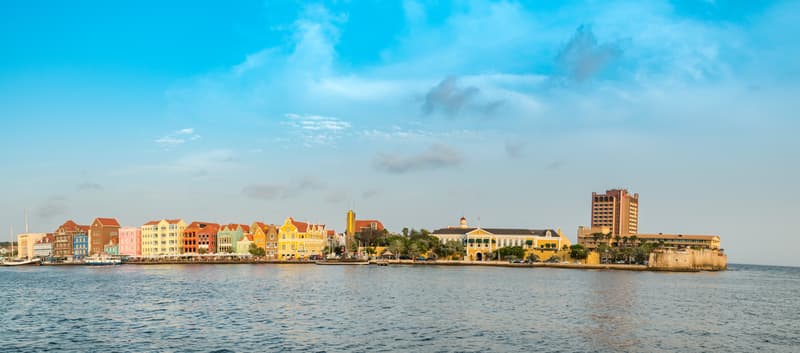
Curaçao is a Dutch-Caribbean island country with the UNESCO-listed harbor city of Willemstad, dry desert hills, and some of the southern Caribbean’s best snorkeling. Cruise ships dock within walking distance of the historic center. Mature travelers can avoid crowds by walking early, hiring private guides, and taking small-group beach and nature trips.
Country facts
History
Curaçao was inhabited by Caquetio and Arawak peoples before Spanish arrival in 1499. The Dutch West India Company captured it in 1634 and turned it into a major trading and slave-trade hub. Plantations, salt pans, and a historic Sephardic Jewish community shaped the island. After the end of slavery in 1863 and the later rise of the oil refinery, Curaçao developed into an autonomous country within the Kingdom of the Netherlands in 2010.
Curaçao's historic prosperity depended heavily on the transatlantic slave trade and plantation slavery. Travelers should visit museums such as Kura Hulanda and consider this history alongside the island's colorful beauty.
Culture
A multicultural Caribbean nation with African, Dutch, Jewish, Latin American, and Asian influences, expressed through Papiamentu, Carnival, and everyday life.
Music: Tumba and tambú are Afro-Curaçaoan styles; dande is a New Year's tradition; today you will also hear salsa, soca, and Dutch-influenced pop.
Signature landscape: The windward north coast's dramatic limestone cliffs, blowholes at Shete Boka, and the Blue Room sea cave, set against an arid landscape of towering cacti.
Cuisine
- Keshi yena (baked cheese stuffed with meat)
- Stoba (goat or beef stew)
- Funchi (cornmeal pudding)
- Arepa di pampuna (pumpkin pancake)
- Curaçao liqueur, the blue orange liqueur named for the island
Architecture & heritage
- UNESCO-listed Historic Area of Willemstad, Inner City and Harbour
- Handelskade's Dutch gabled facades
- Queen Emma Pontoon Bridge
- Mikvé Israel-Emanuel Synagogue
- Fort Amsterdam and Waterfort
- Landhuisen (former plantation houses) in the countryside
Tips for American travellers
- English is widely spoken; learning a Papiamentu greeting such as 'Bon bini' helps.
- U.S. dollars are accepted almost everywhere, but get a little ANG for small vendors.
- Tap water in Willemstad is desalinated and generally safe to drink; bottled water is available if you prefer.
- Reef-safe sunscreen and water shoes are essential for beaches and snorkeling.
- Rental cars drive on the right; roads are well-marked but can have potholes.
- Dress smartly when visiting churches and the synagogue.
Major cities & destinations
Willemstad Capital city; UNESCO-listed historic harbor
Colorful Dutch colonial architecture, the floating market, Queen Emma Bridge, and museums all sit within a walkable city center.
Main cruise port; large ships dock at the Mega Cruise Terminal in Otrobanda, a short walk across the Queen Emma Bridge from Punda.
Queen Emma Pontoon Bridge Handelskade waterfront Punda and Otrobanda historic districts Mikvé Israel-Emanuel Synagogue Fort Amsterdam Floating Market Kura Hulanda MuseumWestpunt Northwest village and national park gateway
Dramatic wild coast, cactus-covered hills, and excellent snorkeling beaches at the far northwest end of the island.
Day-trip destination from Willemstad; best reached by rental car or private guide, not within walking distance of the port.
Christoffel National Park Shete Boka National Park Playa Knip / Kenepa Grandi Playa Jeremi Westpunt villageJan Thiel / Mambo Beach Southeast beach resort strip
White-sand beaches, beach clubs, calm water, and water sports, all within a short drive from Willemstad.
Common excursion from the port; about 15–20 minutes by taxi or boat, popular for a half-day beach escape.
Mambo Beach Boulevard Jan Thiel Beach Spanish Water lagoon Curaçao Sea Aquarium Chogogo Resort beachKlein Curaçao Uninhabited island off the southeast coast
Pristine white sand, a historic lighthouse, sea turtles, and vibrant reefs make it a classic Caribbean day-sail destination.
Boat excursion destination only; not a cruise ship port. Excursions from Willemstad take about 45–60 minutes by catamaran or powerboat.
Klein Curaçao lighthouse Turtle snorkel sites White-sand sandbar beaches Reef walls and underwater marine lifeCruise ports of call
Curaçao has one major cruise port, Willemstad, a deep-water harbor that allows large ships to dock in the historic city center. It is a regular port on Southern Caribbean and ABC-island itineraries, with easy walking access to UNESCO-listed architecture, museums, and waterfront cafés.
- ABC Island Circuit
- Panama Canal & Southern Caribbean Positioning
Willemstad ABC Island Circuit
Large ships dock at the Mega Cruise Ship Terminal in Otrobanda, within walking distance of the Queen Emma Bridge. Smaller ships may tender into St. Anna Bay near the old town.
Best for: Independent walking, history, food, and quick beach access
Operators: Holland America Line, Celebrity Cruises, Royal Caribbean International, Princess Cruises, Norwegian Cruise Line, Oceania Cruises, Windstar Cruises, Regent Seven Seas Cruises
Neighboring islands Aruba and Bonaire are separate ports of call on ABC itineraries; they are not part of Curaçao. The Port of Willemstad is the country's only cruise port.
All cruise ports in Curaçao
Ships visiting by type: 81 ocean 2 river 3 expedition
Showing 1 port in Curaçao

River cruises & routes
Curaçao is not a river-cruise destination—it has no navigable rivers. It appears on ocean and expedition cruises as a port of call in the southern Caribbean. This section therefore summarizes the seagoing routes that include Curaçao.
| Route | Length | Countries | Highlights |
|---|---|---|---|
| ABC Island Circuit (Aruba – Bonaire – Curaçao) | 7–10 nights | Curaçao, Aruba, Bonaire (Kingdom of the Netherlands) | Colorful Willemstad, Bonaire marine park, Aruba beaches, Klein Curaçao day sail |
| Panama Canal & Southern Caribbean | 14–21 nights | Curaçao, Panama, Colombia, sometimes Aruba/Bonaire | Partial or full canal transit, Curaçao's historic harbor, Caribbean/Central American contrasts |
Season: Year-round; peak cruise season December–April; low hurricane risk, but trade winds can be strong and port days occasionally affected by weather.
Cruise lines visiting Curaçao
Willemstad's deep-water port receives ships from major contemporary and premium lines. The port is walkable, and most lines offer a mix of beach, culture, and small-group excursions.
Holland America Line
Southern Caribbean, ABC islands, Panama Canal
Ships: Nieuw Statendam, Rotterdam
Royal Caribbean International
Southern Caribbean, ABC islands, Panama Canal
Ships: Adventure of the Seas, Serenade of the Seas
Regent Seven Seas Cruises
Luxury Caribbean and Panama Canal itineraries
Ships: Seven Seas Voyager, Seven Seas Mariner
Deployments change seasonally; verify your ship's current itinerary. In Willemstad, the main cruise pier is at Otrobanda, and the terminal has taxi, tour, and rental-car desks. For a less herded feel, book directly with local guides and request small groups.
Planning & advice
Curaçao is mature, multicultural, small, and manageable. It rewards independent-minded travelers who want history, architecture, sea, and genuine Caribbean culture without being herded from a bus to a gift shop.
For the American traveller
- U.S. citizens generally do not need a visa for tourist stays; check current entry rules and passport validity before travel.
- U.S. dollars are accepted widely; ATMs dispense ANG and credit cards work at most hotels and restaurants.
- Curaçao is on Atlantic Standard Time, so in winter it is one hour ahead of U.S. Eastern Standard Time and in summer it matches Eastern Daylight Time.
- Taxis are unmetered; agree on the fare before boarding.
- The sun is intense; bring a hat, sunglasses, and reef-safe sunscreen.
- Tap water in Willemstad is desalinated and safe; rural tap water may taste different but is generally safe.
Excursion planning
- Walk Willemstad on your own before joining a guided tour.
- For beaches or the north coast, hire a private guide or driver for four to six hours.
- Book Klein Curaçao boat trips with a company that offers pier pickup and a weather backup plan.
- Ask whether a tour is capped at 12 guests; avoid large coach 'island in a day' trips.
- Consider an overnight pre- or post-cruise stay to see Curaçao without ship crowds.
The verdict
Choose Curaçao when you want a Caribbean port that is equal parts history, architecture, sea, and independent adventure. It is safe, compact, and diverse—best experienced on foot in Willemstad and on a small-group trip to the wild north coast or Klein Curaçao.
Sources
- Britannica — Curaçao (accessed 2026-09-09)
- CIA World Factbook — Curaçao (accessed 2026-09-09)
- UNESCO World Heritage Centre — Historic Area of Willemstad, Inner City and Harbour, Curaçao (accessed 2026-09-09)
- Curaçao Tourist Board — Curaçao.com (accessed 2026-09-09)
- U.S. Department of State — Curaçao Travel Advisory (accessed 2026-09-09)