Czechia - Czech Republic Cruise Ports & Cruise Guide
Total 6
- Central Bohemia
- Prague
This page is an overview of the 6 cruise ports in Czechia - Czech Republic, covering river cruises. Cruises start and end at Prague, Děčín, Mělník. 31 cruise ships visit Czechia - Czech Republic across 6 ports. See live sailings and availability on the Czechia - Czech Republic cruises page.


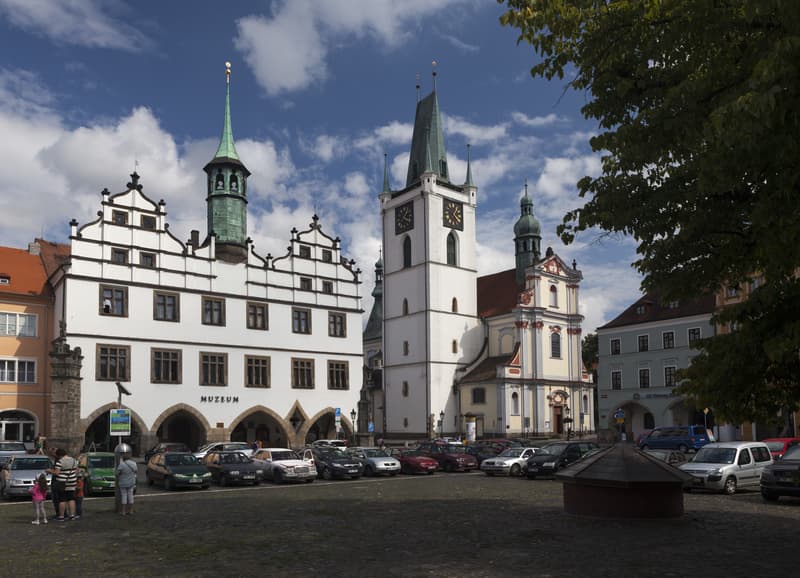


Czechia is not a classic big-ship river-cruise country, but it is a magnificent city-and-small-ship hybrid destination. Prague is the unmissable gateway; the Vltava and Elbe carry shallow-draft ships through intimate towns such as Mělník, Litoměřice and Děčín toward Dresden and Berlin. The country’s real riches—spa towns, UNESCO squares, Moravian cities—are best experienced as carefully chosen overland extensions.
Country facts
History
The Czech lands are a compact but dense slice of Central Europe: a medieval kingdom at the heart of the Holy Roman Empire, a Habsburg province, the industrial core of interwar Czechoslovakia, and since 1993 an independent parliamentary republic. Its cities are layered with Gothic, Baroque, Art Nouveau and modern architecture, and its river valleys—especially the Vltava and Elbe—are natural corridors that now carry small river cruises.
The prettified 'storybook Bohemia' image can obscure a hard modern history. The country’s streets are carefully restored, but many residents carry memories of Nazi occupation, communist-era surveillance, and the complicated aftermath of the Velvet Divorce. Visitors will see layers—baroque, Art Nouveau, communist-era concrete, and post-1989 commercialism—not a medieval theme park.
Culture
Czechs often describe themselves as Central European rather than Eastern European. The national temperament is reserved, ironic, pragmatic, and deeply attached to local place. Beer is not just a drink; it is a social institution. Overtourism in Prague has created some fatigue with large American group tours, so smaller, respectful encounters are welcome.
Music: Classical music is a point of pride—Bedřich Smetana's 'Má vlast' ('Vltava'), Antonín Dvořák, Leoš Janáček. There is also a rich tradition of Moravian folk music, Gypsy/jazz crossover, and contemporary indie rock.
Signature landscape: The Vltava River curving through Prague and the Bohemian countryside; the Elbe canyon below Děčín; the sandstone rock towns of Bohemian Switzerland.
Cuisine
- svíčková na smetaně (marinated beef in cream sauce with bread dumplings)
- vepřo-knedlo-zelo (roast pork, bread dumplings, sauerkraut)
- guláš (beef goulash with dumplings or bread)
- smažený sýr (fried cheese with tartar sauce)
- pilsner-style beer and local microbrews
- Becherovka herbal liqueur
- koláče (filled pastries)
- spa wafers (karlovarské oplatky)
Architecture & heritage
- Romanesque and Gothic churches
- Baroque cathedrals and monasteries
- Art Nouveau façades
- Czech Cubist architecture
- Functionalism (Villa Tugendhat)
- Renaissance arcaded squares in Telč and Slavonice
- Spa colonnades in Karlovy Vary
- Jewish Quarter synagogues and cemeteries in Prague
Tips for American travellers
- Carry small change for public WC facilities, tram tickets, and small purchases.
- Tap water is safe, but restaurants usually serve bottled or filtered water; tap water is not automatically brought.
- Czechs do not expect American-style tipping; rounding up 5–10% for good service is normal.
- Learn a few Czech words; do not assume everyone speaks German or Russian.
- Validate your public transport ticket before boarding; plainclothes inspectors fine heavily.
- Be cautious with exchange offices; use ATMs or banks for koruna.
- The pastry 'trdelník' sold in Prague's Old Town is not a traditional Czech specialty, though it is popular; enjoy it with that context.
Major cities & destinations
Prague Capital city
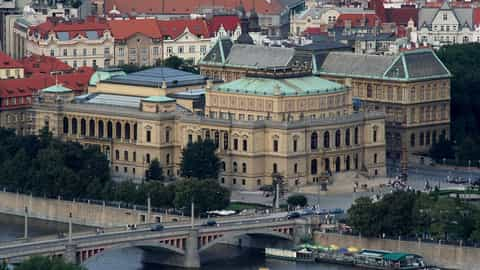
One of Europe's best-preserved city centers; Gothic, Baroque, Art Nouveau and Cubist architecture; vibrant café culture and a dramatic riverscape.
Main embarkation/disembarkation for Vltava/Elbe itineraries; river piers are within walking distance of the Old Town.
Prague Castle & St. Vitus Cathedral Charles Bridge Old Town Square & Astronomical Clock Jewish Quarter (Josefov) Lesser Town (Malá Strana) Wenceslas Square Petřín Hill Vltava riverfrontČeský Krumlov UNESCO World Heritage town
A fairy-tale town wrapped around the Vltava; castle, medieval lanes, and a lively arts scene.
Popular overland excursion from Prague; not a river-cruise port.
Český Krumlov Castle Old Town & Latrán St. Vitus Church Egon Schiele Art Centrum Regional MuseumKarlovy Vary Spa town
Hot springs, colonnades, spa wafers and Becherovka; elegant 19th-century resort atmosphere.
Classic pre/post-cruise overland extension from Prague; no river port.
Mill Colonnade Hot Spring (Vřídlo) Market Colonnade St. Mary Magdalene Church Diana Lookout TowerBrno University city / regional capital
Modern, food-obsessed, less crowded than Prague; home to the UNESCO-listed Villa Tugendhat and lively squares.
Alternative gateway by rail; not on river cruise routes.
Villa Tugendhat Špilberk Castle Old Town Hall Cathedral of St. Peter and Paul Freedom SquareOlomouc University city / historic Moravian capital
Charming, unhurried, with baroque fountains, a UNESCO Holy Trinity Column and strong student energy.
Possible rail extension from Prague or Brno; no river cruise port.
Holy Trinity Column Upper Square (Horní náměstí) Olomouc Astronomical Clock St. Wenceslas Cathedral Archbishop's MuseumKutná Hora UNESCO World Heritage town
Medieval silver-boom town with St. Barbara's Church and the unforgettable Sedlec Ossuary.
Day trip from Prague, often added to cruise extensions; not a port.
St. Barbara's Church Sedlec Ossuary (Bone Church) Italian Court Kutná Hora Historical Town CentreMělník Historic wine town at river confluence
The Vltava and Elbe meet here; Renaissance chateau, vineyards and views over two rivers.
Scenic river call on Elbe itineraries; often the first or last stop from Prague.
Mělník Chateau Church of St. Peter and Paul Confluence viewpoint (Vltava/Elbe) Old Town squareLitoměřice Royal town on the Elbe
Beautifully restored baroque square, Gothic church, calm small-town atmosphere.
One of the best Czech Elbe ports; also the jumping-off point for Terezín.
Mírové náměstí (Peace Square) St. Stephen's Cathedral Litoměřice Castle Dómský pahorek (Cathedral Hill)Ústí nad Labem Industrial river port
A working port with a dramatic setting beneath the Bohemian Central Mountains; not glamorous but honest.
Major Elbe port; cruise ships often pass or tie up here; base for hikes in Bohemian Switzerland.
Větruše Hill and viewpoint Střekov Castle Municipal House Elbe riverfrontDěčín Border town on the Elbe
Castle above the Elbe, gateway to Saxon Switzerland, and the last Czech river port before Germany.
Frequent turn-around/embarkation point for Elbe cruises; close to German border and Dresden.
Děčín Castle Elbe riverfront Děčín Chateau gardens Small town squareTerezín Fortress town and memorial
18th-century military fortress repurposed as a WWII Jewish ghetto and Gestapo prison; essential history.
Shore excursion from Litoměřice; a sober counterpoint to Bohemia's beauty.
Terezín Memorial Small Fortress (Malá pevnost) Ghetto Museum Magdeburg Barracks National CemeteryTelč UNESCO World Heritage town
Fairytale Renaissance square with arcaded houses; perhaps the most photogenic town in Czechia.
Possible overland extension from Prague or Brno; not a port.
Zachariáš of Hradec Square Telč Chateau Church of St. James Water castle and gardensCruise ports of call
Czech river cruising is small-ship, not big-longship. Most sailings begin or end in Prague, then follow the Vltava north to Mělník and the Elbe toward Germany. Ports are compact; some are walking-town stops, others require coach transfers at locks or low-water periods.
- Vltava–Elbe corridor: Prague → Mělník → Litoměřice → Ústí nad Labem → Děčín → Saxon Switzerland/Dresden/Berlin.
- Prague hub with overland extensions: Prague plus Karlovy Vary, Český Krumlov, Kutná Hora, Brno, Telč, or a connecting Danube cruise from Passau or Budapest.
Prague route_family_one
Cruise ships moor on the Vltava embankment, usually near the city center; from here itineraries head north through the lock at Štvanice toward Mělník.
Best for: Start or end of an Elbe cruise; pre-cruise exploration; riverfront orientation.
Operators: CroisiEurope, nicko cruises, Plantours, Viking Cruises, AmaWaterways, Avalon Waterways, Uniworld, Tauck, Emerald Cruises
Mělník route_family_one
At the confluence of the Vltava and Elbe; ships often pause here for a morning or afternoon; wine terraces rise above the river.
Best for: Confluence views, chateau, wine tasting.
Operators: CroisiEurope, nicko cruises, Plantours
Litoměřice route_family_one
A protected historic town on the Elbe; ships moor within walking distance of the main square; base for Terezín excursions.
Best for: Baroque architecture, unhurried exploring, Terezín.
Operators: CroisiEurope, nicko cruises, Plantours
Ústí nad Labem route_family_one
A large industrial port in a valley beneath the Bohemian Central Mountains; more utilitarian than pretty, but useful for excursions.
Best for: Access to Bohemian Switzerland and Střekov Castle.
Operators: CroisiEurope, nicko cruises, Plantours
Děčín route_family_one
The last Czech port on the Elbe before Germany; castle on a rock above the river; frequent turn-around point for Elbe cruises.
Best for: Castle, river valley scenery, gateway to Saxon Switzerland and Dresden.
Operators: CroisiEurope, nicko cruises, Plantours
Terezín route_family_one
Not a normal mooring; reached by coach from Litoměřice. The Small Fortress and Ghetto Museum make this a powerful shore excursion.
Best for: Understanding 20th-century Czech history; respectful memorial visit.
Operators: CroisiEurope, nicko cruises, Plantours
River traffic from Prague is northbound only; there is no scheduled passenger-cruise navigation south of Prague on the upper Vltava. Some cruise lines use coach transfers for passengers whose ships cannot reach Prague because of low water or bridge clearance; always confirm docking details.
All cruise ports in Czechia - Czech Republic
Ships visiting by type: 31 river
Showing 6 ports in Czechia - Czech Republic


River cruises & routes
Elbe cruises from Prague usually sail north to Germany; they pass through the Czech towns of Mělník, Litoměřice, Ústí and Děčín. These are not long river days—often just a few hours between ports—so excursions rely as much on coach tours as on sailing.
| Route | Length | Countries | Highlights |
|---|---|---|---|
| Prague to Berlin: Vltava & Elbe | 8 days (typical) | Czechia, Germany | Prague, Mělník, Litoměřice, Dresden, Meissen, Berlin; optional Terezín excursion. |
| Prague to Dresden: Short Elbe sampler | 5–6 days | Czechia, Germany | Prague, Mělník, Litoměřice, Ústí nad Labem, Děčín, Saxon Switzerland, Dresden. |
| Danube & Prague extension | 13–16 days | Czechia, Austria, Hungary, Germany | Prague pre-cruise; Danube cities such as Vienna and Budapest; rail/coach connection between Prague and Passau or Nuremberg. |
Season: Cruise season runs roughly April–October, with May, June and September ideal. July and August can be hot and crowded; low-water disruptions on the Elbe are possible in late summer. Christmas markets are best seen on a land stay rather than a river cruise.
Cruise lines visiting Czechia - Czech Republic
As of 2026, no U.S.-style mega-longship fleet operates inside Czechia. The active Elbe fleet is small: CroisiEurope, nicko cruises and Plantours run shallow-draft vessels. Major U.S. brands such as Viking, AmaWaterways, Avalon, Uniworld, Tauck and Emerald use Czechia as a land extension on Danube or Rhine itineraries, not as a regular river port. This is a crucial distinction for the American reader.
CroisiEurope
Regular Prague–Berlin Elbe cruises; also Prague–Dresden segments.
Ships: MS Elbe Princesse
nicko cruises
Occasional Elbe itineraries, often between Prague, Dresden and Berlin; check current season.
Plantours
Regional Elbe programs from Germany; some call in Czechia.
Viking Cruises
Prague pre/post-cruise extension on Danube/Rhine itineraries; not a regular Elbe operator.
AmaWaterways
Prague extension on European river cruise packages.
Avalon Waterways
Prague extension on Danube/Rhine itineraries.
Uniworld
Prague extension on luxury river cruises.
Tauck
Czechia in land/river combinations, usually Prague plus Danube or Rhine.
Emerald Cruises
Prague extension on European river cruises.
Verify whether the itinerary is truly on-water in Czechia or a Prague extension by coach/rail. The U.S. brochure phrase 'Prague cruise' often means 'Danube cruise with a Prague add-on.'
Planning & advice
This reader is at a milestone age, wants meaningful travel without being herded, and is drawn to European history, architecture and beer culture. Czechia delivers all three with a scale that feels personal. The catch: Czechia is better as a city-plus-river hybrid than as a pure river cruise. Embrace that hybrid and you will see a Central Europe most Americans only glimpse from a bus window.
For the American traveller
- Choose a shallow-draft ship if you want to sail the Elbe; water levels can cancel or change stops.
- Book a hotel in Prague's Old Town or Lesser Town for two nights before or after the cruise to see the city at dawn and after tour groups leave.
- Ask for a quiet cabin away from the engine if sailing on a small Elbe vessel; they are more intimate but can be noisier than big longships.
- If you fear being herded, avoid the 10am Old Town Square group departure; book private guides or small groups of no more than 8–10 people.
- Use Czech Railways for overland extensions; trains are reliable, comfortable and scenic.
- Pack layers and good walking shoes; cobblestones are everywhere and many historic sites involve stairs.
Excursion planning
- Book Terezín, Villa Tugendhat, and Prague Castle tickets well in advance; they sell out.
- Allow at least two nights in Prague before any cruise; jet lag plus a group schedule is a bad mix.
- Use the Vltava riverfront at sunrise for a crowd-free Charles Bridge.
- In Český Krumlov and Telč, stay overnight if possible; day-trippers flood at midday and leave by late afternoon.
- For spa towns, plan at least four hours; a one-hour stop is not enough to absorb the atmosphere.
The verdict
Go, but go smart. Combine Prague with a short Elbe sailing—or a Danube sailing with a Prague extension—rather than a multi-week river-only fantasy. Use smaller ships, shoulder-season dates, and private guides where it matters. You will leave with a deep, unsanitized sense of Czechia.
Sources
- CIA World Factbook — Czechia (accessed 2026-09-09)
- UNESCO World Heritage Centre — Czechia – Properties inscribed on the World Heritage List (accessed 2026-09-09)
- Visit Czechia / Czech Tourism — Official Travel Website (accessed 2026-09-09)
- Czech Statistical Office — Population (accessed 2026-09-09)
- CroisiEurope — Elbe Cruises (accessed 2026-09-09)
- Radio Prague International — Czech History (accessed 2026-09-09)