Châteauneuf-du-Pape Cruise Port
Roquemaure River Pier (Quai de la Navigation)


Châteauneuf-du-Pape, France Port
Provence-Alpes-Côte d'Azur UN/LOCODE FRCDP Port of call Homeport
Châteauneuf-du-Pape Cruise Port Location
| Port Details | |
|---|---|
| Country | France |
| Region | Provence-Alpes-Côte d'Azur |
| UN/LOCODE | FRCDP |
| Contact | |
| Address | Chemin de l'Ile, 30150 Roquemaure, France |
| Port phone | +33 4 66 90 21 01 |
| Website | www.provence-vallee.fr |
| Geography | |
| Coordinates | 44.05638, 4.83244 |
| Accessibility | |
| Accessible | Limited |
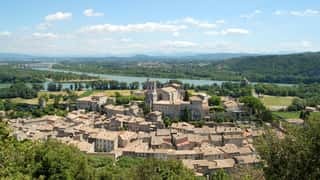
The cruise docking point for Châteauneuf-du-Pape is typically at Roquemaure or Avignon, requiring a 15–20 minute shuttle transfer that costs approximately €40 (~$46.00 USD) for a private taxi if your line does not provide a bus. This iconic destination is located in the Rhône Valley in Provence, southeastern France, and serves strictly as a river cruise port. You are approximately 15 km (9 miles) north of Avignon, roughly a 20-minute drive, and just 10 km (6 miles) south of the Roman city of Orange. Visitor feedback is consistent that without a pre-arranged wine tasting, the village can be fully explored in under an hour. This destination rewards those who understand that the 'village' is really a functional agricultural hub for the surrounding vineyards of the Rhône River valley. It punishes the casual stroller who arrives between 12:00 PM and 2:00 PM, when nearly every boutique and cellar door closes for lunch. According to the Châteauneuf-du-Pape Tourism Office, this was the first French wine region to be granted Appellation d'Origine Contrôlée (AOC) status in 1936, a fact that dictates every aspect of the local culture. You must prepare for steep, uneven cobblestones that climb toward the castle ruins. This is a day for slow sipping and architectural history, not for those seeking high-street shopping or fast-paced entertainment.
Châteauneuf-du-Pape — Port Overview
History
Châteauneuf-du-Pape, or 'The Pope’s New Castle,' owes its global prominence to the relocation of the Papal court to Avignon in 1309. Pope John XXII, the second of the Avignon popes, began construction on the formidable castle that still looms over the village in 1317. For the Papacy, this wasn't just a summer retreat; it was a strategic agricultural investment. The limestone-rich soil and the mistral wind of the Rhône River valley proved ideal for viticulture, a legacy that survived the Great Schism and the Papacy's eventual return to Rome. The region faced near-extinction in the late 19th century due to the Phylloxera epidemic, a catastrophic vine pest that wiped out most European vineyards. However, the resilience of local growers led to the 1923 drafting of production rules by Baron Le Roy of Château Fortia, which became the blueprint for the national AOC system in 1936. Today, when you look at the castle ruins, you are seeing the scars of the 1562 Wars of Religion and the 1944 German retreat, during which the structure was largely destroyed. The history here is literally bottled; the distinct heavy glass bottles embossed with the Papal tiara and the keys of St. Peter signify a direct connection to that 14th-century ecclesiastical power. You can see these symbols carved into the stone of the village fountain today.
The Verdict
Those who make the most of Châteauneuf-du-Pape tend to be the ones who arrive with a plan and the flexibility to adapt it. This guide has been fact-checked by J. Richard and the Waterways Cruise editorial team. Excursions that guarantee a return to the ship can be tailored to your mobility, interests, and pace, so missing departure is never a concern. At Waterways Cruise, no two travelers want the same day ashore, and in this storied village, the right cellar makes all the difference.
Things to Do & See in Châteauneuf-du-Pape
| Attraction | Type | Address | Phone | Hours | Website | Admission |
|---|---|---|---|---|---|---|
| Musée du Vin Brotte | Museum | Avenue Pierre de Luxembourg, 84230 Châteauneuf-du-Pape | +33 4 90 83 59 44 | Daily 9:00 AM – 7:00 PM | brotte.com | EUR €12.00 |
| Place de la Fontaine | Landmark | Place de la Fontaine, 84230 Châteauneuf-du-Pape | Open 24 hours | chateauneuf.com | Free | |
| Château de Châteauneuf-du-Pape | Historical Site | Montée du Château, 84230 Châteauneuf-du-Pape | +33 4 90 83 71 08 | Open 24 hours (Ruins viewable from exterior) | chateauneuf.com | Free |
| Caveau des Vignerons | Cultural Site | 8 Rue de la République, 84230 Châteauneuf-du-Pape | +33 4 90 83 71 08 | Daily 10:00 AM – 12:30 PM, 2:00 PM – 6:30 PM | chateauneuf.com | EUR €15.00 |
| Le Sentier des Vignes | Natural Feature | Departing from Rue du Château, 84230 Châteauneuf-du-Pape | Open 24 hours | Not available | Free |
Musée du Vin Brotte · Museum
EUR €12.00The Brotte Wine Museum is the most professional educational facility in the village. It provides a deep dive into the 13 permitted grape varieties and the unique geology of the Rhône River valley. Be aware that their audio guide is one of the few in France that doesn't talk down to the visitor. You will walk through the history of the 1936 AOC creation and see how the 'galets roulés' river stones retain heat at night to ripen the Grenache grapes. It is an essential first stop to understand what you will be drinking later in the day. The experience concludes with a structured tasting of three wines. Most visitors walk right past the small soil-profile display, which shows how deep the vine roots must travel to reach the water table. It's the most honest representation of 'terroir' in the village.
Avenue Pierre de Luxembourg, 84230 Châteauneuf-du-Pape ·+33 4 90 83 59 44 ·Daily 9:00 AM – 7:00 PM ·www.brotte.com
Place de la Fontaine · Landmark
FreeThis is the social and geographic heart of Châteauneuf-du-Pape. Centered around a 1784 fountain that provided the village's first clean water, the square is surrounded by the town's most prestigious wine shops. You can sit at a cafe and watch the rhythm of the village—locals picking up baguettes while wine buyers from across the globe negotiate pallets of wine. According to the regional tourism board, this square has remained largely unchanged for 200 years. It provides the perfect baseline for your visit. Most visitors fail to look up at the intricate wrought-iron signs above the doorways, each representing a different vigneron's history. It’s an ideal place to people-watch and acclimate before the steep climb to the castle ruins.
Place de la Fontaine, 84230 Châteauneuf-du-Pape ·Open 24 hours ·www.chateauneuf.com
Château de Châteauneuf-du-Pape · Historical Site
FreeStanding at the summit of the village, these ruins are the reason Châteauneuf-du-Pape exists. Built between 1317 and 1333, the palace was designed to show the power of the Avignon Papacy to the surrounding lands. On a clear day, the view includes the giant Ventoux mountain and the distant Palais des Papes. The silence at the top is a sharp contrast to the busy wine shops below. You are standing on the site that literally gave birth to the 'Pope's New Wine.' Most visitors walk past the small signs explaining the 1944 explosion—German forces used the tower as an observation post and blew it up during their retreat. This is where the history of empire and the history of wine collide.
Montée du Château, 84230 Châteauneuf-du-Pape ·+33 4 90 83 71 08 ·Open 24 hours (Ruins viewable from exterior) ·www.chateauneuf.com
Caveau des Vignerons · Cultural Site
EUR €15.00This is the collective cellar of the village, representing over 40 different winemakers. It is the most authoritative place to understand why Châteauneuf-du-Pape is so expensive. The sommeliers here are not just salespeople; they are experts on the 'lieu-dit' (specific vineyard plots) of the region. They typically have 15 different wines open for tasting at any time. It is the best way to compare a 100% Grenache wine against a complex 13-grape blend. You will learn how the oak-aging process differs across the valley. Most visitors miss the opportunity to ask about the 'Vin de Paille,' a rare straw wine made in tiny quantities. This is the intellectual center of the port call.
8 Rue de la République, 84230 Châteauneuf-du-Pape ·+33 4 90 83 71 08 ·Daily 10:00 AM – 12:30 PM, 2:00 PM – 6:30 PM ·www.chateauneuf.com
Le Sentier des Vignes · Natural Feature
FreeThis is a marked walking path that takes you directly into the vineyards that surround the castle. It is the only way to truly see the 'galets roulés' in their natural environment. These large, smooth stones were deposited by the Rhône River millions of years ago. You will see how the vines emerge directly from a carpet of rocks, with no soil visible on the surface. It is well established that this is the best place to understand the physical labor required for this wine—every vine must be tended by hand because the rocks prevent heavy machinery from entering many plots. It is quiet, evocative, and smells of wild rosemary and thyme. Most visitors stay in the village; those who take this path get the real Provence.
Departing from Rue du Château, 84230 Châteauneuf-du-Pape ·Open 24 hours ·Not available
Eating & Drinking in Châteauneuf-du-Pape
Châteauneuf-du-Pape’s culinary identity is inseparable from its wine. The local cuisine is dominated by 'Cuisine Provençale' but with a heavier, more rustic edge to stand up to the high-alcohol (often 15%+) red wines. You will find 'Daube Avignonnaise,' a beef stew made with red wine, carrots, and olives that differs from the 'Daube de Provence' by using lamb instead of beef in many local kitchens. What to drink is obvious—the red wine—but look specifically for bottles from the 'Le Crau' plateau, which are considered the pinnacle of the region. For non-alcoholic specialties, look for 'Sirop de Lavande' in the local épiceries. One honest note: tourists expect to find a lot of seafood here because of the Rhône River, but the river is largely for transport now. The genuine local diet is based on game, lamb, and root vegetables grown in the Vaucluse. You'll find the most authentic market food at the Thursday morning market in nearby Orange, but in the village, focus on the 'Boulangerie du Village' for true 'Fougasse' bread.
| Place | Address | Phone | Hours | Website | Price range |
|---|---|---|---|---|---|
| Le Verger des Papes | Montée du Château, 84230 Châteauneuf-du-Pape | +33 4 90 83 50 40 | 12:00 PM – 2:00 PM, 7:30 PM – 9:30 PM (Closed Mondays) | vergerdespapes.com | €45–€70 (~$52–$80 USD) |
| Le Comptoir de la Mère Germaine | 3 Rue du Commandant Lemaitre, 84230 Châteauneuf-du-Pape | +33 4 90 22 78 34 | 12:00 PM – 2:30 PM, 7:00 PM – 9:30 PM | lameregermaine.com | €35–€50 (~$40–$58 USD) |
| Vinadea | 8 Rue de la République, 84230 Châteauneuf-du-Pape | +33 4 90 83 71 08 | 10:00 AM – 6:30 PM (No Happy Hour) | vinadea.com | €8–€15 (~$9–$17 USD) per glass |
Le Verger des Papes
€45–€70 (~$52–$80 USD)Order the lamb; it is braised for seven hours and falls apart with a fork. This restaurant is carved into the limestone cliff below the castle ruins. The terrace offers a 180-degree view of the Rhône River. It is the only place in town where the food matches the quality of the view. One honest limitation: because of the view, it is popular with groups, so it can be loud during the peak 12:30 PM rush.
Montée du Château, 84230 Châteauneuf-du-Pape ·+33 4 90 83 50 40 ·12:00 PM – 2:00 PM, 7:30 PM – 9:30 PM (Closed Mondays)
Le Comptoir de la Mère Germaine
€35–€50 (~$40–$58 USD)Go for the rotisserie chicken, which is cooked in the open kitchen. The atmosphere is that of a high-end French bistro—unfussy but precise. It is located right off the main square. It's the best spot for a quick but high-quality lunch. Be aware that tables are very close together; it is not a place for a private, romantic conversation.
3 Rue du Commandant Lemaitre, 84230 Châteauneuf-du-Pape ·+33 4 90 22 78 34 ·12:00 PM – 2:30 PM, 7:00 PM – 9:30 PM
Vinadea
€8–€15 (~$9–$17 USD) per glassThis isn't a bar in the American sense; it is a sophisticated tasting counter. It's the right place for a drink because you are served by professional sommeliers who can explain the bottle's history. There is no music, just the sound of corks popping and expert discussion. Locals come here to taste the newest releases before they hit the market.
8 Rue de la République, 84230 Châteauneuf-du-Pape ·+33 4 90 83 71 08 ·10:00 AM – 6:30 PM (No Happy Hour)
Getting There & Around
Once you arrive in the village, the only practical way to move is on foot. The center is compact, but the grades are significant. The walk from the main square to the castle is 450 meters (0.3 miles), but the elevation gain is over 40 meters (130 feet). There is no local bus or tram within the village. Uber does not reliably operate in this rural area; it is best to use the G7 taxi app or have a local restaurant call a driver for you. Bike rentals are available at 'Cycles de la Combe' but cycling is only recommended for those traveling out into the vineyards toward Courthézon, as the village streets are too narrow and steep for casual riding. A navigation tip most guides miss: the village is shaped like a shell; if you are walking 'down,' you will eventually hit the main road (Avenue Pasteur). If you are walking 'up,' you will hit the castle. You cannot get truly lost here.
Itineraries & Sample Walks
4-Hour Shore Excursion in Châteauneuf-du-Pape
Village Walking Tour & Place de la Fontaine
9:30 AM (45 min)
Start at the central fountain. Walk the 'shell' of the village. The architecture is a blend of 14th-century limestone and 18th-century Provencal style.
- 15-minute shuttle from Roquemaure pier. (Included in cruise)
- Entry: Free (Free)
- Look for the 'bouteille de Châteauneuf' embedded in the wall of the bakery—it’s a traditional measuring mark.
Château de Châteauneuf-du-Pape Ruins
10:15 AM (40 min)
The remains of the summer palace of the Avignon Popes. The views extend across the Rhône River to the Palais des Papes in Avignon on clear days.
- 10-minute walk uphill via Rue Joseph Ducos.
- Entry: Free (Free)
- Go around to the north side of the tower to see the 'galets roulés' (river stones) that give the wine its character.
Caveau des Vignerons Tasting
11:00 AM (60 min)
The official communal cellar representing dozens of local producers. It's the best place to sample a cross-section without visiting multiple estates.
- 5-minute walk downhill.
- Entry: €15.00 ($17.50)
- Ask to taste a 'White Châteauneuf'—only 7% of production is white and it is rarely exported.
Lunch Recommendation
Le Verger des Papes
Located directly under the castle ruins with a terrace overlooking the entire valley. It beats the village cafes for view and consistent quality.
Order: Daube de Boeuf Provençale, Tarte Tatin with local apricots
Montée du Château, 84230 Châteauneuf-du-Pape, France
Cost: €55.00 (~$63.50 USD)
8-Hour Full Day Experience in Châteauneuf-du-Pape
Musée du Vin Brotte
9:00 AM (75 min)
An excellent overview of the region's unique soil and production methods. The audio guide is highly rated for its technical depth.
- 15-minute taxi from pier. (€40.00 (~$46.00 USD))
- Entry: €12.00 ($14.00)
- The museum holds a 14th-century wooden wine press that is still functional.
Getting back to the ship
To ensure a safe return, you should depart the village center no later than 60 minutes before your 'All Aboard' time. If your ship is at Roquemaure, a taxi from the Place de la Fontaine will take 12 minutes and cost roughly €40 (~$46.00 USD). If you miss the ship's provided shuttle, do not wait for the next one—call a taxi immediately as they are limited in number. If you are running late, contact the ship's emergency number provided on your daily program. Be aware that river cruise ships are on a strict lock-schedule on the Rhône River and rarely hold for late passengers. Missing the ship here usually means taking a €60 taxi to the next lock in Avignon or Arles. Always carry your ship card and a photo of your passport.
Weather & Best Time to Visit Châteauneuf-du-Pape
Weather & What to Pack
Cruise season: March to November
18°C–32°C (64°F–90°F). Very dry with high sunshine hours. The Mistral wind can gust up to 90 km/h (55 mph).
What to wear: Lightweight, breathable fabrics are essential. Layers are mandatory because the Mistral wind can drop the perceived temperature by 10 degrees in minutes. Wear sturdy, closed-toe walking shoes; sandals are dangerous on the steep, polished stones of the village. A hat with a chin strap is recommended so it doesn't blow away at the castle ruins. There is no dress code for tastings, but smart casual is respected.
Weather risks: The Mistral wind can cause river levels to shift, occasionally leading to docking at alternate piers (Sorgues instead of Roquemaure).
In June, the lavender fields nearby are in bloom, while October offers the visually stunning changing colors of the vine leaves.
| Season | Conditions | Hazards | Affected areas | Visitor advice |
|---|---|---|---|---|
| Summer (June–August) | Intense heat with temperatures often exceeding 35°C (95°F) and low humidity. The Mistral wind can be strong and dehydrating. | The exposed limestone path to the castle becomes a heat trap. Dehydration is a major risk on the 10-minute uphill climb. | The Castle Ruins and the vineyard walking paths (Le Sentier des Vignes). | Wear a wide-brimmed hat and carry water. Walk to the castle before 10:30 AM. Skip the vineyard walk entirely if the temperature exceeds 30°C. |
| Autumn (September–October) | Mild days, cooling evenings, and the peak of the harvest (vendange). High activity levels in the vineyards. | Wet cobblestones in the village after rain become extremely slippery. Vineyard paths are muddy and blocked by harvest machinery. | Rue de la République and narrow alleys leading to the castle. | Wear shoes with excellent grip (Vibram soles are ideal). Be aware that many tasting rooms are closed or under-staffed during harvest peaks in late September. |
Practical Information
Cultural etiquette
In Châteauneuf-du-Pape, a formal 'Bonjour, Monsieur' or 'Bonjour, Madame' is non-negotiable when entering any wine boutique or bakery. Failing to do so is considered a significant social slight. When tasting wine, it is perfectly acceptable and expected to use the 'crachoir' (spit pool) if you are tasting multiple wines; the locals do this to maintain their palate. Tipping is not expected as it is in the US; a 'service compris' (service included) model is used, though rounding up to the nearest €5 for a good lunch is appreciated. Photography is welcomed in the village and at the ruins, but always ask 'Puis-je?' before photographing a private cellar or a vigneron at work. One common cultural misunderstanding: cruise passengers often try to split a single tasting at a boutique to save money. In Châteauneuf-du-Pape, viticulture is a prestigious profession; splitting a tasting is seen as a lack of respect for the producer’s work. Each person should have their own glass.
Mistakes to Avoid
| Mistake |
|---|
Visiting the village between 12:00 PM and 2:00 PM without a restaurant reservation. |
Wearing high heels or smooth-soled sandals. |
Buying wine in the first shop you see near the bus drop-off. |
Assuming the Roquemaure pier is 'in' Châteauneuf-du-Pape. |
Practical tips
Châteauneuf-du-Pape is widely automated for cards (Visa/Mastercard), but several smaller wine boutiques and the local bakery have a 'minimum d'achat' of €10–€15 (~$12–$17 USD) for card use; keep at least €50 in cash for small purchases. Tipping for taxis is not required but €2–€3 for a short transfer is standard. Goodwill phrases: 'C’est superbe' (It is superb) and 'Un grand merci' (A big thank you) carry more weight than a generic thanks. Scams are rare here, but be cautious of 'unlabeled' wine bottles offered by street vendors—these are usually low-quality bulk wine. Dress code: strictly respectful in the village church (Notre-Dame-de-l'Assomption); shoulders must be covered. Best crowd-avoidance strategy: visit the castle ruins at 12:30 PM when the excursion buses go to the hotels for lunch; you will have the ruins almost entirely to yourself. Always verify the shuttle return time before leaving the drop-off point, as they are infrequent in the afternoon.
Cruise Lines Visiting Châteauneuf-du-Pape
Port of Call


Why Book With Waterways Cruise?
Four decades of expertise, one dedicated advisor, and every detail handled, from your front door to the gangway and back.
Personal Service — Your Own Cruise Concierge
Tailor-Made — 100% Custom-Built
Expertise — 40+ Years in Travel
Price Watch — Book With Total Confidence
Signature Sailings
All Cruise Lines at Châteauneuf-du-Pape (A–Z)
Nearby Ports





FAQ — Châteauneuf-du-Pape
Can I walk from the cruise ship to the wine tasting rooms?
No. Most river cruise ships dock at Roquemaure, which is 10 km (6 miles) from the village, or in Avignon, 15 km (9 miles) away. The walk is along busy industrial roads without pedestrian paths. You must use the ship's shuttle or a pre-arranged taxi, which costs about €40 (~$46.00 USD). For a guaranteed back-to-ship transfer, book.
What is the best month to visit Châteauneuf-du-Pape on a cruise?
September is the peak experience. You will see the harvest in action, smell the fermenting grapes in the village air, and enjoy mild 24°C (75°F) weather. Avoid July if you are sensitive to heat, as temperatures often hit 35°C (95°F).
Are wine tastings free in the village?
Generally, no. While some smaller shops offer a quick sip for free, any structured tasting of 3–5 wines at a reputable caveau will cost between €15 and €25 (~$17–$29 USD). This fee is often waived if you purchase two or more bottles.
Is there a dress code for wine tasting in France?
There is no official dress code, but 'Smart Casual' is the standard. Avoid swimwear or extremely athletic gear. Clean sneakers and jeans are perfectly acceptable in all but the most formal Michelin-starred dining rooms.
How do I get my wine purchases back to the United States?
Do not try to carry cases onto the ship. Most reputable shops in the village, like Vinadea, offer specialized shipping via DHL or UPS. Expect to pay roughly €120 (~$138 USD) to ship a 12-bottle case to the US, including insurance.
Is Châteauneuf-du-Pape suitable for travelers who don't drink alcohol?
It is limited. You can enjoy the 14th-century castle ruins and the view, which takes about 30–45 minutes. Beyond that, the village is entirely wine-centric. Non-drinkers may wish to take an excursion to the Roman Theater in Orange instead.
Is there an ATM in Châteauneuf-du-Pape?
Yes, there is a Credit Agricole ATM located at 2 Place de la Fontaine in the center of the village. It is the only one in the historic center, so it can run out of cash during busy festival weekends.
Are the castle ruins accessible for people with walkers?
The climb is very difficult with a walker due to the 15% incline and uneven stones. However, you can take a taxi to the parking lot at the very top, which allows you to see the ruins with only about 50 meters of flat walking.
What does the 'AOC' on the wine label actually mean?
AOC stands for Appellation d'Origine Contrôlée. It is a strict legal guarantee that the wine was made in this specific region, using only the 13 permitted grape varieties, and following traditional production methods established in 1936.
Do I need to make reservations for wine tastings?
For communal cellars like Caveau des Vignerons, no. For private estates like Château de Beaucastel or Château La Nerthe, yes—reservations are required at least 48 hours in advance and often fill up weeks ahead of time.
Fact-checked and co-written by J. Richard, Founder, Waterways Cruise, with the Waterways Cruise Content Team.
Published May 19, 2026 · Last updated October 8, 2026
This guide is researched and reviewed by our editorial team, but prices, hours, and availability change often. Confirm current details directly with venues, excursion operators, and your cruise line before you travel.