Bonn Cruise Port
Bonn River Cruise Terminal (Brassertufer)


Bonn, Germany Port
UN/LOCODE DEBON Port of call Homeport
Bonn Cruise Port Location
| Port Details | |
|---|---|
| Country | Germany |
| UN/LOCODE | DEBON |
| Contact | |
| Address | Brassertufer, 53111 Bonn, Germany |
| Port phone | +49 228 775000 |
| Website | www.bonn.de |
| Geography | |
| Coordinates | 50.73740, 7.09770 |
| Accessibility | |
| Accessible | Limited |
Bonn’s primary river cruise berths at the Brassertufer sit exactly 450 meters (0.28 miles) from the historic Market Square, and a walk is confirmed to take less than six minutes. Located in the North Rhine-Westphalia region of western Germany, this destination offers a compact, walkable alternative to the overwhelming scale of nearby Cologne. As a dedicated river cruise port on the Rhine River, Bonn serves as a logical midpoint between the industrial north and the scenic Middle Rhine Valley. You are only 30 km (18 miles) south of Cologne, roughly 25 minutes by regional train, and 12 km (7 miles) from the legendary Drachenfels ruins in Königswinter. Arrival patterns suggest that while most visitors rush immediately to the Beethoven-Haus, the destination rewards those who first explore the Romanesque Minster and the political history of the former West German capital. This city punishes the unprepared traveler who expects a single 'capital center'; the parliamentary district and the historic core are distinct areas requiring specific transit choices. These routes can be timed to maximize a typical 8-hour call, and arranging this in advance through your cruise line or a licensed local operator may reduce logistical stress common in larger German cities. Bonn rewards history enthusiasts and music lovers, but it punishes those seeking high-energy commercialism or mountain vistas from the city center.
Bonn — Port Overview
History
Founded as the Roman fort 'Bonna' in the 1st century BC, Bonn is one of Germany’s oldest cities. Its strategic location on the Rhine River made it a vital military outpost for the Roman Empire for nearly 400 years. The city rose to cultural prominence in the 18th century as the residence of the Prince-Electors of Cologne, who transformed Bonn into a baroque showcase and paved the way for the birth of Ludwig van Beethoven in 1770. Perhaps its most defining era began in 1949, when it was selected as the provisional capital of the Federal Republic of Germany (West Germany). For four decades, this quiet university town served as the front line of Western democracy during the Cold War. Even after the German government returned to Berlin in 1999, Bonn retained its administrative significance, now serving as Germany's secondary seat of government and a major United Nations hub. You can still see this legacy today in the stark contrast between the medieval spires of the Bonn Minster and the sleek, glass-and-steel UN Campus. The 'Path of Democracy,' a marked trail through the former government quarter, allows you to stand where the Bonn Republic was forged, connecting the city's ancient Roman origins directly to the architecture of modern European governance.
The Verdict
In Bonn, the visitors who come away happiest are the ones who arrive with a plan and the flexibility to adapt it. Whether you are walking in the footsteps of Beethoven or exploring the tense days of the Cold War, this city rewards the curious traveler. This guide has been fact-checked by J. Richard and the Waterways Cruise editorial team. Excursions that guarantee a return to the ship can be tailored to your mobility, interests, and pace, so missing departure is never a concern. No two travelers want the same day ashore.
Things to Do & See in Bonn
| Attraction | Type | Address | Phone | Hours | Website | Admission |
|---|---|---|---|---|---|---|
| Bonn Minster (Bonner Münster) | Historical Site | Münsterplatz, 53111 Bonn | +49 228 985820 | Daily 9:00 AM - 7:00 PM | bonner-muenster.de | Free |
| Haus der Geschichte | Museum | Willy-Brandt-Allee 14, 53113 Bonn | +49 228 91650 | Tue-Fri 9:00 AM - 7:00 PM, Sat-Sun 10:00 AM - 6:00 PM | hdg.de | Free |
| Poppelsdorf Palace & Botanical Gardens | Landmark | Meckenheimer Allee 169, 53115 Bonn | +49 228 735523 | Gardens: 10:00 AM - 6:00 PM (Summer), 10:00 AM - 4:00 PM (Winter) | botgart.uni-bonn.de | Free |
| Beethoven-Haus | Museum | Bonngasse 20, 53111 Bonn | +49 228 9817525 | Wed-Mon 10:00 AM - 6:00 PM | beethoven.de | EUR €10.00 |
| Old Town Hall (Altes Rathaus) | Landmark | Marktplatz 2, 53111 Bonn | +49 228 770 | Exterior viewable 24/7 | bonn.de | Free |
Bonn Minster (Bonner Münster) · Historical Site
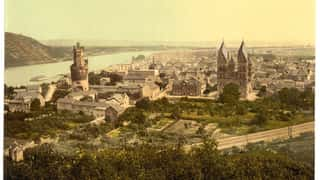
FreeThis Romanesque minor basilica is the soul of the city. Built between the 11th and 13th centuries, it stands on a site that has been used for religious purposes for nearly 2,000 years. Inside, the architecture transitions from heavy Romanesque arches to light Gothic windows, reflecting the evolution of the city itself. You will notice that it is one of the few places in Bonn where you can feel the true weight of medieval history. Look for the 'Angel Pillar' in the transept, a masterpiece of medieval stone carving that most visitors walk right past while looking at the high altar. This stop gives you a moment of profound silence even in the heart of the modern city.
Münsterplatz, 53111 Bonn ·+49 228 985820 ·Daily 9:00 AM - 7:00 PM ·www.bonner-muenster.de
Haus der Geschichte · Museum
FreeThis is arguably the finest museum of contemporary history in the world. It covers German history from the end of WWII to the present day with an honesty that is rare. You will walk through a 1950s grocery store, sit in a real Soviet-era airplane used during the Berlin Airlift, and see the original documents of German reunification. It is not just a collection of facts; it is a sensory journey through the Cold War. The average visit time is 2.5 hours—anything less feels rushed. The visit offers a deep, often emotional understanding of how modern Germany was rebuilt from the ashes of 1945.
Willy-Brandt-Allee 14, 53113 Bonn ·+49 228 91650 ·Tue-Fri 9:00 AM - 7:00 PM, Sat-Sun 10:00 AM - 6:00 PM ·www.hdg.de
Poppelsdorf Palace & Botanical Gardens · Landmark
FreeBuilt on the site of a medieval castle, this Baroque masterpiece served as a summer residence for the Prince-Electors. Today, it anchors the University of Bonn's science departments. The palace is connected to the main university building by the Poppelsdorfer Allee, a magnificent chestnut-lined avenue considered by many to be the most beautiful walk in the city. The botanical gardens surrounding the palace are among the oldest in the world, featuring over 11,000 plant species. You will come away with a sense of the 18th-century grandeur that defined Bonn before it became a political capital.
Meckenheimer Allee 169, 53115 Bonn ·+49 228 735523 ·Gardens: 10:00 AM - 6:00 PM (Summer), 10:00 AM - 4:00 PM (Winter) ·www.botgart.uni-bonn.de
Beethoven-Haus · Museum
EUR €10.00This is the only remaining house of the Beethoven family in its original state. Walking across the creaking wooden floors of the room where Ludwig was born in 1770 is a milestone moment for any music lover. The museum skillfully balances personal intimacy with scholarly depth, displaying his manuscripts, his massive ear trumpets (evidence of his tragic hearing loss), and the organ he played as a child. It is a small space that packs a tremendous emotional punch. The experience delivers a tactile connection to one of history's greatest minds that a modern concert hall simply cannot match.
Bonngasse 20, 53111 Bonn ·+49 228 9817525 ·Wed-Mon 10:00 AM - 6:00 PM ·www.beethoven.de
Old Town Hall (Altes Rathaus) · Landmark
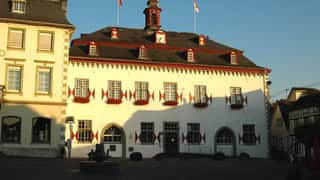
FreeThe pink and silver Rococo facade of the Old Town Hall is the most photographed building in Bonn. Built in 1737, it has been the backdrop for the city’s most significant moments. During the years when Bonn was the capital, every visiting head of state stood on these steps. It survived the bombings of WWII with significant damage but was meticulously restored. Visitors should grab a coffee at one of the adjacent cafes and simply watching the life of the square play out against this ornate backdrop. It delivers the classic European 'market square' feeling that every traveler yearns for.
Marktplatz 2, 53111 Bonn ·+49 228 770 ·Exterior viewable 24/7 ·www.bonn.de
Eating & Drinking in Bonn
Bonn’s culinary identity is rooted in the Rhineland, a region that favors sweet-and-savory combinations. The defining dish is 'Rheinischer Sauerbraten,' traditionally made with horse meat but now almost exclusively beef, marinated for days in vinegar and spices and served with a gravy sweetened with raisins or gingerbread. You must try 'Himmel un Ääd' (Heaven and Earth), a mixture of mashed potatoes and applesauce served with fried blood sausage. Unlike the strictly controlled 'Kölsch' beer of Cologne, Bonn is more eclectic, though 'Bönnsch' is the local pride—an unfiltered, top-fermented ale. For street food, visit the stalls on the Marktplatz for a 'Bratwurst im Brötchen' (bratwurst in a roll), which is how locals actually eat during their lunch break. One honest note: tourists often expect a massive variety of 'German' sausages, but in Bonn, the menus are more likely to reflect the city’s international UN status, with excellent Italian and Vietnamese options alongside the schnitzel.
| Place | Address | Phone | Hours | Website | Price range |
|---|---|---|---|---|---|
| Brauhaus Bönnsch | Sterntorbrücke 4, 53111 Bonn | +49 228 650610 | Daily 11:30 AM - Midnight | boennsch.de | €18.00–€30.00 (~$21.00–$34.50 USD) |
| Em Höttche | Markt 4, 53111 Bonn | +49 228 690009 | Daily 11:00 AM - 11:00 PM | em-hoettche.de | €20.00–€35.00 (~$23.00–$40.00 USD) |
| Alter Zoll Beer Garden | Brassertufer 1, 53111 Bonn | +49 228 241243 | 11:00 AM - 11:00 PM (Weather dependent) | biergarten-bonn.de | €5.00–€8.00 (~$6.00–$9.00 USD) |
Brauhaus Bönnsch
€18.00–€30.00 (~$21.00–$34.50 USD)Order the 'Bönnsch' beer immediately; it comes in a uniquely twisted glass designed to fit the hand. This is hearty Rhineland comfort food at its best. The atmosphere is loud, friendly, and unpretentious. The limitation is that it can get very crowded at lunch, so arrive by 11:45 AM.
Sterntorbrücke 4, 53111 Bonn ·+49 228 650610 ·Daily 11:30 AM - Midnight
Em Höttche
€20.00–€35.00 (~$23.00–$40.00 USD)Located right next to the Old Town Hall, this restaurant dates back to 1389. The interior is a museum in itself with dark wood carvings and stained glass. Order the Sauerbraten—it is the quintessential regional dish. The service can be brisk, so don't expect a lingering, slow-paced meal.
Markt 4, 53111 Bonn ·+49 228 690009 ·Daily 11:00 AM - 11:00 PM
Alter Zoll Beer Garden
€5.00–€8.00 (~$6.00–$9.00 USD)Located directly above the cruise pier on the old city fortifications. It is the perfect place for a drink before re-boarding. You'll sit under ancient plane trees with a direct view of the Rhine River and the Siebengebirge hills. Locals come here to escape the city noise. There is no table service; you buy your drink at the kiosk and find a bench.
Brassertufer 1, 53111 Bonn ·+49 228 241243 ·11:00 AM - 11:00 PM (Weather dependent)
Getting There & Around
Once you leave the Rhine River terminal, walking is the most efficient way to see the Zentrum. The core is roughly 1.5 km (0.9 miles) wide and fully pedestrianized. For the Museum Mile or the Federal Quarter, use the U-Bahn lines 16, 63, or 66. A '24StundenTicket' (24-hour pass) for one person costs €9.20 (~$10.50 USD) and can be purchased at any ticket machine (available in English) at the underground stations. Uber does not operate traditionally here; use the 'FreeNow' app or 'Taxi Bonn' (+49 228 555555) for reliable service. Bike rentals are available via the 'Nextbike' system throughout the city, which is exceptionally flat and bike-friendly. One insider tip: ignore the city bus for short trips. The U-Bahn (trams that go underground) is significantly faster as it bypasses the surface traffic on the Belderberg artery.
Itineraries & Sample Walks
4-Hour Shore Excursion in Bonn
Bonn Minster (Bonner Münster)
9:00 AM (45 min)
One of Germany's oldest churches, this Romanesque basilica features a stunning 12th-century cloister. Visiting early is recommended to hear the acoustics before the midday tour groups arrive.
- Walk from the pier via Am Hof. (Free)
- Entry: Free (Free)
- Do not miss the cloister entrance located on the south side; it is one of the best-preserved Romanesque cloisters in Europe.
Beethoven-Haus
10:00 AM (90 min)
The birthplace of Ludwig van Beethoven. It houses the world's most significant private Beethoven collection, including his last grand piano and his ear trumpets.
- A 5-minute walk north through the pedestrian zone. (Free)
- Entry: €10.00 ($11.50)
- Skip the modern digital exhibits in the annex if short on time; focus on the original attic room where he was born.
Lunch Recommendation
Brauhaus Bönnsch
It is the only place serving the local Bönnsch beer. It’s more authentic than the tourist-heavy restaurants on the Market Square.
Order: Bönnsch beer (served in a twisted glass), Rheinischer Sauerbraten (marinated beef)
Sterntorbrücke 4, 53111 Bonn
Cost: €22.00 (~$25.50 USD)
8-Hour Full Day Experience in Bonn
Zentrum Walk & Minster
9:00 AM (60 min)
Orient yourself in the Market Square and visit the Romanesque basilica.
- Walk from the pier. (Free)
- Entry: Free (Free)
- Look for the statues of the city's patrons, Cassius and Florentius, lying on the ground in front of the Minster.
Haus der Geschichte (House of History)
10:30 AM (150 min)
An immersive journey through German history from 1945 to the present. Visitors who claimed to 'not like museums' have stayed for three hours.
- U-Bahn Line 16/66 from Hauptbahnhof to Heussallee. (€3.20 (~$3.70 USD))
- Entry: Free (Free)
- Head straight to the underground level to see the 'Chained' original segment of the Berlin Wall.
Getting back to the ship
The latest safe departure from the Bonn Market Square is 45 minutes before your ship’s all-aboard time. This allows for a 10-minute walk and a 30-minute buffer for unforeseen delays. If you are in the Federal Quarter, leave 60 minutes before all-aboard to account for U-Bahn frequency. A taxi from the Central Station to the pier costs approximately €10.00 (~$11.50 USD) and takes 5 minutes. If you miss the ship, contact the port agent (number provided in your daily program). Because of the Rhine River's lock system, catching the ship at the next port (often Cologne or Koblenz) is possible via a 30-minute train ride, but it will be at your own expense and will involve significant logistical stress.
Weather & Best Time to Visit Bonn
Weather & What to Pack
Cruise season: March through December
10°C to 24°C (50°F to 75°F). Rainfall is moderate year-round, with the wettest months being July and August.
What to wear: Layering is essential on the Rhine River. Even on warm days, the breeze on the ship's sun deck can be chilly. Sturdy is recommended, closed-toe walking shoes for the cobblestones. A compact umbrella or lightweight waterproof shell is mandatory, as afternoon showers are common in the Rhineland. If visiting religious sites like the Minster, modest attire is expected, though not strictly enforced.
Weather risks: Low water on the Rhine (late summer) can occasionally force ships to dock further north, requiring a bus transfer into Bonn.
December brings the Christmas Markets, where temperatures often drop to 2°C (36°F), requiring thermal layers and gloves.
| Season | Conditions | Hazards | Affected areas | Visitor advice |
|---|---|---|---|---|
| Spring (March–May) | Mild with occasional rain showers; the city is famous for its cherry blossoms in April. | Heerstraße (the 'Cherry Blossom Street') becomes extremely crowded and slippery when petals fall and rain hits the basalt cobblestones. | Altstadt (the area around Heerstraße and Breitestraße). | Wear shoes with excellent grip for wet cobblestones. Arrive at Heerstraße before 9:00 AM to photograph the blossoms before crowds make movement difficult. |
| Summer (June–August) | Warm and occasionally humid, with temperatures reaching 28°C (82°F). | The Rhine River promenade (Brassertufer) is fully exposed with very little shade, leading to rapid heat exhaustion during midday walks. | Riverfront promenade and the Hofgarten park. | Walk the promenade in the early morning. Carry water, as public fountains are sparse between the pier and the Market Square. |
Practical Information
Cultural etiquette
Locals in Bonn are more formal than Americans but less stiff than Berliners. A polite 'Guten Tag' (Good day) when entering a small shop or 'Hallo' is mandatory; ignoring the shopkeeper is considered rude. In dining, meals are a social event; you will rarely see a local 'grabbing a quick bite' at a sit-down restaurant. To signal you are finished, place your knife and fork parallel on the right side of the plate. Photography is generally welcomed, but avoid taking photos of government buildings in the UN quarter where 'No Photography' signs are posted—security is quiet but very observant. Queueing is taken seriously; do not attempt to bypass the line at the Haribo store or the bakery. Tipping is not the 20% American norm; in restaurants, round up the bill or add about 5–10% for good service. One common misunderstanding: do not ask for 'Cologne' water (Eau de Cologne) and expect locals to be impressed—they consider Bonn a distinct cultural entity, and the rivalry with Cologne, while friendly, is real.
Mistakes to Avoid
| Mistake |
|---|
Spending the first hour at the pier-side beer garden. |
Trying to walk to the Federal Quarter (UN Campus). |
Assuming the Beethoven-Haus is open every day. |
Looking for 'The Castle' in Bonn center. |
Practical tips
Cash is still king in many smaller Bonn establishments. While major museums and restaurants accept Visa and Mastercard, the 'Bönnsch' brewery and small cafes often prefer the German 'Girocard' or cash. Always carry at least €20.00 (~$23.00 USD) in small bills. Tipping is simple: 'Stimmt so' (keep the change) for small amounts, or 5–10% for dinner. Five essential words: 'Danke' (Thanks), 'Bitte' (Please/You're welcome), 'Entschuldigung' (Excuse me), 'Rechnung' (The bill), and 'Prost' (Cheers). Be alert for the 'Friendship Bracelet' scam near the Beethoven statue in Münsterplatz, where someone tries to tie a thread on your wrist and then demands money. Dress code is 'smart casual' for the city; however, if you are attending a performance at the Opera House, a jacket for men is recommended. The best time to visit the Beethoven-Haus is at 10:00 AM sharp; by 11:30 AM, the narrow hallways are often clogged with tour groups from the larger ocean ships that bus passengers in from Cologne.
Cruise Lines Visiting Bonn
Port of Call



Embarkation / Disembarkation
Why Book With Waterways Cruise?
Four decades of expertise, one dedicated advisor, and every detail handled, from your front door to the gangway and back.
Personal Service — Your Own Cruise Concierge
Tailor-Made — 100% Custom-Built
Expertise — 40+ Years in Travel
Price Watch — Book With Total Confidence
Signature Sailings
All Cruise Lines at Bonn (A–Z)
Nearby Ports


FAQ — Bonn
Can I walk from the Bonn cruise pier to the Beethoven House?
Yes, it is a very manageable walk of approximately 850 meters (0.5 miles). Once you leave the Rhine River pier, you cross the Belderberg road and enter the pedestrian zone. The walk is entirely flat and takes about 10 minutes at a steady pace. Along the way, you will pass the Old Town Hall and the Market Square. It is a good idea to follow the 'Beethoven Walk' brass medallions embedded in the sidewalk. For those with mobility concerns, a private pedicab transfer from the gangway directly to the museum entrance can be arranged in advance.
Is the Haus der Geschichte museum really free?
Yes, admission to the Haus der Geschichte (House of History) is free for all visitors. This is a government-funded institution designed to educate the public on German contemporary history. Despite being free, the quality of the exhibits is world-class, featuring original artifacts like the Chancellor's Mercedes and segments of the Berlin Wall. It is located on the Museum Mile, about 3 km (1.8 miles) from the pier. You should budget at least 2 hours for this stop. This experience is consistently ranked as the top value in the Rhine Valley.
How much does a train ticket from Bonn to Cologne cost?
A one-way ticket on the regional train (RE5 or RB26) from Bonn Hauptbahnhof to Cologne Central Station costs €9.20 (~$10.50 USD) for an adult. The journey takes between 18 and 30 minutes depending on the train type. Trains run approximately every 20 minutes. Be sure to validate your ticket at the red or orange machines on the platform before boarding if it doesn't have a specific time on it. For small groups of 3 to 5 people, a 'SchönerTagTicket NRW' for €52.00 (~$60.00 USD) offers better value as it covers all local transit for the entire day.
Are shops in Bonn closed on Sundays?
Yes, nearly all retail shops, including the Haribo store and department stores, are closed on Sundays due to German 'Ladenschlussgesetz' (shop closing laws). However, museums like the Beethoven-Haus and Haus der Geschichte remain open, as do most restaurants and cafes in the Zentrum. If your port call falls on a Sunday, focus your itinerary on cultural sites and the Rhine River promenade. The only exception for shopping is the small convenience shops located inside the Bonn Central Station, which are allowed to open on Sundays.
Which is better: the Beethoven House or the Museum Mile?
This depends entirely on your interests. The Beethoven-Haus is a 90-minute intimate look at 18th-century musical genius, located right in the city center. The Museum Mile (specifically the Haus der Geschichte) is a massive, 3-hour immersive journey through 20th-century politics. If you only have 4 hours, choose the Beethoven-Haus for its proximity. If you have 8 hours and a passion for modern history, the Museum Mile is the superior choice. The Museum Mile is often advised to offer a more 'unique' German experience than the composer's house.
Is there a public elevator at the Bonn cruise pier?
The cruise pier itself is at river level. To reach the city center, you must ascend to the street level of the Brassertufer. There are no elevators at the Alter Zoll pier area; however, there is a paved ramp that curves up the hill, which is suitable for wheelchairs and walkers. The incline is roughly 8% for about 50 meters (164 feet). If this is a concern, you should call a taxi to the lower pier level (Brassertufer), which can take you directly to the flat pedestrian zone for approximately €10.00 (~$11.50 USD).
What is the best way to get to the Haribo store?
The main Haribo City Store is located at Am Neutor 3, right next to the University and the Hofgarten. From the Rhine River cruise pier, it is a flat 12-minute walk (approx. 1 km / 0.6 miles). Just walk through the Market Square and past the Bonn Minster. The store is open Monday through Saturday from 10:00 AM to 7:00 PM. It is much easier to visit this store than the factory outlet in Bad Godesberg, which requires a 15-minute train ride. Visitors report that the 'pick-your-own' gummy wall is a highlight for grandchildren back home.
Is English widely spoken in Bonn?
Yes, English is very widely spoken, especially in the historic center, museums, and restaurants. Because of Bonn's history as a capital and its current status as a UN hub, the level of English proficiency is higher here than in many other German cities of comparable size. Most menus in the Zentrum are available in English. However, learning a few German phrases like 'Guten Tag' and 'Die Rechnung, bitte' earns significant goodwill. At the Haus der Geschichte, English audio guides are provided for free as part of the experience.
Can I see the UN buildings in Bonn?
You can view the exterior of the UN Campus, including the famous 'Langer Eugen' skyscraper and the modern World Conference Center, from the public paths along the Rhine River or in the Federal Quarter. However, for security reasons, you cannot enter the buildings without being part of an official, pre-arranged tour, which are rarely available for individual travelers. The best view is from the Rhine River promenade near the 'United Nations' U-Bahn stop. Group tours for larger parties with significant advance notice can be arranged in advance.
Is the water safe to drink in Bonn?
The tap water in Bonn is of excellent quality and perfectly safe to drink. Germany has some of the strictest water quality standards in the world. You can fill your reusable water bottles at the ship or at any public tap. In restaurants, if you ask for 'water,' they will almost always bring you bottled sparkling water and charge you for it (often €4.00–€6.00 / ~$4.50–$7.00 USD). If you want tap water, ask specifically for 'Leitungswasser,' though some traditional restaurants may still refuse or charge a small service fee.
Fact-checked and co-written by J. Richard, Founder, Waterways Cruise, with the Waterways Cruise Content Team.
Published May 19, 2026 · Last updated November 2, 2026
This guide is researched and reviewed by our editorial team, but prices, hours, and availability change often. Confirm current details directly with venues, excursion operators, and your cruise line before you travel.