Wesel Cruise Port
Anleger Lippeglacis Wesel


Wesel, Germany Port
UN/LOCODE DEWES Port of call Homeport
Wesel Cruise Port Location
| Port Details | |
|---|---|
| Country | Germany |
| UN/LOCODE | DEWES |
| Contact | |
| Address | Lippeglacis, 46483 Wesel, Germany |
| Port phone | +49 281 203 2622 |
| Website | www.wesel-tourismus.de |
| Geography | |
| Coordinates | 51.67500, 6.44500 |
| Accessibility | |
| Accessible | Limited |
The river cruise pier in Wesel is located at the Lippeglacis, a flat 850-metre walk from the city's monumental Prussian Citadel. Situated in the Lower Rhine region of North Rhine-Westphalia, this destination rewards those interested in military history and Hanseatic heritage but punishes those seeking typical fairytale medieval architecture. The walk to the central Willibrordi-Dom takes about 18 minutes; however, most of the town center was reconstructed after 97% destruction in 1945, so the 'old' atmosphere is a modern interpretation. You are approximately 35 km (22 miles) north of Duisburg and 60 km (37 miles) from the fashion capital of Düsseldorf, making Wesel a tranquil alternative to the industrial hubs further south. As a dedicated river cruise port on the Rhine River, Wesel provides an intimate docking experience where you can step directly from the gangway onto level paths. Be aware that the city is best explored on foot or by bicycle, as the terrain is exceptionally level. This port rewards the patient observer who looks past the modern facades to find the hidden Baroque remnants, but it will disappoint anyone expecting the timber-framed density of the Moselle valley. Realistically, you can see the primary landmarks in a four-hour window without a taxi.
Wesel — Port Overview
History
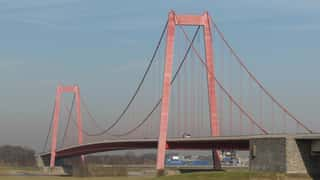
Wesel’s identity is forged by its position at the confluence of the Lippe and the Rhine River. Founded in the 12th century, it rose to prominence as a wealthy member of the Hanseatic League by 1407, serving as a vital trade link between England and Westphalia. The city's trajectory changed in the 17th century when it became a strategic Prussian fortress. Between 1681 and 1722, the Great Elector and his successors transformed Wesel into one of the most formidable military strongholds in northern Europe. This Prussian era left an indelible mark, most notably the massive Zitadelle (Citadel), which remains the largest fortification in the Rhineland. The most tragic chapter occurred in February 1945, when Allied bombing decimated nearly the entire urban core to neutralize its rail bridge and defensive capability. Consequently, what you see today is a 'Miracle of Reconstruction.' The Willibrordi-Dom, a Late Gothic cathedral originally built between 1498 and 1540, was painstakingly rebuilt stone-by-stone over several decades, only being 'completed' with its new spire in 1994. History here is not a dusty museum piece; it is a visible dialogue between the remnants of Prussian might and the resilience of a community that refused to let its heritage vanish under the rubble of World War II.
The Verdict
Wesel rewards the traveler who appreciates the quiet triumph of reconstruction over the easy allure of the antique. This guide has been fact-checked by J. Richard and the Waterways Cruise editorial team. A visit here is often most successful when balancing the massive scale of the Prussian Citadel with the intimate, restored beauty of the Willibrordi-Dom. Excursions that guarantee a return to the ship can be tailored to your mobility, interests, and pace, so missing departure is never a concern. No two travelers want the same day ashore.
Things to Do & See in Wesel
| Attraction | Type | Address | Phone | Hours | Website | Admission |
|---|---|---|---|---|---|---|
| Willibrordi-Dom | Historical Site | Großer Markt, 46483 Wesel, Germany | +49 281 22533 | Daily 11:00 AM - 5:00 PM (subject to services) | wesel-dom.de | Free |
| LVR-Niederrheinmuseum Wesel | Museum | An der Zitadelle 14-20, 46483 Wesel, Germany | +49 281 339960 | Tue-Sun 11:00 AM - 5:00 PM | niederrheinmuseum-wesel.lvr.de | EUR €4.50 |
| Berliner Tor | Landmark | Berliner Torplatz, 46483 Wesel, Germany | Open 24 hours | wesel-tourismus.de | Free | |
| Zitadelle Wesel | Historical Site | An der Zitadelle 7, 46483 Wesel, Germany | +49 281 203 2622 | Grounds open 24/7; Buildings vary | wesel.de | Free |
| Auesee | Natural Feature | Auesee, 46487 Wesel, Germany | Open 24 hours | wesel.de | Free |
Willibrordi-Dom · Historical Site
FreeStanding in the Großer Markt, the Willibrordi-Dom is the emotional heart of Wesel. This Late Gothic basilica was almost entirely leveled in 1945, and its current state is a testament to fifty years of meticulous labor. You will find that the reconstruction used original quarry sites to ensure color matching. Inside, the architecture is characterized by its incredible height and the 'Willibrord-Window.' Look for the small, scorched fragments of the original medieval pillars kept in the side chapel—they are the only parts that 'remember' the fire. It is a good idea to spend 20 minutes just sitting in the nave; the silence here is different than in larger cathedrals. It is a space of deep local pride. Most visitors walk past the 'Donkey of Wesel' bronze sculpture just outside; it’s a nod to a 19th-century linguistic pun that has become the city’s identity. You will come away with a powerful sense of peace and a reminder that even total destruction can be overcome.
Großer Markt, 46483 Wesel, Germany ·+49 281 22533 ·Daily 11:00 AM - 5:00 PM (subject to services) ·www.wesel-dom.de
LVR-Niederrheinmuseum Wesel · Museum
EUR €4.50Housed within the thick masonry of the Citadel’s former arsenal, this museum is the authoritative voice on the history of the Lower Rhine. Visitors often report that the 'Wesel 1945' exhibit is the most moving experience in the city. It explains not just the 'how' but the 'why' of the city's destruction. The museum covers the rise of the Hanseatic League and the sheer dominance of the Prussian military in the 1700s. Look for the massive scale models of the fortress—they help you orient yourself before you walk the actual walls. It is worth noting that the museum gift shop is actually the best place in town to find high-quality local books and maps. Expect a solid academic foundation for everything else you will see in the port. Don't skip the section on the Rhine River trade; it explains why this specific bend in the river made Wesel so strategically valuable for a thousand years.
An der Zitadelle 14-20, 46483 Wesel, Germany ·+49 281 339960 ·Tue-Sun 11:00 AM - 5:00 PM ·niederrheinmuseum-wesel.lvr.de
Berliner Tor · Landmark
FreeThe Berliner Tor is the grand survivor. Built between 1718 and 1722 by Jean de Bodt, it was the main eastern entrance to the Prussian fortress city. While the rest of the city's fortifications were dismantled in the 1890s to allow for expansion, this gate was preserved as a monument to Prussian architectural taste. Keep in mind that it is modeled on the triumphal arches of Rome, intended to signal Wesel's status as a first-class military hub. The gate features elaborate sculptures of Minerva and Mars, the gods of wisdom and war—a typical Prussian juxtaposition. Most visitors walk past without noticing that the side wings were added later; the central arch is the only original 18th-century structure. Standing here, you can trace the original limits of the old city. The visit offers a crisp, visual hit of Baroque grandiosity that contrasts sharply with the functional modern architecture surrounding it.
Berliner Torplatz, 46483 Wesel, Germany ·Open 24 hours ·www.wesel-tourismus.de
Zitadelle Wesel · Historical Site
FreeThis is the largest fortress in the Rhineland, and its scale is difficult to grasp from the street. The main courtyard is over 200 metres long. Built as a five-pointed star fortress, it served as the backbone of Prussian defense against the French for centuries. Today, it is a peaceful collection of archives, museums, and music schools. As you walk through the main entrance (the Bridge Gate), look at the thickness of the walls—they were designed to withstand heavy artillery from across the Rhine River. Visitors should follow the signs for the 'Schill-Kasematten' to see where the Napoleon-era officers were held. You will find that the Citadel remains the most visited site in the region, yet because of its size, it never feels crowded. This stop gives you a sense of 'Prussian order' and provides the best walking route in the city, sheltered from wind and traffic. It is a place where the military past has been successfully converted into a cultural future.
An der Zitadelle 7, 46483 Wesel, Germany ·+49 281 203 2622 ·Grounds open 24/7; Buildings vary ·www.wesel.de
Auesee · Natural Feature
FreeThe Auesee is the recreational heart of Wesel. Created from a former gravel pit, this crystal-clear lake is now a designated leisure zone. For a cruise passenger, it offers a total break from 'city' tourism. You will find that travelers who are 'museum-ed out' love the 20-minute taxi ride here just to sit by the water with a coffee. The water quality is among the best in North Rhine-Westphalia. You'll see locals sailing, windsurfing, and swimming. Be aware that the bird sanctuary at the northern end is a must for birdwatchers—bring binoculars if you have them. Most visitors miss the small 'barefoot path' near the main entrance designed for sensory walking. The experience delivers fresh air, a glimpse into local German weekend life, and a beautiful vista of the Rhine River floodplains that most tourists never see. It is Wesel's most relaxed experience.
Auesee, 46487 Wesel, Germany ·Open 24 hours ·www.wesel.de
Eating & Drinking in Wesel
The culinary identity of Wesel is firmly rooted in the 'Niederrheinische' (Lower Rhine) tradition, which is heartier and less 'refined' than the French-influenced cuisine of the south. Regional staples include *Panhas* (a type of meatloaf with buckwheat) and *Muscheln Rheinische Art* (mussels cooked in white wine with root vegetables), which are a local obsession from September to March. What makes this different from the rest of Germany is the heavy Dutch influence; you will find more pumpernickel bread and high-quality cheeses here than in Bavaria. For a drink, the town sits on the 'beer border'—locals drink *Altbier* (dark lager) from nearby Düsseldorf and *Pilsner* with equal passion. One honest note: tourists often expect a 'Rhine Wine' experience here, but Wesel is a beer and schnapps town. If you want the genuine experience, go to a local bakery for *Spekulatius* cookies—Wesel has a long tradition of spiced biscuit making that dates back to the Hanseatic spice trade.
| Place | Address | Phone | Hours | Website | Price range |
|---|---|---|---|---|---|
| Restaurant Lippeschlößchen | Willy-Brandt-Straße 2, 46483 Wesel | +49 281 4488 | Daily 11:30 AM - 9:30 PM | lippeschloesschen.de | €25.00–€40.00 (~$29.00–$46.00 USD) |
| Kaiserhof Wesel | Kaiserring 1, 46483 Wesel | +49 281 339320 | Mon-Sat 12:00 PM - 10:00 PM | kaiserhof-wesel.de | €18.00–€30.00 (~$20.50–$34.50 USD) |
| Scala Kulturspielhaus | Wilhelmstraße 8-10, 46483 Wesel | +49 281 164350 | Wed-Sun 6:00 PM - 11:00 PM (plus event times) | scala-wesel.de | €4.00–€8.00 (~$4.50–$9.00 USD) |
Restaurant Lippeschlößchen
€25.00–€40.00 (~$29.00–$46.00 USD)Order the Pike-Perch; it is sourced locally and served with a delicate mustard sauce typical of the Lower Rhine. This restaurant is situated on a small rise, providing a panoramic view of the Lippe river meadows. Travelers often praise the 'slow food' approach—everything is made from scratch. Keep in mind that service is traditionally German and professional, meaning it is not 'fast'—allow at least 90 minutes for lunch.
Willy-Brandt-Straße 2, 46483 Wesel ·+49 281 4488 ·Daily 11:30 AM - 9:30 PM
Kaiserhof Wesel
€18.00–€30.00 (~$20.50–$34.50 USD)Order the Schnitzel; it is pan-fried in clarified butter as it should be, not deep-fried. The atmosphere here is 19th-century Prussian elegance, a perfect match for the city's history. It is conveniently located between the train station and the city center. The decor may feel a bit dated to younger travelers, but it offers a familiar, comfortable reliability that is hard to find elsewhere.
Kaiserring 1, 46483 Wesel ·+49 281 339320 ·Mon-Sat 12:00 PM - 10:00 PM
Scala Kulturspielhaus
€4.00–€8.00 (~$4.50–$9.00 USD)This is where Wesel’s soul lives. It’s an old movie theater turned into a bar and performance space. Order a local Altbier and soak in the cinematic history—they've kept much of the original 1950s interior. It’s the right place for a drink because it feels 'real' and unpolished. Locals come here for the live jazz and the nostalgic vibe. Honest limitation: it can be loud if a performance is starting, so check their schedule before you go.
Wilhelmstraße 8-10, 46483 Wesel ·+49 281 164350 ·Wed-Sun 6:00 PM - 11:00 PM (plus event times)
Getting There & Around
Wesel is designed for the pedestrian. Once you leave the Rhine River pier, a paved, level path leads directly into the city's green belt. For most visitors, walking is the only sensible option as the main sites are clustered within a 1.5 km radius. If you wish to travel further, such as to the Auesee lake, it is best to rent a bicycle through the 'NiederrheinRad' system; stations are located near the train station and cost approximately €12.00 (~$14.00 USD) per day. Local buses are reliable but unnecessary for the central historic sites. Uber does not operate here; instead, use local taxi companies like Taxi Temmler. Note that the city uses a 'radial' layout; all major paths eventually lead back to either the Cathedral or the Citadel. One tip most guides miss: the 'Kulturpfad' (Culture Path) is marked by small metal studs in the pavement—follow these to hit all the minor historic markers without needing a map.
Itineraries & Sample Walks
4-Hour Shore Excursion in Wesel
Zitadelle Wesel (The Citadel)
9:00 AM (90 min)
Walk through the main gate to appreciate the sheer scale of Prussian military engineering. The complex is now a cultural hub. Don't just look at the walls; go inside the courtyard to see how the old barracks have been repurposed.
- A 10-minute walk south from the cruise pier along the Lippeglacis path.
- Entry: Free (Free)
- The view from the top of the outer ramparts offers the best perspective of the original star-fortress layout—most people stay at ground level.
Willibrordi-Dom (Cathedral)
10:45 AM (45 min)
This Late Gothic masterpiece is a symbol of Wesel's survival. The interior is surprisingly light and airy for a German cathedral. Take a moment to look at the 'Vesperbild'—a medieval Pietà that survived the bombings.
- A 12-minute walk north via Brückstraße and Hohe Straße.
- Entry: Free (Free)
- Look for the small 'Donkey of Wesel' figures near the entrance—it's the city's unofficial mascot based on a local linguistic quirk.
Lunch Recommendation
Restaurant Lippeschlößchen
While most tourists eat at the chain cafes on Hohe Straße, this family-run spot offers a panoramic view of the Lippe meadows and the Rhine. It’s where Wesel's elite dine.
Order: Lower Rhine Mussels (seasonal), Zwiebelrostbraten (Onion Roast Beef)
Willy-Brandt-Straße 2, 46483 Wesel
Cost: €25.00–€35.00 (~$29.00–$40.50 USD)
8-Hour Full Day Experience in Wesel
Zitadelle Wesel
9:00 AM (60 min)
Explore the outer gates and the Schill monument.
- 10-minute walk from pier
- Entry: Free (Free)
- The Main Gate (Haupttor) is the most photogenic spot in the city.
LVR-Niederrheinmuseum Wesel
10:15 AM (90 min)
This museum provides the essential context for the Lower Rhine. It tracks the city's Hanseatic wealth and its military transformation.
- Located within the Citadel complex
- Entry: €4.50 ($5.00)
- The model of the city pre-1945 is heart-breaking but essential for understanding what was lost.
Willibrordi-Dom & Großer Markt
1:30 PM (60 min)
Visit the Cathedral and the adjacent Flemish-style Town Hall facade.
- 15-minute walk north
- Entry: Free (Free)
- Check for organ rehearsals; the acoustics are world-class.
Berliner Tor
3:00 PM (30 min)
The last remaining Baroque gate of the city's Prussian defenses. It looks like a miniature Arc de Triomphe.
- 10-minute walk east via Viehstraße
- Entry: Free (Free)
- The sculptures on the gate represent the virtues of the Prussian state—look for the figures of Wisdom and Justice.
Getting back to the ship
The 'All Aboard' time is usually 30 minutes before departure. Given that the walk from the Großer Markt (Cathedral) back to the Lippeglacis pier is exactly 1.5 km (0.9 miles), you should leave the city center no later than 45 minutes before departure to ensure a safe buffer. A taxi from the town center takes only 5 minutes and costs approximately €10.00 (~$11.50 USD), but you must call for one (+49 281 3131); do not rely on finding one waiting. If you are running late, contact the port agent immediately (details on your daily ship program). The Rhine River current is strong; once the gangway is up, ships rarely wait more than 5 minutes. Passengers who miss the ship in Wesel will have to take a 45-minute train to Duisburg or a 90-minute train to Düsseldorf to catch up, costing roughly €40 per person.
Weather & Best Time to Visit Wesel
Weather & What to Pack
Cruise season: April to October (plus December for Christmas Markets)
Spring/Fall: 10°C–18°C (50°F–64°F). Summer: 20°C–26°C (68°F–79°F). Generally temperate with occasional Rhine rain.
What to wear: Layers are essential due to the Rhine River breeze which can be surprisingly cool even on sunny days. Wear comfortable walking shoes; while the city is flat, the Citadel involves significant walking on hard brick surfaces. A light waterproof jacket is a must, as afternoon squalls are common in the Lower Rhine region.
Weather risks: Early morning fog on the Rhine can occasionally delay docking by 30-60 minutes in October.
The blooming of the 'Wesel Azaleas' in May makes the city's parks particularly scenic for early-season cruisers.
| Season | Conditions | Hazards | Affected areas | Visitor advice |
|---|---|---|---|---|
| Summer (June–August) | Warm and often humid with temperatures averaging 23°C (73°F). | The exposed paths around the Citadel and the riverfront offer very little shade, leading to rapid dehydration on sunny days. | The Lippeglacis promenade and the main courtyard of the Citadel. | Wear a wide-brimmed hat and use the shaded benches within the Citadel's interior courtyards during midday. |
| Autumn (September–November) | Crisp air with frequent Rhine mists and rain showers; temperatures around 12°C (54°F). | Wet leaves on the cobblestoned areas near the Willibrordi-Dom and the Citadel entrance become surprisingly slick. | Großer Markt and the entrance ramps to the LVR-Niederrheinmuseum. | Wear shoes with deep lug soles. Avoid the inclined ramps near the fortress walls when visibly wet. |
Practical Information
Cultural etiquette
In Wesel, as in much of the Lower Rhine, the greeting is a direct, firm handshake accompanied by a crisp 'Guten Tag.' Locals are known for being more reserved than their neighbors in Cologne; don't expect the boisterous 'Halleluja' energy here. In restaurants, when you are finished, place your knife and fork parallel on the right side of the plate; leaving them crossed signals you are just resting. Splitting dishes is not common and can be viewed as odd in traditional spots like Kaiserhof. Photography is generally allowed everywhere except during church services in the Willibrordi-Dom—always wait until the service is completely over. Germans queue strictly and value personal space; 'budging' is a significant social offense. Tipping is expected but not at American levels: round up to the nearest €5 or €10, or add roughly 5-10% for good service. A common mistake cruise passengers make is trying to pay for small items (under €10) with a credit card; many local bakeries and kiosks are still strictly 'Nur Bares' (Cash Only).
Mistakes to Avoid
| Mistake |
|---|
Spending the first hour hunting for a medieval 'Old Town' quarter. |
Walking to the Auesee lake thinking it's a 'quick stroll' from the pier. |
Arriving at the Willibrordi-Dom between 12:30 PM and 1:30 PM. |
Neglecting to carry coins for public restrooms. |
Practical tips
Wesel is a town where cash still speaks. While major shops on Hohe Straße and museums like the LVR accept Visa and Mastercard, small cafes and the local market are strictly cash-only; keep at least €30 in small bills for the day. Tipping is a 'round-up' culture; for a €27.50 lunch, leaving €30 is perfectly acceptable. To earn genuine goodwill, use these five phrases: 'Guten Morgen' (Good morning), 'Danke schön' (Thank you), 'Bitte' (Please/You're welcome), 'Wo ist der Dom?' (Where is the Cathedral?), and 'Tschüss' (Bye). Scams are rare here, but be wary of 'unlicensed' bike tours offered near the pier; stick to the official tourism office for rentals. The dress code for the Willibrordi-Dom is respectful; men should remove hats and everyone should cover shoulders. The best time to visit the Cathedral is at 11:15 AM—right after the morning cleaning but before the lunch rush. If you see a 'Donkey' statue, don't climb it for photos; it's considered disrespectful to the city's symbols.
Cruise Lines Visiting Wesel
Port of Call

Why Book With Waterways Cruise?
Four decades of expertise, one dedicated advisor, and every detail handled, from your front door to the gangway and back.
Personal Service — Your Own Cruise Concierge
Tailor-Made — 100% Custom-Built
Expertise — 40+ Years in Travel
Price Watch — Book With Total Confidence
Signature Sailings
All Cruise Lines at Wesel (A–Z)
Nearby Ports
FAQ — Wesel
Is the walk from the ship to Wesel city center flat?
Yes, Wesel is exceptionally flat. The path from the Lippeglacis pier to the city center follows the old town fortifications and involves zero hills or significant inclines. The total elevation gain is less than 5 metres over the entire 1.5 km walk. This makes Wesel one of the best ports on the Rhine for travelers using walkers or manual wheelchairs. Most of the route is paved with smooth asphalt or large, flat paving stones, though there are small sections of modern cobblestone in the Großer Markt. For guaranteed comfort, a door-to-door transfer if you prefer to save your energy for the sites themselves can be arranged in advance.
Can I see the Xanten Roman ruins from Wesel?
Yes, but you need a plan. The Xanten Archaeological Park is 15 km (9 miles) from Wesel. A taxi takes about 20 minutes and costs approximately €40.00 (~$46.00 USD) each way. Public transit involves a train from Wesel Hauptbahnhof to Xanten, taking 15 minutes, but the station is 2 km from the pier. You realistically need a minimum 6-hour port call to see Xanten and return safely without missing your ship. You should take the ship's organized excursion for Xanten to guarantee your return. For a more relaxed day, stay in Wesel and explore the Citadel. Private car transfers to Xanten with a guaranteed return-to-ship can be arranged in advance through your cruise line or a licensed local operator.
What is the 'Wesel Donkey' everyone talks about?
The donkey is Wesel's unofficial mascot. It stems from a famous German echo-rhyme: 'Wie heißt der Bürgermeister von Wesel? Esel!' (What's the name of the mayor of Wesel? Donkey!). Rather than being offended, the city embraced it. You will find over 100 life-sized, painted donkey statues scattered throughout the city. The most famous one is a bronze statue by the Berliner Tor. Many gift shops sell chocolate donkeys for around €4.50 (~$5.20 USD) and porcelain versions for €15.00 (~$17.25 USD). It's a charming local quirk that adds a bit of whimsy to the otherwise stern Prussian architecture. It makes for a great, lighthearted photo opportunity during your walk between the Cathedral and the Citadel.
Are museums in Wesel closed on Mondays?
Yes, both the LVR-Niederrheinmuseum and the Preußen-Museum are closed every Monday. If your ship docks on a Monday, you will not be able to see the interiors of these major historical sites. However, the Citadel grounds and the Willibrordi-Dom remain open to the public. In this case, it is a good idea to focus your day on the outdoor 'Kulturpfad' walking tour or take a taxi to the Auesee lake for a nature walk. Always check your ship's daily schedule, but you will find that Monday remains a 'quiet day' for cultural institutions in the Lower Rhine. Your itinerary can be adjusted if you find yourself here on a Monday.
Is there a Christmas Market in Wesel?
Wesel hosts a very traditional and cozy Christmas Market (Adventmarkt) in the Großer Markt, usually during the first weekend of December. Unlike the massive, crowded markets in Cologne, the Wesel market focuses on local crafts and regional food from the Lower Rhine. You can find handmade wooden toys and local 'Spekulatius' cookies. A mug of Glühwein typically costs €4.00 (~$4.50 USD) plus a €2-3 deposit for the mug. It is an excellent stop for river cruises on a holiday itinerary as the market is located just 1.5 km (0.9 miles) from the pier. The atmosphere with the illuminated Willibrordi-Dom in the background is spectacular. Specific dates for this year's market can be provided in advance.
What is the best thing to buy in Wesel?
The most authentic purchase is 'Echt Weseler Spekulatius' (Spiced biscuits). Wesel has a 150-year-old tradition of baking these, linked to the Hanseatic spice trade. A box from a local bakery like Konditorei дам typically costs €8.00 (~$9.20 USD). For a non-food item, look for a 'Wesel Donkey' porcelain figurine or high-quality Prussian history books from the museum shop. Avoid the generic 'Germany' souvenirs like beer steins made in China; instead, look for Lower Rhine fruit brandies (Obstbrand) which are produced in the nearby countryside. A 500ml bottle of local pear brandy costs roughly €18.00 (~$20.75 USD). Travelers consistently report that these artisanal food items are the most appreciated gifts brought home from the Lower Rhine.
Does Wesel have free public WiFi?
Yes, the city offers 'Wesel.connect,' a free public WiFi network. It is most reliable in the Großer Markt, the pedestrian zone (Hohe Straße), and around the Berliner Tor. You typically have to register with an email address for 2 hours of free access. However, the signal does not reach the Lippeglacis cruise pier. If you need to download maps or check emails, it is a good idea to do so while sit at a cafe near the Cathedral. Speeds are adequate for navigation and basic messaging but not for video calls. For a more reliable connection, most local cafes like Cafe Vesalia will provide their private password if you purchase a coffee, which usually costs around €3.50 (~$4.00 USD).
How much should I tip a taxi driver in Wesel?
Tipping in Wesel is simple: round up to the nearest Euro for short trips, or add 10% for longer journeys. If your taxi from the pier to the Auesee costs €11.20, giving the driver €12.00 is perfectly acceptable and appreciated. If the service was exceptional, you might give €13.00. Unlike in the US, tips are not a mandatory percentage of the bill but a gesture of goodwill. Drivers do not expect tips as part of their wage. Also, be aware that many taxis in Wesel still prefer cash; always ask 'Kann ich mit Karte zahlen?' (Can I pay with card?) before the journey starts to avoid a stressful situation at the end.
Are there any public restrooms near the cruise pier?
There are no restrooms directly on the pier itself. The nearest public facilities are located at the entrance to the Citadel (Zitadelle), which is an 800-metre (10-minute) walk from where the ship docks. These restrooms are maintained by the museum and are very clean. They generally require a €0.50 (~$0.60 USD) coin for entry, so ensure you have small change ready. Additional accessible restrooms can be found in the modern City Hall glass pavilion near the Cathedral, about 1.5 km (0.9 miles) from the pier. For travelers with mobility concerns, it is a good idea to use the ship's facilities immediately before disembark to avoid the 10-minute walk to the first available restroom.
Is Wesel safe for solo travelers?
Wesel is remarkably safe, even by German standards. It is a quiet, provincial city with very low crime rates. The walk from the pier to the city center is through a well-lit public park and residential areas. Solo travelers have consistently reported feeling completely comfortable exploring the Citadel and the shopping district alone. Standard common sense applies: keep your bag zipped and be aware of your surroundings near the train station at night, but pickpocketing is almost unheard of here compared to larger cities like Cologne or Amsterdam. The local police (Polizei) are helpful and almost all speak English. If you need any assistance, the Wesel Marketing office at the Großer Markt is the best place to go.
Fact-checked and co-written by J. Richard, Founder, Waterways Cruise, with the Waterways Cruise Content Team.
Published May 19, 2026 · Last updated November 2, 2026
This guide is researched and reviewed by our editorial team, but prices, hours, and availability change often. Confirm current details directly with venues, excursion operators, and your cruise line before you travel.