Rome Italy Cruise Port
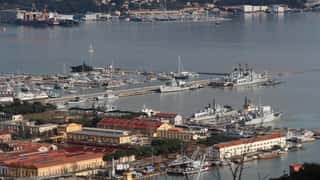
Port of Civitavecchia (Porto di Roma)


Rome Italy, Italy Port
UN/LOCODE ITOME Port of call
Rome Italy Cruise Port Location
| Port Details | |
|---|---|
| Country | Italy |
| UN/LOCODE | ITOME |
| Contact | |
| Address | Molo Vespucci, 00053 Civitavecchia RM, Italy |
| Port phone | +39 0766 366201 |
| Website | civitavecchia.porti-di-roma.it |
| Geography | |
| Coordinates | 45.61667, 10.11667 |
| Accessibility | |
| Accessible | Limited |
The cruise terminal at Civitavecchia is 80 km (50 miles) from central Rome, a distance that demands at least 70 to 90 minutes of transit time each way. Located in the Lazio region of central Italy, this destination serves as a primary hub for ocean cruise itineraries traversing the Tyrrhenian Sea. Rome is roughly 95 km (60 miles) south of the medieval town of Viterbo and 220 km (137 miles) north of Naples, making it the monumental heart of any Mediterranean voyage. Waterways Cruise clients consistently report that attempting to 'see it all' in one day is the fastest route to frustration. You must choose between the Vatican, the ancient Roman Forum, or the Baroque fountains of the city center. It is worth knowing that traffic on the A12 highway can turn a 90-minute taxi ride into a two-hour ordeal during morning rush hour. This destination rewards the disciplined traveler who pre-books every entrance and punishes those who arrive without a specific transport plan. Whether you arrive on a large ocean-going vessel or a boutique small-ship, Rome requires significant logistics before the first espresso is even ordered.
Rome Italy — Port Overview
History
Rome was traditionally founded in 753 BC by Romulus, growing from a collection of hilltop villages into the 'Caput Mundi'—the head of the world. Its strategic position on the Tiber River allowed it to dominate Mediterranean trade and military expansion for centuries. The shift from Republic to Empire in 27 BC under Augustus transformed the city into a marble-clad testament to power. Travelers today primarily see the results of two major eras: the Imperial height, represented by the Colosseum (completed in 80 AD), and the Renaissance/Baroque rebirth funded by the Papacy. The Sack of Rome in 1527 by Holy Roman Emperor Charles V was a pivotal trauma that paradoxically led to the grand urban planning and wide piazzas navigated today. In 1871, Rome became the capital of a unified Italy, leading to the construction of the massive Vittoriano monument, which locals often call the 'wedding cake.' You can see this collision of eras at the Largo di Torre Argentina, where 20th-century tram lines circle the 1st-century BC temples where Julius Caesar was assassinated. Every street you walk in the Centro Storico is a layered archaeological record of these 2,700 years of continuous human ambition.
The Verdict
Rome is a city that demands a strategic approach. In this port, the visitors who come away happiest are the ones who arrive with a plan and the flexibility to adapt it when a queue is too long or a street is closed. This guide has been fact-checked by J. Richard and the Waterways Cruise editorial team. Excursions that guarantee a return to the ship can be tailored to your mobility, interests, and pace, so missing departure is never a concern. No two travelers want the same day ashore.
Things to Do & See in Rome Italy
| Attraction | Type | Address | Phone | Hours | Website | Admission |
|---|---|---|---|---|---|---|
| The Pantheon | Historical Site | Piazza della Rotonda, 00186 Roma RM, Italy | +39 06 6830 0230 | Daily 9:00 AM - 7:00 PM | pantheonroma.com | EUR €5.00 |
| Trevi Fountain | Landmark | Piazza di Trevi, 00187 Roma RM, Italy | +39 06 0608 | Open 24 hours | turismoroma.it | Free |
| St. Peter's Basilica | Religious Site | Piazza San Pietro, 00120 Città del Vaticano | +39 06 6988 3731 | 7:00 AM - 7:00 PM | vatican.va | Free |
| The Colosseum | Historical Site | Piazza del Colosseo, 1, 00184 Roma RM, Italy | +39 06 3996 7700 | 9:00 AM - 7:00 PM (seasonal) | parcocolosseo.it | EUR €18.00 |
| Vatican Museums & Sistine Chapel | Museum | Viale Vaticano, 00165 Roma, Italy | +39 06 6988 4676 | 9:00 AM - 6:00 PM | m.museivaticani.va | EUR €20.00 |
The Pantheon · Historical Site
EUR €5.00Standing before the Pantheon is the most direct connection to the Roman Empire you can have. Built by Hadrian around 126 AD, its concrete dome remains the largest unreinforced dome in the world. The height and diameter are identical (43.3 meters), creating a perfect sphere within a cylinder. When you step inside, the scale of the 16 massive Corinthian columns, each a single block of Egyptian granite, is staggering. You will notice that many visitors walk past the tomb of the Renaissance master Raphael on the left-hand side. Don't be one of them. This stop gives you a sense of timelessness that neither the Colosseum nor the Vatican can replicate, precisely because it is still a functioning consecrated church. It is the one site in Rome that feels exactly as it did 1,900 years ago.
Piazza della Rotonda, 00186 Roma RM, Italy ·+39 06 6830 0230 ·Daily 9:00 AM - 7:00 PM ·www.pantheonroma.com
Trevi Fountain · Landmark
FreeThe Trevi is the largest Baroque fountain in the city and an absolute requirement for first-time visitors. Designed by Nicola Salvi, it depicts Oceanus taming the waters. The sound of the rushing water hits you two blocks before you see the stone. While throwing a coin with your right hand over your left shoulder 'guarantees' a return to Rome, the real joy is in the detail of the 'scoglio' (the rocky outcrop). 30 different species of plants are carved into the stone, all scientifically accurate. It is an engineering marvel, once the terminal point of the Aqua Virgo aqueduct. Despite the crushing crowds, the theatricality of the space is undeniable. It delivers that 'movie-set' Roman feeling that visitors yearn for, but be prepared for a purely observational experience—you will not find a quiet moment here during daylight hours.
Piazza di Trevi, 00187 Roma RM, Italy ·+39 06 0608 ·Open 24 hours ·www.turismoroma.it
St. Peter's Basilica · Religious Site
FreeRegardless of your faith, St. Peter's is a monumental achievement of human engineering and art. This is the largest church in the world, and every dimension is designed to deceive—the cherubs near the holy water fonts look small but are over six feet tall. Visitors should head straight to the right aisle to see the Pieta, then under Bernini's massive bronze Baldacchino. It is well established that the 'Scaavi' tour (the necropolis underneath) is the best experience but requires booking months in advance. The basilica delivers a sense of overwhelming scale and wealth. It is the physical manifestation of the Papacy's power. It rewards the early riser with a quiet, spiritual experience and punishes the latecomer with long waits in the unshaded square. Remember: the dress code is strictly enforced—no bare shoulders or knees.
Piazza San Pietro, 00120 Città del Vaticano ·+39 06 6988 3731 ·7:00 AM - 7:00 PM ·www.vatican.va
The Colosseum · Historical Site
EUR €18.00The Flavian Amphitheatre remains the ultimate symbol of Rome. Completed in 80 AD, it could hold 50,000 spectators for gladiatorial games. While the exterior is iconic, the interior reveals the complex 'hypogeum' (underground) where animals and prisoners were kept. The walk around the perimeter is roughly 500 meters. The sheer engineering of the 80 entrance arches (the 'vomitoria') allowed the entire stadium to empty in minutes. Most visitors walk past the small museum on the second tier; a 15-minute stop there is recommended to see the recovered ancient graffiti. You will come away with a visceral connection to the brutality and brilliance of Roman life. However, it is also the city's most congested site. Without a pre-booked 'Skip the Line' ticket, you will waste your entire port call standing in the sun.
Piazza del Colosseo, 1, 00184 Roma RM, Italy ·+39 06 3996 7700 ·9:00 AM - 7:00 PM (seasonal) ·parcocolosseo.it
Vatican Museums & Sistine Chapel · Museum
EUR €20.00This is one of the world's most important art collections, but it is also a logistical nightmare. The 'must-see' is Michelangelo's ceiling in the Sistine Chapel and his 'Last Judgment'. The consistent feedback from visitors is that the experience is marred by the crowds. To truly enjoy it, you need an 'Early Access' tour that enters at 7:30 AM. Once inside, don't rush—look for the Laocoön in the Octagonal Court and the Raphael Rooms. This stop gives you an unparalleled artistic high, but the physical toll is significant. You will be walking on marble floors for 3 hours with few places to sit. It is a commitment of time and energy that requires missing almost everything else in Rome.
Viale Vaticano, 00165 Roma, Italy ·+39 06 6988 4676 ·9:00 AM - 6:00 PM ·m.museivaticani.va
Eating & Drinking in Rome Italy
Roman cuisine is defined by the 'Quinto Quarto' (the fifth quarter)—the tradition of using offal, born from the city's ancient working-class meat markets. However, the four 'Kings of Roman Pasta' are what you must try: Gricia, Carbonara, Amatriciana, and Cacio e Pepe. What defines a genuine Roman version is the use of Pecorino Romano (sheep's milk cheese) rather than Parmesan. For drinks, look for white wines from the nearby Castelli Romani, specifically Frascati Superiore. A unique specialty most tourists miss is the 'Carciofo alla Giudia' (Jewish-style artichoke), deep-fried until the leaves are like potato chips; find the authentic version in the Ghetto neighborhood. Beware of any place with photos of food on a board or 'tourist menus' for €15.00—locals never eat there. Genuine Roman dining is loud, social, and starts late; lunch is at 1:30 PM and dinner rarely before 8:30 PM.
| Place | Address | Phone | Hours | Website | Price range |
|---|---|---|---|---|---|
| Roscioli Salumeria con Cucina | Via dei Giubbonari, 21, 00186 Roma RM, Italy | +39 06 687 5287 | 12:30 PM - 4:00 PM, 7:00 PM - 11:30 PM | salumeriaroscioli.com | €45.00–€65.00 (~$52.00–$75.00 USD) |
| Armando al Pantheon | Salita de' Crescenzi, 31, 00186 Roma RM, Italy | +39 06 6880 3034 | 12:30 PM - 3:00 PM, 7:00 PM - 11:00 PM | armandoalpantheon.it | €40.00–€60.00 (~$46.00–$69.00 USD) |
| The Court | Via Labicana, 125, 00184 Roma RM, Italy | +39 06 6935 4581 | 6:00 PM - 1:00 AM | palazzomanfredi.com | €25.00–€30.00 (~$29.00–$34.50 USD) |
Roscioli Salumeria con Cucina
€45.00–€65.00 (~$52.00–$75.00 USD)Part high-end deli, part restaurant, Roscioli is a Roman institution. You dine surrounded by shelves of the world's best cheese and wine. Order the Carbonara—it is widely considered the best in the city, using Paolo Parisi eggs and hand-selected guanciale. One honest limitation: the tables are extremely cramped and the service can be brisk to the point of appearing rude. It is a place for serious eating, not a long, relaxing lounge.
Via dei Giubbonari, 21, 00186 Roma RM, Italy ·+39 06 687 5287 ·12:30 PM - 4:00 PM, 7:00 PM - 11:30 PM
Armando al Pantheon
€40.00–€60.00 (~$46.00–$69.00 USD)Located just steps from the Pantheon, this wood-paneled dining room has been serving traditional Roman fare since 1961. The Gricia (guanciale, pecorino, and black pepper) is masterfully balanced. The popularity of this spot is virtually impossible to get a walk-in table. You must book online exactly 30 days in advance when the system opens. It delivers a refined, classic Roman experience that feels like stepping back into the mid-century city.
Salita de' Crescenzi, 31, 00186 Roma RM, Italy ·+39 06 6880 3034 ·12:30 PM - 3:00 PM, 7:00 PM - 11:00 PM
The Court
€25.00–€30.00 (~$29.00–$34.50 USD)Located inside Palazzo Manfredi, this is arguably the most spectacular place for a drink in Europe. You are eye-level with the Ludus Magnus (gladiator training school) and the Colosseum. Locals come here for the 'Aperitivo'—the drinks come with high-end snacks. It is expensive, but you are paying for the view of a lifetime. Dress code is 'Smart Casual'—no flip-flops or cruise lanyards.
Via Labicana, 125, 00184 Roma RM, Italy ·+39 06 6935 4581 ·6:00 PM - 1:00 AM
Getting There & Around
Once you have left the Tyrrhenian Sea coast and arrived at Roma Termini or San Pietro station, walking is the primary way to see the historic core. However, the city is vast. The 'BIRG' ticket for €12 is recommended.00 (~$14.00 USD), which covers your round-trip regional train from Civitavecchia plus all buses, trams, and metro lines in Rome for the day. You can buy this at the Civitavecchia station newsstand. Uber operates only as 'Uber Black' or 'Uber Lux' in Rome, meaning it is significantly more expensive than a standard taxi. For a reliable local alternative, download the 'Free Now' app to hail official white taxis at fixed rates. While Rome has a bike-sharing scheme, the combination of aggressive traffic and ancient cobblestones makes cycling unsuitable for most cruise passengers. One insider tip: ignore the Metro for the Centro Storico—it skirts the edges of the historic center. The Number 8 and Number 19 Trams are far better for seeing the city while moving.
Itineraries & Sample Walks
4-Hour Shore Excursion in Rome Italy
The Pantheon
10:30 AM (45 min)
The best-preserved ancient Roman building. Stand under the oculus and look for the original 2nd-century bronze doors. Most visitors miss the tombs of the Italian kings on the interior perimeter.
- Take a private transfer from Civitavecchia directly to Largo di Torre Argentina, then a 5-minute walk. (€150.00 (~$172.50 USD) for private car)
- Entry: €5.00 ($5.75)
- Book your timed entry at least 2 weeks in advance; the queue for non-ticket holders can exceed 90 minutes in July.
Piazza Navona
11:30 AM (40 min)
A Baroque masterpiece built on the site of Domitian's ancient stadium. Focus on Bernini's 'Fountain of the Four Rivers'. Look for the 'hidden' carvings of the Rio de la Plata figure shielding his eyes.
- A 5-minute walk west from the Pantheon via Via del Salvatore. (Free)
- Entry: Free (Free)
- Avoid the restaurants on the piazza; walk two blocks west to Via del Governo Vecchio for authentic food at half the price.
Lunch Recommendation
Hostaria da Pietro
This family-run spot avoids the 'tourist menu' traps of the nearby Spanish Steps and serves handmade pasta to a loyal local following.
Order: Tonnarelli Cacio e Pepe, Saltimbocca alla Romana
Via di Gesù e Maria, 18, 00187 Roma RM, Italy
Cost: €35.00 (~$40.50 USD)
8-Hour Full Day Experience in Rome Italy
St. Peter's Square & Basilica
9:30 AM (120 min)
The largest church in the world. Michelangelo's Pieta is on the right just after entry. Most miss the 'Holy Door' which is only opened during Jubilee years.
- Train from Civitavecchia to Roma San Pietro station (45 mins), then 10-minute walk. (€4.60 (~$5.50 USD))
- Entry: Free (Free)
- Arrival before 9:00 AM is the only way to avoid a 2-hour security queue.
Castel Sant'Angelo
12:00 PM (60 min)
Originally Hadrian's mausoleum, then a papal fortress. The view from the top terrace is the best panoramic photo spot in Rome.
- 10-minute walk east from St. Peter's along Via della Conciliazione. (Free)
- Entry: €13.00 ($15.00)
- Skip the interior rooms if you are short on time; the ramp up to the terrace is the real highlight.
Getting back to the ship
The absolute latest safe departure from Roma Termini is 3:30 PM for a 5:30 PM 'All Aboard'. A private taxi back to Civitavecchia costs roughly €160.00 (~$184.00 USD) and takes 75–90 minutes; however, an accident on the A12 highway can easily double this time. The 'Civitavecchia Express' train is the most reliable option, as it is a dedicated tourist service with no intermediate stops. If you miss the train or are running late, contact the Port Agent immediately (number on your daily program). The ship will NOT hold for independent travelers. Missing the ship in Rome requires a 3-hour taxi or train to the next port (typically Livorno or Naples), costing upwards of €400.00 (~$460.00 USD).
Weather & Best Time to Visit Rome Italy
Weather & What to Pack
Cruise season: Year-round; peak season is April to October.
Summer: 28°C–34°C (82°F–93°F), dry and sunny. Spring/Autumn: 15°C–22°C (59°F–72°F) with occasional showers. Winter: 5°C–13°C (41°F–55°F).
What to wear: Comfortable, broken-in walking shoes are mandatory; do not wear new sandals on cobblestones. For the Vatican and churches, shoulders and knees must be covered. A light pashmina or zip-off trousers are recommended. In summer, high-SPF sunscreen and a hat are essential as sites like the Roman Forum offer zero shade from the Tyrrhenian Sea sun. Layering is key for spring and autumn when mornings are crisp but afternoons warm up significantly.
Weather risks: Summer heat advisories can lead to the closure of the upper levels of the Colosseum. Sudden afternoon thunderstorms in October can cause localized flooding in Trastevere.
Early June offers the best balance of long daylight hours and manageable heat before the July spike.
| Season | Conditions | Hazards | Affected areas | Visitor advice |
|---|---|---|---|---|
| Summer (June–August) | Intense heat often exceeding 35°C (95°F) with high humidity and minimal shade in open archaeological sites. | The uneven 'sampietrini' cobblestones expand in the heat, creating tripping hazards. Dehydration is a severe risk in the unshaded Roman Forum and Colosseum. | The Roman Forum, Palatine Hill, and the long walk from the Vatican Museums to St. Peter's Square. | Wear light linen clothing and wide-brimmed hats. Utilize the 'nasoni' (nose-shaped) public fountains for free cold water. Skip the Forum between 12:00 PM and 3:00 PM. |
| Winter (December–February) | Cool and damp with frequent light rain; temperatures average 8°C–13°C (46°F–55°F). | Wet sampietrini become exceptionally slick, rivaling ice for lack of traction. Steep staircases in Monti and the Capitolium become dangerous without treaded shoes. | Trastevere's narrow alleys, the Spanish Steps (where sitting is prohibited), and the slopes of the Aventine Hill. | Footwear with heavy rubber soles is non-negotiable. Carry a compact umbrella, as street vendors will charge €15.00 (~$17.50 USD) for poor-quality ones the moment it drizzles. |
Practical Information
Cultural etiquette
Romans greet with a firm handshake and eye contact; two kisses (right then left) are reserved for established friends. In cafes, the 'standing price' at the bar is significantly lower than the 'sitting price' at a table—sometimes a 300% difference. If you sit down, expect to pay a 'coperto' (cover charge). Regarding photography, it is strictly forbidden in the Sistine Chapel; the guards are aggressive and will delete your photos. Romans don't really 'queue' in a straight line for buses or bars; it is a polite but firm 'crowd-push'—you must hold your ground or you will never board. Tipping is not expected as it is in the US; a 'round-up' of a few Euros or 5-10% for exceptional service at dinner is plenty. Taxi drivers do not expect a tip unless they handle heavy luggage. A common mistake is ordering a 'Latte' and being surprised when served a glass of plain milk; order a 'Caffè Latte' instead. Finally, never order a Cappuccino after 11:00 AM—Romans believe the milk destroys digestion and it marks you instantly as a naive tourist.
Mistakes to Avoid
| Mistake |
|---|
Taking a regional train (FL5) back to the ship too late. |
Eating lunch at restaurants with 'Tourist Menus' facing major monuments. |
Failing to pre-book Vatican or Colosseum tickets. |
Ordering a cappuccino after 11:00 AM. |
Practical tips
Rome is increasingly a tap-to-pay city; you can use contactless credit cards for all public transit gates and 90% of restaurants. However, carry at least €50.00 in cash for small purchases like gelato, kiosks, or 'coperto' charges. A 10% tip is generous; anything more is unnecessary. Five essential phrases: 'Buongiorno' (Good morning), 'Per favore' (Please), 'Grazie' (Thank you), 'Dov'è il bagno?' (Where is the bathroom?), and 'Il conto, per favore' (The bill, please). Scams are rampant: avoid anyone trying to put a 'friendship bracelet' on your wrist (they will demand money) and never accept a 'free' rose. At the Colosseum, 'Gladiators' will offer photos and then demand €20.00 (~$23.00 USD)—ignore them. Dress modestly for churches—shoulders and knees must be covered or you will be denied entry to St. Peter's or the Pantheon. The best time to visit the Trevi Fountain is 7:30 AM; by 10:00 AM, the crowds make it impossible to reach the water's edge. Use the 'nasoni' water fountains—they are free, cold, and the same water as the expensive bottled stuff.
Cruise Lines Visiting Rome Italy
Port of Call


Embarkation / Disembarkation
Why Book With Waterways Cruise?
Four decades of expertise, one dedicated advisor, and every detail handled, from your front door to the gangway and back.
Personal Service — Your Own Cruise Concierge
Tailor-Made — 100% Custom-Built
Expertise — 40+ Years in Travel
Price Watch — Book With Total Confidence
Signature Sailings
All Cruise Lines at Rome Italy (A–Z)
Nearby Ports


FAQ — Rome Italy
Where is the nearest luggage storage at Roma Termini for cruise passengers?
The official 'Kipoint' luggage office is located on Platform 24 at Roma Termini. It charges €10.00 (~$11.50 USD) for the first 5 hours. However, it often has a long queue. It is best to use 'Radical Storage' or 'Bounce' to book a secure spot at a nearby shop for a flat €5.00 (~$6.00 USD) per day, which can be done via their mobile apps in under two minutes. This is especially useful if you plan to walk from the station to the Colosseum without dragging your carry-on across the cobblestones.
How much does the Civitavecchia Express train cost and is it worth it?
The Civitavecchia Express costs €10.00 (~$11.50 USD) one-way or €15.00 (~$17.50 USD) for a round-trip ticket. It is absolutely worth the premium over the €4.60 (~$5.50 USD) regional train because it guarantees a seat and bypasses 10 intermediate commuter stops, reducing the risk of being caught in local transit delays. The train departs Civitavecchia at 9:07 AM and returns from Roma San Pietro at 4:30 PM. This excursion is frequently recommended for a stress-free independent return to the pier.
Can I see the Sistine Chapel without visiting the rest of the Vatican Museums?
No. The Sistine Chapel is the final room of the museum circuit. You must walk through roughly 3 kilometers (2 miles) of galleries and rooms, including the Gallery of Maps and the Raphael Rooms, to reach it. There is no 'shortcut' for the general public. Expect the walk alone to take 45 minutes, even if you do not stop to look at any other art. This is why it is a good idea to allow a minimum 3-hour window for any Vatican Museum visit.
Is it true that I can't sit on the Spanish Steps anymore?
Yes. As of 2019, the city of Rome has strictly prohibited sitting on the Spanish Steps to preserve the monument. Police with whistles are stationed there throughout the day and will issue fines starting at €250.00 (~$288.00 USD) if you attempt to sit. The same rule applies to the fountains; do not dip your feet in the water or eat messy food on the stone steps of any major monument. It is a strictly enforced local ordinance designed to curb overtourism.
What is the best way to get from Civitavecchia to the Vatican directly?
The most efficient way is taking the train from Civitavecchia and getting off at the 'Roma San Pietro' station, not 'Roma Termini'. The walk from San Pietro station to St. Peter's Square is only 10 minutes (800 meters), whereas the metro from Termini takes an additional 30 minutes. This strategy saves you nearly an hour of transit time. It is well established that this is the secret 'pro' move for cruise passengers focused solely on the Vatican.
Are there any free water stations in Rome city center?
Yes, Rome has over 2,500 'nasoni' (large noses)—curved iron fountains that provide free, constantly running, potable water. The water is tested daily and is the same high quality as the city's tap water. You can find them at the Pantheon, the Colosseum, and in every major piazza. Simply plug the bottom of the spout with your finger, and water will squirt out of a small hole on top, creating a convenient drinking fountain. Using these will save you at least €15.00 (~$17.50 USD) in bottled water costs over a full day.
Do I need to carry my passport with me in Rome?
Italian law requires you to carry a valid form of identification at all times. While a photocopy or a high-quality photo of your passport on your phone is usually sufficient for casual interactions, you must have the original document or a valid government-issued ID (like a driver's license) to enter the Colosseum or Vatican, as tickets are now strictly 'nominal' and checked against your ID. A neck wallet tucked under your shirt is recommended to prevent pickpocketing while carrying these essential documents.
Which Roman metro line is best for reaching the Colosseum?
Metro Line B (the Blue Line) is the only one with a dedicated 'Colosseo' stop. When you exit the station, the monument is literally across the street. If you are coming from the Vatican, you must take Line A to 'Termini' and then transfer to Line B. Be aware that the transfer at Termini involves long tunnels and steep stairs; allow at least 15 minutes just for the station change. For guaranteed transport between sites, a private driver to avoid the chaotic metro system entirely can be arranged in advance.
What should I do if the weather is extremely hot in Rome?
If temperatures exceed 35°C (95°F), prioritize indoor sites with thick stone walls like the Pantheon or St. Peter's Basilica, which stay naturally cool. Avoid the Roman Forum and Palatine Hill, as they are massive open-air archaeological parks with almost zero shade. If you are feeling the heat, head to a department store like 'La Rinascente' on Via del Tritone—not only for the air conditioning but for the free ancient aqueduct ruins you can see in the basement level.
How do I identify an official taxi in Rome to avoid being overcharged?
Official Rome taxis are always white, have a 'Taxi' sign on the roof, and must display the 'Comune di Roma' emblem on the front doors along with their license number. They must use a meter (tassametro). If a driver quotes you a fixed price (except for airport transfers), they are likely acting illegally. Ensure the meter is started when you enter. For a 15-minute ride in the center, expect to pay €12.00–€18.00 (~$14.00–$21.00 USD). Using the 'Free Now' app is the safest way to ensure you get a legitimate driver at the correct rate.
Fact-checked and co-written by J. Richard, Founder, Waterways Cruise, with the Waterways Cruise Content Team.
Published May 19, 2026 · Last updated October 12, 2026
This guide is researched and reviewed by our editorial team, but prices, hours, and availability change often. Confirm current details directly with venues, excursion operators, and your cruise line before you travel.