Luxembourg Cruise Ports & Cruise Guide
Total 3
This page is an overview of the 3 cruise ports in Luxembourg, covering river cruises. Cruises start and end at Wasserbillig, Remich. 15 cruise ships visit Luxembourg across 3 ports. See live sailings and availability on the Luxembourg cruises page.
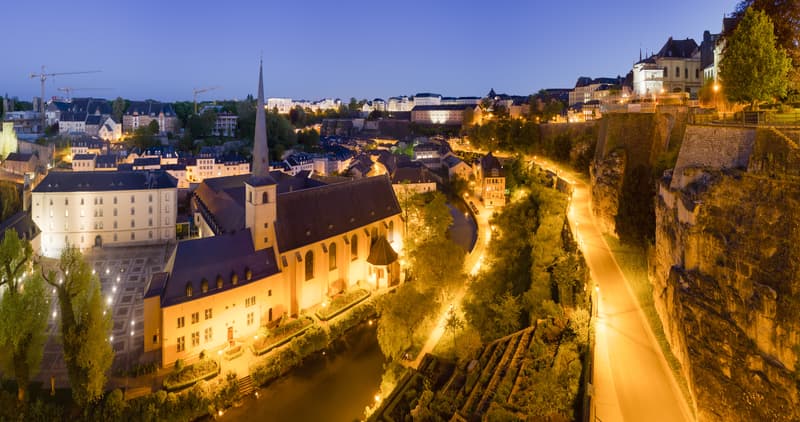


Luxembourg is the world's only Grand Duchy and one of Europe's smallest countries, but it packs a remarkable amount of history, wine-country scenery, and UNESCO heritage into a compact area. River cruising touches its Moselle border at intimate ports like Remich and Grevenmacher, with Luxembourg City reachable by short coach transfer. For the milestone American traveler who fears being herded, Luxembourg rewards unhurried walking, small-group tastings, and independent exploration of fortresses, Romanesque abbeys, and vineyard paths.
Country facts
History
Luxembourg began in 963 when Count Siegfried acquired a rocky promontory called Lucilinburhuc. For centuries it was a fortress passed among Burgundian, Habsburg, Spanish, Austrian, and French rulers. The Congress of Vienna made it a Grand Duchy in 1815; independence in 1839 created the modern borders. Twice occupied by Germany in the 20th century, Luxembourg became a founding member of the EU and chose European integration as its core identity.
Luxembourg's history is often told through sieges and occupations by larger neighbors; the post-war turn toward European unity reframed it as a symbol of openness. This package keeps that nuance rather than presenting a simple fairy tale.
Culture
A small, wealthy, trilingual nation shaped by steel, banking, and European institutions. The national motto, 'Mir wëlle bleiwe wat mir sinn' ('We want to remain what we are'), captures a proud self-reliance.
Music: From the Philharmonie Luxembourg to the Rockhal, the country has a lively classical and contemporary scene. The national holiday on 23 June and village wine festivals are great moments for local brass bands and folk ensembles.
Signature landscape: The Moselle Valley's steep, slate-soil vineyards and the sandstone rock formations of the Mullerthal, known as 'Little Switzerland.'
Cuisine
- Judd mat Gaardebounen – smoked pork collar with broad beans
- Gromperekichelcher – crispy potato pancakes
- Bouneschlupp – green bean soup
- Kachkéis – cooked cheese spread
- Riesling paschtéit – Riesling pork pie
- Fierkelsbäck – roast suckling pig
- Crémant de Luxembourg – sparkling wine from the Moselle
Architecture & heritage
- Bock Casemates and the Fortress of Luxembourg (UNESCO)
- Grand Ducal Palace
- Notre-Dame Cathedral
- Chemin de la Corniche
- Adolphe Bridge
- Vianden Castle
- Echternach Abbey and Basilica of St. Willibrord
- Clervaux Castle and The Family of Man
Tips for American travellers
- Public transport is free nationwide, including buses and trains.
- English is widely spoken in tourism, hospitality, and among younger locals.
- Carry a euro chip card; contactless payments are common, but keep cash for small village shops.
- Luxembourg City is very hilly; use the public elevators and escalators to connect the old town to the Grund.
- Restaurants typically serve lunch 12:00–14:00 and dinner 18:00–21:00.
- Many shops close on Sundays, even in tourist areas.
- Don't call it part of Germany or Belgium; Luxembourg is its own country with a distinct identity.
- Dress in layers; weather changes quickly in the Ardennes and Moselle valley.
Major cities & destinations
Luxembourg City Capital city
A dramatic UNESCO-listed old town perched on cliffs above the Alzette and Pétrusse valleys, with world-class museums and a fortress core.
Most river cruises reach it by coach from Remich or Grevenmacher; it is not directly on a navigable stretch of the Moselle.
Bock Casemates Chemin de la Corniche Grand Ducal Palace Notre-Dame Cathedral Adolphe Bridge Mudam – Grand Duke Jean Museum of Modern ArtRemich River port / wine town
Called the 'Pearl of the Moselle,' with a sunny promenade, wine cellars, and easy access to Luxembourg City.
The main Luxembourg docking point for Rhine–Moselle and Moselle-only cruises.
Remich riverside promenade Église Saint-Nicolas Moselle wine cellars Schengen ferry and bridge viewpointGrevenmacher Town / wine center
One of Luxembourg's oldest towns and a centre for crémant and Riesling, with a quiet, uncrowded riverbank.
Secondary docking point used when Remich is full or on smaller Moselle itineraries.
Caves Bernard-Massard St. Laurent Church Moselle embankment Grevenmacher wine trailVianden Town
A fairy-tale hilltop castle and medieval town that many consider a highlight of Luxembourg.
Shore excursion destination from Remich or Grevenmacher, about 45–60 minutes by coach.
Vianden Castle Victor Hugo Museum Vianden chairlift Trinitarian Church and old townEchternach Town
Luxembourg's oldest town, with a famous Benedictine abbey and gateway to the Mullerthal 'Little Switzerland.'
Popular coach excursion from Moselle ports; combines culture and hiking.
Echternach Abbey and Basilica of St. Willibrord Echternach Lake Mullerthal rock formations Schiessentümpel waterfallSchengen Village
The symbolic birthplace of Europe's borderless Schengen Area, on a bend of the Moselle.
Some Moselle cruises pass or stop here; it is a short walk or bike ride from Remich.
Schengen European Museum Schengen Bridge Moselle riverfront and wine terracesClervaux Town
A medieval town in the Ardennes with the famous 'Family of Man' photographic exhibition.
Longer coach excursion from Moselle ports for those wanting Ardennes and WWII context.
Clervaux Castle The Family of Man Abbey of St. Maurice and St. Maur Sts. Cosmas and Damian ChurchCruise ports of call
Luxembourg's navigable waterway is a short but viticultural stretch of the Moselle River along the country's eastern border. River ships usually dock at Remich or Grevenmacher; Luxembourg City is reached by coach. Ports are small and personal, with no mega-ship infrastructure.
- Rhine–Moselle–Saar: cruises from Amsterdam or Cologne upstream through the Rhine Gorge, into the Moselle, and sometimes up the Saar. Luxembourg appears as a scenic wine-country side trip.
- Moselle-only: Trier/Bernkastel–Remich–Schengen–Metz/Luxembourg loops, focused on wine, Roman ruins, fortresses, and the UNESCO city.
Remich Rhine–Moselle–Saar and Moselle-only
The main Luxembourg docking point. A pretty promenade, wine cellars, and bus connections make it the natural gateway to Luxembourg City.
Best for: First-time visitors, wine lovers, and those who want the easiest access to Luxembourg City.
Operators: CroisiEurope, AmaWaterways, Avalon Waterways, Emerald Cruises, Scenic Cruises
Grevenmacher Moselle-only and Rhine–Moselle
A smaller, quieter port with a working town feel. It is a center for crémant production and offers easy access to Echternach and the Mullerthal.
Best for: Travelers seeking a more local stop, sparkling wine tastings, and excursions to the Mullerthal.
Operators: CroisiEurope, AmaWaterways, Avalon Waterways
Schengen Moselle-only
A small landing stage and promenade rather than a full river port. Some itineraries pass through, while others visit by launch from Remich.
Best for: European history enthusiasts, wine lovers, and travelers who enjoy symbolic small-town moments.
Operators: CroisiEurope, Emerald Cruises
The Moselle is the only navigable river touching Luxembourg. There is no year-round large cruise terminal. Water depth and low bridges mean operators choose Remich or Grevenmacher depending on vessel and river levels. Nearby German Trier and French Metz are alternative gateways for Moselle itineraries.
All cruise ports in Luxembourg
Ships visiting by type: 15 river


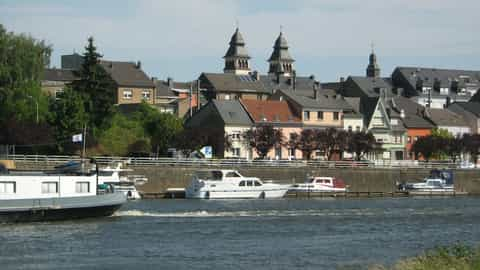
River cruises & routes
Luxembourg is not a standalone river-cruise country; it appears as a signature call on Moselle or Rhine–Moselle sailings. The Moselle corridor is intimate, with locks, vineyards, and castle-topped villages. A Luxembourg call is best appreciated as a focused day of UNESCO history and wine-country calm.
| Route | Length | Countries | Highlights |
|---|---|---|---|
| Amsterdam – Rhine Gorge – Moselle – Luxembourg | 10–12 | Netherlands, Germany, Luxembourg | Amsterdam canals, Cologne Cathedral, Rhine Gorge, Cochem, Bernkastel-Kues, Remich, Luxembourg City |
| Moselle & Luxembourg Wine Cruise | 7–8 | Germany, Luxembourg, France | Trier, Saarburg, Remich, Schengen, Metz; wine tastings in the Moselle valley |
| Paris – Champagne – Moselle – Luxembourg | 12–14 | France, Luxembourg | Paris, Reims, Épernay, Verdun, Metz, Remich, Luxembourg City |
Season: April–October, with September–October best for golden vineyards and harvest atmosphere. Some Christmas-market sailings include Trier and Luxembourg City, but Luxembourg river docking may be limited outside the main season.
Cruise lines visiting Luxembourg
Major river cruise lines include Luxembourg on Moselle and Rhine–Moselle itineraries, but not every European voyage calls there. Ships are typically smaller than ocean liners and dock at modest river ports.
CroisiEurope
Moselle, Saar, and Rhine itineraries from France and Germany, often with Luxembourg calls.
AmaWaterways
Rhine and Moselle cruises from Amsterdam, with excursions to Luxembourg City and Moselle wine villages.
Avalon Waterways
Active & Discovery cruises on the Rhine and Moselle, including Luxembourg calls.
Emerald Cruises
European river cruises on the Rhine/Moselle corridor with possible Schengen or Remich stops.
Scenic Cruises
All-inclusive Europe river cruises that may include the Moselle and Luxembourg excursions.
Published programs change seasonally; always confirm exact Luxembourg port calls and shore excursions with the cruise line or a travel advisor. Ships are usually 110–135 m long and may dock at Remich or Grevenmacher depending on water levels.
Planning & advice
For the milestone traveler who wants European history, beauty, and a sense of discovery without crowds, Luxembourg offers a manageable, multilingual, low-stress experience. The wine villages are intimate, the capital is compact and walkable, and the river-cruise infrastructure is small enough to feel personal rather than touristic.
For the American traveller
- Luxembourg is safe, easy to navigate, and less crowded than Paris or Amsterdam.
- Free public transport means you can explore independently without tour-bus pressure.
- English works in hotels, restaurants, and museums; French/German/Luxembourgish are on signs.
- The country is compact; do not overplan. A full day in Luxembourg City plus a Moselle wine stop is enough for most cruise itineraries.
- Carry a credit card with a chip and a small amount of euros for village shops and wineries.
- Be ready for hills, cobblestones, and weather changes; comfortable walking shoes are essential.
- If you dislike being herded, ask your cruise line if independent disembarkation is allowed in Remich or Grevenmacher.
- Moselle wines are excellent but little exported; try Riesling, Pinot Gris, Auxerrois, and crémant on site.
Excursion planning
- Choose a cruise that spends at least a full day in Remich so you have time for Luxembourg City and a wine tasting.
- Book a small-group or private walking tour of Luxembourg City rather than a large motorcoach tour.
- In Luxembourg City, use the public elevator from the Bock area down to the Grund to save energy.
- For Vianden, go early in the day to avoid tour-bus crowds and enjoy the castle before peak hours.
- In September/October, add a Moselle wine-harvest excursion; the villages are lively but not overwhelming.
- If you are physically able, the Mullerthal's easy hiking paths are a great alternative to another cathedral.
- Check whether the Schengen museum is open on your port day; hours can be limited in shoulder seasons.
The verdict
Luxembourg is best seen as a river-cruise accent rather than a standalone week. Choose an itinerary that spends at least a full day at a Moselle port such as Remich, with unhurried options for Luxembourg City, a wine tasting, and either Vianden or Echternach. It rewards the independent-minded traveler who treats the ship as a base, not a cage.
Sources
- CIA World Factbook — Luxembourg (accessed 2026-09-09)
- Luxembourg National Tourist Office — Visit Luxembourg (accessed 2026-09-09)
- UNESCO World Heritage Centre — City of Luxembourg: its Old Quarters and Fortifications (accessed 2026-09-09)
- Schengen Tourist Office — European Museum Schengen (accessed 2026-09-09)
- Mobilitéit — Free public transport in Luxembourg (accessed 2026-09-09)