Geiranger Cruise Port
Geiranger Port Authority / Stranda Hamnevesen


Geiranger, Norway Port
UN/LOCODE NOGNR Port of call Homeport
Geiranger Cruise Port Location
| Port Details | |
|---|---|
| Country | Norway |
| UN/LOCODE | NOGNR |
| Contact | |
| Address | Geirangervegen 2, 6216 Geiranger, Norway |
| Port phone | +47 70 26 30 07 |
| Website | www.stranda-hamnevesen.no |
| Geography | |
| Coordinates | 62.10150, 7.19350 |
| Accessibility | |
| Accessible | Limited |
The SeaWalk at Geiranger is a 236-metre floating pier that allows passengers to walk directly from ship to shore in under five minutes, bypassing the need for tender boats. This convenience is essential because the village itself is exceptionally small, and the real rewards of this port lie at elevations exceeding 1,000 metres. Located in the Sunnmøre region of Møre og Romsdal county, Geiranger serves as a premier ocean cruise port within the Geirangerfjord, a UNESCO World Heritage site. You are positioned roughly 20 km (12 miles) by water from Hellesylt and 110 km (68 miles) by road from the Art Nouveau city of Ålesund, a journey that takes approximately 2.5 hours including ferry connections. Visitor feedback is consistent that Geiranger punishes the late sleeper. If you are not on a 9:00 AM bus to the viewpoints, you will spend your day looking at the backs of other tourists’ heads. This destination rewards those who prioritize the natural verticality of the landscape over the souvenir shops at the pier. While the village is flat and manageable, the surrounding terrain is punishingly steep, requiring motorized transport for all but the most athletic hikers. Expect rain; even on clear mornings, the fjord creates its own microclimate that can obscure viewpoints in minutes.
Geiranger — Port Overview
History
Geiranger’s prominence began not as a port, but as a collection of precarious mountain farms. Founded as a permanent settlement in the 16th century, the area was defined by the extreme isolation of its residents. Farmers at Skageflå and Knivsflå lived on ledges hundreds of metres above the Geirangerfjord, tethering their children with ropes to prevent them from falling over the cliffs. The shift toward tourism arrived in 1869 when the first cruise ship, the 'SS Neptune,' entered the fjord. This prompted the construction of the Geiranger Road, completed in 1889, which featured nine hairpin bends that are still part of the route to Flydalsjuvet today. This engineering feat transformed a secluded farming community into a world-renowned destination. In 1907, the first motor car reached Geiranger, signaling the end of the pony-and-cart era for visitors. The most significant modern milestone occurred in 2005 when UNESCO recognized the fjord as a World Heritage site, cementing its protection. You can still see the remnants of the abandoned cliffside farms from the ship's rail as you transit the fjord. These stone structures, many dating back to the 18th century, serve as silent witnesses to the era before the floating SeaWalk and luxury coaches defined life at the water's edge.
The Verdict
The clients who get the most from Geiranger are those who arrive with a plan and the flexibility to adapt to the shifting fjord weather. This guide has been fact-checked by J. Richard and the Waterways Cruise editorial team. Excursions that guarantee a return to the ship can be tailored to your mobility, interests, and pace, so missing departure is never a concern. No two travelers want the same day ashore in the Norwegian fjords.
Things to Do & See in Geiranger
| Attraction | Type | Address | Phone | Hours | Website | Admission |
|---|---|---|---|---|---|---|
| Norsk Fjordsenter | Museum | Geirangervegen 163, 6216 Geiranger | +47 70 26 38 10 | Daily 10:00–17:00 | fjordsenter.no | USD 155 NOK |
| Ørnesvingen (The Eagle Road) | Landmark | Ørnevegen, 6216 Geiranger | Open 24 hours (seasonal) | nasjonaleturistveger.no | Free | |
| Dalsnibba / Geiranger Skywalk | Natural Feature | Nibbevegen, 6216 Geiranger | +47 70 26 30 07 | Daily 09:00–18:00 (May–Sept) | dalsnibba.no | Included in bus tours / ~330 NOK for private cars |
| Waterfall Walk (Storfossen) | Tourist Attraction | Geirangervegen, 6216 Geiranger | Open 24 hours | geirangerfjord.no | Free | |
| Skageflå Hiking Trail | Historical Site | Skageflå, Geirangerfjord | Open 24 hours (Daylight only recommended) | geirangerfjord.no | Free |
Norsk Fjordsenter · Museum
USD 155 NOKThe Norsk Fjordsenter is the definitive educational hub for the Geirangerfjord UNESCO World Heritage area. It is worth noting that most travelers appreciate the context it provides for the landscape they see from the ship's balcony. The center utilizes high-tech interactive displays to explain the glacial retreat that carved the 260-metre deep fjord. You will walk through a simulated 'avalance' zone—a common historical threat here—and see the intricate tools used by the cliff-dwelling farmers of the 1700s. The site is a 20-minute walk uphill from the pier via the Waterfall Walk, but it provides a necessary intellectual anchor to a day otherwise spent in transit. Look for the geological core samples; they show 10,000 years of history in a single tube of mud. It's an essential stop for those who want to understand *why* this place is protected by the UN. The closing experience is the 'Fjord Cinema,' which uses 4K footage to show the fjord in all four seasons, including the frozen winters you’ll never see from a cruise deck.
Geirangervegen 163, 6216 Geiranger ·+47 70 26 38 10 ·Daily 10:00–17:00 ·www.fjordsenter.no
Ørnesvingen (The Eagle Road) · Landmark
FreeØrnesvingen is the steepest stretch of road in the Sunnmøre region, climbing from sea level to 620 metres through eleven legendary hairpin turns. The name 'Eagle Road' comes from the fact that it passes through territory traditionally dominated by golden eagles. The viewing platform at the top provides the most famous view of the Geirangerfjord, including the Seven Sisters waterfall and the abandoned Knivsflå farm. The transit from the pier takes about 12 minutes under light traffic, making it the most time-efficient high-altitude view in Geiranger. Most visitors walk past the lower concrete 'lip' of the platform—don't. Stand as close to the edge as the glass allows to see the sheer drop to the water below. It is a dizzying, magnificent perspective that demonstrates the scale of the fjord better than any map. This is where you will get your 'hero' shot of the ship. Expect a sense of the engineering prowess required to make this remote valley accessible to the world.
Ørnevegen, 6216 Geiranger ·Open 24 hours (seasonal) ·www.nasjonaleturistveger.no
Dalsnibba / Geiranger Skywalk · Natural Feature
Included in bus tours / ~330 NOK for private carsAt 1,500 metres above sea level, Dalsnibba is the highest point accessible by road in the entire fjord region. The 'Skywalk' is a steel platform with a glass railing that extends over a 500-metre drop, providing an unobstructed view of the Geirangerfjord and the surrounding peaks of the Jostedalsbreen glacier system. You will find that the temperature here is typically 10 degrees colder than at the pier, so dress accordingly. This stop is about the sheer scale of Norway’s alpine interior. You aren't just looking at a fjord; you are looking at the roof of the country. Many visitors walk past the historical markers at the base of the platform that detail the construction of the road in the 1930s—a manual labor feat that is hard to imagine in this thin air. The Skywalk delivers a sense of insignificance against the vastness of the Norwegian landscape. It is the one experience in Geiranger that truly takes your breath away, provided the weather gods cooperate.
Nibbevegen, 6216 Geiranger ·+47 70 26 30 07 ·Daily 09:00–18:00 (May–Sept) ·www.dalsnibba.no
Waterfall Walk (Storfossen) · Tourist Attraction
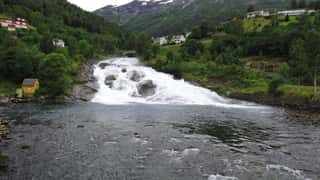
FreeThe Waterfall Walk is a series of 327 steps and viewing platforms that run parallel to the Storfossen waterfall, which thunders through the center of the Geiranger valley. This is a visceral, loud, and wet experience. You will feel the vibration of the water in your chest as it drops toward the Geirangerfjord. It is worth noting that most stop at the third platform; it is a good idea to go all the way to the top to see where the water transitions from a mountain stream to a raging torrent. The path is well-maintained with steel railings, but the spray is constant. It connects the village level to the Fjord Center and the Hotel Union. This walk delivers a sense of the raw power that shaped this landscape. It is the best way to burn off a ship breakfast while taking in the natural beauty of the valley. Most people walk past the historical water-gauge markings near the bridge—they show how high the water can rise during spring snowmelt. It's a humbling reminder of nature's force in the Sunnmøre region.
Geirangervegen, 6216 Geiranger ·Open 24 hours ·www.geirangerfjord.no
Skageflå Hiking Trail · Historical Site
FreeSkageflå is an abandoned mountain farm located on a ledge 250 metres above the Geirangerfjord. This is the 'holy grail' for hikers in the area. Historically, this farm was so remote that the residents had to pay their taxes to a priest who was rowed out to the cliff base. When the King and Queen of Norway celebrated their silver wedding anniversary in 1993, they hiked to this very spot. The experience of standing on the farm's plateau, looking directly across at the Seven Sisters waterfall, is unmatched by any roadside viewpoint. You will see how the farmers lived, farming tiny plots of land while tethering their livestock to prevent them from falling. The trail is physically demanding but offers the most authentic connection to the 'old' Norway that once existed before the cruise ships arrived. Travelers often report it was the highlight of their entire Norwegian journey, but emphasize that you must have a pre-arranged boat pick-up to make it back before the gangway closes.
Skageflå, Geirangerfjord ·Open 24 hours (Daylight only recommended) ·www.geirangerfjord.no
Eating & Drinking in Geiranger
The culinary identity of Geiranger is rooted in the preservation methods of the fjord farms. Unlike Oslo’s cosmopolitan dining, here you will find a focus on smoked, cured, and fermented foods. 'Fenalår' (slow-cured leg of lamb) is a staple that you must try; it has a saltiness that reflects the coastal air. Local berries, particularly cloudberries and lingonberries, define the desserts. For something unique, seek out 'Geiranger Sjokolade'—this local chocolatier uses ingredients like blue cheese and Aquavit in their truffles, located in a blue boathouse near the pier. Most tourists expect to find fresh salmon everywhere, but the local specialty is actually mountain goat, often served as a dry-cured sausage. To drink, try the local apple cider from the nearby Valldal valley; it is crisp, slightly tart, and far superior to the mass-produced lagers found in the souvenir shops. Norwegian tap water is pristine—do not waste money on bottled water here.
| Place | Address | Phone | Hours | Website | Price range |
|---|---|---|---|---|---|
| Brasserie Posten | Geirangervegen 2, 6216 Geiranger | +47 70 26 30 05 | Daily 12:00–21:00 | brasserieposten.no | 400 NOK (~$36.50 USD) |
| Westerås Restaurant | Geirangervegen, 6216 Geiranger | +47 90 17 63 60 | Daily 11:00–18:00 (June–Aug) | westerasgard.no | 300 NOK (~$27.50 USD) |
| Friaren Bistro & Bar | Geirangervegen 1, 6216 Geiranger | +47 70 26 30 02 | 11:00–23:00; Happy Hour 17:00–18:00 | hotel-geiranger.no | 140 NOK (~$13.00 USD) per beer |
Brasserie Posten
400 NOK (~$36.50 USD)Located right at the water's edge, Brasserie Posten is a highly recommended restaurant for a sit-down meal. The fish soup is legendary; visitors return to Geiranger just for a bowl. It’s an honest, high-quality establishment that refuses to use frozen ingredients. The only limitation is that it gets extremely busy between 1:00 PM and 3:00 PM; try to time your visit for a late lunch at 3:30 PM.
Geirangervegen 2, 6216 Geiranger ·+47 70 26 30 05 ·Daily 12:00–21:00
Westerås Restaurant
300 NOK (~$27.50 USD)Westerås is a 10-minute taxi ride uphill. Order the sour cream porridge (Rømmegrøt)—it is the quintessential Norwegian mountain dish. The view from the outdoor terrace is breathtaking, looking straight down the Geirangerfjord. Note that the restaurant is only open during the peak summer months and closes early if the weather is poor.
Geirangervegen, 6216 Geiranger ·+47 90 17 63 60 ·Daily 11:00–18:00 (June–Aug)
Friaren Bistro & Bar
140 NOK (~$13.00 USD) per beerFriaren is the best spot for a celebratory drink before re-boarding. They stock a wide selection of local Norwegian craft beers and have a solid list of Scandinavian spirits. It’s the perfect place to watch the tender boats and SeaWalk activity. The local 'Akevitt' (Aquavit) selection is particularly good if you want to try Norway's national spirit.
Geirangervegen 1, 6216 Geiranger ·+47 70 26 30 02 ·11:00–23:00; Happy Hour 17:00–18:00
Getting There & Around
Once you leave the Geirangerfjord shoreline at the pier, the only viable way to navigate the steep terrain is by motorized transport. The village itself is entirely walkable, but reaching the viewpoints requires booking the 'Fjord Panorama' bus or a private taxi. The 'Geiranger Skywalk Bus' is recommended which costs ~550 NOK (~$50.50 USD) and includes Dalsnibba. These buses sell out weeks in advance; if you haven't pre-booked, your only option is the hop-on-hop-off service, which is notoriously unreliable when three ships are in port. Taxis are available but operate on a first-come, first-served basis. Uber does not operate in Geiranger. Electric 'e-mobility' Twizy cars are available for rent near the pier for ~1,200 NOK (~$110.00 USD) for 2 hours; they are excellent for couples but struggle on the steepest inclines. One navigation tip: if you plan to walk the 'Waterfall Walk' back down to the ship, take a taxi or bus *up* to the Fjord Center first. Walking *down* the 327 steps is much easier on the knees and provides the same views.
Itineraries & Sample Walks
4-Hour Shore Excursion in Geiranger
Waterfall Walk
9:00 AM (60 min)
This path features 327 steps running alongside the Storfossen waterfall. It connects the village to the Fjord Center. The power of the water is immense, and the spray is refreshing.
- Walk directly from the SeaWalk toward the Geiranger Hotel. (Free)
- Entry: Free (Free)
- Look for the small viewing platforms that jut out over the falls; they offer the best angle for 'action' shots without getting your lens soaked.
Norsk Fjordsenter
10:15 AM (90 min)
An interactive museum explaining the UNESCO status and the history of the fjord farms. The biological exhibits on local flora are excellent.
- Continue to the top of the Waterfall Walk. (Free)
- Entry: 155 NOK ($14.00)
- The 15-minute 'Fjord Movie' in the cinema is better than most National Geographic documentaries; don't skip it.
Lunch Recommendation
Westerås Farm (Westerås Gard)
This is a working farm 300m above the fjord. It offers authentic goat-milk products and a view that the village cafes simply cannot match.
Order: Traditional Norwegian Sour Cream Porridge (Rømmegrøt), Cured Fenalår (lamb leg)
Geirangervegen, 6216 Geiranger
Cost: 350 NOK (~$32.00 USD)
8-Hour Full Day Experience in Geiranger
Dalsnibba / Geiranger Skywalk
8:30 AM (120 min)
Europe's highest fjord view from a road. At 1,500 metres, you are looking down on the clouds and the cruise ships which appear like toys in the Geirangerfjord.
- Pre-booked Skywalk Bus from the terminal. (550 NOK (~$50.50 USD))
- Entry: Included in bus (Included in bus)
- Bring a heavy jacket even if it's 20°C at the pier; Dalsnibba can be near freezing with wind chill.
Flydalsjuvet
11:30 AM (45 min)
The classic 'postcard' view of the fjord. There are two main viewing platforms connected by a short path.
- Descent via Skywalk bus or taxi. (Included)
- Entry: Free (Free)
- Most people stay on the top platform; walk 200m down to the lower rock for the famous 'overhanging' photo op.
Getting back to the ship
The absolute latest you should leave the Flydalsjuvet or Fjord Center area is 60 minutes before your all-aboard time. If you are at the Dalsnibba summit, allow 90 minutes. A taxi back to the pier will cost ~400 NOK (~$36.50 USD) from the mid-level viewpoints. The public buses are generally on time but can be delayed by heavy coach traffic on the narrow hairpin turns. If you miss the ship, the port authority (+47 70 26 30 07) is your primary contact. Be warned: missing the ship in Geiranger is a logistical nightmare. You will likely need to take a 3-hour taxi to Ålesund or a 5-hour journey to Bergen to catch the ship at its next call. The ship will *not* wait for independent passengers, as the fjord pilot's schedule is strictly regulated.
Weather & Best Time to Visit Geiranger
Weather & What to Pack
Cruise season: May to September
10°C–18°C (50°F–64°F), frequent rain, and mist. Humidity is high due to the fjord evaporation.
What to wear: Layering is mandatory. Start with a light wool base, add a fleece, and top with a 100% waterproof jacket. Do not use umbrellas; fjord winds will snap them. Sturdy hiking shoes with rubber soles are required for the Waterfall Walk and village cobblestones. Sunscreen is still needed on overcast days as UV reflects off the Geirangerfjord water.
Weather risks: Low-lying clouds often obscure the Dalsnibba summit. If the webcams at the Tourist Information office show 'white-out' conditions, cancel your mountain tour immediately.
Early June offers the best views of the Seven Sisters waterfall during peak snowmelt.
| Season | Conditions | Hazards | Affected areas | Visitor advice |
|---|---|---|---|---|
| Summer (June–August) | Mild temperatures ranging from 12°C to 20°C (54°F–68°F), though mountain summits are significantly colder. High rainfall is common. | Wet, mossy rocks on the Waterfall Walk become treacherous. Sudden fog on the Eagle Road reduces visibility for drivers to near zero. | Waterfall Walk stairs, Ørnesvingen (Eagle Road), and the Dalsnibba summit path. | Wear sturdy hiking boots with deep treads; sneakers will slide on the granite steps. Always carry a waterproof shell, even if the sun is out at the pier. |
| Shoulder Season (May and September) | Crisp air, 5°C to 12°C (41°F–54°F), with a high probability of lingering snow at higher elevations. | Black ice can form on the Dalsnibba road (Fv63) in early May or late September. Snowmelt makes hiking trails muddy and unstable. | Flydalsjuvet viewpoint and the Nibbevegen toll road to the Skywalk. | Confirm that the road to Dalsnibba is actually open before booking a taxi; it often remains closed due to snow until late May. |
Practical Information
Cultural etiquette
Norwegians are famously reserved but deeply polite. A simple 'Takk' (thank you) goes a long way. When greeting locals, a firm handshake with direct eye contact is the norm; avoid overly emotive gestures or loud talking in public spaces like the Geiranger Church. Dining is a quiet affair; you are expected to wait until everyone is served before eating. In Geiranger, splitting a bill at a restaurant is common and easily handled by card readers. Photography is welcomed, but always ask before filming individuals, especially at the working farms like Westerås. Queueing is a national sport in Norway; they wait in an orderly fashion for buses and toilets. Cutting a line is considered a major social offense. Tipping is not mandatory, as service is included, but rounding up the bill or adding 5–10% for exceptional service at a place like Brasserie Posten is appreciated. One common mistake cruise passengers make is trying to haggle; prices in Norway are fixed and non-negotiable. Attempting to bargain is seen as disrespectful to the vendor.
Mistakes to Avoid
| Mistake |
|---|
Spending the first hour browsing the harbor gift shops. |
Booking a bus to Dalsnibba when the village is fogged in. |
Wearing sneakers or sandals for the Waterfall Walk. |
Assuming there is a pharmacy in the village. |
Practical tips
Norway is almost entirely a cashless society. You will need a credit or debit card with a PIN for everything from public toilets to bus tickets. Tipping is not expected, but 5-10% is a kind gesture for sit-down meals. Learn these five words to earn goodwill: 'Hei' (Hi), 'Takk' (Thanks), 'Unnskyld' (Excuse me), 'Ja' (Yes), and 'Ha det' (Goodbye). Be aware of the 'lookout scam'—local vendors may tell you a viewpoint is closed to push you toward their specific paid tour; always verify road status at the Tourist Information office. Dress code for the Geiranger Church is respectful; cover shoulders and remove hats. The best time to visit the Waterfall Walk is immediately upon docking to avoid the 10:30 AM peak. If you are taking the Skywalk bus, be at the departure point 15 minutes early; they do not wait for latecomers, even by 30 seconds. Finally, keep your camera lens covered when not in use; the constant fjord mist will create spots on your photos that are hard to remove in post-processing.
Cruise Lines Visiting Geiranger
Port of Call





Why Book With Waterways Cruise?
Four decades of expertise, one dedicated advisor, and every detail handled, from your front door to the gangway and back.
Personal Service — Your Own Cruise Concierge
Tailor-Made — 100% Custom-Built
Expertise — 40+ Years in Travel
Price Watch — Book With Total Confidence
Signature Sailings
Nearby Ports


FAQ — Geiranger
Can I walk from Geiranger to Hellesylt?
No, you cannot realistically walk between Geiranger and Hellesylt during a port call. While they are only 20 km (12 miles) apart, they are separated by the steep walls of the Geirangerfjord with no direct coastal road. Travel between the two requires a 65-minute ferry or a multi-hour drive via mountain passes. If you miss the ship in Geiranger and need to reach Hellesylt, you must hire a private boat for roughly 4,000 NOK (~$365.00 USD). Visitors should stay in the Geiranger area unless you have a pre-booked excursion that specifically includes both locations via a dedicated tour boat.
Is there a place to buy rain gear in the port?
Yes, there is a dedicated sport and outdoor shop located 200m from the SeaWalk pier, adjacent to the Tourist Information building. They carry high-quality Norwegian brands like Helly Hansen and Norrøna. A basic waterproof shell will cost approximately 1,200 NOK (~$110.00 USD). You should purchase gear here only if your own equipment fails, as prices are significantly higher than in the US. For guaranteed comfort, it is a good idea to bring a 100% waterproof jacket from home. Remember that umbrellas are useless in the fjord winds; you need a jacket with a drawstring hood to stay dry during the Waterfall Walk spray.
Are there public lockers for my heavy backpack?
Yes, there are a limited number of coin/card-operated lockers located inside the Tourist Information building, about a 3-minute walk from the SeaWalk. The cost is 80 NOK (~$7.50 USD) for a medium-sized locker for the day. These lockers fill up by 10:00 AM on days when multiple ships are in port. If the lockers are full, the staff may sometimes store bags behind the counter for a higher fee, but this is not guaranteed. It is best to leave all non-essential items in your ship cabin to avoid the hassle, as the steep terrain makes even a light backpack feel much heavier after an hour.
Is there a local grocery store near the pier?
Yes, there is a Spar supermarket located in the center of the village, roughly 300m from the cruise terminal. It is the best place to buy local Norwegian snacks like 'Brunost' (brown cheese) or 'Lefse' (sweet flatbread) at local prices rather than tourist-inflated rates. A liter of water costs ~30 NOK (~$2.75 USD) here, compared to 50 NOK in the gift shops. Note that the supermarket is closed on Sundays due to Norwegian law. It is worth visiting early in the morning to grab snacks before the mountain excursions depart, as the store becomes very crowded during the mid-day lunch break.
What happens if the SeaWalk is already full when you arrive?
If the SeaWalk is occupied by another vessel, your ship will drop anchor in the Geirangerfjord and use its own tender boats to ferry you to the tender pier. This process typically adds 30–45 minutes to your disembarkation time. You will board a small boat (capacity ~80–100) from the ship's side platform. If this happens, it is a good idea to be at the tender ticket station on your ship at least 30 minutes before your desired departure. Once on shore, the tender pier is located directly next to the SeaWalk, so your access to the village and bus station remains the same. Always confirm your ship's specific docking status the evening before arrival.
Can I rent a car and drive to the Seven Sisters waterfall?
No, you cannot drive to the Seven Sisters waterfall. The falls are located on a vertical cliff face with no road access. They are only visible from the water or from the Ørnesvingen (Eagle Road) viewpoint across the fjord. You can rent a small electric Twizy car for ~1,200 NOK (~$110.00 USD) for 2 hours to reach the viewpoints, but you will still be looking at the falls from a distance of 2 km. For a closer look, you must book a RIB boat or the local sightseeing ferry. A private boat tour that takes you within meters of the spray for a truly immersive experience can be arranged in advance.
Is the Geiranger Church open for visitors?
The Geiranger Church, a distinctive octagonal wooden structure built in 1842, is typically open to the public from 10:00 AM to 4:00 PM during the cruise season. Entry is free, but a small donation for maintenance is appreciated. It is a 5-minute uphill walk from the pier. The interior features beautiful 'rose-painting' (rosemaling), a traditional Norwegian folk art. Visitors should visit during the morning hours for a moment of quiet reflection away from the terminal bustle. Please note that the church may close for private services or funerals on short notice. It is a working parish church, not just a museum, so please dress and behave respectfully.
How do I get to the 'Llama Farm' I saw in photos?
The llamas are located at Westerås Farm (Westerås Gard), which sits on a mountain shelf roughly 300 metres above the village. To get there, take a 10-minute taxi from the pier (~250 NOK / ~$23.00 USD) or hike the steep Waterfall Walk and continue along the road for another 20 minutes. The llamas are usually in the fields adjacent to the restaurant. It is a private farm, so while you can photograph the animals from the path, do not enter the enclosures. You will find that this a fantastic alternative for those who find the village too crowded; the farm offers a rustic, peaceful atmosphere with incredible fjord views.
Is there free Wi-Fi at the viewpoints like Dalsnibba?
Free Wi-Fi is available at the Dalsnibba summit shop and at the Norsk Fjordsenter, but there is no public Wi-Fi at Ørnesvingen or Flydalsjuvet. Cellular coverage (4G/5G) is excellent throughout the valley and even at the mountain summits. If you are an American traveler, it is a good idea to check your international roaming plan before disembark, as data speeds are very high. The Wi-Fi at the Tourist Information office in the village is often overwhelmed by cruise passengers. It is a good idea to download your Google Maps for the Møre og Romsdal region offline before leave the ship to ensure you can navigate even if the signal drops in the deep mountain tunnels.
Can I see the Northern Lights (Aurora Borealis) in Geiranger?
It is highly unlikely you will see the Northern Lights during the cruise season (May–September). The Aurora Borealis requires darkness, and Geiranger experiences 'Midnight Sun' conditions or late twilight throughout the summer. In June and July, the sun barely dips below the horizon, meaning the sky never gets dark enough to see the lights. The best time for Aurora in Norway is October through March, which is outside the standard cruise window for the fjords. If a travel agent tells you otherwise, they are incorrect. The 'Midnight Sun' itself is the light phenomenon to look for—the fjord looks magical in the soft, 11:00 PM gold-blue light.
Fact-checked and co-written by J. Richard, Founder, Waterways Cruise, with the Waterways Cruise Content Team.
Published May 19, 2026 · Last updated November 2, 2026
This guide is researched and reviewed by our editorial team, but prices, hours, and availability change often. Confirm current details directly with venues, excursion operators, and your cruise line before you travel.