Sortland Cruise Port
Sortland Havn


Sortland, Norway Port
UN/LOCODE NOSLX Port of call
Sortland Cruise Port Location
| Port Details | |
|---|---|
| Country | Norway |
| UN/LOCODE | NOSLX |
| Contact | |
| Address | Havnegata 2, 8400 Sortland, Norway |
| Port phone | +47 76 10 76 50 |
| Website | www.sortland-havn.no |
| Geography | |
| Coordinates | 68.70000, 15.41667 |
| Accessibility | |
| Accessible | Limited |
The cruise terminal at Sortland sits directly on the Sortlandsundet, placing you exactly 450 meters (0.28 miles) from the primary commercial district, a 6-minute flat walk. Located in the Vesterålen archipelago of Nordland, northern Norway, this is a functional regional hub rather than a curated tourist village. You are visiting the 'Blue City,' an ongoing art project where the town center is systematically painted in shades of blue. The walking time from the gangway to the central square takes under 10 minutes, making this one of the most accessible ports in the Norwegian Arctic. For context, you are situated 30 km (18 miles) northeast of Stokmarknes—home to the Hurtigruten Museum—and roughly 100 km (62 miles) from the more famous Svolvær in Lofoten. Sortland serves as an ocean cruise port for mid-sized vessels and a vital lifeline for the daily coastal steamers. Keep in mind that travelers often mistake Sortland for a sleepy hamlet; in reality, it is a busy logistical center that rewards those seeking authentic Sami culture and stark, industrial-meets-Arctic photography. It punishes those who arrive expecting the quaint, red-shack aesthetics found in Reine or Henningsvær. This port is about the raw, working life of the Vesterålen islands, framed by the deep waters of the Sortlandsundet.
Sortland — Port Overview
History
Sortland’s prominence is a modern phenomenon compared to its ancient neighbors. While the Vesterålen region has been inhabited since the Stone Age, Sortland itself emerged as a major trading post only in the late 19th century. Its strategic location on the Sortlandsundet strait made it the natural choice for a regional administrative and commercial center. The most defining moment in the city’s visual history occurred recently, in 1999. Local artist Bjørn Elvenes proposed the 'Blue City' project (Blåbyen) to celebrate the millennium. His vision was to transform the monochrome town into a three-dimensional blue canvas, reflecting the surrounding sea and sky. This was not a unanimous decision; it is worth noting that local debates over which buildings should be 'blued' continue to this day. Beyond the paint, Sortland served as a critical node during the expansion of the Norwegian fishing industry and the Vesterålske Dampskibsselskab, the shipping company that founded the Hurtigruten in 1893. When you look at the stark, mid-century architecture of the town center today, you are seeing the result of rapid post-war growth. The Sortland Bridge, opened in 1975, physically connected the island of Langøya to the mainland, ending the city’s reliance on ferries and cementing its status as the 'Clutch of Vesterålen.' The blue facades you see today are a deliberate attempt to give an industrial town a poetic identity.
The Verdict
At Sortland, the people who do best are the ones who arrive with a plan and the flexibility to adapt it. This guide has been fact-checked by J. Richard and the Waterways Cruise editorial team. Excursions that guarantee a return to the ship can be tailored to your mobility, interests, and pace, so missing departure is never a concern. At Waterways Cruise, no two travelers want the same day ashore, especially in a port as unique as the Blue City.
Things to Do & See in Sortland
| Attraction | Type | Address | Phone | Hours | Website | Admission |
|---|---|---|---|---|---|---|
| The Blue City (Blåbyen) | Cultural Site | Strandgata, 8400 Sortland | Open 24 hours | visitvesteralen.com | Free | |
| Sortland Bridge (Sortlandsbrua) | Landmark | Sortlandsbrua, 8400 Sortland | Open 24 hours | Not available | Free | |
| Inga Sami Siida | Cultural Site | Kringlen 1, 8400 Sortland | +47 90 87 75 50 | By appointment / Tour schedules | ingasamisiida.no | USD 450 NOK |
| Jennestad Trading Post | Historical Site | Jennestad, 8400 Sortland | +47 76 11 14 80 | 10:00–17:00 (June–August) | museumnord.no | USD 100 NOK |
| Kulturfabrikken (The Culture Factory) | Cultural Site | Strandgata 7, 8400 Sortland | +47 76 11 14 80 | 10:00–16:00 (Daily) | kulturfabrikkensortland.no | Free |
The Blue City (Blåbyen) · Cultural Site
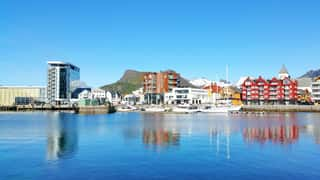
FreeThe Blue City project is the defining characteristic of Sortland. Initiated in 1999 by artist Bjørn Elvenes, the project aimed to turn the town into a massive art installation. Rather than a single shade, the city utilizes a palette of blues inspired by the Arctic sea and sky. Walking through the center, you'll see everything from bright turquoise storefronts to deep navy office blocks. This isn't just about paint; it’s an attempt to give a post-war industrial town a cohesive soul. The walking circuit is about 1.5 km (0.9 miles) to see the key buildings. Don't expect every single house to be blue—it is a work in progress and a point of local debate. What makes it worth the time is the sheer audacity of the concept in such a remote location. Look for the 'Blåby-poesi' (Blue City Poetry) on the walls; even if you don't speak Norwegian, the typography adds a unique texture to the architecture. It delivers a surreal, monochromatic atmosphere that is especially striking when the winter light hits the facades, though even in summer, it provides a cool, contemplative backdrop to your day.
Strandgata, 8400 Sortland ·Open 24 hours ·www.visitvesteralen.com
Sortland Bridge (Sortlandsbrua) · Landmark
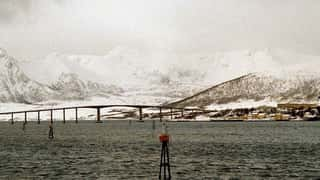
FreeSpanning the Sortlandsundet, this cantilever bridge is a triumph of 1970s Norwegian engineering. At 948 meters (3,110 feet) long, it was a vital link that ended the city's isolation. For a cruise passenger, it serves as the ultimate viewpoint. Walking to the center of the span takes about 15–20 minutes from the town center. From the top, you look down on the cruise pier, the blue roofs of the city, and the massive, snow-dusted peaks of the Vesterålen Alps. It is worth noting that the height (30 meters above the water) provides the best perspective on how the town is literally carved into the edge of the strait. Be warned: the wind here is significantly stronger than in the town center. Many hats lost to the Sortlandsundet from this bridge. It is an honest, raw experience that puts the scale of the Arctic landscape into perspective. It delivers a sense of 'top of the world' isolation that you can't get from the streets below, and it is the best place to photograph your ship while it's in port.
Sortlandsbrua, 8400 Sortland ·Open 24 hours ·Not available
Inga Sami Siida · Cultural Site
USD 450 NOKThis is not a 'living history' museum; it is the actual home and workplace of the Inga family, who have herded reindeer in Vesterålen for generations. Located a short drive from the pier, it offers the most authentic window into Sami culture available to cruise passengers in this part of Norway. You won't find kitschy performances here. Instead, you'll sit around a fire in a traditional lavvu, drinking coffee and listening to the family describe the realities of modern herding—from using GPS trackers to the eternal struggle against predators. The highlight is feeding the reindeer; these animals are semi-wild, and being in their presence is a powerful sensory experience. The Inga family’s prioritization of education over entertainment is well established, reflecting a commitment to authenticity. You'll learn about the eight seasons of the Sami calendar and the importance of the reindeer to their identity. It delivers an intimate, heart-to-heart cultural connection that feels like visiting old friends rather than being a 'tourist.' It is the single best way to spend a day in Sortland if you want a memory that lasts longer than a photograph.
Kringlen 1, 8400 Sortland ·+47 90 87 75 50 ·By appointment / Tour schedules ·www.ingasamisiida.no
Jennestad Trading Post · Historical Site
USD 100 NOKJennestad is a step back into the era of the 'Merchant Kings' of Northern Norway. Founded in the early 1800s, it reached its zenith around 1900 as a hub for the stockfish trade. While Sortland went blue and modern, Jennestad remained a perfectly preserved timber village. The centerpiece is the old general store, which operated until 1982. It looks exactly as it did on its final day of business—shelves stocked with vintage tins, textiles, and maritime gear. The silence of the place is striking compared to the bustle of the town. There is also an art gallery on-site that showcases local Vesterålen painters. It delivers a sophisticated, nostalgic experience that contrasts sharply with the functionalist center of Sortland. If you appreciate architecture and the history of Arctic commerce, this is the most important site in the region. It’s the kind of place where you can almost hear the echoes of fishermen bargaining for their winter supplies. It delivers texture and historical depth that the Blue City cannot.
Jennestad, 8400 Sortland ·+47 76 11 14 80 ·10:00–17:00 (June–August) ·www.museumnord.no
Kulturfabrikken (The Culture Factory) · Cultural Site
FreeLocated in a former squid processing plant just steps from the pier, Kulturfabrikken is the modern heart of Sortland. It houses the public library, a cinema, an art gallery, and a local history museum. For a cruise traveler, it serves as the ultimate orientation point. The walk is 250 meters from the pier gate. The interior is a masterclass in industrial-to-cultural conversion, with high ceilings and views over the Sortlandsundet. The Vesterålen Museum has a small but impactful branch here focusing on the city's blue history. Even if you don't visit the museum, the cafe (Kafé Isrosa) is the best place in town for a coffee and a 'svele' (Norwegian pancake). It delivers a warm, welcoming, and local atmosphere that is a great refuge if the Arctic weather turns sour. It is the best place to observe the local 'Sortlendinger' in their natural habitat. It delivers comfort and modern Norwegian design in a way that feels very accessible and unpretentious.
Strandgata 7, 8400 Sortland ·+47 76 11 14 80 ·10:00–16:00 (Daily) ·www.kulturfabrikkensortland.no
Eating & Drinking in Sortland
The culinary identity of Sortland is rooted in the Vesterålen stockfish trade. Unlike the more touristy Lofoten, where 'mølje' (cod, liver, and roe) is a seasonal event, here it is a staple. The regional specialty you must try is Boknafisk—a bridge between fresh cod and the hard stockfish used for Lutefisk. It is dried for just a few weeks, giving it a pungent, fermented edge that locals love. For drinking, the influence of the Mack Brewery in Tromsø is absolute; order a 'Mack Isbjørn' if you want to drink like a Vesterålen fisherman. Street food is rare, but you will find 'pølse i brød' (hot dog in a bun) at every Narvesen kiosk—it is the unofficial national dish of Norway. One honest note: travelers expect to find whale meat on every menu. While available in some spots, most locals eat it rarely, and it's more of a traditional throwback than a modern daily staple. For the most genuine experience, visit the fish counter at the Coop Extra supermarket near the pier; the quality of the cold-water shrimp (reker) there is better than what many high-end restaurants serve in the US.
| Place | Address | Phone | Hours | Website | Price range |
|---|---|---|---|---|---|
| Ekspedisjonen | Strandgata 3, 8400 Sortland | +47 76 12 11 20 | 11:00–22:00 | ekspedisjonen.no | 300–500 NOK (~$27–$45 USD) |
| Bakeriet | Strandgata 22, 8400 Sortland | +47 76 12 10 33 | 08:00–16:00 | 50–150 NOK (~$4.50–$13.50 USD) | |
| Lanterne Bar | Strandgata 1, 8400 Sortland | +47 76 12 25 00 | 16:00–02:00 | 110–140 NOK (~$10–$13 USD) |
Ekspedisjonen
300–500 NOK (~$27–$45 USD)Located right on the quay, this is the most atmospheric dining spot in Sortland. The interior is filled with maritime memorabilia and heavy timber. Order the 'Boknafisk'—it is a local delicacy that is half-dried in the sea air and then boiled; it is a taste of the real Vesterålen that most tourists are too timid to try. The portions are massive and the service is brisk.
Strandgata 3, 8400 Sortland ·+47 76 12 11 20 ·11:00–22:00
Bakeriet
50–150 NOK (~$4.50–$13.50 USD)This is the classic Norwegian bakery experience. It is simple, unpretentious, and smells like cardamom. Buy a Skolebolle—a sweet bun with custard and coconut—and sit in the window to watch the blue town wake up. It is the cheapest and most satisfying 'real' meal you can have in the center.
Strandgata 22, 8400 Sortland ·+47 76 12 10 33 ·08:00–16:00
Lanterne Bar
110–140 NOK (~$10–$13 USD)This is where you go for a drink if you want to meet people who actually work on the boats you see in the strait. It’s not fancy, but the view of the Sortlandsundet from the quay-side windows is unbeatable. If you're lucky, you'll see the Hurtigruten ship dock just meters away while you sip your beer.
Strandgata 1, 8400 Sortland ·+47 76 12 25 00 ·16:00–02:00
Getting There & Around
Once you disembark at the Sortland Havn, your primary mode of transport should be your own two feet. The city center is exceptionally flat and navigable. For those looking to explore beyond the blue facades, the local 'Nordland fylkeskommune' bus system is reliable but infrequent. A single fare is approx 45 NOK (~$4.00 USD) and can be paid via the 'Billett Nordland' app. Taxis are provided by Sortland Taxi (+47 76 12 11 00); expect a base fare of 120 NOK (~$11.00 USD) and roughly 30 NOK per kilometer thereafter. Uber does not operate here. Bike rentals are available from Sport 1 in the Storsenter mall for those wishing to cross the Sortland Bridge, but be aware of the wind. A navigation tip often missed: the town is laid out in a grid—Strandgata and Vesterålsgata are the two main arteries. If you can see the bridge, you know which way is East.
Itineraries & Sample Walks
4-Hour Shore Excursion in Sortland
The Blue City Walking Circuit
9:00 AM (90 min)
Walk the loop including Strandgata and the main square. Look for the 'writing on the walls'—literary quotes from Vesterålen authors. Most visitors miss the small blue 'ship' sculpture near the library.
- Walk south from the pier for 450 meters along Havnegata. (Free)
- Entry: Free (Free)
- Follow the blue line painted on the pavement to see the most significant architectural examples.
Sortland Church (Sortland Kirke)
10:30 AM (45 min)
A wooden cross-shaped church built in 1901. It survived the modernization of the town and offers a peaceful vantage point. Note the distinctive yellow and white facade—a rare break from the blue theme.
- Walk west for 10 minutes (approx 600m) uphill from the square.
- Entry: Free (Free)
- The cemetery surrounding the church offers a quiet view of the mountains that most guides ignore.
Lunch Recommendation
Sortland Mat & Vinhus
This venue avoids the tourist-trap pricing of the pier-side cafes and serves authentic, seasonally-sourced Vesterålen ingredients to a largely local crowd.
Order: Fiskesuppe (Creamy fish soup), Arctic Char with cucumber salad
Vesterålsgata 33, 8400 Sortland
Cost: 350 NOK (~$32.00 USD)
8-Hour Full Day Experience in Sortland
Inga Sami Siida
09:00 AM (150 min)
This is a real working reindeer farm. You will sit in a lavvu, hear stories of Sami life, and feed the reindeer. It is intimate and unhurried.
- Pre-booked tour or taxi (15 min). (500 NOK (~$45.00 USD) for taxi)
- Entry: 450 NOK (~$41.00 USD)
- Ask Laila about the specific markings on the reindeer ears—it’s how they track ownership across the mountains.
Sortland Mat & Vinhus (Lunch)
12:00 PM (75 min)
Enjoy fresh local fish soup or Arctic char. This is where local business people eat.
- Return taxi/shuttle to city center. (500 NOK (~$45.00 USD))
- Entry: Free (Free)
- Order the Reinsdyrstek if available; it's the best in Vesterålen.
Jennestad Trading Post
1:30 PM (90 min)
An exceptionally preserved historic trade center. The old store is a time capsule of 1920s commerce.
- 15-minute taxi north. (400 NOK (~$36.00 USD))
- Entry: 100 NOK (~$9.00 USD)
- Check the garden behind the main house; it is one of the few places in Vesterålen where you can see how the merchant elite lived.
Getting back to the ship
To ensure you are back on board before departure, it is best to leave the town center no later than 45 minutes before all-aboard time. Although the walk is only 6 minutes, the pier area can become congested with returning tour buses. A taxi from the bus station will cost approx 200 NOK (~$18.00 USD) and take 2 minutes. There is no reliable 'public' bus that runs to the pier. If you are running late, contact the Port Authority at +47 76 10 76 50. Note that the ship will rarely hold for independent travelers. Missing the ship in Sortland is a costly mistake; you would need to take a taxi or bus to the next port (often Svolvær or Stokmarknes), which can cost upwards of 3000 NOK (~$270 USD) and involves a long journey through mountain tunnels.
Weather & Best Time to Visit Sortland
Weather & What to Pack
Cruise season: May to September
8°C–16°C (46°F–61°F). High humidity, frequent light drizzle, and consistent wind from the strait.
What to wear: Layering is non-negotiable. A merino wool base layer is recommended, a fleece mid-layer, and a high-quality Gore-Tex shell. Footwear should be waterproof sneakers or light hiking boots; cobblestones are rare here, but wet pavement is constant. Sun protection is needed for the 24-hour daylight, even on overcast days.
Weather risks: Strong winds in the Sortlandsundet can occasionally cause berthing delays or cancel tender operations for larger vessels.
Early June offers the best chance for dry weather, while August brings the highest rainfall.
| Season | Conditions | Hazards | Affected areas | Visitor advice |
|---|---|---|---|---|
| Summer (June–August) | Cool and bright with the Midnight Sun. Temperatures range from 8°C to 15°C (46°F–59°F). | The Sortland Bridge can experience sudden, high-velocity wind gusts that make walking across the narrow pedestrian path treacherous for those with poor balance. | Sortland Bridge and exposed waterfront promenades. | Wear a windproof shell even if it looks sunny. The wind coming off Sortlandsundet is deceptive. |
| Autumn (September–October) | Frequent rain and increasing darkness. Average temperatures 4°C to 10°C (39°F–50°F). | Wet, fallen leaves on the inclines near the Sortland Church and the bridge access ramps become exceptionally slippery. | Residential sidewalks and the path to the bridge viewpoint. | Sturdy, waterproof hiking shoes with deep lugs are mandatory. Avoid the bridge walk in heavy rain. |
Practical Information
Cultural etiquette
Norwegians in Vesterålen are famously direct but initially reserved. A nod and a 'Hei' (pronounced like 'Hi') is the standard greeting. Do not expect effusive small talk from shopkeepers; they value privacy and efficiency. Dining is a quiet affair; raising your voice in a restaurant is considered boorish. When you are finished eating, place your knife and fork parallel on the right side of the plate to signal the server. Photography of the blue buildings is encouraged, but avoid photographing children or people's private homes without a nod of consent—Sortlendinger value their 'privatliv.' Tipping is not mandatory and is often just rounding up the bill in a taxi or cafe; in a sit-down restaurant, 5–10% is generous if the service was exceptional. One common mistake cruise passengers make is trying to haggle; prices in Norway are fixed and non-negotiable. Attempting to bargain is seen as deeply disrespectful and embarrassing for the local. Finally, remember that the 'Blue City' is a source of both pride and occasional frustration for locals—treating it as a 'quaint' theme park rather than a living city can cause minor offense.
Mistakes to Avoid
| Mistake |
|---|
Expecting a traditional 'red shack' Norwegian village. |
Walking the Sortland Bridge during a wind advisory. |
Assuming the shops are open on Sundays. |
Not bringing a windproof shell for a 'sunny' day. |
Practical tips
Norway is essentially a cashless society. You can spend an entire day in Sortland without ever touching a Norwegian Krone. All taxis, cafes, and even the smallest market stalls accept Visa and Mastercard (ensure you have a PIN). Tipping is minimal; 5% in a restaurant is sufficient. To earn goodwill, learn the word 'Takk' (Thank you)—use it often. Scams are virtually non-existent here, but be wary of the 'Blue City' map vendors who occasionally try to sell what is available for free at the library. The dress code for the Sortland Church is casual but respectful; remove your hat when entering. The best crowd-avoidance strategy is to head to the Sortland Bridge or the Church between 10:30 AM and 12:30 PM, as the large ship tour buses are usually at the Sami farm or in transit during this window. Always check the weather forecast for 'Sortland' on yr.no—the local weather can differ wildly from the general Vesterålen forecast.
Cruise Lines Visiting Sortland
Port of Call

Why Book With Waterways Cruise?
Four decades of expertise, one dedicated advisor, and every detail handled, from your front door to the gangway and back.
Personal Service — Your Own Cruise Concierge
Tailor-Made — 100% Custom-Built
Expertise — 40+ Years in Travel
Price Watch — Book With Total Confidence
Signature Sailings
All Cruise Lines at Sortland (A–Z)
Nearby Ports



FAQ — Sortland
Are all the buildings in Sortland actually blue?
No. Approximately 15–20 major buildings in the town center are part of the 'Blue City' project. While the artist’s original vision was for the entire town to be blue, it is currently a mix of blue-painted concrete, modern glass, and traditional Norwegian white or yellow wood. You will see various shades from turquoise to deep navy, but it is not a 100% blue environment. The project is an ongoing local debate.
Can I see the Northern Lights from Sortland during a cruise call?
Only if your cruise docks between late September and March. During the main summer cruise season (May to August), Sortland experiences the Midnight Sun or 24-hour daylight, making it physically impossible to see the Aurora Borealis. If you are here in autumn, you must head away from the city lights to the darkened areas near the Sortland Bridge or Sigerfjord for the best chance of viewing.
Is the Hurtigruten Museum located in Sortland?
No. The Hurtigruten Museum (Hurtigrutemuseet) is located in Stokmarknes, which is 30 km (18 miles) southwest of Sortland. While Sortland is a major stop for the ships, the museum—which features a preserved 1950s vessel inside a glass building—requires a 30-minute taxi or bus ride each way. Ensure your port call is at least 5 hours long before attempting an independent trip to Stokmarknes.
How long does it take to walk across the Sortland Bridge?
It takes approximately 15 to 20 minutes to walk from the start of the bridge to the center of the span, and another 15 minutes to reach the far side (Strand). The total distance is nearly 1 kilometer (0.6 miles). Be aware that the pedestrian path is narrow and exposed to strong Arctic winds, which can significantly increase walking time and effort. Most cruise passengers only walk to the midpoint for photos.
Is there a place to see Sami reindeer without a pre-booked tour?
No. The Inga Sami Siida is a private, working farm and does not allow 'drop-in' visitors. You must have a pre-booked reservation or be part of an organized excursion. There are no reindeer wandering freely in the Sortland town center. If you want to see them independently, you must arrange a taxi and confirm availability with the family via their website at least 48 hours in advance.
Is the tap water in Sortland safe to drink?
Yes. The tap water in Sortland—and all of Norway—is among the cleanest and safest in the world. It comes from local mountain sources and is often of higher quality than bottled water. You should bring a reusable bottle and fill it at your ship or the Kulturfabrikken to save the 35 NOK (~$3.20 USD) cost of a plastic bottle at local kiosks.
Are there any sandy beaches in Sortland?
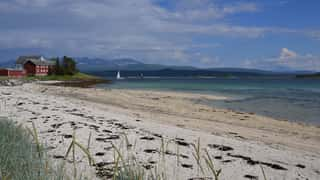
No. The coastline around Sortland is rocky and industrial. While there are some small pebble coves in Sigerfjord (8 km away), there are no sandy 'swimming' beaches within reach of the port. Vesterålen does have stunning white sand beaches (like those in Bø or Andøya), but these are 60–90 minutes away by car and not feasible during a standard 6-hour port call.
Does Sortland have free public wifi?
Yes. The most reliable free wifi is found at the Kulturfabrikken (the public library and culture hub) near the pier. Many cafes like 'Bakeriet' also offer free wifi for customers. There is no town-wide open network, but the signal at the library is strong enough for video calls and large downloads. Further tips on staying connected in Arctic ports can be found online.
What is the best local snack to buy in a Sortland supermarket?
Look for 'Brunost' (brown whey cheese), specifically the Gudbrandsdalsost variety. It has a sweet, caramel-like flavor. Pair it with 'flatbrød' or a freshly baked waffle. Another local favorite is 'Tørrfisk' (dried cod) snacks, though the smell is strong. These can be found at the REMA 1000 or Coop Extra supermarkets, both within a 10-minute walk of the cruise pier.
Is Sortland a good place to buy a traditional Norwegian sweater?
Yes, but avoid the pier-side stalls. For authentic, high-quality knitwear, go to the Sport 1 or Intersport shops in the center. They stock genuine brands like Devold and Dale of Norway. A real wool sweater will cost between 1500 and 2500 NOK (~$135–$225 USD). These are far superior in warmth and durability to the 'souvenir' versions. Checking the 'Made in Norway' label is recommended.
Fact-checked and co-written by J. Richard, Founder, Waterways Cruise, with the Waterways Cruise Content Team.
Published May 19, 2026 · Last updated November 2, 2026
This guide is researched and reviewed by our editorial team, but prices, hours, and availability change often. Confirm current details directly with venues, excursion operators, and your cruise line before you travel.