Oman Cruise Ports & Cruise Guide
Total 4
This page is an overview of the 4 cruise ports in Oman, covering ocean cruises. Cruises start and end at Salalah. 13 cruise ships visit Oman across 4 ports. See live sailings and availability on the Oman cruises page.


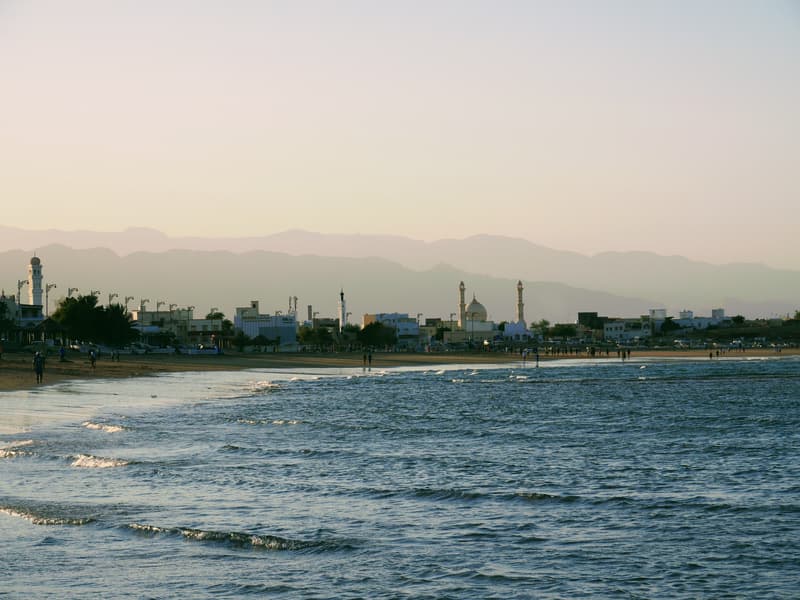
Oman is the quiet, sophisticated heart of the Arabian Peninsula—a land of ancient forts, green wadis, vast dunes, and a long Indian Ocean coastline. For the American traveler marking a milestone, it is best seen by small ship: expedition and premium lines call at Muscat, Salalah, Khasab, and occasionally Sur, where private excursions can be arranged to avoid the feeling of being herded. There are no navigable rivers, so this is a coastal-cruise destination rather than a river-cruise destination. The reward is authenticity: Omani hospitality, UNESCO-listed heritage, and landscapes that range from desert to monsoon-green mountains.
Country facts
History
Oman is one of the oldest independent states in the Arab world, shaped by maritime trade in frankincense and copper, the spread of Ibadi Islam, Portuguese colonization of the coast, and an empire that once stretched to East Africa. Modern Oman was rebuilt after 1970 under Sultan Qaboos and continues under Sultan Haitham.
The standard narrative focuses on the Al Said dynasty and the 1970 'renaissance'; earlier Ya'rubi, Portuguese, and regional histories are less familiar to American readers. Some tourism narratives present Oman as 'unchanged', which underestimates the country's rapid social and economic transformation.
Culture
Omani identity blends Ibadi Islam, maritime trade, Bedouin heritage, and Indian Ocean connections; regional identities are strong, especially Dhofari culture in the south.
Music: Traditional Omani music includes the razha (poetic sword dance), Al-Bar'ah of Dhofar, fann at-tanbura, and the Omani lyre; women's zaffan processions are also part of celebrations.
Signature landscape: The contrast of khareef-misted green mountains in Dhofar and the great red-orange dunes of Wahiba Sands—plus some of Arabia's cleanest coastline.
Cuisine
- Shuwa: slow-roasted lamb cooked in an underground sand oven
- Majboos: spiced rice with meat or fish
- Mishkak: grilled skewered meat or fish
- Omani halwa: saffron and rose-flavored sweet jelly
- Dates and Omani kahwa: spiced coffee served with dates
- Mashuai: grilled kingfish with lemon rice
Architecture & heritage
- Bahla Fort (UNESCO World Heritage)
- Nizwa Fort and its round tower
- Jabrin Castle
- Aflaj irrigation systems of Oman (UNESCO World Heritage)
- Sultan Qaboos Grand Mosque
- Land of Frankincense sites in Dhofar (UNESCO World Heritage)
- Ancient city of Qalhat (UNESCO World Heritage)
Tips for American travellers
- Dress modestly: shoulders and knees covered, especially in mosques and traditional neighborhoods.
- Remove shoes before entering mosques and many homes.
- Ask permission before photographing people, particularly Omani women.
- Public displays of affection are generally frowned upon.
- During Ramadan, avoid eating, drinking, or smoking in public during daylight hours.
- The weekend is Friday–Saturday; many government offices and some shops close Friday morning.
- Alcohol is served only in licensed hotels and restaurants; it is not sold in public shops.
Major cities & destinations
Muscat Capital city and main cruise gateway
Modern, low-rise capital framed by rocky mountains and the Gulf of Oman; home to the Sultan Qaboos Grand Mosque, Royal Opera House, and the historic Al Alam Palace.
Primary cruise port in Oman; most itineraries dock at Port Sultan Qaboos near Mutrah; easy access to Grand Mosque, Mutrah Corniche, and Old Muscat.
Sultan Qaboos Grand Mosque Al Alam Palace Royal Opera House Muscat Bait Al Zubair Museum National Museum of OmanMutrah Historic port district of Muscat
The crescent-shaped Mutrah Corniche, the Mutrah Souq, and the old Portuguese forts give a sense of old maritime Oman.
Cruise berths are adjacent to Mutrah; passengers can walk from the port to the corniche and souq, making it ideal for independent exploring.
Mutrah Souq Mutrah Corniche Al Jalali Fort Al Mirani Fort Riyam ParkNizwa Historic interior town
Cultural heart of Oman; famous for Nizwa Fort, the round tower, Friday goat market, and date plantations.
Most popular shore excursion from Muscat, about 1.5–2 hours inland; best as a private small-group trip with a driver-guide.
Nizwa Fort Nizwa Souq Friday goat market Qanat/falaj irrigation systems Nizwa Grand MosqueBahla Historic oasis town
UNESCO-listed Bahla Fort is one of Oman's most atmospheric mud-brick monuments, surrounded by date palms and the Al Hajar foothills.
Usually combined with Nizwa on a day excursion from Muscat; the route also passes Jabrin Castle.
Bahla Fort Bahla Oasis Jabrin Castle Pottery workshopsSalalah Southern port city and Dhofar capital
A different Oman: the monsoon khareef turns mountains green from July to September, and frankincense groves and UNESCO-listed sites anchor the Land of Frankincense.
Important Indian Ocean port on expedition-style Arabian Sea itineraries; ships call primarily between October and April, with some summer sailings for khareef.
Museum of the Land of Frankincense Al Baleed Archaeological Park Wadi Darbat Mughsail Beach Frankincense souq in HaffaKhasab Port town in the Musandam Peninsula
Oman's northern exclave on the Strait of Hormuz; dramatic fjords, traditional dhow building, and a quieter pace than Dubai.
A natural small-ship port; dhow cruises into Khawr Ash Sham and the 'fjords' are the signature excursion.
Khasab Fort Khawr Ash Sham fjord Telegraph Island Dhow-building yard Bukha FortSur Coastal city on the Gulf of Oman
Historic shipbuilding town known for dhows, the Ras Al Jinz turtle reserve, and calm beaches.
Smaller port; often included on Oman coastal itineraries; shore excursions focus on maritime heritage and sea turtles.
Dhow shipyard Ras Al Jinz Turtle Reserve Sunaysilah Fort Bilad Sur Castle Al Ayjah watchtowerWahiba Sands Desert region
A sea of red-orange dunes, Bedouin camps, and dramatic light; a classic Arabian desert experience without crossing into the Empty Quarter.
Reachable on a full-day or overnight excursion from Muscat; most cruise passengers see it on pre- or post-cruise extensions rather than a port day.
Large dunes Bedouin-style desert camps Al Rakah desert falaj Sunset photography pointsCruise ports of call
Oman is not a river-cruise destination; it is visited by ocean and expedition cruise ships. The main cruise gateways are Port Sultan Qaboos in Muscat, Port of Salalah, and Khasab Port in Musandam. Smaller coastal calls include Sur and sometimes Duqm.
- Persian Gulf & Arabian Peninsula: 7–12 night loops from Dubai, Abu Dhabi, or Doha that include Khasab, Muscat, and sometimes Salalah.
- Indian Ocean & Arabian Sea Expedition: 10–20 night repositioning or expedition voyages between Muscat, Salalah, Socotra, and the Indian Ocean islands.
Port Sultan Qaboos (Muscat) route_family_one
Located close to Mutrah Corniche and Old Muscat. Most cruise calls in Oman use this port. It is walkable to Mutrah Souq, and taxis and guides are available for the short drive to the Grand Mosque.
Best for: First-time visitors; city culture; combining forts and coastal views.
Operators: Ponant, Silversea, Seabourn, Oceania Cruises, Azamara, Windstar Cruises, Hurtigruten Expeditions
Port of Salalah route_family_two
A deep-water port serving the Dhofar region. Cruise calls are less frequent than Muscat, often on repositioning or expedition itineraries. Summer khareef calls are rare but increasingly offered.
Best for: Frankincense heritage, monsoon landscapes in season, wide beaches.
Operators: Ponant, Silversea, Seabourn, Oceania Cruises, Hurtigruten Expeditions
Khasab Port route_family_one
Gateway to the Musandam Peninsula fjords. Ships anchor or tie up at a small port; local dhow operators meet passengers for excursions.
Best for: Fjord cruising, dhow rides, mountain scenery.
Operators: Ponant, Silversea, Seabourn, Azamara, Windstar Cruises
Sur Port route_family_two
An occasional call for expedition and boutique ships. The town is known for dhow building, and Ras Al Jinz Turtle Reserve is nearby.
Best for: Maritime heritage, turtles, authentic town atmosphere.
Operators: Ponant, Windstar Cruises, Hurtigruten Expeditions
Duqm and Masirah Island are emerging expedition stops, but shore infrastructure remains limited; for most travelers, Muscat, Salalah, Khasab, and Sur cover the essential Omani coast.
All cruise ports in Oman
Ships visiting by type: 13 ocean


River cruises & routes
Oman has no navigable rivers; traditional river cruising does not exist here. Instead, small expedition and ocean ships run coastal itineraries along Oman's roughly 3,000 km shoreline. For the milestone traveler, these are a better fit than large-ship port calls.
| Route | Length | Countries | Highlights |
|---|---|---|---|
| Dubai to Muscat (Persian Gulf loop) | 7–9 nights | UAE, Oman | Khasab fjords, Port Sultan Qaboos, Mutrah Souq, optional Nizwa fort excursion. |
| Muscat to Salalah (Oman Coastal Expedition) | 10–14 nights | Oman | Sur shipyard, turtle reserve, wadis, Wahiba Sands edge, Dhofar frankincense sites. |
| Indian Ocean Crossing | 16–24 nights | Oman, Yemen (Socotra), Seychelles/Maldives | Expedition landings, Socotra archipelago, Indian Ocean wildlife; itinerary depends on geopolitical conditions. |
Season: October–April is the comfortable cruising season; May–September is very hot, though Salalah's khareef monsoon runs roughly July–September and has a small summer-cruise niche. Book well ahead for winter holiday and spring-break sailings.
Cruise lines visiting Oman
Premium, luxury, and expedition lines dominate Oman cruise calls. The country appeals to lines emphasizing destination immersion rather than mega-ship entertainment. Several lines offer private or small-group excursions, important for readers who fear being herded.
Ponant
Arabian Gulf loops and Indian Ocean expedition voyages; calls at Muscat, Salalah, Khasab.
Ships: Le Bougainville, Le Lapérouse
Silversea
Middle East and Indian Ocean itineraries; Port Sultan Qaboos and Salalah; included shore excursions and private options.
Ships: Silver Spirit, Silver Moon
Seabourn
Arabian Peninsula and India routes; Muscat and Khasab calls.
Ships: Seabourn Encore
Oceania Cruises
World cruises and Middle East voyages; longer port stays in Muscat; optional Overnight Adventures.
Ships: Marina, Riviera
Azamara
Arabian Gulf itineraries with overnight stays in Muscat; destination-intensive, small-ship.
Ships: Azamara Quest, Azamara Onward
Windstar Cruises
Small-ship Arabian Gulf and India sailings; Khasab and Muscat; water-sports platform.
Ships: Star Legend
Hurtigruten Expeditions
Expedition-style Indian Ocean and Arabian Sea voyages; Salalah and Sur; focus on nature and culture.
Ships: MS Fram
Confirm current deployment because ship assignments rotate annually. On all lines, private or small-group shore excursions are worth the premium for this reader. Avoid day tours with 40+ people unless necessary.
Planning & advice
You want more than a checklist; Oman offers unhurried sensory experiences—the smell of frankincense, the call to prayer, the silence of dunes—with a level of safety and English ability that makes independent exploration easy. A small-ship or expedition voyage with private excursions gives you the milestone sense of discovery without the herd.
For the American traveller
- Request a private or small-group guide at the port; large cruise groups often follow identical loops.
- Dress modestly: shoulders and knees covered for mosques and souks; pack a scarf.
- Carry cash in rials for souks; cards are accepted in hotels and larger restaurants but not small stalls.
- Alcohol is served only in licensed hotels and restaurants; do not bring alcohol ashore from the ship.
- Hydrate and use high-SPF sunscreen; heat peaks April–October.
- Friday prayers mean some sites close late morning; plan around it.
- Ask before photographing locals, and avoid photographing military or security areas.
- If traveling during Ramadan, be aware that many daytime restaurants are closed and eating in public is discouraged.
Excursion planning
- Book through your ship or a vetted local operator; distances are long and port time is limited.
- Start early to beat heat and crowds at the Grand Mosque and Nizwa Fort.
- For turtle nesting at Ras Al Jinz, check the seasonal access and whether a late evening excursion is possible.
- Wahiba Sands is more than two hours from Muscat; a 4x4 is essential.
- Wadi Shab requires walking and swimming; ask about mobility before booking.
- Musandam dhow cruises depart from Khasab; schedule around tides.
- Use a licensed local DMC rather than an online aggregator for private shore excursions.
The verdict
Oman is an excellent milestone destination for the independent-minded American traveler, provided you choose a small ship, travel October–April, and invest in private excursions. Skip it if you want nightlife, shopping, or river cruising; embrace it for forts, sea, dunes, and warm hospitality.
Sources
- CIA — Oman - The World Factbook (accessed 2026-09-09)
- Encyclopaedia Britannica — Oman (accessed 2026-09-09)
- UNESCO World Heritage Centre — Oman - Properties inscribed on the World Heritage List (accessed 2026-09-09)
- Oman Ministry of Heritage and Tourism — Experience Oman (accessed 2026-09-09)
- Lonely Planet — Oman (accessed 2026-09-09)