Palau Cruise Ports & Cruise Guide
Total 1
This page is an overview of the 1 cruise ports in Palau, covering ocean cruises. 4 cruise ships visit Palau across 1 ports. See live sailings and availability on the Palau cruises page.

Palau is a remote Micronesian archipelago of over 300 islands, famed for its extraordinary marine biodiversity, limestone Rock Islands, and rich cultural heritage. For the mature American traveler seeking authentic, unhurried experiences, Palau offers world-class snorkeling and diving, significant WWII history, and a deeply preserved indigenous culture. Expedition cruises are the ideal way to explore its scattered atolls and small islands, avoiding crowds and allowing intimate access to hidden lagoons, Jellyfish Lake, and traditional villages.
Country facts
History
Palau has been inhabited for over 3,000 years, with a distinct Austronesian culture and matrilineal social structure. Contact with Europeans began in the 16th century; Spain, Germany, and Japan each administered the islands before the United States took control under the UN Trusteeship after WWII. Palau became an independent republic in 1994 under a Compact of Free Association with the US.
Palau's history includes a brutal WWII battle on Peleliu that left many scars, and the island's economy is still heavily dependent on US funding and tourism. The Japanese colonial era deeply shaped local culture and infrastructure, which is often glossed over in tourist materials.
Culture
Palauan identity is rooted in matrilineal clans, village councils, and respect for the ocean. Traditional practices like the 'bai' meeting house, storyboards, and money (Megalithic stone money) are still valued. The national ethos emphasizes environmental stewardship, embodied in the Palau Pledge stamped on passports.
Music: Traditional Palauan music features group singing, bamboo percussion, and stories passed down through generations. Modern styles mix with contemporary Pacific island music.
Signature landscape: The Rock Islands Southern Lagoon, a UNESCO World Heritage site, with its distinctive mushroom-shaped limestone islets, turquoise lagoons, and remarkable marine biodiversity, including the famous Jellyfish Lake.
Cuisine
- Fresh seafood – including parrotfish, tuna, and crab
- Taro – a staple root crop, often roasted or boiled
- Cassava and tapioca pudding
- Fruit bat soup – a traditional delicacy
- Coconut milk and fruit – including mangoes, papayas, and bananas
Architecture & heritage
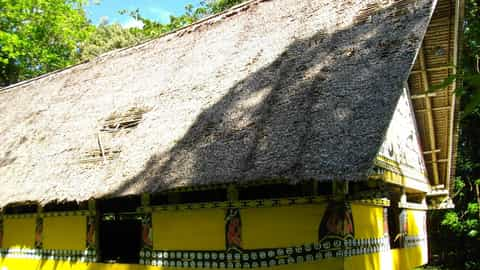
- Traditional bai (men's meeting houses) with painted gables and intricate storyboards
- Ulong and other rock art sites
- Japanese-era buildings and WWII relics, including anti-aircraft guns and bunkers on Peleliu
- Stone money pieces on Yap (and some in Palau's villages)
Tips for American travellers
- Ask permission before photographing people or entering villages
- Dress modestly in villages and when visiting bai
- Do not touch or stand on coral – the reefs are fragile
- Participate in a traditional welcome ceremony if invited
- The Palau Pledge is required on entry – be prepared to respect the environment
Major cities & destinations
Koror Largest town and commercial center
Koror is the gateway to Palau, offering museums, restaurants, and easy access to nearby Rock Islands. It's the main hub for tours and diving.
Koror's Malakal Harbor is the primary cruise ship anchorage and the departure point for most excursion boats.
Etpison Museum Belau National Museum Koror State Long Island Park Japanese Lighthouse and WWII memorialsBabeldaob Largest island
Babeldaob is the geographic heart of Palau, with rugged interior, waterfalls, ancient stone monoliths, and the current capital, Ngerulmud.
Cruise ships may offer land excursions to Babeldaob's cultural and natural highlights from Koror.
Ngerulmud Capitol Complex Ngardmau Waterfall Badrulchau Stone Monoliths Airai Bai (traditional meeting house)Peleliu Island state and WWII historic site
Peleliu is a poignant WWII battlefield, where fierce fighting occurred in 1944. It's a must-visit for history enthusiasts.
Expedition ships may anchor at Peleliu to offer battlefield tours and diving on wrecks.
Peleliu WWII Battlefield Memorial Bloody Nose Ridge Japanese naval headquarters and caves Orange Beach landing siteRock Islands Lagoon and UNESCO World Heritage Site
The Rock Islands are Palau's most iconic landscape – over 200 forest-topped limestone islets rising from a turquoise lagoon, with hidden beaches, marine lakes, and snorkel sites.
Many cruises spend full days exploring the Rock Islands via small boats, with multiple snorkel stops.
Jellyfish Lake (Ongeim'l Tketau) Blue Corner and Blue Holes Ngerukewid Islands (Ngerukeewid) 'Seventy Islands' Milky Way Lagoon (white-sand mud bath)Angaur Island state
Angaur is a small, less-visited island with WWII relics, excellent diving, and a unique local language (Japanese-influenced).
Occasional expedition stops for diving and historical tours.
Angaur WWII shipwreck and gun emplacements Lighthouse Blue Hole and swimming areasCruise ports of call
Palau is a remote destination, typically visited as part of a Western Pacific expedition or a South Pacific crossing. Most cruise ships anchor at Koror (Malakal Harbor), using tenders to bring passengers ashore. Expedition lines also arrange skiff excursions directly into the Rock Islands and Peleliu.
- Western Pacific Expedition – includes Guam, Palau, and sometimes Yap or Chuuk, focusing on WWII history, culture, and diving.
- Micronesia Island Crossing – longer itineraries from Australia or Asia to Honolulu, with Palau as a featured stop.
Koror (Malakal Harbor) Both
Malakal Harbor is the main entry for cruise ships, located just south of Koror town. Ships anchor offshore and tender passengers to the dock. The harbor is well protected, and most day excursions depart from here.
Best for: First-time visitors, cultural tours, and access to the Rock Islands.
Operators: Lindblad Expeditions, Ponant, Oceania Cruises
Peleliu (anchorage) Western Pacific Expedition
Peleliu is often visited on expedition cruises focusing on WWII history. Ships may anchor off the island and use Zodiacs to land on the beach. The island is less developed, with no large piers.
Best for: History buffs and divers interested in war wrecks.
Operators: Lindblad Expeditions, Ponant
Guam (Agana) is the usual embarkation port for Palau-bound expedition cruises, with direct flights from the US via Honolulu or Tokyo. A few cruises include Palau on trans-Pacific sailings with stops in Saipan, Yap, or Chuuk.
All cruise ports in Palau
Ships visiting by type: 3 ocean 2 expedition
Showing 1 port in Palau
River cruises & routes
Palau has no rivers, but the concept of 'expedition cruising' through its lagoon and islands provides a similar small-ship experience. These voyages are not traditional river cruises; they are ocean expeditions with Zodiac excursions.
| Route | Length | Countries | Highlights |
|---|---|---|---|
| Guam to Palau (return) | 8–10 | USA (Guam) and Palau | Rock Islands, Jellyfish Lake, Peleliu, WWII sites, snorkeling, and cultural encounters. |
| Yokohama to Palau via Micronesia | 14–18 | Japan, Palau, Federated States of Micronesia | Remote islands, Japanese heritage, WWII history, pristine reefs. |
Season: Dry season: November–April (best for cruising); wet season: May–October with occasional tropical storms. Peak travel is winter months.
Cruise lines visiting Palau
Because of Palau's remoteness, cruise traffic is limited. Expedition lines dominate, but a few luxury lines include Palau on world cruises or Pacific crossings.
Lindblad Expeditions
Guam–Palau–Yap or Palau–Fiji, emphasizing nature and culture.
Ships: National Geographic Orion, National Geographic Resolution
Ponant
Asian and Pacific itineraries, often including Palau with French-inspired luxury.
Ships: Le Bougainville, Le Lapérouse
Oceania Cruises
World cruise segments or transpacific crossings that call at Koror.
Ships: Marina, Riviera
Always verify current schedules, as Palau port calls are infrequent and may be cancelled due to weather or port constraints. Expedition ships with small landing craft offer the best access to the Rock Islands and Peleliu.
Planning & advice
Palau is the antidote to mass-market cruising. Its remote location and limited tourism infrastructure mean small groups, unhurried schedules, and genuine encounters. The natural wonders – from jellyfish-filled lakes to WWII memorials – offer a mix of adventure and reflection that appeals to travelers who seek meaning over crowds.
For the American traveller
- Passport must be valid for at least 6 months; no visa required for US citizens for up to 90 days.
- The Palau Pledge is a mandatory customs declaration – sign it at entry; it commits you to protect the environment.
- Health care is limited; bring prescription medications and a basic first-aid kit.
- US dollars are used, but credit cards are not accepted everywhere; carry cash for small shops and villages.
- Wi-Fi is slow and limited, especially outside Koror – embrace digital detox.
- Respect local customs; ask before taking photos of people or sacred sites.
Excursion planning
- Book shore excursions through your cruise line or reputable local operators well in advance, as spaces are limited.
- For snorkeling, bring your own mask and snorkel for a better fit; most tours provide gear.
- Jellyfish Lake requires a permit and a ranger guide – your tour operator will arrange it.
- Wear reef-safe sunscreen to protect the corals; it's often required.
- For WWII tours, wear comfortable walking shoes and bring water; sites are not heavily developed.
The verdict
Palau is an extraordinary destination for the mature, culturally curious traveler. Its fragile beauty demands respect, but rewards with some of the world's most iconic marine landscapes and a deep sense of place. Choose a small-ship expedition to experience it authentically, without the crowds.
Sources
- CIA World Factbook — Palau (accessed 2026-09-09)
- Belau Tourism Administration — Official Palau Travel Guide (accessed 2026-09-09)
- Britannica — Palau (accessed 2026-09-09)
- UNESCO World Heritage Centre — Rock Islands Southern Lagoon (accessed 2026-09-09)
- National Geographic Expeditions — Palau Cruises (accessed 2026-09-09)