Poland Cruise Ports & Cruise Guide
Total 4 · 2 river · 2 ocean
This page is an overview of the 4 cruise ports in Poland, covering river and ocean cruises. Cruises start and end at Gdańsk, Szczecin. 54 cruise ships visit Poland across 4 ports. See live sailings and availability on the Poland cruises page.


Poland offers a deeply layered history, from medieval old towns to the scars of WWII and a resilient culture. Its river cruise infrastructure is still emerging—most travelers arrive via Baltic Sea cruises calling at Gdańsk or by land. This package focuses on authentic experiences, honest caveats about limited river routes, and smart planning for independent-minded travelers.
Country facts
History
Poland's history spans over a thousand years, from the Piast dynasty to the Polish-Lithuanian Commonwealth, through partitions, rebirth, WWII, communism, and the Solidarity movement. It is a story of resilience and a deep national identity.
Poland's history is deeply moving but also painful, especially regarding the Holocaust and the near-total destruction of Warsaw. Visitors should approach these sites with solemnity and avoid conflating Nazi-occupied Poland with Polish perpetration of the Holocaust.
Culture
A strong, resilient national identity rooted in Catholicism, a rich literary tradition, and a deep sense of hospitality. Regional identities are strong—from Kashubian in the north to Silesian and Podhale highlander culture.
Music: Classical music – especially Chopin – plus vibrant folk traditions (polonaise, mazurka) and a modern jazz scene.
Signature landscape: Białowieża Forest, Europe's last primeval lowland forest, and the Tatra Mountains offer dramatic landscapes.
Cuisine
- Pierogi (dumplings)
- Bigos (hunter's stew)
- Żurek (sour rye soup)
- Gołąbki (cabbage rolls)
- Oscypek (smoked sheep cheese from the Tatras)
- Pączki (Polish donuts)
Architecture & heritage
- Gothic brick churches (St. Mary's in Gdańsk)
- Renaissance attics and town halls (Zamość)
- Baroque palaces (Wilanów)
- Timber churches of the Carpathians
- Post-war reconstructed Old Towns (Warsaw, Gdańsk)
Tips for American travellers
- Learn a few Polish phrases – English is not universal outside major cities.
- Cash is still king in small towns and markets.
- Tipping 10% in restaurants is customary.
- Dress conservatively in churches and religious sites.
- Avoid saying 'Polish concentration camps' – the correct term is 'German Nazi concentration camps on occupied Polish soil.'
- When discussing history, be respectful; WWII and communism are still raw.
Major cities & destinations
Warsaw Capital
A city of phoenix-like resilience; meticulously rebuilt Old Town, powerful museums, and a vibrant contemporary scene.
River port on the Vistula; some local river cruises start/end here.
Old Town (UNESCO) Royal Castle Wilanów Palace POLIN Museum of the History of Polish Jews Warsaw Uprising Museum Łazienki ParkKraków Former capital
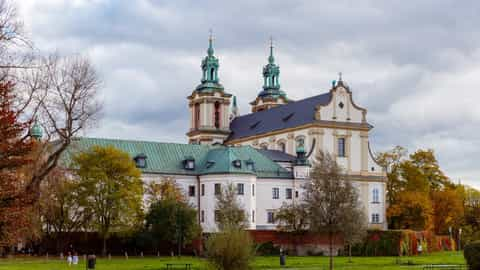
Poland's best-preserved medieval city, with a beautiful main square, Wawel Castle, and the moving Kazimierz district.
No direct river cruise port; easily reached by train from Warsaw or as a land extension.
Main Market Square (Rynek Główny) Wawel Castle and Cathedral Kazimierz Jewish Quarter Wieliczka Salt Mine (day trip) Auschwitz-Birkenau Memorial and Museum (day trip)Gdańsk Baltic port city
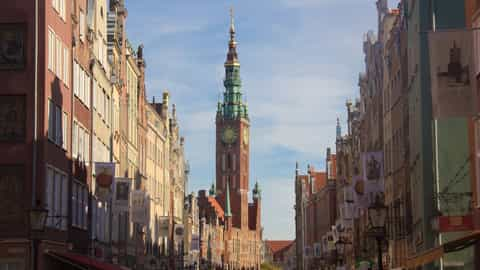
Amber-rich Hanseatic port with a fairy-tale old town, a powerful shipyard history, and easy access to the coast.
Major Baltic Sea cruise port; also a river port on the Vistula for local cruises.
Gdańsk Old Town (Long Market, Town Hall) St. Mary's Church European Solidarity Centre Gdańsk Shipyard Malbork Castle (day trip)Wrocław River city on the Oder
A city of 12 islands, 100+ bridges, a charming Market Square, and the famous Wrocław dwarfs.
Primary port for Oder river cruises; boats connect to Szczecin and beyond.
Market Square (Rynek) Ostrów Tumski (Cathedral Island) Centennial Hall (UNESCO) Panorama Racławicka Wrocław Dwarfs scavenger huntToruń Medieval town on the Vistula
Birthplace of Copernicus, a perfectly preserved Gothic old town, and a gingerbread tradition.
Frequent stop on Vistula river cruises between Warsaw and Gdańsk.
Old Town (UNESCO) Copernicus House Gingerbread Museum Leaning Tower of ToruńPoznań Regional capital
A vibrant city with a colorful old town, a Renaissance town hall, and a lively food scene.
Not a major river port, but accessible by rail; often a land extension.
Poznań Old Town Town Hall and goats clock Imperial Castle Ostrów Tumski CathedralCruise ports of call
Poland's river cruise infrastructure is modest. Baltic Sea cruise ships regularly call at Gdańsk/Gdynia, while river cruises on the Vistula and Oder are seasonal, small-ship operations. Most international river cruise lines do not feature Poland as a primary destination.
- Vistula River Route – connects Warsaw, Toruń, Bydgoszcz, and Gdańsk.
- Oder River Route – connects Wrocław, the Oder valley, Szczecin, and the Baltic Sea.
Gdańsk Vistula
A major Baltic cruise port and the terminus for Vistula river cruises. Deep-water quays in Gdańsk and Gdynia handle large ships.
Best for: History, maritime heritage, old town charm, and as a gateway to the Baltic coast.
Operators: Baltic Sea cruise lines, Local river cruise operators
Warsaw Vistula
The capital and main transportation hub. Vistula river cruises are limited but occasionally run between Warsaw and Toruń or Gdańsk.
Best for: Museums, royal heritage, and modern culture.
Operators: Local river cruise operators
Toruń Vistula
A UNESCO-listed medieval town on the Vistula, often included in small-ship river itineraries.
Best for: Gothic architecture, Copernicus, gingerbread, and a peaceful riverfront.
Operators: Local river cruise operators
Wrocław Oder
A vibrant city on the Oder with a network of islands and bridges. Some river cruises operate between Wrocław and Szczecin.
Best for: Architecture, riverside ambiance, and the whimsical dwarf statues.
Operators: Local river cruise operators
Szczecin Oder
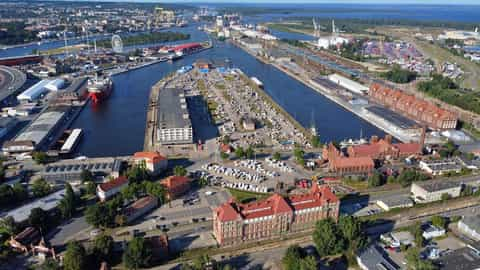
A large port at the mouth of the Oder, close to the Baltic Sea. More industrial, but a gateway to the Pomeranian coast.
Best for: Maritime history, Pomeranian culture, and as a stop on Oder-to-Baltic itineraries.
Operators: Local river cruise operators
Gdynia, adjacent to Gdańsk, is also a major Baltic cruise port. Bydgoszcz, on the Bydgoszcz Canal, occasionally appears on Vistula itineraries. Most river ports have limited draft, so only small ships can navigate inland.
All cruise ports in Poland
Ships visiting by type: 42 ocean 10 river 5 expedition

River cruises & routes
Poland is not a mainstream river cruise destination. International lines like Viking and AmaWaterways do not run regular itineraries through Polish rivers. However, small local operators offer exploratory cruises on the Vistula and Oder, often combined with rail or land stays.
| Route | Length | Countries | Highlights |
|---|---|---|---|
| Warsaw to Gdańsk via Vistula | 7–10 | Poland | Warsaw Old Town, Toruń's medieval charm, Bydgoszcz canals, Gdańsk's amber heritage |
| Wrocław to Szczecin via Oder | 5–7 | Poland | Wrocław's islands, Ksiaz Castle, Oder valley, Szczecin's maritime history |
Season: May–September; July–August is the busiest but also the wettest.
Cruise lines visiting Poland
Baltic Sea cruises are the main cruise option, with Gdańsk/Gdynia as a port of call. River cruising is limited to local operators.
Baltic Sea cruise lines
Baltic itineraries that include Gdańsk/Gdynia, often along with Stockholm, Tallinn, and St. Petersburg (or Helsinki).
Local river cruise operators (e.g., White Fleet, Odra Cruises)
Short river cruises on the Vistula and Oder; these are generally not full-ship cruises but rather day boats or small expedition vessels.
No major international river line operates regular Poland itineraries as of 2026. Baltic cruise lines visit only coastal ports. For river exploration, it is best to book private guides or small-group tours with local operators.
Planning & advice
Poland is for the seasoned traveler who seeks deep history, meaningful encounters, and less-touristed destinations. It is not a typical river-cruise country, so you can avoid the crowds and truly connect with local culture.
For the American traveller
- English is not widely spoken outside major tourist centers; learn key phrases and consider downloading offline translation.
- Carry cash (PLN) for small purchases, markets, and rural areas.
- Tipping 10–15% is appreciated but not mandatory.
- Poland is generally safe, but be mindful of pickpockets in crowded tourist spots.
- Avoid the 'herd' by booking private guides or small-group tours, especially at Auschwitz-Birkenau and the Warsaw Uprising Museum.
- Pace your visits to war-related sites; they are emotionally heavy.
Excursion planning
- Book Auschwitz and Wieliczka tours weeks in advance, especially in summer.
- Wear comfortable walking shoes – old towns are cobblestoned.
- Consider a half-day river boat ride in Warsaw or Wrocław instead of a full cruise.
- If you want a river cruise, expect a small, intimate vessel and check whether there is an English-speaking guide.
- Use trains between major cities – they are comfortable and cheap.
The verdict
Poland is a rewarding destination for those willing to travel independently or via Baltic cruises. Its river cruise infrastructure is minimal, but the land-based experiences – from Kraków's medieval charm to Gdańsk's maritime heritage – are world-class. Approach it as a cultural immersion rather than a classic river cruise, and you'll be richly rewarded.
Sources
- Wikipedia — Poland (accessed 2026-09-09)
- Poland Travel (Official Tourism) — Poland Travel (accessed 2026-09-09)
- Cruise Critic — Poland River Cruises (accessed 2026-09-09)