Senegal Cruise Ports & Cruise Guide
Total 1
This page is an overview of the 1 cruise ports in Senegal, covering ocean cruises. 15 cruise ships visit Senegal across 1 ports. See live sailings and availability on the Senegal cruises page.

Senegal is a cultural heavyweight of West Africa: cosmopolitan Dakar, the memorial island of Gorée, the colonial river city of Saint-Louis, and the mangrove waterways of the Sine-Saloum and Casamance. For the right cruiser, it offers an authentic, thought-provoking alternative to more familiar Atlantic itineraries. The key is choosing a small-ship or expedition-style voyage and building in time to travel at a deliberate pace.
Country facts
History
From precolonial kingdoms and the tragedy of the transatlantic slave trade through French colonial rule to one of Africa's most stable democracies, Senegal has a layered, often painful past. Its modern identity is built on Sufi Islam, teranga hospitality, and cultural leadership in music, film, and literature.
Senegal's role in the transatlantic slave trade is painful but essential to understand. Many Senegalese are also deeply proud of their independence, tolerance, and cultural heritage; approach historic sites with humility and a willingness to listen.
Culture
A society based on teranga (hospitality), predominantly Muslim and shaped by Sufi brotherhoods, with peaceful coexistence among Muslim, Christian, and animist communities.
Music: Mbalax, pioneered by Youssou N'Dour; also sabar drumming, kora traditions, and modern Afrobeat.
Signature landscape: Lac Rose / Lake Retba, the pink salt lake whose color comes from Dunaliella salina algae.
Cuisine
- Thiéboudienne (fish and rice)
- Yassa chicken or fish with onion-citrus sauce
- Mafé (peanut stew)
- Grilled fish with onion sauce
- Bassi (cassava in palm oil)
- Bissap (hibiscus drink)
- Café Touba (spiced coffee)
Architecture & heritage
- Gorée Island's colonial houses and slave memorials
- Saint-Louis's 19th-century colonial grid and balconies
- The Great Mosque of Touba, a modern monument of Mouride Sufism
- Baobab forests and Serer burial groves
- Dakar's African Renaissance Monument, striking but controversial
Tips for American travellers
- Senegal is safe and welcoming, but street hustling is common; a polite 'no thanks' is fine.
- Do not use your left hand to eat or hand things in traditional settings.
- Always ask before photographing people, especially in markets and villages.
- Friday prayers make some streets and shops close midday; plan accordingly.
- Alcohol is less common but available in restaurants; do not drink in public during Ramadan.
- The heat is intense; bring sun protection, a hat, and drink bottled water.
Major cities & destinations
Dakar Capital city
Cosmopolitan gateway with museums, markets, Atlantic beaches, a dynamic art scene, and the energy of a West African metropolis.
Primary cruise port for Senegal; most calls dock in Dakar or anchor off Gorée and transfer passengers.
IFAN Museum of African Arts Monument de la Renaissance Africaine Village des Arts Dakar Cathedral Soumbedioune Market Almadies PeninsulaGorée Island / historic UNESCO site
A car-free UNESCO-listed island with poignant slave-trade history, pastel colonial houses, and quiet lanes.
Usually a tender stop from Dakar; some ships anchor off the island and ferry passengers ashore.
House of Slaves (Maison des Esclaves) Fort d'Estrées / Gorée Castle IFAN Historical Museum St. Charles Church Gorée MemorialSaint-Louis Historic port city / UNESCO site
The former colonial capital, famous for its 19th-century architecture, the Pont Faidherbe bridge, and its dramatic sand spit.
An occasional small-ship expedition stop or a long overland day trip from Dakar; not served by large cruise vessels.
Faubourg de Ndar / Langue de Barbarie Pont Faidherbe Saint-Louis Cathedral Guet Ndar fishing quarter Djoudj National Bird Sanctuary (nearby)Touba Holy city
The sacred city of the Mouride Sufi brotherhood and home to the Great Mosque, a powerful expression of Senegal's religious culture.
Not a cruise port; visited by road from Dakar as a private full-day excursion. Non-Muslims can tour the exterior and market areas with respect.
Great Mosque of Touba Mausoleum of Amadou Bamba Touba market Baol region cultural landscapeSine-Saloum Delta Coastal delta / biosphere region
A labyrinth of mangroves, salt islands, birdlife, and Serer fishing villages unlike anywhere else in West Africa.
Anchorage for small expedition ships; shore excursions use pirogues and zodiacs through tidal channels.
Mangrove channels of Palmarin Djiffer fishing village Joal-Fadiouth shell island Saloum Delta National Park birdwatching Baobab forestsLac Rose Natural salt lake / day-trip destination
The famous pink lake just north of Dakar, where salt harvesters work in shallow water and sand dunes frame the shore.
Reached by road from Dakar; often combined with Gorée and a Dakar city tour on a single port call.
Lake Retba shoreline Salt harvesting concession Pink lake viewpoints Lompoul Desert dunes (nearby extension)Ziguinchor River town / cultural region
The heart of the Casamance region, with Diola and Mandinka cultures, riverine mangroves, palm forests, and a different rhythm from northern Senegal.
Rare small-ship expedition port on the Casamance River; security has improved but travelers should confirm current guidance.
Ziguinchor market St. Anthony of Padua Cathedral Île de Carabane Diola villages and rice paddies Lower Casamance National ParkCruise ports of call
Senegal's cruising is defined by Dakar, the region's largest port, plus a growing number of expedition calls in the Sine-Saloum Delta and Casamance River. Large world-cruise ships spend a day in Dakar, while small ships can devote several days to river and mangrove exploring.
- West Africa Expedition — small-ship voyages that explore the Sine-Saloum, Casamance, and Senegal River by tender or zodiac.
- World Cruise & Transatlantic — premium ships that use Dakar as a gateway to Gorée, Lac Rose, and city culture.
Dakar route_family_two
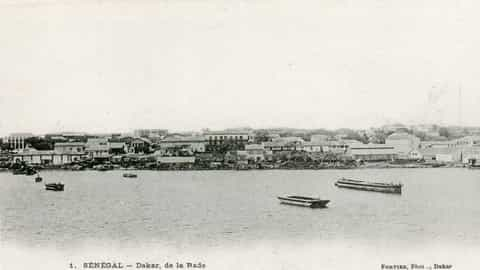
The Port of Dakar is West Africa's largest and the most reliable cruise berth in Senegal. It sits near the city center, allowing direct access to museums, markets, and day trips to Gorée and Lac Rose.
Best for: First-time visitors, markets, museums, contemporary African culture, and combining a city tour with the nearby coast.
Operators: Ponant, Hapag-Lloyd Cruises, Seabourn, Silversea, Oceania Cruises, Regent Seven Seas Cruises
Gorée route_family_two
Tenders land at the island jetty from ships anchored off Gorée or from Dakar harbor. The island is car-free and can feel crowded when several tour groups arrive together.
Best for: History, memorial reflection, photography, and a slower pace after the energy of Dakar.
Operators: Ponant, Hapag-Lloyd Cruises, Seabourn, Silversea, Oceania Cruises, Regent Seven Seas Cruises
Saint-Louis route_family_one
Expedition ships anchor off the Langue de Barbarie or send passengers ashore by tender into the Senegal River. The sandbar shifts with tides and currents, so calls are weather-dependent.
Best for: Colonial architecture, fishing culture, birdlife, and the haunting beauty of a city caught between river and sea.
Operators: Ponant, Hapag-Lloyd Cruises
Sine-Saloum Delta route_family_one
Ships anchor in the Saloum River and use zodiacs or pirogues to explore the mangrove channels. Tides control the schedule, and villages receive visitors with quiet curiosity.
Best for: Nature, birding, Serer culture, and unhurried small-boat exploration.
Operators: Ponant, Hapag-Lloyd Cruises
Ziguinchor route_family_one
Small expedition ships can call at Ziguinchor on the Casamance River or anchor downstream and use tenders. The area is culturally distinct, with Diola villages, rice paddies, and dense mangroves.
Best for: Travelers seeking a deep cultural immersion and one of the least-visited stretches of West Africa's coast.
Operators: Ponant, Hapag-Lloyd Cruises
The Port of Dakar is the only reliable deep-water cruise berth. Other calls are expedition anchorages, often weather- and tide-dependent. Casamance calls may be modified based on security; check current U.S. State Department and local advice.
All cruise ports in Senegal
Ships visiting by type: 13 ocean 4 expedition
Showing 1 port in Senegal
River cruises & routes
True overnight river cruising is rare in Senegal. The Casamance and Senegal Rivers are explored by expedition launches, pirogues, and small-ship zodiacs; most itineraries are 'coastal plus river' rather than a single waterway route.
| Route | Length | Countries | Highlights |
|---|---|---|---|
| Dakar to Casamance River & Bijagós | 10–14 days | Senegal, The Gambia, Guinea-Bissau | Gorée; Sine-Saloum mangroves; Ziguinchor; Carabane; Orango National Park |
| Cape Verde to Dakar & Saint-Louis | 8–12 days | Cape Verde, Senegal | Mindelo; Praia; Gorée; Saint-Louis; Djoudj; Lac Rose |
Season: November to May is the dry, cooler season; December through April is prime. Avoid the wet season from July to October when heat and humidity are high and some tracks become difficult.
Cruise lines visiting Senegal
Dakar appears as a port call on many world cruises, but only expedition ships travel the rivers and deltas. This means a small-ship or expedition cruise is the best way to see Senegal from the water.
Ponant
West Africa expedition voyages from Cape Verde and the Canaries, including Casamance and Saloum.
Ships: Le Bougainville, Le Dumont-d'Urville
Hapag-Lloyd Cruises
Expedition cruises along West Africa with Senegal River and Casamance excursions.
Ships: HANSEATIC nature, HANSEATIC inspiration
Seabourn
World cruise and transatlantic segments calling at Dakar and Gorée.
Ships: Seabourn Quest, Seabourn Sojourn
Silversea
World cruises and Africa itineraries with Dakar calls.
Ships: Silver Dawn, Silver Shadow
Regent Seven Seas Cruises
World cruise segments with a Dakar call.
Ships: Seven Seas Mariner, Seven Seas Splendor
Availability varies year to year; Dakar is a common call, while the Senegal River and Casamance are expedition niches. Verify with the cruise line or a specialist agent before booking, as West Africa itineraries can change.
Planning & advice
Milestone travelers often fear being herded; Senegal is a destination where going small is not just better, it is necessary. An expedition ship with 100–200 passengers, licensed local guides, and a thoughtful itinerary turns history and nature into an intimate experience.
For the American traveller
- Carry a photocopy of your passport and a yellow fever vaccination certificate; it may be checked upon arrival.
- U.S. citizens generally do not need a tourist visa for stays under 90 days, but entry rules can change; confirm before travel.
- Tap water is not safe to drink; use bottled or filtered water.
- Do not photograph government buildings, military sites, or people without asking.
- Use registered, licensed guides; avoid walking alone after dark in Dakar; keep valuables hidden.
- Learn a few phrases in Wolof: 'Salaam aleikum' (peace), 'Jërëjëf' (thank you).
- Dress modestly outside beach resorts; women may cover shoulders and knees.
- Bargaining is expected in markets; start at roughly half the quoted price.
- A firm but polite 'ba ba benn' (no) is the best way to handle persistent touts.
- For Casamance, obtain up-to-date security information from the U.S. State Department and local authorities before overland travel.
Excursion planning
- Book through the ship or a licensed local operator; the ship will wait for organized tours, but independent risk is yours.
- Visit Gorée early in the morning before the crowds; ask if the ship's tour has a dedicated tender.
- Combine Dakar, Gorée, and Lac Rose with a private vehicle to control the pace.
- For Saint-Louis, consider an overland trip from Dakar rather than relying on a ship call; it is a long day but possible.
- For birders, Djoudj is seasonal; best from December to April.
- Keep a flexible attitude; port calls can be altered due to winds, swell, or security conditions.
The verdict
Recommended for open-minded, well-traveled readers who want depth, not beach. Choose a small-ship or expedition itinerary that includes Gorée and the Sine-Saloum or Casamance, and go with patience, cultural curiosity, and a willingness to listen.
Sources
- CIA World Factbook — Senegal (accessed 2026-09-09)
- Encyclopaedia Britannica — Senegal (accessed 2026-09-09)
- UNESCO World Heritage Centre — Island of Gorée (accessed 2026-09-09)
- UNESCO World Heritage Centre — Saint-Louis Island (accessed 2026-09-09)
- UNESCO World Heritage Centre — Djoudj National Bird Sanctuary (accessed 2026-09-09)
- U.S. Department of State — Senegal Travel Advisory (accessed 2026-09-09)
- U.S. Centers for Disease Control and Prevention — Senegal Travelers' Health (accessed 2026-09-09)