Golubac Cruise Port
Golubac Fortress Visitor Center Pier

Golubac, Serbia Port
Central Serbia UN/LOCODE RSUBS Port of call
Golubac Cruise Port Location
| Port Details | |
|---|---|
| Country | Serbia |
| Region | Central Serbia |
| UN/LOCODE | RSUBS |
| Contact | |
| Address | Djerdapska Magistrala, Golubac 12223, Serbia |
| Port phone | +381 12 638 798 |
| Website | tvrdjavagolubackigrad.rs |
| Geography | |
| Coordinates | 44.65296, 21.63199 |
| Accessibility | |
| Accessible | Limited |
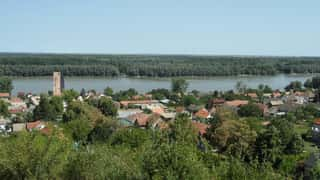
The cruise docking point at the Golubac Fortress visitor center sits exactly 4 km (2.5 miles) from the town center, a distance that requires a 5-minute taxi or a 45-minute walk along an entirely exposed riverside path. Located in the Braničevo District of eastern Serbia, this port marks the dramatic entrance to the Đerdap National Park and the Iron Gates gorge. You are approximately 130 km (80 miles) downstream from Belgrade, a 1-hour and 45-minute drive, and just 25 km (15 miles) from the popular Silver Lake resort area. Golubac is a quintessential river cruise port where the ship often docks twice: once for the historic site and once for the town. You will find that the lack of shade makes the trek between the fortress and the town center grueling for anyone disembarking after 10:00 AM. This destination rewards the early riser who prioritizes the fortress's upper zones before the heat settles into the stone. However, it punishes those with limited mobility who expect a seamless, flat connection between the major landmarks. The Danube is the lifeblood here, and your entire day will revolve around its banks. Realistically, you can expect a day of profound medieval history followed by a quiet, local riverside atmosphere, provided you utilize the available shuttles rather than attempting to navigate the distance on foot.
Golubac — Port Overview
History
Golubac first emerged in historical records in 1335, though its foundations likely date back to Roman fortifications designed to monitor traffic on the Danube. The fortress you see today was a strategic 'lock' on the river, contested for centuries by the Serbian Despotate, the Kingdom of Hungary, and the Ottoman Empire. Its position was critical; whoever held Golubac controlled the entrance to the Iron Gates, the narrowest and most dangerous stretch of the river. In 1428, a massive siege led by Hungarian King Sigismund saw the death of the legendary Polish knight Zawisza the Black, an event still commemorated in local lore. The Ottomans eventually secured the site, adding the distinct octagonal Cannon Tower to defend against artillery. For centuries, the fortress was partially submerged and neglected after the construction of the Đerdap I hydroelectric dam in 1972, which raised the river's water level. However, a massive €6.6 million (~$7.6 million USD) restoration project completed in 2019 relocated the modern road—which previously ran directly through the fortress gate—into a tunnel. This restored the medieval integrity of the site. Today, the ten massive towers and connecting ramparts stand as the most complete medieval fortification on the entire river system, directly visible from your ship's bow as you approach the dock.
The Verdict
The clients who get the most from Golubac are those who arrive with a plan and the flexibility to adapt to the river's conditions. This guide has been fact-checked by J. Richard. Whether you are scaling the towers or enjoying a quiet coffee on the quay, the scale of this medieval landmark is unforgettable.
Things to Do & See in Golubac
| Attraction | Type | Address | Phone | Hours | Website | Admission |
|---|---|---|---|---|---|---|
| Golubac Fortress Visitor Center & Palace | Museum | Djerdapska Magistrala, Golubac 12223, Serbia | +381 12 638 798 | 10:00 AM – 7:00 PM (seasonal) | tvrdjavagolubackigrad.rs | USD 600 RSD |
| Tumane Monastery | Cultural Site | Tumane Village, Golubac, Serbia | +381 12 675 130 | 7:00 AM – 8:00 PM | manastirtumane.org | Free |
| Fortress Blue Zone (Towers 3 & 4) | Historical Site | Djerdapska Magistrala, Golubac, Serbia | +381 12 638 798 | 10:00 AM – 6:00 PM | tvrdjavagolubackigrad.rs | USD 1000 RSD |
Golubac Fortress Visitor Center & Palace · Museum
USD 600 RSDThe heart of the 2019 restoration is this Visitor Center and the ground-level Palace. The walking path is perfectly managed for those with limited mobility. Inside, you'll find a world-class exhibition explaining how the fortress controlled the Danube. Most visitors walk past the 'Ship Wreckage' display—it contains actual timbers from 15th-century vessels found in the river silt. The Palace itself has been rebuilt to show how a medieval commander lived, with massive stone hearths and narrow arrow-slits that look directly out onto the Danube. This is the only section of the fortress that offers climate-controlled spaces and consistent seating. It delivers a comprehensive overview of Serbian and Ottoman history without requiring a single stair climb. If you only have one hour, spend it here and in the Cannon Tower (Tower 8), which is also mostly flat access. It is the most professional museum experience in eastern Serbia and provides the essential context for the 'Iron Gates' transit you will likely experience later in the day. The experience actually delivers a sense of the sheer scale of the river's power.
Djerdapska Magistrala, Golubac 12223, Serbia ·+381 12 638 798 ·10:00 AM – 7:00 PM (seasonal) ·tvrdjavagolubackigrad.rs
Tumane Monastery · Cultural Site
FreeLocated just 9 km from the Danube, Tumane is one of the most vibrant spiritual centers in the Balkans. Visitors have been moved by the chanting and the deep sense of peace. The monastery was founded by Miloš Obilić, a Serbian hero of the Battle of Kosovo. Today, it is famous for the relics of St. Zosimus of Sinai. What makes this genuinely worth your time is the contrast between the martial history of the Fortress and the quiet devotion here. Look for the modern frescoes inside the church—they are painted in the traditional Byzantine style but with a clarity that is rare in older sites. Best arrival time is between 11:00 AM and 12:00 PM when the morning rush has subsided. Be aware that women should have shoulders and knees covered, though the monastery provides wrap-around skirts at the gate. You will come away with an intimate look at the Serbian Orthodox faith that you simply cannot find in a city cathedral. It’s a place where the 14th century feels like yesterday.
Tumane Village, Golubac, Serbia ·+381 12 675 130 ·7:00 AM – 8:00 PM ·manastirtumane.org
Fortress Blue Zone (Towers 3 & 4) · Historical Site
USD 1000 RSDFor those who are physically able, the Blue Zone is the pinnacle of the Golubac experience. This zone includes the climb to Tower 4, which sits mid-way up the cliffside. You must wear a safety helmet (provided) and be accompanied by a fortress employee. What makes this genuinely worth the time is the perspective of the Danube. From this height, you can see the Iron Gates gorge opening up like a giant gateway. Look for the ancient masonry techniques where small stones were used to fill gaps between the massive limestone blocks—it's a detail you miss from the ground. The climb takes about 20 minutes of steady effort. The honest caveat is that the descent is actually harder on the knees than the ascent. Closing statement: the visit offers the 'knight's-eye view' of the river, making you realize how impossible it would have been to sail past this point without permission. It is the most thrilling 30 minutes in the Braničevo District.
Djerdapska Magistrala, Golubac, Serbia ·+381 12 638 798 ·10:00 AM – 6:00 PM ·tvrdjavagolubackigrad.rs
Eating & Drinking in Golubac
The culinary identity of Golubac is defined by the Danube. While Serbian cuisine is famous for its 'Roštilj' (grilled meats), here the focus shifts to river fish. The regional specialty is 'Riblja Čorba,' a spicy, paprika-heavy soup traditionally made from at least three types of fish (carp, catfish, and pike). Unlike the version in Belgrade, the Golubac variety is often thicker and served with homemade noodles. To drink, you must try 'Rakija' made from Homolje honey or quince (Dunja)—the Homolje mountains nearby produce the most sought-after honey in the country. For street food, seek out 'Pleskavica' from the small kiosks in the town market (pijaca); it is the Balkan version of a burger but spiced with local pepper. One honest note: tourists often expect to find 'Balkan Trout,' but trout is a mountain fish—here, you are eating what the big river provides: Catfish and Pike-perch. If it’s on the menu as 'fresh,' it came from the water you are currently looking at.
| Place | Address | Phone | Hours | Price range |
|---|---|---|---|---|
| Restoran Zlatna Ribica | Obala Kralja Aleksandra 12, Golubac | +381 12 678 111 | 10:00 AM – 11:00 PM | 2000–3500 RSD (~$18–$31 USD) |
| Nana Kafe | Kralja Aleksandra I, Golubac | 8:00 AM – 10:00 PM | 1000–1800 RSD (~$9–$16 USD) | |
| Caffe Bar Jedro | Obala Kralja Aleksandra, Golubac | 9:00 AM – Midnight; Happy Hour 5:00 PM – 7:00 PM | 250–500 RSD (~$2.50–$4.50 USD) |
Restoran Zlatna Ribica
2000–3500 RSD (~$18–$31 USD)Order the Pike-perch; it is the prize of the Danube. The fish soup is served in a traditional copper kettle. The restaurant sits directly on the water with a view of the Romanian bank. One honest limitation: service can be slow (Serbian 'polako' style), so allow 90 minutes.
Obala Kralja Aleksandra 12, Golubac ·+381 12 678 111 ·10:00 AM – 11:00 PM
Nana Kafe
1000–1800 RSD (~$9–$16 USD)This is where you get the genuine taste of Serbia for a fraction of the cost. The Ćevapi are hand-rolled and char-grilled. It’s loud, local, and authentic. They do not accept credit cards—bring Dinar.
Kralja Aleksandra I, Golubac ·8:00 AM – 10:00 PM
Caffe Bar Jedro
250–500 RSD (~$2.50–$4.50 USD)The right place for a Quince Rakija (fruit brandy). The view of the sunset over the Danube's widest point is unmatched. Locals come here to escape the heat.
Obala Kralja Aleksandra, Golubac ·9:00 AM – Midnight; Happy Hour 5:00 PM – 7:00 PM
Getting There & Around
Once you leave the cruise pier, walking is the primary way to explore the Fortress itself. However, to move between the Fortress and Golubac town, you must use a vehicle. The consistent feedback from visitors is that the 4 km walk is deceptively tiring. There is no Uber or local rideshare app in Golubac; you must rely on local taxis which are safe and generally honest. A ride to town should never exceed 700 RSD (~$6.25 USD). Bike rentals are available at the Visitor Center for 400 RSD (~$3.50 USD) per hour, and the path to town is flat, making this the best way for active travelers to see both sites. Navigation tip: The fortress uses a tiered ticketing system (Green, Blue, Red, Black). Most guides forget to mention that you cannot 'upgrade' your ticket once you are inside the towers; you must decide your physical capacity at the entrance gate.
Itineraries & Sample Walks
4-Hour Shore Excursion in Golubac
Golubac Fortress (Green Zone)
10:00 AM (120 min)
Focus on the Palace and Tower 8 (the Cannon Tower). The Palace houses a detailed museum on the 1428 siege. Most visitors walk past the 'fresco remains' in the chapel area—look for the faint blue pigment on the interior walls of the palace ruin.
- Directly adjacent to the cruise pier. (Free)
- Entry: 600 RSD ($5.50)
- Buy the Green Zone ticket even if you plan to climb; it allows access to the best viewpoints without the 45-minute wait for the restricted climbing groups.
Golubac Town Quay
12:15 PM (90 min)
Walk the paved promenade. This is where you see the Danube at its absolute widest. Stop at a local cafe for a 'Domaća Kafa' (Serbian coffee). Look for the small fishing boats; they are still used to catch the giant catfish the region is known for.
- 5-minute taxi from Fortress parking lot. (500 RSD (~$4.50 USD))
- Entry: Free (Free)
- The town fountain has the coldest drinking water in the district; fill your bottles here before returning to the ship.
Lunch Recommendation
Restoran Zlatna Ribica
Unlike the generic grill houses in town, this is the local benchmark for fresh river fish caught that morning from the Danube.
Order: Riblja Čorba (Spicy Danube fish soup), Smuđ na žaru (Grilled Pike-perch)
Obala Kralja Aleksandra 12, Golubac
Cost: 2500 RSD (~$22.50 USD)
8-Hour Full Day Experience in Golubac
Golubac Fortress (Comprehensive)
09:00 AM (150 min)
With 8 hours, you can tackle the Blue Zone (Tower 4). It requires a guide and a helmet (provided). The view from the Hat Tower (Tower 1) is the most iconic in Serbia.
- Direct dock access. (Free)
- Entry: 1200 RSD ($10.50)
- The Blue Zone only allows 30 people at a time; be at the ticket office at 9:00 AM sharp to secure your slot.
Tumane Monastery
12:00 PM (90 min)
An active 14th-century monastery known as the 'Lourdes of Serbia.' It is exceptionally well-maintained. Visit the cave of St. Zosimus, a 10-minute walk into the woods behind the monastery.
- 15-minute taxi or pre-arranged tour bus. (1500 RSD (~$13.50 USD))
- Entry: Free (Free)
- Most people skip the monastery store—the monks produce their own cheese, honey, and wine which are far superior to anything in the town shops.
Getting back to the ship
To guarantee your return before all-aboard, you should leave Golubac town center no later than 45 minutes before departure. If you are at the town quay, a taxi to the Fortress pier takes 5 minutes and costs roughly 500 RSD (~$4.50 USD). If you miss the local shuttle, do not attempt to walk back if you are within 30 minutes of departure. The ship will generally not hold for independent travelers as the Danube lock schedules at Đerdap I are strictly timed and missing a slot can delay the ship by 4 hours. If you are running late, call the Port Authority at +381 12 678 114. Passengers who miss the ship in Golubac will face a 2-hour taxi ride to Kladovo (the next possible stop) costing approximately €100 (~$115 USD).
Weather & Best Time to Visit Golubac
Weather & What to Pack
Cruise season: April through October
20°C to 30°C (68°F to 86°F), low rainfall, moderate humidity from the river.
What to wear: Sturdy, closed-toe shoes with good grip are non-negotiable for the fortress stone stairs. Light, breathable clothing is essential for the exposed Danube banks. A hat and high-SPF sunscreen are required as the stone reflects significant UV radiation. If visiting in Spring, a windbreaker is needed for the Košava winds.
Weather risks: High winds (Košava) can cause the upper towers to close without notice. Summer heat exhaustion is the primary medical risk for passengers walking the quay.
October offers the best photography light but significantly shorter hours for the fortress.
| Season | Conditions | Hazards | Affected areas | Visitor advice |
|---|---|---|---|---|
| Summer (June–August) | Hot and dry with temperatures frequently exceeding 32°C (90°F). | The limestone paths and stone stairs of the fortress become heat-soaked. There is virtually zero shade on the 4 km walk between the town and the fortress. | Fortress Upper Zones and the Riverside Quay path. | Wear a wide-brimmed hat and carry at least 1 liter of water. Avoid the walk to town between 11 AM and 4 PM; use taxis instead. |
| Spring (March–May) | Unpredictable with strong 'Košava' winds blowing from the southeast. | High winds can lead to the closure of the fortress towers (Zones Blue and Black) for safety. Wet stone steps become slippery. | Fortress Towers 5 through 9. | Wear windproof layering. Check the fortress flag—if it is red, the upper climbing zones are closed to the public. |
Practical Information
Cultural etiquette
Locals in Golubac greet each other with a firm handshake and direct eye contact. As a visitor, a simple 'Dobar dan' (Good day) earns significant goodwill. When dining, meals are a slow affair; do not signal for the check by waving—catch the waiter's eye and make a writing motion in the air. Tipping is not mandatory but rounding up the bill by 10% is standard for good service in restaurants. Photography is generally allowed everywhere except inside the Tumane Monastery church during a service; always ask 'Može?' (May I?) before photographing local fishermen. One common misunderstanding: Serbian hospitality can seem aggressive. If a local offers you a shot of Rakija at 10:00 AM, it is a gesture of honor. You can politely refuse by placing your hand over your heart and nodding, but never make a face of disgust. Queueing is somewhat fluid in smaller Serbian towns; if someone 'merges' in front of you at a kiosk, they aren't being rude—they are just in a hurry. Stand your ground gently but firmly.
Mistakes to Avoid
| Mistake |
|---|
Attempting to walk from the Fortress to the Town Center in summer. |
Buying the 'Black Zone' ticket without assessing the weather. |
Not carrying local Serbian Dinar (RSD). |
Missing the 'Cannon Tower' because it looks like a separate building. |
Practical tips
Local currency is the Serbian Dinar (RSD). While the Fortress and larger restaurants accept cards, the shuttle bus, small cafes, and market stalls are strictly cash-only. Visitors should carry at least 3000 RSD (~$27 USD) for the day. Tipping is 10% in restaurants and rounding up the nearest 100 RSD for taxis. Learn five words: 'Hvala' (Thank you), 'Molim' (Please), 'Živeli' (Cheers), 'Pivo' (Beer), and 'Dobar dan' (Good day). Scam alert: Be wary of unlicensed taxis at the fortress pier that quote 'flat rates' in Euros; always insist on Dinar and ask 'Koliko do grada?' (How much to town?) before entering. Dress code: When visiting Tumane Monastery, women must cover shoulders and knees; men should not wear shorts. The best way to avoid crowds is to be off the ship and at the Fortress gate exactly at 10:00 AM, as the Belgrade day-trip buses arrive around 11:30 AM.
Cruise Lines Visiting Golubac
Port of Call




Why Book With Waterways Cruise?
Four decades of expertise, one dedicated advisor, and every detail handled, from your front door to the gangway and back.
Personal Service — Your Own Cruise Concierge
Tailor-Made — 100% Custom-Built
Expertise — 40+ Years in Travel
Price Watch — Book With Total Confidence
Signature Sailings
All Cruise Lines at Golubac (A–Z)
Nearby Ports


FAQ — Golubac
Can I use Euros in Golubac?
Technically, no. The official currency is the Serbian Dinar (RSD). While some taxi drivers might accept a €5 note in a pinch, it is illegal for businesses to accept foreign currency. You will also receive a terrible 'street rate.' it is worth noting that using the ATM at the Fortress Visitor Center to withdraw 2000–3000 RSD (~$18–$27 USD) is the most efficient way to handle your day. For larger purchases at the Fortress gift shop, Visa and Mastercard are widely accepted.
Is Golubac Fortress safe for people with vertigo?
Only the Green Zone is safe. The Blue, Red, and Black zones involve climbing narrow wooden and stone stairs with significant 'air' beneath them and occasionally minimal railings. It is worth knowing that even the 'Hat Tower' climb can be challenging for those uncomfortable with heights. If you have vertigo, stick to the Palace museum and the riverside walkways. These areas are flat, secure, and still offer the incredible 6 km wide view of the Danube. You don't need to climb to feel the scale of the Iron Gates entrance.
How do I get from the ship to the town center?
If your ship docks at the Fortress, you are 4 km (2.5 miles) from the town center. Do not walk; the route is exposed and follows the highway. Instead, take a local taxi for 500 RSD (~$4.50 USD) or use the seasonal shuttle bus which costs 200 RSD (~$1.80 USD). Taxis are usually waiting in the Visitor Center parking lot. If you are on a ship-organized tour, they will likely provide a motorcoach. If you are independent, the bike rental at the Fortress is a great 15-minute alternative to reach town.
Is the water in Golubac safe to drink?
Yes, tap water in Golubac and at the Fortress Visitor Center is safe and meets European standards. There is a famous public fountain on the Town Quay that locals swear by for its mineral content and temperature. It is best to bring a reusable bottle and fill it there. Buying bottled water at the Fortress is possible but costs roughly 250 RSD (~$2.25 USD), whereas the fountain is free. Staying hydrated is critical in the Serbian summer where humidity from the Danube can be deceptive.
What is the best thing to buy in Golubac?
Homolje Honey is the standout product. It is a regional specialty with a protected status. Look for the 'Suncokret' (Sunflower) or 'Bagrem' (Acacia) varieties. A 1kg jar should cost no more than 1300 RSD (~$11.50 USD). Avoid buying this at the fortress; go to the local market (pijaca) in the town center for the freshest jars directly from the beekeepers. It is a unique, portable piece of eastern Serbia that holds up well for travel.
Are there any public beaches in Golubac?
There are no managed sandy beaches in the immediate vicinity of the Fortress or Town Quay. The river current at the entrance to the Iron Gates is extremely strong and dangerous for swimming. If you want a 'beach' experience, you must take a 20-minute taxi (2500 RSD / ~$22.50 USD) to Srebrno Jezero (Silver Lake), which is a dammed arm of the Danube with pebble beaches and cafes. For a 4-hour port call, this is not realistic.
Do I need to tip my taxi driver in Serbia?
Tipping is appreciated but not mandatory for short hops. For a 500 RSD fare from the Fortress to town, rounding up to 600 RSD (~$5.50 USD) is a generous and well-received gesture. Serbian taxi drivers in rural areas like Golubac rarely see American-style 20% tips and will be very grateful. Ensure you have small Dinar denominations, as drivers often struggle to change large 2000 RSD notes for a short trip.
Is there a dress code for the Fortress?
There is no formal dress code for the Fortress itself, but athletic wear is strongly recommended if you plan to climb. Closed-toe shoes with rubber soles are mandatory for the Blue and Red zones; the staff may refuse entry to those in flip-flops or heels. However, if you plan to combine your visit with the Tumane Monastery, you must bring a shawl to cover your shoulders and ensure your knees are covered.
What is the Košava wind?
The Košava is a cold, southeasterly wind that can blow for days in the spring and autumn. In Golubac, it is accelerated by the 'funnel' effect of the Iron Gates gorge. It can reach speeds of 70 km/h (43 mph). If it is blowing, the fortress towers will be closed for safety. It is well established that the wind can make the temperature feel 5°C (10°F) colder than it actually is. Check the local forecast for 'vetar' (wind) before disembarking.
Can I walk to the Romanian side of the river?
No. The Danube here is between 2 km and 6 km wide. There are no bridges in Golubac. The nearest border crossing is the Đerdap I dam (Iron Gate 1), which is 100 km (62 miles) downstream. You will see the Romanian village of Coronini directly across from the fortress, but reaching it requires a significant overland journey or a private boat permit which is not feasible during a standard cruise port call.
Fact-checked and co-written by J. Richard, Founder, Waterways Cruise, with the Waterways Cruise Content Team.
Published May 19, 2026 · Last updated November 2, 2026
This guide is researched and reviewed by our editorial team, but prices, hours, and availability change often. Confirm current details directly with venues, excursion operators, and your cruise line before you travel.