Slovakia Cruise Ports & Cruise Guide
Total 2
This page is an overview of the 2 cruise ports in Slovakia, covering river cruises. Cruises start and end at Bratislava, Komárno. 86 cruise ships visit Slovakia across 2 ports. See live sailings and availability on the Slovakia cruises page.


Slovakia is the understated heart of the Danube, anchored by Bratislava's walkable old town and castle-topped skyline. The country offers a compact, uncrowded Central European experience with Gothic towns, dramatic mountain scenery, and a river cruising route that feels less polished and more authentic than its better-known neighbors. For an American traveler who fears being herded, Slovakia rewards independent exploration with short distances, easy public transport, and genuine hospitality.
Country facts
History
Slovakia's history is layered between Slavic Great Moravia, the Hungarian Kingdom, Habsburg rule, and 20th-century Czechoslovakia. Independence in 1993 created a young but stable republic that joined the EU and NATO in 2004 and adopted the euro in 2009.
Slovakia's modern history is often overshadowed by the Czech Republic, and the country has faced challenges including democratic backsliding concerns, high-profile corruption investigations, and the marginalization of Roma communities. Visitors will find a safe and functional country, but should not mistake the postcard image for the full political and social picture.
Culture
Slovak identity is rooted in language, mountain landscapes, castles, folk traditions, and a history of being part of larger states. Regional loyalties remain strong, especially between Bratislava, central Slovakia, and eastern Slovakia.
Music: Folk music with the fujara overtone flute, bagpipes, and string ensembles; classical traditions are strong, with the Slovak Philharmonic and opera at the Slovak National Theatre.
Signature landscape: The High Tatras, the Carpathians' highest range, with alpine peaks, glacial lakes, and hiking trails; also the Danube River corridor that shapes the capital.
Cuisine
- Bryndzové halušky: potato dumplings with sheep cheese and bacon
- Kapustnica: sauerkraut soup with sausage and mushrooms
- Pirohy: filled dumplings with potato, cheese, or fruit
- Lokše: potato flatbread often served with goose fat or poppy seeds
- Šúľance: sweet dumplings with poppy seeds
- Slovak wines: Tokaj, Frankovka modrá, and Rizling vlašský
Architecture & heritage
- Gothic and Renaissance old towns
- Hilltop castles such as Bratislava, Devín, Spiš, and Bojnice
- Wooden churches of the Slovak Carpathians (UNESCO)
- Medieval mining towns such as Banská Štiavnica
- Art Nouveau buildings in Bratislava and Košice
Tips for American travellers
- Don't call the language Czech; learn a few Slovak words such as 'Ďakujem' (thank you).
- Euros are used; carry cash for small shops and rural markets.
- Tipping: round up or add 5-10% for good service.
- Public transport is efficient; Vienna airport is a convenient gateway.
- Avoid 'herded' tours by taking a private guide or self-guided walk.
- English is common in Bratislava and tourist areas, less so in villages.
Major cities & destinations
Bratislava Capital city / river port
Compact, walkable old town, dramatic hilltop castle, lively cafés and a young energy; one of Europe's most pleasant small capitals.
Primary Danube cruise call in Slovakia; ships dock within walking distance or a short shuttle from the center.
Bratislava Castle Old Town Hall and Main Square (Hlavné námestie) St. Martin's Cathedral Primate's Palace Michael's Gate and Tower Slavín War Memorial Danube promenade and EuroveaKošice Second-largest city / regional hub
Gothic St. Elisabeth Cathedral, a lively historic center, and gateway to eastern Slovakia's UNESCO sites.
Not directly on the main Danube cruise route; reached by pre-/post-cruise overland extensions from Bratislava or Budapest.
St. Elisabeth Cathedral Urban Tower Jakab's Palace East Slovak Museum Singing Fountain Slovak Technical MuseumBanská Štiavnica UNESCO historic mining town
A perfectly preserved medieval silver-mining town in the Štiavnické Mountains; quiet lanes, Renaissance houses, and a dramatic calvary hill.
Not a river port; offered as an overland excursion from Danube cruises or a self-drive detour between Vienna and Budapest.
Old Castle (Starý zámok) New Castle (Nový zámok) Holy Trinity Square Kalvária (Calvary) Open-air mining museum (Banské múzeum)High Tatras Alpine mountain region
Slovakia's most dramatic natural landscape: jagged peaks, glacial lakes, waterfalls, and well-marked trails; a refreshing contrast to Danube lowlands.
Not a river port; a rail or car extension from Bratislava (about 3.5–4 hours) often added for milestone travelers who want mountains.
Štrbské Pleso Popradské pleso Rysy summit (day hike) Lomnický štít cable car Tatra Electric Railway Studená dolina valleyDevín Village / castle ruin at the confluence
Dramatic Devín Castle above the Morava-Danube confluence; a place of layered Slovak and Slavic history and a favorite Sunday outing from Bratislava.
Occasionally a scenic sail-past or short stop for smaller ships; commonly reached by bus or bike from Bratislava.
Devín Castle Confluence of the Morava and Danube Devín National Cultural Monument Mikuláš gate Romanesque palace ruinsKomárno Border fortress town / river port
An imposing fortress system at the Danube and Váh confluence, with Hungarian cultural influences and far fewer visitors than Bratislava.
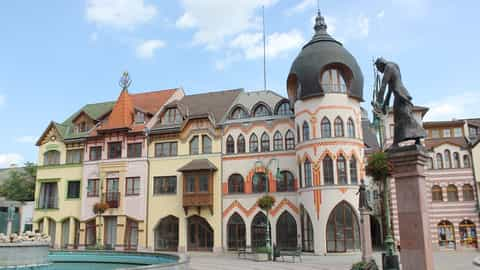
A rising Danube port of call on some itineraries; dock near the fortress and old town, ideal for a slow wander.
Komárno Fortress (Nová pevnosť) Old Fortress (Staré opevnenie) Danube Museum (Podunajské múzeum) Court of Europe Župný dom (County House) Bust-lined pedestrian promenadeCruise ports of call
Slovakia has only a short stretch of the Danube as a major cruise artery—roughly 172 km from Bratislava to the Hungarian border—but it is a signature call on most Vienna–Budapest itineraries. Ships generally dock in the capital; some lines include Komárno or pass Devín.
- Danube Classic: Vienna–Bratislava–Budapest (the 'Imperial Capital' triangle)
- Lower Danube / Budapest extension: Passau–Vienna–Bratislava–Budapest–Belgrade or the Black Sea, with Slovakia as a one- or two-night call.
Bratislava Both Danube Classic and Lower Danube routes
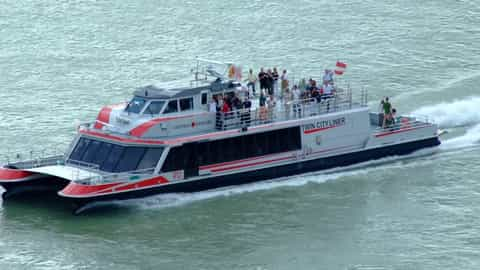
Cruise ships dock along the Danube promenade near the Old Bridge or Eurovea, a short walk to Hviezdoslavovo Square. The location is one of the most convenient on the Danube: you can be in the old town within 10 minutes.
Best for: Castle views, old-town cafés, first-timers to Slovakia, easy independent exploration
Operators: AmaWaterways, Amadeus, Avalon Waterways, CroisiEurope, Emerald Cruises, Riverside Luxury Cruises, Scenic, Tauck, Uniworld, Viking
Komárno Danube Classic extension and lower Danube repositioning
Komárno is a quieter stop at the confluence of the Danube and Váh, with one of Central Europe's largest fortress complexes. Ships tie up on the Slovak bank; the town center and fortress are a short walk.
Best for: Fortress history, uncrowded wandering, cycling, Danube views, photographers
Operators: AmaWaterways, CroisiEurope, Emerald Cruises, Riverside Luxury Cruises, Scenic
Danube route through Slovakia is short; no Slovak port is used for turnarounds. Most cruises combine Slovakia with Austria and Hungary, and shore excursions to Banská Štiavnica or Devín are run as overland trips from Bratislava.
All cruise ports in Slovakia
Ships visiting by type: 86 river
River cruises & routes
The Danube is the only river in Slovakia with regular international cruise traffic. Because the country is narrow and the current is gentle, most itineraries treat Slovakia as a one-day highlight rather than a turnaround point.
| Route | Length | Countries | Highlights |
|---|---|---|---|
| Vienna to Budapest (7 nights) | 7 nights | Austria, Slovakia, Hungary | Vienna, Bratislava, Budapest; optional Devín and Danube Bend excursions |
| Passau to Budapest (10 nights) | 10 nights | Germany, Austria, Slovakia, Hungary | Passau, Melk, Vienna, Bratislava, Budapest; Wachau Valley |
| Budapest to Nuremberg (10 nights) | 10 nights | Hungary, Slovakia, Austria, Germany | Budapest, Bratislava, Vienna, Melk, Bamberg, Nuremberg |
| Vienna to Bucharest / Lower Danube (14-21 nights) | 14-21 nights | Austria, Slovakia, Hungary, Croatia/Serbia, Bulgaria, Romania | Bratislava as the first or second call before the Iron Gates |
Season: Mid-April through early November; high season in May-June and September-October; Christmas market cruises on the Danube operate in late November-December but focus on Vienna and Budapest.
Cruise lines visiting Slovakia
All major river cruise companies that operate on the Danube include Slovakia, primarily via Bratislava. The range is broad, from all-inclusive luxury to contemporary European lines.
AmaWaterways
Danube classic and grand river itineraries; Bratislava on most Vienna–Budapest sailings
Ships: AmaMagna, AmaViola, AmaVerde
Amadeus
Danube cruises between Passau, Vienna, Budapest; calls at Bratislava
Ships: Amadeus Silver, Amadeus Elegant
Avalon Waterways
Active-discovery Danube cruises; Bratislava included
Ships: Avalon Envision, Avalon Illumination
CroisiEurope
Danube cruises from Vienna to Budapest or the Black Sea; includes Bratislava, sometimes Komárno
Ships: MS Beethoven, MS Mozart
Riverside Luxury Cruises
Luxury Danube voyages with Bratislava and sometimes Komárno
Ships: Riverside Mozart, Riverside Debussy
Scenic
All-inclusive Danube journeys; Bratislava calls with Scenic Freechoice excursions
Ships: Scenic Amber, Scenic Pearl
Tauck
Small-ship Danube trips; Bratislava included
Ships: ms Emerald, ms Sapphire
Uniworld
Boutique all-inclusive Danube cruises; Bratislava on many itineraries
Ships: River Duchess, River Princess
Viking
Vienna–Budapest and Grand European cruises; Bratislava shore excursions
Ships: Viking Var, Viking Rinda
Bratislava is a standard call, not a turnaround. Booking a Danube cruise that begins or ends in Vienna or Budapest provides the most efficient way to include Slovakia. For a less herded experience, choose a line that includes Komárno and private shore excursions, or add 2-3 nights in Bratislava before/after the cruise.
Planning & advice
Slovakia rewards travelers who want a less polished, more authentic Central Europe. It is compact, uncrowded, and layered with castles, wine, mountains, and café life—ideal for milestone travelers who prefer depth over checklists and don't want to be herded through gift shops.
For the American traveller
- Passport: valid at least 3 months beyond stay; US citizens may visit visa-free for up to 90 days in the Schengen Area
- Currency: euro; credit cards accepted in cities, but have cash for small purchases
- Electricity: 230V/50Hz; bring an adapter for US devices
- Language: English is common in Bratislava and tourist spots; learn a few Slovak phrases
- Mobility: old town streets and castle hills involve cobblestones and stairs; choose private cars/guides if needed
- Safety: low violent crime; watch for pickpockets in crowded areas; road rules are strict
- Health: travel insurance recommended; EU health cards do not apply to US citizens
- Connectivity: US phones roam in Slovakia; free Wi-Fi is widely available
Excursion planning
- Avoid 'panoramic bus tours' that only loop around; walk the old town early before groups arrive
- Book Devín Castle as a small-group or self-guided trip; the bike path from Bratislava is flat and scenic
- If your ship stops in Komárno, spend the time at the fortress rather than taking a long bus tour
- Pair a Danube cruise with a 2-3 night land stay in Bratislava; the city is small enough to explore on your own
- Use the castle viewpoint at sunrise for photos; crowds arrive later
- Ask your cruise line about 'slow walking' or 'active' excursion categories
- For High Tatras or Banská Štiavnica, consider a private driver from Bratislava; trains are reliable but longer
The verdict
Slovakia is the underrated anchor of a Danube cruise: Bratislava is one of the most walkable capitals in Europe, Devín gives a dramatic river view, and Komárno offers an uncrowded fortress stop. Add a couple of land days or a mountain extension, and it becomes a genuinely memorable milestone journey.
Sources
- CIA World Factbook — Slovakia (accessed 2026-09-09)
- Britannica — Slovakia (accessed 2026-09-09)
- UNESCO World Heritage Centre — Slovakia - Properties inscribed on the World Heritage List (accessed 2026-09-09)
- Slovakia Travel — Official Travel Guide (accessed 2026-09-09)