Solomon Islands Cruise Ports & Cruise Guide
Total 4
This page is an overview of the 4 cruise ports in Solomon Islands, covering ocean cruises. 10 cruise ships visit Solomon Islands across 4 ports. See live sailings and availability on the Solomon Islands cruises page.
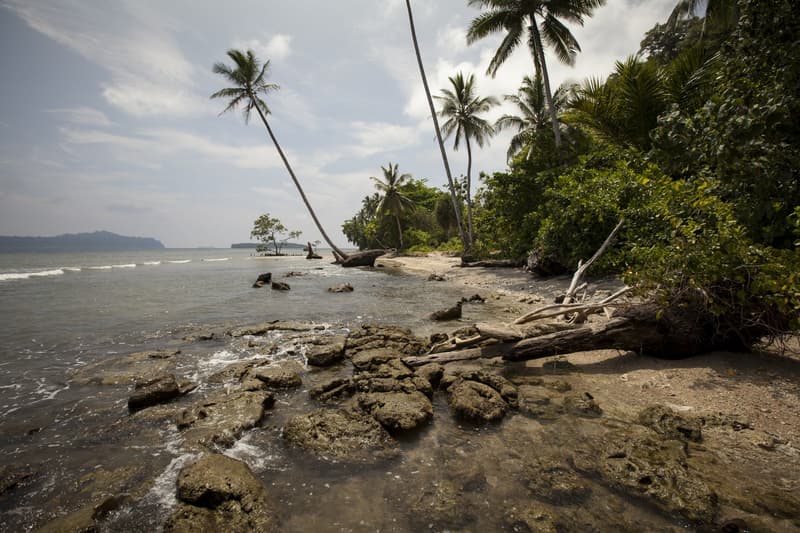
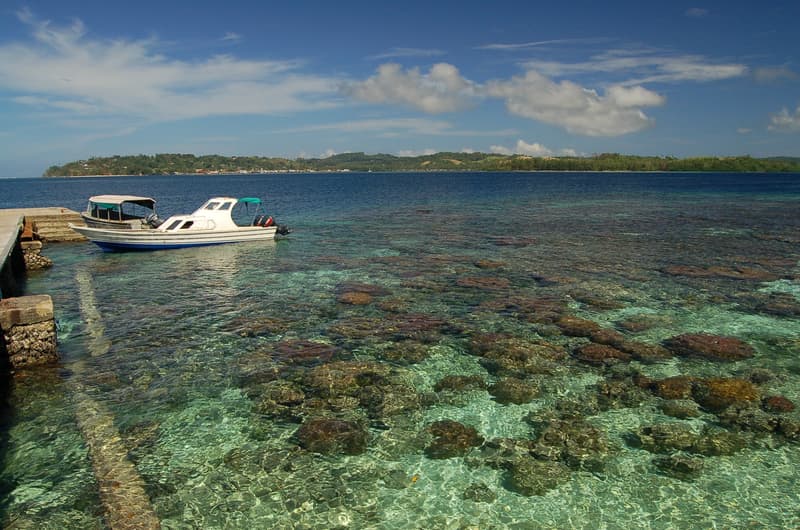


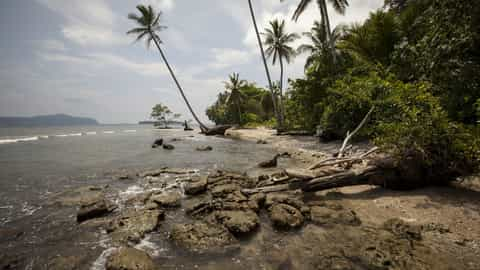
Solomon Islands is one of the few places where a traveler can still feel like an explorer rather than a tourist. Small expedition ships anchor off palm-fringed islands, local guides lead you through WWII relics and lagoon villages, and no one herds you into a souvenir mall. The trade-off is real: infrastructure is basic, medical care is limited, and itineraries are weather dependent. For the right traveler, that is exactly the point.
Country facts
History
Solomon Islands is an archipelago of sharp contrasts: ancient trading networks, colonial extraction, the hinge of the Pacific War, and now a fragile but proud postcolonial nation.
History here is not packaged; it is lived. Landowners and village communities still control most sites, so local permissions matter more than official tickets.
Culture
A majority Melanesian population with significant Polynesian outliers; identity is rooted in the 'wantok' system, kastom, and the village rather than the nation-state.
Music: Bamboo panpipe ensembles and string bands; church hymns are deeply important; each island has distinct kastom songs.
Signature landscape: Marovo Lagoon, the world's largest double barrier reef lagoon, a watery mosaic of reefs, islands, and mangroves.
Cuisine
- Fish cooked in coconut milk
- Taro
- Cassava
- Sweet potato
- Green banana
- Pawpaw and pineapple
- Sago grubs (traditional)
Architecture & heritage
- Traditional leaf houses (na oka)
- Skull shrines and clan sites in Roviana
- Colonial-era buildings in Tulagi
- WWII aircraft and ship relics
- National Museum and Cultural Centre, Honiara
Tips for American travellers
- Learn a few Pijin words: 'halo' (hello), 'tankiu' (thank you), 'mi laek' (I would like)
- Dress modestly in villages—cover shoulders and knees
- Always ask permission before photographing people or villages
- Use your right hand for eating and passing things
- Carry small local currency notes for markets and donations
- Expect no ATMs outside Honiara and Gizo
Major cities & destinations
Honiara Capital city
The nation's only real urban center, with WWII history, markets, and museums.
Main embarkation/debarkation port; largest anchorage and only deep-water wharf.
National Museum and Cultural Centre Central Market Guadalcanal American Memorial Vilu War Museum Mataniko FallsGizo Western Province town and dive hub
Postcard lagoon, vibrant market, WWII wrecks, and easy island day trips.
One of the most frequent expedition anchorages in the Western Province; used for diving, market visits, and village exchanges.
Gizo Market Toa Maru wreck Kennedy Island Gizo CathedralMunda Town and WWII heritage site
Roviana Lagoon, skull shrines, and relics of the Pacific War.
Anchorage with a WWII-era airstrip; gateway to Marovo Lagoon and Roviana.
Skull Island Roviana Lagoon Munda WWII relics Munda Point airstripTulagi Historic town, Florida Islands
Former British administrative capital with a haunted, atmospheric history.
Protected anchorage; used by smaller expedition ships for WWII and cultural excursions.
Tulagi war tunnels Tulagi Japanese WWII relics Florida Islands village World War II cemeteryMarovo Lagoon Natural lagoon and cultural seascape
UNESCO-quality barrier reef lagoon with dazzling biodiversity and traditional life.
Frequent Zodiac destination; no port, but calm protected waters for small-boat exploration.
Double barrier reef Kasolo village Tetepare Island Bareho IslandRennell Island Raised coral island and UNESCO World Heritage site
East Rennell is the largest raised coral atoll in the world; Lake Tegano is a World Heritage site.
Remote outer-island call for expedition ships only; weather-dependent landing.
Lake Tegano Tahumama Conservation Area Nggango villageCruise ports of call
Solomon Islands cruising is expedition-style, not Caribbean-style. Ships are small, landings are wet, and each day is determined by weather, local custom, and opportunity.
- Western Province loop: Honiara – Gizo – Marovo Lagoon – Munda – Honiara
- Remote outer islands: Honiara – Tulagi – Rennell Island – Santa Cruz Islands (weather permitting)
Honiara Both (Western Province loop / Remote outer islands)
The only large port in the Solomon Islands, located on Guadalcanal. Most expeditions start or end here, using the deep-water wharf near Point Cruz.
Best for: World War II history, cultural museums, market life, and flight connections
Operators: Heritage Expeditions, Coral Expeditions, Ponant, Lindblad Expeditions
Gizo Western Province loop
A small, colorful town built around a sheltered lagoon. Gizo is a hub for divers, birders, and travelers wanting to see everyday island life.
Best for: Snorkeling, WWII wrecks, island culture, and market visits
Operators: Heritage Expeditions, Coral Expeditions, Lindblad Expeditions
Munda Western Province loop
Munda sits on New Georgia island beside Roviana Lagoon. It has a WWII-era airstrip, skull shrines, and some of the country's richest cultural sites.
Best for: Roviana Lagoon, airstrip history, village visits, and WWII relics
Operators: Heritage Expeditions, Coral Expeditions
Marovo Lagoon Western Province loop
A vast double barrier reef lagoon in the New Georgia Islands, home to exceptional marine biodiversity and traditional Melanesian villages.
Best for: Biodiversity, village homestays, snorkeling, and tranquil lagoon cruising
Operators: Heritage Expeditions, Coral Expeditions, Lindblad Expeditions
Tulagi Remote outer islands
Once the British administrative capital, Tulagi is now a quiet relic-rich island with Japanese WWII tunnels and excellent sheltered diving.
Best for: Pre-war British administration history, WWII tunnels, and quiet anchorage
Operators: Coral Expeditions, Lindblad Expeditions
Rennell Island Remote outer islands
East Rennell is the world's largest raised coral atoll, dominated by Lake Tegano, a brackish World Heritage lake dotted with limestone islets.
Best for: Lake Tegano, endemic birds, remote Polynesian-outlier culture, and dramatic limestone scenery
Operators: Heritage Expeditions
Auki, Noro, and Lata occasionally appear in itineraries as supply ports or weather alternates, but the main cruising world is the Western Province and the far-flung outliers.
All cruise ports in Solomon Islands
Ships visiting by type: 9 ocean 3 expedition
Showing 4 ports in Solomon Islands

River cruises & routes
Strictly speaking, Solomon Islands has no river cruises. For expedition travelers, the equivalent is a small-ship voyage through island channels and lagoons. These itineraries are route-based rather than port-based and require expedition-style logistics.
| Route | Length | Countries | Highlights |
|---|---|---|---|
| Solomon Islands Revealed | 12 nights | Solomon Islands | Honiara, Gizo, Marovo Lagoon, Munda, WWII sites, village encounters |
| Bismarck and Solomon Seas | 14 nights | Papua New Guinea, Solomon Islands | Rabaul to Honiara, New Georgia, Rennell, Santa Cruz |
Season: April to October is the most reliable cruising season; November to April is the cyclone/rainy season with variable schedules.
Cruise lines visiting Solomon Islands
No mainstream mega-ship lines run Solomon Islands cruises. Instead, a small number of expedition lines include the Solomons in their South Pacific programming, with capacities of roughly 50–200 passengers.
Heritage Expeditions
Honiara-centred expedition routes, including Western Province and outer islands
Ships: Heritage Adventurer
Coral Expeditions
Small-ship expeditions through Solomon Islands and Papua New Guinea
Ships: Coral Discoverer, Coral Geographer
Lindblad Expeditions
Remote Solomon Islands expeditions with naturalists
Ships: National Geographic Orion
Ponant
Occasional expedition voyages in the South Pacific including Solomon Islands
Ships: Le Soléal
Master operator list (used in port entries): Heritage Expeditions; Coral Expeditions; Lindblad Expeditions; Ponant. All routings change annually; always confirm current itineraries with the operator.
Planning & advice
This reader wants meaningful travel, not a checklist. Solomon Islands delivers the opposite of herding: you will be one of only a few visitors in a village, not one of thousands at a selfie stop.
For the American traveller
- U.S. citizens need a passport valid at least 6 months and can generally get a visitor visa on arrival for tourism stays up to 90 days; confirm with Solomon Islands Immigration before travel.
- No direct flights from North America; fly via Brisbane (BNE), Nadi (NAN), or Port Moresby (POM) to Honiara.
- The U.S. State Department advisory for Solomon Islands is usually Level 2 (Exercise Increased Caution) due to crime, especially in Honiara; avoid displaying valuables at night.
- Medical facilities are limited; evacuation insurance is essential.
- Cyclone season runs November to April; travel in the dry season for cruising.
Excursion planning
- Book expedition shore excursions through the ship, but request independent time and hire local guides at the wharf.
- Pack water shoes, reef-safe sunscreen, and a dry bag for Zodiac landings.
- Village visits are not shows; ask permission and consider taking gifts like rice or school supplies if your operator suggests it.
- If you dive, bring certification and your own equipment; rental is scarce outside Gizo and Munda.
The verdict
A rare, non-commercial South Pacific destination. Choose a small expedition operator, travel in the dry season, and keep your expectations flexible; you will be rewarded with unforgettable encounters and a sense of discovery that big-ship cruising cannot touch.
Sources
- Encyclopaedia Britannica — Solomon Islands (accessed 2026-09-09)
- CIA World Factbook — Solomon Islands (accessed 2026-09-09)
- Solomon Islands Visitors Bureau — Official Tourism Website (accessed 2026-09-09)
- UNESCO World Heritage Centre — East Rennell (accessed 2026-09-09)
- Heritage Expeditions — Solomon Islands Expeditions (accessed 2026-09-09)
- Coral Expeditions — Solomon Islands Cruises (accessed 2026-09-09)