Togo Cruise Ports & Cruise Guide
Total 1
This page is an overview of the 1 cruise ports in Togo, covering ocean cruises. 4 cruise ships visit Togo across 1 ports. See live sailings and availability on the Togo cruises page.

Togo is West Africa's under-the-radar sliver: roughly 56 km of Atlantic coastline, lagoon waterways, colonial towns, vibrant markets, and UNESCO-listed earthen tower houses inland. It has no established river-cruise industry, so the most honest Waterways Cruise approach is a Lomé-based small-ship/pirogue extension or an ocean-expedition port call rather than a conventional river itinerary. For the American traveler, Togo rewards those who value authenticity over polish and are comfortable with modest infrastructure.
Country facts
History
Togo's story is one of precolonial kingdoms, German annexation, French colonial rule, a contested independence, and one of Africa's longest-ruling political dynasties.
Tourism infrastructure is thin, democratic institutions are imperfect, and travelers should check current security and health guidance. That honesty is also the appeal: Togo is not a manufactured cruise stop.
Culture
A narrow West African country where coastal Vodun, Ewe textile traditions, and northern earthen architecture meet.
Music: Traditional Ewe drumming and Vodun ceremonial music, with highlife and Afrobeat influences; notable artists include Bella Bellow and King Mensah.
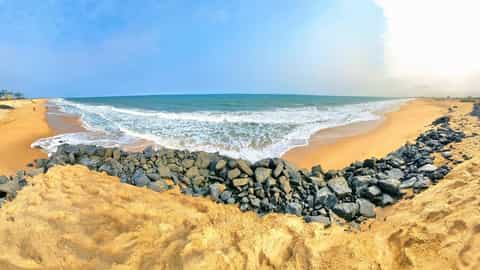
Signature landscape: The palm-fringed Atlantic coastline and the protected lagoon system of Lake Togo and the Mono River estuary.
Cuisine
- Akume (corn or cassava dough served with soups and sauces)
- Fufu
- Riz au gras (spiced West African rice)
- Grilled tilapia with chili and onion
- Koklo meme (spicy grilled chicken)
- Djenkoumé (corn cake)
- Alloco (fried plantain)
Architecture & heritage
- Koutammakou earthen tower-houses of the Batammariba (UNESCO)
- German colonial civic and railway architecture in Lomé
- Château Vial in Kpalimé
- Slave House at Agbodrafo and slave-trade heritage sites in Aného
- Akodessawa Fetish Market, the largest fetish market in Africa
Tips for American travellers
- Apply for the Togo e-visa before arrival.
- Carry new, small-denomination CFA francs; many rural stalls do not make change.
- Learn a few French greetings; English is rare outside hotels.
- Ask permission before photographing people, markets, and Vodun shrines.
- Dress modestly outside the beach; cover shoulders and knees.
- Use registered guides for heritage sites; unofficial guides can be persistent.
Major cities & destinations
Lomé Capital, coastal metropolis, and port city
Vibrant markets, colonial architecture, Atlantic beaches, and the country's cultural crossroads.
Principal deep-water port; most cruise calls and coastal charters begin or end here.
Grand Marché with Nana Benz textile stalls Akodessawa Fetish Market Lomé Cathedral (Cathédrale du Sacré-Cœur) National Museum Independence Monument Boulevard du Mono and the beachfrontAného Historic coastal town
Once an important slave-trade port and German colonial capital, today offering quiet beaches and strong Vodun heritage.
A secondary anchorage and pirogue destination for lagoon excursions from Lomé.
Aného Slave House (Maison des Esclaves) Notre-Dame de l'Assomption church German colonial buildings and old cemetery Aného beach Mono River estuaryAgbodrafo (Lake Togo) Lakeside village and lagoon port
Peaceful lake landscapes, the infamous Slave House at Agbodrafo, and everyday pirogue life.
The most realistic 'waterways' Togo experience: shallow-draft boats, pirogues, and lagoon cruising.
Maison des Esclaves (Agbodrafo) Lake Togo Agbodrafo village Togoville on the north shoreKpalimé Highland town near the Ghana border
Waterfalls, rainforest, mountain views, and the German-era Château Vial.
Popular overland excursion from Lomé; sometimes marketed as a bush excursion from coastal ships.
Château Vial Womé Waterfalls (Cascades de Womé) Kpalimé market Mont Agou viewpoint Craft villages for woodcarving and potteryKara Northern regional capital
Gateway to Koutammakou, the Land of the Batammariba and the UNESCO-listed Tamberma tower houses.
An overland extension, not a cruise port; best reached by air or road from Lomé.
Koutammakou cultural landscape (Tamberma villages) Kara Grand Marché Kara hills La Kara RiverSokodé Central market and transport hub
A genuinely Togolese central town known for its lively market, Islamic heritage, and weaving.
Possible overland stop on a Lomé–Kara itinerary, not a cruise destination.
Grand Marché de Sokodé Grande Mosquée de Sokodé Centre artisanal for weaving and dyeingAtakpamé Hill-town colonial center
German and French colonial buildings, palm plantations, and views of the Atakora Mountains.
Occasional overland excursion from Lomé; no water access.
German colonial buildings Atakpamé cathedral Central market Atakora Mountain viewpointsCruise ports of call
Togo's coastline is only about 56 km long, so the port conversation is small. Lomé is the main entry point; Aného and Lake Togo are shallow-draft satellite stops best explored by pirogue.
- West African Coastal Expedition — ocean-going ships call at Lomé as one stop on a West Africa run.
- Togo Lagoon & Mono River Pirogue Circuit — local boats connect Lomé, Lake Togo, and Aného.
Lomé West African Coastal Expedition
The Port of Lomé is a modern deep-water harbor and West African transshipment hub; cruise and expedition vessels use it as a gateway.
Best for: Markets, colonial architecture, national culture, and easy day trips.
Aného Togo Lagoon & Mono River Pirogue Circuit
Aného was an early German colonial capital and a major Atlantic slave-trade port. Today it is quieter, with colonial relics, a sacred lagoon, and strong Vodun traditions.
Best for: Travelers drawn to history, colonial relics, and uncrowded beaches.
Agbodrafo (Lake Togo) Togo Lagoon & Mono River Pirogue Circuit
Lake Togo is a brackish lagoon connected to the Atlantic; Agbodrafo village is known for the Maison des Esclaves and as a launch point for Togoville.
Best for: Waterfront life, birding, slow boat travel, and local history.
The nearest large cruise ports outside Togo are Tema in Ghana and Cotonou in Benin; some West African itineraries combine all three coastal countries.
All cruise ports in Togo
Ships visiting by type: 3 ocean 1 expedition
Showing 1 port in Togo
River cruises & routes
No conventional river-cruise product exists on Togo's rivers. The Mono River is seasonal and shallow, the Oti River in the north is remote, and Lake Togo is a lagoon better suited to pirogues. A memorable soft-adventure waterway day is possible from Lomé through Lake Togo to Aného.
| Route | Length | Countries | Highlights |
|---|---|---|---|
| Lomé–Lake Togo–Aného Lagoon Circuit | 1–2 days | Togo | Pirogue crossing to Togoville, Lake Togo birdlife, Agbodrafo Slave House, Aného colonial history. |
| West Africa Coastal Expedition with Lomé Call | 12–18 days | Senegal, Gambia, Guinea-Bissau, Côte d'Ivoire, Ghana, Togo, Benin | Atlantic forts, urban markets, lagoon cultures, and port calls in Accra/Tema and Cotonou. |
Season: November–March is the best dry-season window; April–June is hot and humid; July–October has heavier rain and rougher seas; Harmattan haze can occur in December and January.
Cruise lines visiting Togo
No river-cruise line currently operates in Togo. Ocean and expedition ships occasionally include Lomé on West African repositioning or expedition itineraries, but the market is thin.
No master operator list is provided because no line has a regular, published Togo schedule. For planning, verify any West Africa itinerary's port list directly with the cruise line and consider a specialist expedition operator if a small-ship stop is desired.
Planning & advice
Togo is the anti-cruise-ship shore excursion: small, personal, and unpolished. A reader who wants genuine West African encounters and can tolerate imperfect infrastructure will find Togo deeply rewarding.
For the American traveller
- Check the current U.S. State Department travel advisory for Togo and enroll in the Smart Traveler Enrollment Program (STEP).
- A yellow fever vaccination is required; malaria prophylaxis is strongly recommended.
- Get a Togo e-visa in advance; passport must have at least six months validity and blank pages.
- Do not rely on credit cards; ATMs are limited outside Lomé.
- Use port agents and vetted local guides; avoid large political gatherings.
- Bring prescription medications and basic first-aid supplies; medical facilities are limited outside Lomé.
Excursion planning
- Book tours through a known local operator or hotel rather than picking up guides on the street.
- Start at 8 a.m. to avoid heat, crowds, and afternoon thunderstorms.
- Request a private car and guide for your own group if you dislike large coach excursions.
- Pack a day bag with water, sunscreen, insect repellent, and a camera.
- Build flexible time for border crossings, road conditions, and informal boat schedules.
- For Lake Togo and Aného, take a pirogue with life vests and confirm safety equipment before boarding.
The verdict
Togo is a compelling destination for the curious, unhurried traveler who wants to see West Africa before the cruise crowds arrive. It is not a conventional river-cruise country, but as a port of call or pre/post-cruise extension it offers remarkable markets, layered history, and landscapes that feel genuinely undiscovered.
Sources
- CIA World Factbook — Togo (accessed 2026-09-09)
- U.S. Department of State — Togo International Travel Information (accessed 2026-09-09)
- UNESCO World Heritage Centre — Koutammakou, the Land of the Batammariba (accessed 2026-09-09)
- Encyclopaedia Britannica — Togo (accessed 2026-09-09)
- Port Autonome de Lomé — Port de Lomé (accessed 2026-09-09)