Nurnberg, Germany Bavaria Cruise from Nuremberg to Bucharest — 16 Days

15 nights · Nurnberg, Germany Bavaria · River cruise · Departs Nuremberg (Germany) · Visiting Passau, Linz, Melk, Durnstein, Vienna, Bratislava, Budapest, Mohacs, Vukovar, Belgrade, Svishtov, Ruse, Silistra, Giurgiu, Bucharest · Aboard Scenic Cruises on the Scenic Jasper

Scenic Cruises logo

Waterways

This river cruise sails the Rhine-Main-Danube Canal and Danube, departing Nuremberg.

  1. Rhine-Main-Danube Canal (canal) →
  2. Danube
Cruise lineScenic Cruises
ShipScenic Jasper
Duration15 nights
Port calls16
Departures1 sailings
From fare$8,236 per person
Year built2015
Guests169
Cabins85
Crew53
Length135 m
Beam11 m
Cruising speed12.0 kn
  1. Day 1

    Nuremberg, Germany

    Nuremberg is a city of striking contrasts, where medieval streets meet the history of twentieth-century Germany. Within its old walls, the Imperial Castle rises above timbered houses, churches and the Hauptmarkt. Visit St. Sebaldus Church, then explore the Documentation Center and former Nazi Party Rally Grounds for essential context. Allow time for local gingerbread and a walk across the Pegnitz, which divides the historic centre.

  2. Day 1

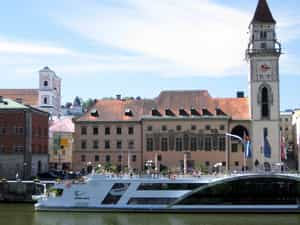
    Passau, Germany

    Passau sits where the Danube, Inn and Ilz meet, their contrasting waters framing one of Bavaria’s most handsome old towns. Walk its baroque lanes to St Stephen’s Cathedral, famed for its historic organ. From the fortress of Veste Oberhaus, rooftops and rivers unfold in a memorable view. Passau rewards a leisurely call: explore on foot, pause beside the water, and watch three waterways shape the city’s character.

  3. Day 3

    Linz, Austria

    Linz rewards curious travelers with a rare blend of imperial architecture, modern art and working-city energy. On the Danube, its compact center makes an easy introduction to Upper Austria, while cafés serve the famous Linzer Torte. At Ars Electronica Center, interactive exhibitions explore technology and the future; nearby Lentos Art Museum adds a striking riverside counterpoint. Ride the Pöstlingbergbahn for broad views over the city and river, then return to the baroque Hauptplatz.

  4. Day 4

    Melk, Austria

    Melk stands at the western end of Austria’s Wachau, a UNESCO-listed Danube valley. Its vineyards, apricot orchards and medieval towns make the river journey especially rewarding. High above the water, Melk Abbey commands attention with its baroque church, imperial rooms and celebrated library. Founded as a Benedictine monastery in 1089, it remains active and ranks among Austria’s most memorable cultural landmarks.

  5. Day 4

    Durnstein, Austria

    Dürnstein is a small Wachau village with an outsized place in Austrian history. Its blue-and-white abbey tower rises above the Danube, while lanes of pastel houses lead to riverside cafés and apricot shops. Climb to the castle ruins where Richard the Lionheart was held from 1192 to 1194 for broad valley views. Beyond the village, vineyards and orchards define this UNESCO-listed stretch of the Wachau.

  6. Day 5

    Vienna, Austria

    Arrive in Vienna by river and give the city more than a passing glance. Its imperial centre rewards a slow walk, from St Stephen’s Cathedral to the grand Ringstrasse boulevards. Set aside time for Schönbrunn Palace, once the Habsburgs’ summer residence, or choose the Kunsthistorisches Museum for its remarkable collections. Then take a seat in a traditional coffeehouse; in Vienna, coffee and cake are part of the city’s daily ritual.

  7. Day 6

    Bratislava, Slovakia

    Bratislava rewards a day ashore with a walkable old town, a lively Danube waterfront and a castle above the river. Explore the lanes around Michael’s Gate, then climb to Bratislava Castle for wide views across the city and beyond. Pause at a café terrace before following the riverside promenade. Slovakia’s capital is compact, making its historic centre easy to discover on foot.

  8. Day 7

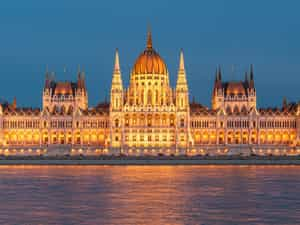
    Budapest, Hungary

    Budapest makes a memorable arrival, with the Danube dividing hilly Buda from lively, level Pest. From the river, the Hungarian Parliament’s Gothic Revival façade commands attention, especially after dark. Cross the Chain Bridge to explore Castle Hill, or stay in Pest for cafés, markets, and celebrated thermal baths. Allow time to linger: Budapest’s pleasures are best discovered on foot, over a long lunch, and beside the water.

  9. Day 9

    Mohacs, Hungary

    Mohács sits on the Danube in southern Hungary, where river life meets a turbulent past. The town is known for the 1526 Battle of Mohács, a defeat that reshaped Hungary. It also hosts Busójárás, a UNESCO-listed pre-Lenten festival of carved masks, bells and lively processions. Visit the battlefield memorial, then stroll the riverside streets or sample paprika-rich Hungarian cooking. Mohács rewards travelers willing to look beyond Budapest.

  10. Day 10

    Vukovar, Croatia

    Vukovar sits where the Vuka meets the Danube, in Croatia’s quiet eastern corner. Its streets reveal an elegant Baroque past alongside the scars of the 1991 siege, most powerfully at the Water Tower. Visit the restored Eltz Manor, now home to the Vukovar City Museum, then follow the riverfront. Nearby Vučedol offers a remarkable window into a prehistoric culture that flourished here five millennia ago.

  11. Day 11

    Belgrade, Serbia

    Belgrade stands where the Sava meets the Danube, a strategic crossroads shaped by centuries of conquest and commerce. From the riverfront, Kalemegdan Fortress commands wide views over both waterways and the city’s layered skyline. Below it, cafés, markets and pedestrian streets reveal a capital that feels energetic, not polished for visitors. Come ashore for history, strong coffee and a distinctly Balkan pace; Belgrade rewards those who explore beyond the main square.

  12. Day 13

    Svishtov, Bulgaria

    Svishtov sits on Bulgaria’s southern bank of the Danube, facing Romania across one of Europe’s great waterways. Nearby, Novae, a Roman legionary fortress, reveals the empire’s reach along the river frontier. In town, the Church of the Holy Trinity, designed by master builder Kolyo Ficheto, merits a visit. Svishtov is also the birthplace of writer Aleko Konstantinov, whose work remains central to Bulgarian literature.

  13. Day 13

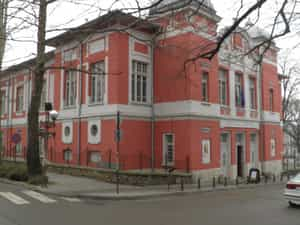
    Ruse, Bulgaria

    Ruse is Bulgaria’s grand Danube city, where elegant nineteenth-century façades give the streets a distinctly European air. Start at Svoboda Square, framed by cafés and the striking Monument of Liberty, then explore the Regional Historical Museum. Ruse also makes a rewarding base for visiting the UNESCO-listed rock-hewn churches of Ivanovo, a short drive inland. After sightseeing, settle beside the river and watch the Danube carry the day downstream.

  14. Day 14

    Silistra, Bulgaria

    Silistra puts the Danube at your doorstep, with Romania visible across the river and Bulgaria’s quieter northeast behind it. Once Roman Durostorum, the town preserves traces of an imperial frontier, including a fourth-century tomb with vivid frescoes. Climb to the Ottoman-era Medjidi Tabia fortress for broad river views, then explore the compact center. Nearby, Srebarna Nature Reserve, a UNESCO-listed wetland, draws migratory birds and Dalmatian pelicans.

  15. Day 15

    Giurgiu, Romania

    Giurgiu sits on the Danube, where Romania meets Bulgaria across the river. Its Friendship Bridge carries road and rail traffic to Ruse, giving this port a direct link between two countries. Bucharest lies about 65 kilometres north, making the capital a popular excursion for river-cruise visitors. In town, the 18th-century Clock Tower offers a landmark and a glimpse of Giurgiu’s long history on the river.

  16. Days 15–16

    Bucharest, Romania

    Bucharest is Romania’s capital, where Belle Époque façades stand beside broad boulevards and stark communist-era buildings. Start along Calea Victoriei, then explore the Old Town’s lanes, churches, cafés and 19th-century landmarks. Visit the Romanian Athenaeum, a celebrated concert hall, and the Palace of Parliament, a vast monument to the communist era. Allow time for a meal: Romanian cooking pairs well with the city’s lively café culture.

Scenic Jasper Cruises

Published September 11, 2026
Last updated October 3, 2026
Author: J. Richard


Cruise Disclosure

Good to know: Prices are quoted per person based on double occupancy and include all applicable taxes and fees. Availability and prices can change quickly, so please continue through the booking process to confirm the latest availability and pricing before you pay.

We work hard to make sure everything on this website is accurate and up to date. However, some information may be incomplete or inaccurate, including details supplied by third parties or otherwise outside our control, and we cannot be held responsible for such errors. We work with 41 cruise line operators, that are providing cruises on 585 ships visiting 1,731 ports across 7,194 unique cruises, creating 13,822 itineraries. This is a great deal of data to continually update daily from our suppliers. If a pricing error, misrepresentation, or omission occurs, we reserve the right to adjust the pricing, correct the information, or cancel or decline any booking made in error, with notice to you. Thank you for your understanding!