Milan, Italy Riviera Cruise from Genova to Reykjavík — 51 Days

50 nights · Milan, Italy Riviera · Departs Genoa (Italy) · Visiting Saint-Tropez, Port-Vendres, Port Mahon, Motril, Tangier, Seville, Portimao, Lisbon, Cherbourg, Plymouth UK, Lundy Island England, Skomer Island, Isle of Man, Belfast, Isle of Bute, Isle of Mull, Isle of Eigg, St Kilda Islands Scotland, Fair Isle, Lerwick, Isle of Noss, Torshavn, Klaksvik, Reykjavik, Isafjordur, Jan Mayen Island, Longyearbyen, Siglufjordur, Patreksfjordur · Aboard Seabourn Cruises on the Seabourn Pursuit

Seabourn Cruises logo
Cruise lineSeabourn Cruises
ShipSeabourn Pursuit
Duration50 nights
Port calls30
Departures1 sailings
From fare$54,846 per person
Year built2023
Guests317
Cabins132
Crew120
Length170 m
Beam26 m
Cruising speed22.0 kn
  1. Day 1

    Genoa, Italy

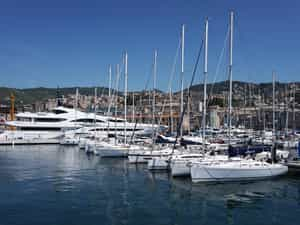
    Genoa is a city shaped by the sea, with a busy port framed by hills and centuries of trade. In the old town, narrow caruggi lead to grand squares and Romanesque churches. The Palazzi dei Rolli, a UNESCO-listed group of aristocratic residences, reveal the city’s former wealth. Walk the restored Porto Antico, then sit down to basil-scented pesto or freshly caught seafood. Genoa rewards those who explore on foot.

  2. Day 2

    Saint-Tropez, France

    Saint-Tropez is more than a name on a yacht’s bow. Its Vieux Port remains active with fishing boats and pleasure craft. Ochre façades and narrow lanes lead into the old town. Climb to the 17th-century citadel for sea views and the Maritime History Museum. At Place des Lices, cafés and plane trees frame local life. Pampelonne’s celebrated beaches lie a short drive away.

  3. Day 3

    Port-Vendres, France

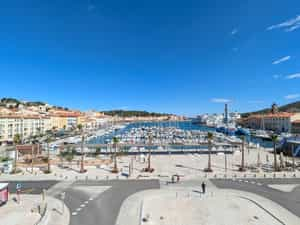
    Port-Vendres is a working harbour on France’s Côte Vermeille, where the Pyrenees meet the Mediterranean. Fishing boats and cargo vessels share its deep-water port, giving the town a distinctly maritime character. Nearby Collioure offers galleries and a colourful waterfront, just a short drive away. Back in Port-Vendres, look for local anchovies and wines from the surrounding hills.

  4. Day 4

    Port Mahon, Spain

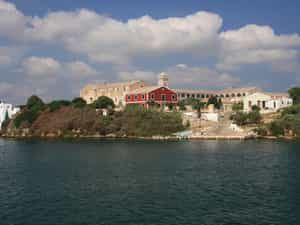
    Mahón sits at the head of one of the world’s largest natural harbours, a deep-water inlet that shaped Menorca’s history. From the waterfront, climb to the old town for Georgian façades, lively markets and views across the port. Menorca’s British-era influence appears in its architecture and in gin, still distilled locally and served with lemonade. Allow time to explore beyond Mahón: the island’s quiet coves, prehistoric stone monuments and clear waters reward an unhurried visit.

  5. Day 5

    At Sea (At Sea)

  6. Day 6

    Motril, Spain

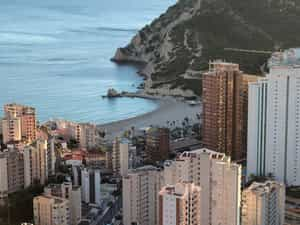
    Motril is a working port on Granada’s Mediterranean coast, backed by the foothills of the Sierra Nevada. It puts the Alhambra and historic centre of Granada within reach, as well as the white villages of the Alpujarras. In town, explore Motril’s sugar-cane legacy, browse local produce, and sample seafood from the Costa Tropical. For a slower day, beaches and palm-lined promenades keep the coast close.

  7. Day 7

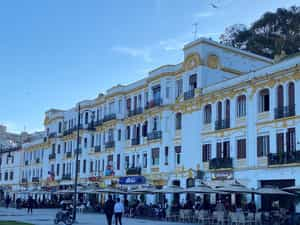
    Tangier, Morocco

    Tangier faces Spain across the Strait of Gibraltar, where the Mediterranean meets the Atlantic. Walk its medina’s steep lanes past whitewashed houses and shops selling leather, ceramics, and spices. At the Kasbah, find sea views and the former sultan’s palace, now a museum. Beyond the old walls, cafés and boulevards recall the city’s international past. Visit the American Legation, the first U.S. diplomatic property abroad. Or drive to Cap Spartel, where Atlantic and Mediterranean waters meet.

  8. Day 8

    Seville, Spain

    Seville’s river port opens onto a city of Moorish courtyards, Gothic grandeur and lively streets. The cathedral and Giralda dominate the old quarter. The Alcázar’s tiled rooms and gardens reveal centuries of Islamic and Christian rule. Along the Guadalquivir, former trading warehouses recall the city’s Atlantic fortunes. Come ashore ready to walk, pause for tapas, and let the details set the pace.

  9. Day 10

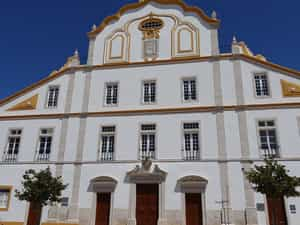
    Portimao, Portugal

    Portimão sits where the Arade River meets the Atlantic, in Portugal’s sunlit Algarve. From the quay, Praia da Rocha’s ochre cliffs and broad sands are close at hand. In the old town, tiled façades and cafés frame the Igreja de Nossa Senhora da Conceição. Choose fresh sardines at the waterfront, or cross the river to Ferragudo for a quieter village view. Portimão makes an easy base for exploring the Algarve’s coast without sacrificing a genuine working-town feel.

  10. Day 11

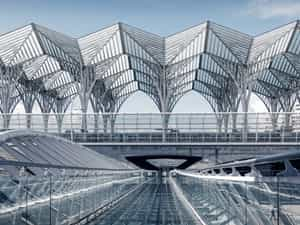
    Lisbon, Portugal

    Lisbon is a city best approached with time and comfortable shoes. Its seven hills rise above the Tagus, linking tiled lanes, grand squares and viewpoints with wide river views. In Alfama, narrow streets preserve the feel of old Lisbon. In Belém, the Jerónimos Monastery and Tower recall Portugal’s age of discovery. Pause for coffee and a warm pastel de nata between sights.

  11. Day 12

    At Sea (At Sea)

  12. Day 14

    Cherbourg, France

    Step ashore in Cherbourg, a working harbour at Normandy’s northern tip, and find a city shaped by the sea. Its deep-water harbour has long anchored life here. The Cité de la Mer brings maritime history to life in a former transatlantic terminal. Beyond town, the Cotentin Peninsula offers quiet beaches, cider farms and stone villages. Cherbourg rewards time ashore, whether you follow the waterfront or explore the countryside.

  13. Day 15

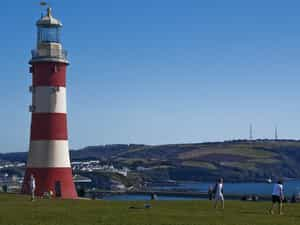
    Plymouth UK

    Plymouth faces the open waters of Plymouth Sound, where naval history and a working harbour shape the city’s character. The Hoe opens broad views across the Sound to Drake’s Island. The Barbican’s historic quays include the Mayflower Steps, commemorating the Pilgrims’ 1620 departure for America. Independent shops and waterfront restaurants make this old port rewarding to explore on foot.

  14. Day 16

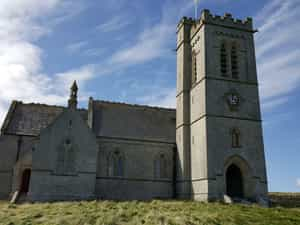
    Lundy Island England

    Three miles long and a world apart, Lundy rises from the Bristol Channel off north Devon. Seasonal ferries sail from Bideford or Ilfracombe; helicopter flights operate from Hartland Point in winter. Follow granite paths to 13th-century Marisco Castle, historic lighthouses and expansive cliff-top views. Watch for seals and seabirds, including puffins in season. The surrounding waters became England’s first Marine Conservation Zone in 2010. Lundy rewards visitors who trade shops and schedules for wildlife, open air and genuine solitude.

  15. Day 17

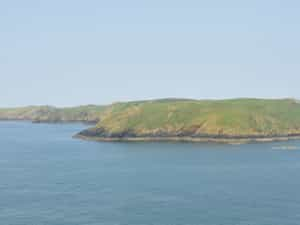
    Skomer Island

    Just off the Pembrokeshire coast, Skomer Island rewards the short boat crossing with wildlife on an extraordinary scale. In spring and summer, puffins gather here; after dark, Manx shearwaters return to nest in burrows. Paths cross open grassland and clifftops, revealing seals, seabirds and wide Atlantic views. Boats leave from Martin’s Haven, but landings are limited; book ahead and check conditions before travelling.

  16. Day 18

    Bantry (Ask Travel Agent)

  17. Day 19

    Schull (Ask Travel Agent)

  18. Day 20

    Cape Clear Island Ireland (Scenic Area)

  19. Day 21

    Kinsale (Ask Travel Agent)

  20. Day 22

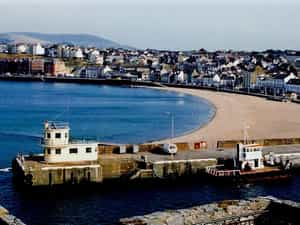
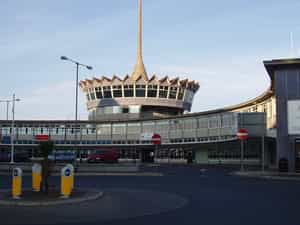
    Isle of Man

    Douglas, the Isle of Man’s capital, welcomes visitors with a broad seafront. Its Victorian promenade and Manx Museum offer a concise introduction to the island’s history. Ride the electric railway north to Ramsey, or visit Tynwald Hill, where the island’s parliament holds its annual open-air sitting. Beyond town, rugged cliffs, sandy bays and quiet roads reward exploration on foot or by car.

  21. Day 23

    Belfast

    Belfast pairs a proud maritime past with a lively, walkable centre. At Titanic Belfast, the story of the famous liner unfolds beside the shipyard where she was built. Nearby, grand City Hall and the Cathedral Quarter reveal different sides of the city, from civic confidence to café-lined lanes. Across west Belfast, political murals offer a vivid perspective on its recent history. With the Giant’s Causeway within reach, Belfast also makes a compelling starting point for Northern Ireland’s dramatic coast.

  22. Day 24

    Isle of Man

    Douglas, the Isle of Man’s capital, welcomes visitors with a broad seafront. Its Victorian promenade and Manx Museum offer a concise introduction to the island’s history. Ride the electric railway north to Ramsey, or visit Tynwald Hill, where the island’s parliament holds its annual open-air sitting. Beyond town, rugged cliffs, sandy bays and quiet roads reward exploration on foot or by car.

  23. Day 25

    Isle of Bute

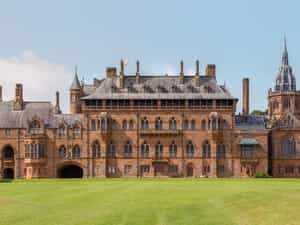
    On the Isle of Bute, Scotland feels close to the sea and refreshingly unhurried. Rothesay, the island’s main town, faces the Firth of Clyde with a Victorian seafront and a rare circular medieval castle. Beyond town, quiet roads lead to sandy bays, open farmland and Mount Stuart, a striking neo-Gothic country house. Explore its richly decorated interiors and gardens, then stroll Rothesay’s promenade before leaving.

  24. Day 26

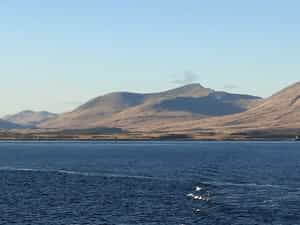
    Isle of Mull

    Arrive on Mull for Atlantic light, white-sand bays and rugged green hills. At Craignure, Duart Castle rises above the Sound of Mull, guarding this strategic channel for centuries. Tobermory’s brightly painted harbour rewards a stroll among independent shops, cafés and waterfront views. Beyond the villages, watch for white-tailed eagles, otters and red deer across moorland and coast. Allow time for narrow roads and changeable weather; the island’s quieter pleasures rarely come at speed.

  25. Day 26

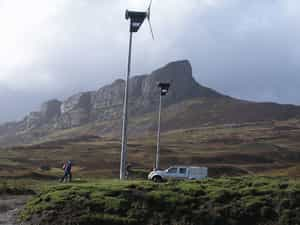
    Isle of Eigg

    Eigg is one of Scotland’s Small Isles, a compact island of dark volcanic ridges, open moorland and Atlantic shore. From the pier at Galmisdale, roads and footpaths lead into a landscape best explored at an unhurried pace. Climb An Sgùrr, the island’s dramatic pitchstone ridge, or walk to Singing Sands, where quartz-rich grains can squeak underfoot. Eigg has been community-owned since 1997, and its small population gives a visit a distinctly local character.

  26. Day 27

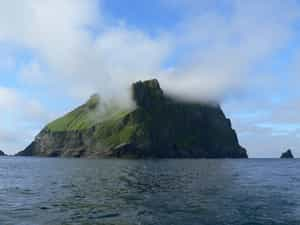
    St Kilda Islands Scotland

    St Kilda lies far out in the Atlantic, west of Scotland’s Outer Hebrides. Its main island, Hirta, holds stone cleits and the remains of a community evacuated in 1930. Today, its cliffs shelter vast seabird colonies, including gannets and puffins. UNESCO recognises St Kilda for its natural and cultural heritage. Boat trips reach Hirta when conditions allow, but weather is part of the journey.

  27. Day 28

    Fair Isle

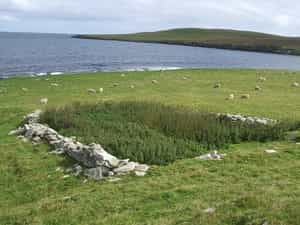
    Set between Orkney and Shetland, Fair Isle rewards the detour with a rare sense of quiet and distance. Sea cliffs rise above the Atlantic, where puffins and other seabirds gather in season. On land, stone crofts and green pasture frame a close-knit community famed for its distinctive Fair Isle knitting. Its appeal lies in remoteness as much as scenery; allow time to explore, since weather shapes island life.

  28. Day 28

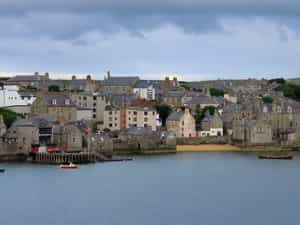
    Lerwick

    Lerwick feels more like a North Atlantic outpost than a Scottish port, with stone-fronted streets facing a working harbour. Shetland’s capital rewards a stroll along the waterfront and through narrow lanes. The Lodberrie, an eighteenth-century merchant’s house built partly over the sea, is one of its most distinctive landmarks. Visit Shetland Museum and Archives for the islands’ Norse heritage and contemporary life. Beyond town, open moorland, sea cliffs and wildlife offer a striking change of scale.

  29. Day 29

    Isle of Noss

    Just east of Bressay, Noss’s cliffs rise nearly 600 feet above the North Sea, a striking approach by boat. This uninhabited Shetland island is a National Nature Reserve, famed for its seabird colonies. Thousands of gannets crowd the ledges, while fulmars and guillemots wheel above the water. A seasonal boat from Bressay provides access, weather permitting; paths lead to close views of the cliffs.

  30. Day 30

    Suduroy Island Faroes (Scenic Stop)

  31. Day 31

    Torshavn

    Tórshavn is one of the world’s smallest capitals, yet it offers a revealing introduction to the Faroe Islands. Begin at Tinganes, where red-painted timber buildings cluster on a narrow headland beside the harbor. The Løgting, the Faroese parliament, meets nearby, continuing a political tradition rooted in the islands’ Norse past. In the compact center, cafés, shops and museums offer an easy pause before the Atlantic’s open horizons reclaim your attention.

  32. Day 32

    Klaksvik

    Klaksvík is the Faroe Islands’ second-largest town, set between steep mountains on Borðoy’s sheltered east coast. Fishing remains central to its life, yet the town rewards a slower look. Visit Christianskirkjan, whose timber roof recalls traditional Faroese building. From the harbor, ferries cross to Kalsoy, while roads and subsea tunnels connect Klaksvík with the wider islands. Come for the sea air, mountain views, and an unvarnished sense of Faroese life.

  33. Day 33

    At Sea (At Sea)

  34. Day 34

    Heimaey Island Iceland (Scenic Stop)

  35. Day 35

    Reykjavik, Iceland

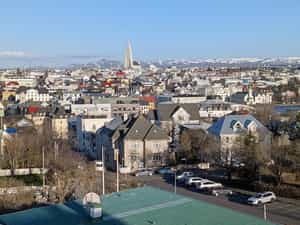
    Reykjavík is a capital with one foot in the wild. The Atlantic frames the city, volcanic mountains rise on the horizon, and geothermal water warms its pools. Start at Hallgrímskirkja, whose tower commands broad views, then walk down to the harbor and Harpa concert hall. Cafés, design shops, and museums make the compact center easy to explore on foot. Beyond town, geysers and waterfalls make a striking day trip; return for a soak in a neighborhood pool.

  36. Day 36

    Isafjordur, Iceland

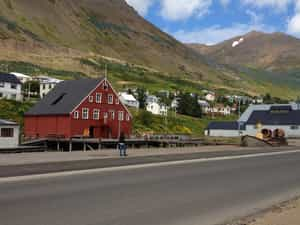
    Ísafjörður is the Westfjords’ principal town, set between a sheltered harbor and steep, often snow-streaked mountains. Walk its compact center to see colorful timber houses, then visit the Westfjords Heritage Museum in the historic harbor district. Its exhibits trace the fishing trade that shaped life along Iceland’s remote western coast. Beyond town, dramatic fjord scenery unfolds along winding roads. With a full day ashore, consider the drive to Dynjandi, one of the region’s most striking waterfalls.

  37. Day 37

    At Sea (At Sea)

  38. Day 38

    Jan Mayen Island, Norway

    Jan Mayen is less a conventional port than a rare landing on Norway’s remote Arctic island. Set between Greenland and the Norwegian Sea, it is dominated by Beerenberg. At 2,277 metres, its glaciated summit is the world’s northernmost active volcano. With no town or visitor infrastructure, landings depend on weather and sea conditions. If ashore, expect stark volcanic shores, broad Arctic horizons and seabird colonies—not shops or sightseeing buses.

  39. Day 39

    At Sea (At Sea)

  40. Day 40

    Longyearbyen, Norway

    Longyearbyen is the world’s northernmost settlement of its size, set beside Adventfjorden on Norway’s Svalbard archipelago. Coal built the town; the Svalbard Museum traces its mining past and the realities of Arctic life. Choose a guided excursion for glacier views, wildlife watching or a snowmobile journey into polar terrain. Outside town, travel with an experienced guide: polar bears roam Svalbard, and the wilderness demands respect. Visit in summer for the midnight sun, or winter for blue twilight and northern lights.

  41. Day 41

    Coastal Cruising (Coastal Cruising)

  42. Day 47

    At Sea (At Sea)

  43. Day 49

    Siglufjordur, Iceland

    Set beneath steep mountains at the head of a narrow fjord, Siglufjörður feels close to Iceland’s northern edge. Once the center of Iceland’s herring boom, this compact harbor town preserves its story at the Herring Era Museum. Walk the waterfront, then explore restored herring buildings and exhibits tracing the industry’s rise and fall. Beyond town, mountain roads and hiking routes open onto the dramatic Tröllaskagi Peninsula. Its fjord setting and steep peaks make the town as memorable as its past.

  44. Day 50

    Patreksfjordur, Iceland

    From Patreksfjörður’s sheltered Westfjords harbour to Höfn beneath Vatnajökull, Iceland’s western and southeastern edges reveal strikingly different landscapes. Patreksfjörður is a quiet base for exploring dramatic sea cliffs and Látrabjarg, where puffins nest in summer. Höfn is celebrated for langoustine and views of Vatnajökull, Europe’s largest glacier. Farther west along the south coast, glacier lagoons bring icebergs close to shore.

  45. Day 51

    Reykjavik, Iceland

    Reykjavík is a capital with one foot in the wild. The Atlantic frames the city, volcanic mountains rise on the horizon, and geothermal water warms its pools. Start at Hallgrímskirkja, whose tower commands broad views, then walk down to the harbor and Harpa concert hall. Cafés, design shops, and museums make the compact center easy to explore on foot. Beyond town, geysers and waterfalls make a striking day trip; return for a soak in a neighborhood pool.

Seabourn Pursuit Cruises
Published September 1, 2026
Last updated October 3, 2026
Author: J. Richard


Cruise Disclosure

Good to know: Prices are quoted per person based on double occupancy and include all applicable taxes and fees. Availability and prices can change quickly, so please continue through the booking process to confirm the latest availability and pricing before you pay.

We work hard to make sure everything on this website is accurate and up to date. However, some information may be incomplete or inaccurate, including details supplied by third parties or otherwise outside our control, and we cannot be held responsible for such errors. We work with 41 cruise line operators, that are providing cruises on 585 ships visiting 1,731 ports across 7,194 unique cruises, creating 13,822 itineraries. This is a great deal of data to continually update daily from our suppliers. If a pricing error, misrepresentation, or omission occurs, we reserve the right to adjust the pricing, correct the information, or cancel or decline any booking made in error, with notice to you. Thank you for your understanding!