Denmark Cruise from Copenhagen to Montréal — 38 Days

37 nights · Denmark · Departs Copenhagen (Denmark) · Visiting Skagen, Farsund, Stavanger, Lerwick, Torshavn, Klaksvik, Husavik, Isafjordur, Reykjavik, Grundarfjordur, Nanortalik, Paamiut, Nuuk, L'Anse aux Meadows, Gaspe, Baie-Comeau, Quebec City, Montreal, Havre-Saint-Pierre, Red Bay NL, St Anthony NL, St Johns NL, Saint Pierre and Miquelon Islands, Madeleine-Magdalen Islands · Aboard Seabourn Cruises on the Seabourn Quest

Seabourn Cruises logo
Cruise lineSeabourn Cruises
ShipSeabourn Quest
Duration37 nights
Port calls25
Departures1 sailings
From fare$36,298 per person
Year built2011
Guests540
Cabins225
Crew330
Length198 m
Beam25 m
Cruising speed19.0 kn
  1. Day 1

    Copenhagen, Denmark

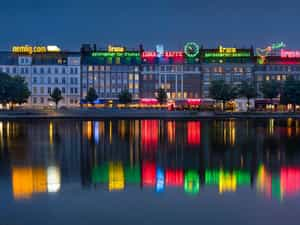
    Copenhagen is best explored at street level, where royal history meets modern design. At Nyhavn, colorful harbor-front houses frame canal tours; nearby Amalienborg Palace is the monarch’s winter residence. Christiansborg Palace combines Denmark’s parliament with historic royal rooms, while Christianshavn’s canals reveal a quieter side. Pause for smørrebrød, the open-faced rye-bread staple, and explore the city’s design shops before returning to port.

  2. Day 2

    Skagen, Denmark

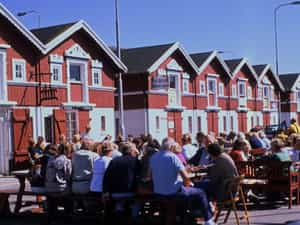
    At Denmark’s northernmost town, the distinctive light has drawn artists and travellers for generations. Skagen’s ochre houses with white trim line quiet streets, while its fishing harbour remains central to local life. A short journey leads to Grenen, where the Skagerrak and Kattegat meet in shifting waves. At Skagens Museum, discover works by the Skagen Painters, then browse local galleries or linger over fresh seafood.

  3. Day 3

    Farsund, Norway

    Farsund sits on Norway’s southern coast, where a sheltered harbor opens toward the North Sea. White wooden houses line the waterfront, and the old town rewards a slow walk between cafés, shops and the quay. Beyond town, the Lista peninsula brings windswept beaches, seabird-rich headlands and the striking red Lista Lighthouse. Take a coastal drive or boat excursion among the islands and inlets shaping this stretch of Agder.

  4. Day 4

    Stavanger, Norway

    Stavanger rewards a shore day spent on foot. White wooden houses line the compact old centre beside a lively harbour. The Norwegian Petroleum Museum explains how oil reshaped the city. Climb to the cathedral, begun around 1125, then browse Øvre Holmegate’s colourful cafés and shops. For a wider view, take a boat into Lysefjord, where sheer cliffs rise beneath Preikestolen. Wear good shoes; cobbles and steep lanes are part of the pleasure.

  5. Day 5

    Lerwick

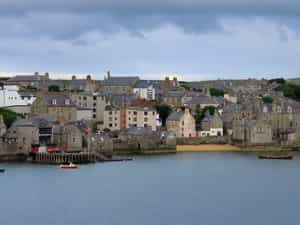
    Lerwick feels more like a North Atlantic outpost than a Scottish port, with stone-fronted streets facing a working harbour. Shetland’s capital rewards a stroll along the waterfront and through narrow lanes. The Lodberrie, an eighteenth-century merchant’s house built partly over the sea, is one of its most distinctive landmarks. Visit Shetland Museum and Archives for the islands’ Norse heritage and contemporary life. Beyond town, open moorland, sea cliffs and wildlife offer a striking change of scale.

  6. Day 6

    Torshavn

    Tórshavn is one of the world’s smallest capitals, yet it offers a revealing introduction to the Faroe Islands. Begin at Tinganes, where red-painted timber buildings cluster on a narrow headland beside the harbor. The Løgting, the Faroese parliament, meets nearby, continuing a political tradition rooted in the islands’ Norse past. In the compact center, cafés, shops and museums offer an easy pause before the Atlantic’s open horizons reclaim your attention.

  7. Day 7

    Klaksvik

    Klaksvík is the Faroe Islands’ second-largest town, set between steep mountains on Borðoy’s sheltered east coast. Fishing remains central to its life, yet the town rewards a slower look. Visit Christianskirkjan, whose timber roof recalls traditional Faroese building. From the harbor, ferries cross to Kalsoy, while roads and subsea tunnels connect Klaksvík with the wider islands. Come for the sea air, mountain views, and an unvarnished sense of Faroese life.

  8. Day 9

    Husavik, Iceland

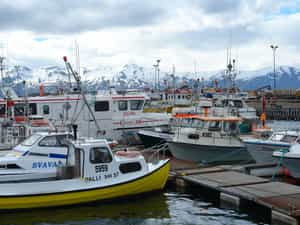
    Húsavík sits on Skjálfandi Bay, where whale-watching boats search for whales and other marine life. The compact center is easy to explore on foot, from the harbor to the 1907 Húsavíkurkirkja. At the Húsavík Whale Museum, exhibits trace the region’s close ties to the sea. For a different view, GeoSea’s seawater baths look out across the bay toward the Arctic horizon.

  9. Day 10

    Isafjordur, Iceland

    Ísafjörður is the Westfjords’ principal town, set between a sheltered harbor and steep, often snow-streaked mountains. Walk its compact center to see colorful timber houses, then visit the Westfjords Heritage Museum in the historic harbor district. Its exhibits trace the fishing trade that shaped life along Iceland’s remote western coast. Beyond town, dramatic fjord scenery unfolds along winding roads. With a full day ashore, consider the drive to Dynjandi, one of the region’s most striking waterfalls.

  10. Day 11

    Reykjavik, Iceland

    Reykjavík is a capital with one foot in the wild. The Atlantic frames the city, volcanic mountains rise on the horizon, and geothermal water warms its pools. Start at Hallgrímskirkja, whose tower commands broad views, then walk down to the harbor and Harpa concert hall. Cafés, design shops, and museums make the compact center easy to explore on foot. Beyond town, geysers and waterfalls make a striking day trip; return for a soak in a neighborhood pool.

  11. Day 12

    Grundarfjordur, Iceland

    Grundarfjörður sits on the north shore of Iceland's Snæfellsnes peninsula, a fishing village beneath steep mountains. Its signature sight is Kirkjufell, a 463-metre peak shaped like an arrowhead. Walk or drive to Kirkjufellsfoss, where cascades frame the mountain. Further west, Snæfellsjökull glacier crowns a volcano and the national park around it. Weather changes quickly here, so bring warm, waterproof layers. Come for scale, silence and light.

  12. Day 15

    Nanortalik, Greenland

    Nanortalik, Greenland’s southernmost town, sits on an island where fjords, sea cliffs and steep mountains define the horizon. Its name means “place of polar bears,” and bears still roam the surrounding region. From the harbor, boat journeys reach dramatic Tasermiut Fjord, famed for its granite walls and remote wilderness. Visit the local museum for a glimpse of Greenlandic life, then watch for icebergs and seabirds along the coast.

  13. Day 16

    Paamiut, Greenland

    Paamiut lies on Greenland’s southwest coast, between Nuuk and Qaqortoq, beneath steep mountains. Founded in 1742, this small fishing town remains shaped by the sea. Brightly painted homes rise above the harbor, while a handsome wooden church anchors the centre. Watch for whales offshore, then look inland to the fjords and peaks of Sermersooq. Greenland’s towns have no road links, so arrival by ship offers a close-up encounter with life on this remote coast.

  14. Day 17

    Nuuk, Greenland

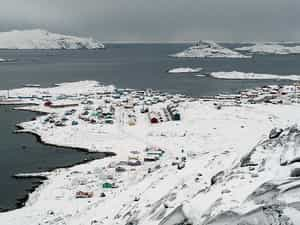
    Nuuk is Greenland’s capital, where Arctic scale meets the pace of a working town. Set beside the vast Nuuk Fjord, it pairs brightly painted houses with modern architecture and a lively harbor. Visit the Greenland National Museum to see the 500-year-old Qilakitsoq mummies and objects tracing Inuit life. Then look toward Sermitsiaq, the landmark mountain rising beyond the water. Nuuk rewards travelers seeking Greenlandic culture alongside its dramatic landscapes.

  15. Day 20

    L'Anse aux Meadows, Canada

    At Newfoundland’s northern tip, L’Anse aux Meadows offers a rare encounter with the Viking age in North America. Archaeologists uncovered evidence of a Norse settlement here dating to about 1,000 years ago. UNESCO recognizes L’Anse aux Meadows as the only confirmed Norse site in North America. Walk among reconstructed turf-walled buildings, then explore the visitor centre’s artefacts and archaeological evidence. Beyond the site, the wind-shaped coastline rewards a slower look.

  16. Day 22

    Gaspe, Canada

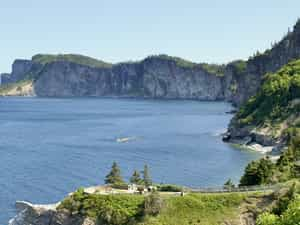
    Gaspé sits at the eastern end of Quebec’s Gaspé Peninsula. It faces the Gulf of St. Lawrence, with fishing harbours and rugged shoreline close at hand. In 1534, Jacques Cartier met St. Lawrence Iroquoians here and raised a cross for France. Beyond town, Forillon National Park protects cliffs, forests and coastal trails, while whale-watching excursions explore the surrounding waters. At nearby Cap-des-Rosiers, Canada’s tallest lighthouse marks the peninsula’s northern shore.

  17. Day 23

    Baie-Comeau, Canada

    Baie-Comeau stands on Quebec’s North Shore, overlooking the broad St. Lawrence estuary. Founded in the 1930s as a company town, it grew around a paper mill and the region’s abundant hydroelectric power. Explore its older streets, then venture inland toward the Manicouagan Reservoir, a vast landscape of water, forest and granite. Back at the shore, the river’s changing light invites a slower look.

  18. Day 24

    Quebec City, Canada

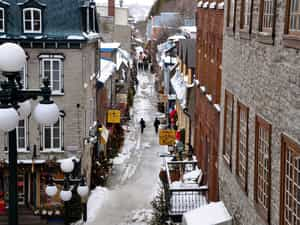
    Québec City is best explored on foot, where French-speaking Canada feels unmistakably distinct. Within the UNESCO-listed Historic District, stone walls, steep lanes and 17th-century façades tell the story of New France. Ride the funicular between Upper and Lower Town, then browse Petit-Champlain’s boutiques beside the St. Lawrence River. Allow time for the Plains of Abraham, where a pivotal 1759 battle changed the course of Canadian history. Come ashore ready to climb; the finest views reward a little effort.

  19. Day 25

    Montreal, Canada

    Montréal is a city of French character and North American energy, best explored on foot. From the Old Port, cobbled streets lead to Old Montréal’s grand squares, cafés and Notre-Dame Basilica. Climb or drive up Mount Royal for a broad view of the skyline and the St. Lawrence River. Then follow the city’s appetite, from market produce and bagels to inventive French-Canadian cooking. Allow time for the museums and lively terraces; Montréal’s pleasures are close together, but never feel hurried.

  20. Day 27

    Havre-Saint-Pierre, Canada

    Havre-Saint-Pierre sits on Quebec’s Côte-Nord, where the Gulf of St. Lawrence meets a coast shaped by wind and tide. Its nearby Mingan Archipelago National Park Reserve is famed for sculpted limestone monoliths scattered across islands and islets. Boat excursions reveal seabird colonies, remote shores and formations best seen from the water. Back in town, sample local seafood and enjoy the unhurried rhythm of this small coastal community.

  21. Day 29

    Red Bay NL, Canada

    Red Bay sits on Labrador’s rugged coast, where the Atlantic still sets the pace. In the 1500s, Basque whalers crossed the ocean to hunt right and bowhead whales here. Their remains form one of North America’s most important early industrial sites. Visit the UNESCO-listed archaeological remains and interpretation centre, then look across the harbour toward Saddle Island. Come for the whaling history, sea air and striking sense of distance.

  22. Day 30

    St Anthony NL, Canada

    At Newfoundland’s northern edge, Saint Anthony faces the Strait of Belle Isle, where icebergs drift south each spring. In season, whale-watching boats head offshore; coastal trails and the working harbour bring the region’s maritime life into view. Nearby, L’Anse aux Meadows preserves a Norse settlement recognized by UNESCO. Saint Anthony also traces Dr. Wilfred Grenfell’s medical work, which served Labrador and northern Newfoundland.

  23. Day 31

    St Johns NL, Canada

    St. John’s sits at the edge of the North Atlantic, where steep streets descend toward a working harbor. The compact center rewards time on foot, with Victorian row houses, independent shops and historic churches clustered around Water Street. Climb Signal Hill for views across the harbor and coastline. At Cabot Tower, learn how Marconi received the first transatlantic wireless signal here in 1901. Leave room for fresh seafood and local music.

  24. Day 33

    Saint Pierre and Miquelon Islands, France

    Off Newfoundland’s southern coast, Saint-Pierre and Miquelon offer a distinctly French stop in North America. Saint-Pierre, the larger settlement, lines a sheltered harbor with colorful houses, cafés and narrow streets. The islands’ seafaring history is visible in their museums and waterfront, while Miquelon’s dunes and lagoons invite a quieter outing. Bring a warm layer: Atlantic weather can change quickly, even in summer.

  25. Day 34

    Madeleine-Magdalen Islands, Canada

    The Magdalen Islands rise from the Gulf of St. Lawrence, closer to Prince Edward Island than mainland Quebec. Red cliffs, long beaches and fishing villages keep the sea in view. Explore historic La Grave on Île du Havre-Aubert, where fishers’ cottages and galleries line the waterfront. Follow the coast for smoked herring, fresh lobster and views worth a slower day ashore.

  26. Day 35

    Gaspe, Canada

    Gaspé sits at the eastern end of Quebec’s Gaspé Peninsula. It faces the Gulf of St. Lawrence, with fishing harbours and rugged shoreline close at hand. In 1534, Jacques Cartier met St. Lawrence Iroquoians here and raised a cross for France. Beyond town, Forillon National Park protects cliffs, forests and coastal trails, while whale-watching excursions explore the surrounding waters. At nearby Cap-des-Rosiers, Canada’s tallest lighthouse marks the peninsula’s northern shore.

  27. Day 37

    Quebec City, Canada

    Québec City is best explored on foot, where French-speaking Canada feels unmistakably distinct. Within the UNESCO-listed Historic District, stone walls, steep lanes and 17th-century façades tell the story of New France. Ride the funicular between Upper and Lower Town, then browse Petit-Champlain’s boutiques beside the St. Lawrence River. Allow time for the Plains of Abraham, where a pivotal 1759 battle changed the course of Canadian history. Come ashore ready to climb; the finest views reward a little effort.

  28. Day 38

    Montreal, Canada

    Montréal is a city of French character and North American energy, best explored on foot. From the Old Port, cobbled streets lead to Old Montréal’s grand squares, cafés and Notre-Dame Basilica. Climb or drive up Mount Royal for a broad view of the skyline and the St. Lawrence River. Then follow the city’s appetite, from market produce and bagels to inventive French-Canadian cooking. Allow time for the museums and lively terraces; Montréal’s pleasures are close together, but never feel hurried.

Seabourn Quest Cruises

Published August 10, 2026
Last updated October 3, 2026
Author: J. Richard


Cruise Disclosure

Good to know: Prices are quoted per person based on double occupancy and include all applicable taxes and fees. Availability and prices can change quickly, so please continue through the booking process to confirm the latest availability and pricing before you pay.

We work hard to make sure everything on this website is accurate and up to date. However, some information may be incomplete or inaccurate, including details supplied by third parties or otherwise outside our control, and we cannot be held responsible for such errors. We work with 41 cruise line operators, that are providing cruises on 585 ships visiting 1,731 ports across 7,194 unique cruises, creating 13,822 itineraries. This is a great deal of data to continually update daily from our suppliers. If a pricing error, misrepresentation, or omission occurs, we reserve the right to adjust the pricing, correct the information, or cancel or decline any booking made in error, with notice to you. Thank you for your understanding!