Ilha Grande Cruise Port
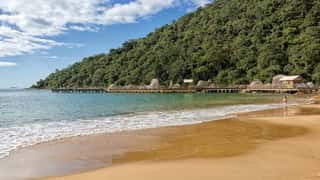
The tender ride from your ship to the Vila do Abraão pier typically takes 20 minutes across the often-choppy waters of the Baía da Ilha Grande. Located in the Costa Verde region of Rio de Janeiro state, this island is a protected ecological reserve where private cars are strictly prohibited. You will spend your day on foot or on small boats; there are no taxis, buses, or Ubers here. The walking transit from the pier to the main beach restaurants takes under 10 minutes, but the terrain is primarily sand and uneven stone. This destination sits approximately 150 km (93 miles) west of Rio de Janeiro and 100 km (62 miles) east of the colonial town of Paraty, making it a remote escape rather than an urban stop. Be aware that the single biggest mistake travelers make is attempting to hike to Lopes Mendes Beach, which takes 2.5 hours each way through steep jungle; take the taxi boat instead. Ilha Grande rewards those who embrace a slower, maritime pace and punishes anyone requiring air-conditioned land transport or high-end shopping. Expect a rustic, raw experience where nature is the primary architect.
Cais da Vila do Abraão


Ilha Grande, Brazil Port
UN/LOCODE BRILG Port of call Homeport
Ilha Grande Cruise Port Location
| Port Details | |
|---|---|
| Country | Brazil |
| UN/LOCODE | BRILG |
| Contact | |
| Address | Rua da Praia, Vila do Abraão, Ilha Grande, Angra dos Reis, RJ, 23968-000, Brazil |
| Port phone | +55 24 3361-3318 |
| Website | www.angra.rj.gov.br |
| Geography | |
| Coordinates | -23.15000, -44.23333 |
| Accessibility | |
| Accessible | Limited |
The tender ride from your ship to the Vila do Abraão pier typically takes 20 minutes across the often-choppy waters of the Baía da Ilha Grande. Located in the Costa Verde region of Rio de Janeiro state, this island is a protected ecological reserve where private cars are strictly prohibited. You will spend your day on foot or on small boats; there are no taxis, buses, or Ubers here. The walking transit from the pier to the main beach restaurants takes under 10 minutes, but the terrain is primarily sand and uneven stone. This destination sits approximately 150 km (93 miles) west of Rio de Janeiro and 100 km (62 miles) east of the colonial town of Paraty, making it a remote escape rather than an urban stop. Be aware that the single biggest mistake travelers make is attempting to hike to Lopes Mendes Beach, which takes 2.5 hours each way through steep jungle; take the taxi boat instead. Ilha Grande rewards those who embrace a slower, maritime pace and punishes anyone requiring air-conditioned land transport or high-end shopping. Expect a rustic, raw experience where nature is the primary architect.
Ilha Grande — Port Overview
History
Ilha Grande’s history is a dark contrast to its current tropical allure. Originally inhabited by the Tamoio people, the island became a strategic lair for European pirates in the 16th and 17th centuries who used the deep coves of the Baía da Ilha Grande to ambush Portuguese gold ships. By the late 1800s, the island transitioned from a smuggling hub to a site of forced isolation. In 1884, Emperor Dom Pedro II inaugurated the Lazareto, a quarantine hospital designed to process immigrants arriving in Brazil with infectious diseases like cholera. You can still see the crumbling brickwork of the Lazareto ruins today, a short walk from Vila do Abraão. The island's most notorious era began in 1903 with the construction of the Cândido Mendes prison, which housed Brazil's most dangerous criminals and political dissidents for nearly a century. This high-security facility effectively prevented large-scale development on the island, inadvertently preserving the Atlantic Rainforest that now draws tourists. The prison was finally closed and demolished in 1994, marking the island’s transformation into a protected State Park. When you walk the 'Circuito do Abraão' today, the stone aqueduct you pass was built in 1893 to supply water to the quarantine station, standing as a silent monument to the island’s period of enforced solitude and medical history.
The Verdict
Ilha Grande is a destination that rewards the prepared. Travelers who benefit most from this port are the ones who arrive with BRL cash, sturdy sandals, and the flexibility to adapt to 'island time'. This guide has been fact-checked by J. Richard and the Waterways Cruise editorial team. Excursions that guarantee a return to the ship can be tailored to your mobility, interests, and pace, so missing departure is never a concern. No two travelers want the same day in paradise.
Things to Do & See in Ilha Grande
| Attraction | Type | Address | Phone | Hours | Website | Admission |
|---|---|---|---|---|---|---|
| Vila do Abraão | Cultural Site | Vila do Abraão, Ilha Grande, Brazil | +55 24 3361-3318 | Open 24 hours | angra.rj.gov.br | Free |
| Lazareto Ruins | Historical Site | Praia do Abraão - West End, Ilha Grande, Brazil | Open 24 hours | inea.rj.gov.br | Free | |
| Lopes Mendes Beach | Natural Feature | Lopes Mendes, Ilha Grande, Brazil | Daily 8:00 AM – 5:00 PM | visitbrasil.com | Free | |
| The Aqueduct | Historical Site | Circuito do Abraão, Ilha Grande, Brazil | Open 24 hours | Not available | Free | |
| Lagoa Azul (Blue Lagoon) | Natural Feature | North Coast, Ilha Grande, Brazil | Accessible by boat only | Not available | Free |
Vila do Abraão · Cultural Site
FreeVila do Abraão is the beating heart of the island, a place where time has been held in check by the lack of pavement and motors. The village is a charming grid of sandy lanes lined with colorful pousadas, hibiscus bushes, and local artisan shops. Visitor feedback is consistent that the village feels like a time capsule of old Brazil. You'll spend your time walking between the main square and the waterfront, where Schooners bob in the Baía da Ilha Grande. Most visitors walk past the Church of Saint Sebastian without realizing it dates back to the mid-19th century and serves as the town's primary hurricane shelter. The best way to experience it is to grab a freshly squeezed 'suco de abacaxi' (pineapple juice) from a street vendor and simply watch the chaos of the boat arrivals. It is not a place for 'sights' in the traditional sense, but for absorbing a way of life that has largely disappeared elsewhere on the coast. It rewards the patient traveler who doesn't mind a bit of sand between their toes.
Vila do Abraão, Ilha Grande, Brazil ·+55 24 3361-3318 ·Open 24 hours ·www.angra.rj.gov.br
Lazareto Ruins · Historical Site
FreeThe Lazareto ruins are the island's most significant historical monument, serving as a visceral reminder of its past as a place of exile. Constructed in 1884 to serve as a quarantine hospital for immigrants, the site later became a military base and eventually a prison. Today, the massive brick arches are being slowly strangled by fig trees, creating a haunting 'Angkor Wat' vibe in the middle of the Brazilian rainforest. It is worth knowing that these ruins were intentionally partially demolished in the 1950s to make way for a new prison, leaving behind a maze of columns and foundations. When you stand among the ruins, look toward the sea to imagine the steamships anchored in the Baía da Ilha Grande, waiting to offload sick passengers. It’s a somber, beautiful place that offers a necessary counterpoint to the island’s sunny beaches. The walk there takes you past the 'Black Rocks' area, which offers some of the best views back toward your cruise ship anchored in the bay.
Praia do Abraão - West End, Ilha Grande, Brazil ·Open 24 hours ·www.inea.rj.gov.br
Lopes Mendes Beach · Natural Feature
FreeLopes Mendes is the 'Holy Grail' of Brazilian beaches, a 3 km stretch of blindingly white, powder-fine sand. Because it faces the open ocean rather than the protected Baía da Ilha Grande, the water is crystal clear with rolling turquoise waves. There are no buildings, no roads, and no palm trees (only native almond trees provide meager shade). It is worth noting that 80% of cruise passengers underestimate the heat of the walk from the boat landing at Pouso. You must bring plenty of water and a hat. The experience is one of pure, raw nature—the sound of the wind through the trees and the crashing of the Atlantic surf. It is not a place for 'lounging' in a beach chair; it is a place for walking the waterline and feeling the immense scale of the Brazilian coast. If you are fit enough for the 25-minute hike from the boat, it is the one experience on the island you will remember for the rest of your life. It delivers a sense of isolation that is increasingly rare in modern travel.
Lopes Mendes, Ilha Grande, Brazil ·Daily 8:00 AM – 5:00 PM ·www.visitbrasil.com
The Aqueduct · Historical Site
FreeRising 30 feet above the forest floor, the Aqueduct of Ilha Grande is a monumental piece of 19th-century infrastructure. Built in 1893 using local stone and whale oil mortar, it was designed to funnel fresh water from the mountain springs down to the Lazareto quarantine station. Today, it is draped in moss and ferns, looking like a Roman ruin transplanted into the tropics. Visitors often report that the area around the aqueduct is one of the best places on the island to spot Howler Monkeys in the canopy above. The structure itself is incredibly photogenic, with its series of repeating arches cutting through the dense green foliage. It is a short, slightly uphill walk from the Lazareto ruins and serves as the gateway to the deeper trails of the island. Standing beneath it, you get a sense of the immense labor required to build such a facility in a remote, roadless jungle. It’s a quiet, contemplative spot that most 'beach-only' tourists skip, making it a peaceful retreat from the village buzz.
Circuito do Abraão, Ilha Grande, Brazil ·Open 24 hours ·Not available
Lagoa Azul (Blue Lagoon) · Natural Feature
FreeLagoa Azul is not a lagoon in the traditional sense but a shallow, sheltered area between several small islets where the water takes on a vivid, neon-blue hue. The sandy bottom and clear waters of the Baía da Ilha Grande create a natural swimming pool filled with colorful fish and sea stars. According to local boat captains, the water remains calm here even when the outer ocean is rough, making it the island's premier snorkeling spot. When you jump into the water, you'll be surrounded by thousands of small fish that are remarkably unafraid of humans. Most visitors simply swim near their boats, but the best snorkeling is actually found near the rocky shorelines of the islets where the coral starts to form. The visibility here is often exceeding 10 meters (33 feet) on sunny days. While it can feel like a 'tourist trap' during the peak of the day when the music-blasting schooners arrive, an early morning visit offers a serene, aquarium-like experience that is the highlight of many South American cruises.
North Coast, Ilha Grande, Brazil ·Accessible by boat only ·Not available
Eating & Drinking in Ilha Grande
The culinary identity of Ilha Grande is defined by the 'Caiçara' culture—the traditional coastal inhabitants of Brazil. The standout dish is Moqueca, but unlike the Bahian version, the Ilha Grande variety often incorporates local 'Prata' bananas, adding a creamy sweetness to the seafood stew. You should also look for 'Peixe à Belle Meunière', a dish reflecting the French influence in Brazilian coastal cooking. For a local drink, try a 'Caipirinha de Jorge', made with local tangerines and 'Cachaça' (sugar cane spirit) from the nearby Paraty region. Avoid expecting high-end wine lists; the tropical heat makes cold 'Chopp' (draft beer) or fresh coconut water the beverages of choice. One honest note: tourists often expect a wide variety of tropical fruits, but because everything must be boated in from the mainland, the variety is actually quite limited compared to Rio. Stick to what is in season—usually mango, pineapple, and passionfruit.
| Place | Address | Phone | Hours | Price range |
|---|---|---|---|---|
| Lua e Mar | Rua da Praia, 37, Vila do Abraão, Ilha Grande, Brazil | +55 24 3361-5113 | Daily 12:00 PM – 10:00 PM | 120.00–180.00 BRL (~$20.50–$31.00 USD) |
| Pizzaria do Dom Mario | Rua Bougainville, Vila do Abraão, Ilha Grande, Brazil | +55 24 3361-5349 | Daily 5:00 PM – 11:00 PM | 80.00–130.00 BRL (~$13.50–$22.50 USD) |
| Las Sorbet Acai Bar | Rua da Praia, Vila do Abraão, Ilha Grande, Brazil | Daily 10:00 AM – 8:00 PM | 25.00–40.00 BRL (~$4.50–$7.00 USD) |
Lua e Mar
120.00–180.00 BRL (~$20.50–$31.00 USD)Lua e Mar is an institution on the island. The tables are set directly on the sand under ancient trees, illuminated by lanterns as the sun sets over the Baía da Ilha Grande. You must order the Moqueca with Banana; the sweetness of the fruit perfectly balances the savory dendê oil and coconut milk of the fish stew. Visitor feedback is consistent that the service is 'island time'—slow, but the view and the quality make it worth the wait. The main downside is that the sand can be difficult for those with mobility issues, so ask for a table near the wooden boardwalk.
Rua da Praia, 37, Vila do Abraão, Ilha Grande, Brazil ·+55 24 3361-5113 ·Daily 12:00 PM – 10:00 PM
Pizzaria do Dom Mario
80.00–130.00 BRL (~$13.50–$22.50 USD)Located one block back from the beach on the charming Rua Bougainville, Dom Mario is widely considered the best 'chef-driven' kitchen on the island. While they are famous for their thin-crust pizzas, the steak dishes are surprisingly excellent for a remote island. The decor is rustic-chic with lots of dark wood and warm lighting. It is the perfect place to escape the humidity of the beach for a refined meal. Be aware that it only opens in the late afternoon, so it is only an option for cruise ships with a late-night departure.
Rua Bougainville, Vila do Abraão, Ilha Grande, Brazil ·+55 24 3361-5349 ·Daily 5:00 PM – 11:00 PM
Las Sorbet Acai Bar
25.00–40.00 BRL (~$4.50–$7.00 USD)This is not a cocktail bar, but rather the essential 'island fuel' stop. Acai in Brazil is served like a thick, frozen sorbet, and Las Sorbet serves the best on the island. It's the perfect place to sit on a colorful bench, watch the hikers return from the trails, and enjoy the local spirit of 'vitalidade'. Locals come here post-hike to replenish their energy.
Rua da Praia, Vila do Abraão, Ilha Grande, Brazil ·Daily 10:00 AM – 8:00 PM
Getting There & Around
Navigating Ilha Grande is a strictly bimodal experience: you are either walking or on a boat. Once you step off the tender, you are in Vila do Abraão, where the 'main street' is a strip of sand called Rua da Praia. For any destination beyond the immediate village, you must use a 'Taxi Boat' (small motorboats) or a 'FlexBoat' (faster RIB-style boats). These depart constantly from the main pier. A round-trip to the Pouso landing (for Lopes Mendes) typically costs 60.00 BRL (~$10.50 USD). There are no day passes; you pay per trip in cash. Do not bother looking for bike rentals; the 'roads' are either deep sand or steep, rocky jungle paths that are unsuitable for casual cycling. One navigation tip most guides omit: the 'T1' and 'T10' trail markers are color-coded and highly reliable, but the distances are measured in 'estimated time' which assumes a fast hiking pace. Always add 30% to the posted time if you are over 60 or carrying a camera.
Itineraries & Sample Walks
4-Hour Shore Excursion in Ilha Grande
Lazareto Ruins
9:00 AM (45 min)
These evocative 19th-century ruins were once a quarantine station for immigrants. The brick arches are now being reclaimed by the jungle. Most visitors miss the small interpretive plaques that explain the medical history of the site.
- Walk along the beach (Rua da Praia) heading west from the pier. (Free)
- Entry: Free (Free)
- Look for the iron rings in the rocks near the water—these were used to moor the ships bringing patients in the 1880s.
The Aqueduct
10:00 AM (30 min)
Built in 1893, this stone structure carried fresh water from the mountains to the Lazareto. It is an impressive feat of colonial engineering deep in the rainforest.
- Follow the T1 trail inland from the ruins; the path is relatively flat but dirt-surfaced. (Free)
- Entry: Free (Free)
- Continue 5 minutes past the aqueduct to find the 'Poção', a natural swimming hole in the river.
Praia da Julia
11:00 AM (60 min)
A smaller, quieter beach than the main village beach. It has overhanging trees providing natural shade and a few small kiosks for a cold drink.
- Walk back through the village center to the eastern edge of the bay. (Free)
- Entry: Free (Free)
- The 'Boneca' kiosk here serves the best grilled cheese with oregano on the island.
Lunch Recommendation
Lua e Mar
While many eat at the buffet-style spots near the pier, Lua e Mar offers tables set directly in the sand under the trees. It is the birthplace of the island's signature fish-with-banana dish.
Order: Moqueca de Peixe com Banana (Fish stew with plantains), Bolinho de Bacalhau (Codfish fritters)
Rua da Praia, Vila do Abraão, Ilha Grande, Brazil
Cost: 120.00 BRL (~$20.50 USD)
8-Hour Full Day Experience in Ilha Grande
Lopes Mendes Beach
8:30 AM (180 min)
Consistently ranked as one of the world's most beautiful beaches. The sand is so fine it squeaks under your feet. Note: there are no kiosks or services on this beach, so you must bring your own water.
- Take a FlexBoat from Abraão Pier to Praia do Pouso, then hike 25 mins over the hill. (60.00 BRL (~$10.50 USD))
- Entry: Free (Free)
- Walk to the very end of the beach (left side) to find a small chapel and the best surf breaks.
Vila do Abraão Exploration
1:00 PM (90 min)
Wander the artisanal shops and the main square. This is the time to visit the Church of Saint Sebastian.
- Return FlexBoat from Pouso to Abraão Pier. (Included in round trip)
- Entry: Free (Free)
- Skip the shops on the main beach and head one street back for better prices on handmade sandals.
Getting back to the ship
The latest safe departure time from Vila do Abraão is 60 minutes before your ship's scheduled all-aboard time. This allows for the 20-minute tender ride and the potential 15-20 minute wait in the tender queue. If you are at a remote beach like Lopes Mendes, you must depart by boat no later than 2 hours before all-aboard. There is no public transit or road access to the ship; if you miss the final tender, you will be stranded on the island. You will need to hire a private speedboat (roughly 1,500.00 BRL / ~$258.00 USD) to take you to the mainland at Angra dos Reis, and then arrange a 3-hour taxi to the next port (usually Rio or Santos). The Port Authority contact number is +55 24 3365-0273.
Weather & Best Time to Visit Ilha Grande
Weather & What to Pack
Cruise season: October to April
26°C–32°C (79°F–90°F), high humidity (80%+), with occasional heavy tropical showers.
What to wear: Light, breathable linen or moisture-wicking fabrics are essential. Do not wear denim; it will never dry in this humidity. You must wear sturdy walking sandals (like Keen or Merrell) rather than flip-flops if you plan to walk the trails to the ruins. A wide-brimmed hat and high-SPF reef-safe sunscreen are non-negotiable as the reflection off the Baía da Ilha Grande is intense.
Weather risks: Sudden afternoon thunderstorms can cause tender operations to be suspended for 30–60 minutes for safety. Tropical heat exhaustion is the most common medical issue for cruise passengers here.
January and February are the wettest months, often seeing short but violent downpours every afternoon.
| Season | Conditions | Hazards | Affected areas | Visitor advice |
|---|---|---|---|---|
| Summer (December–March) | Hot and humid with frequent afternoon tropical downpours. | Jungle trails become extremely muddy and slippery; the granite rocks near the Lazareto ruins become hazardous when wet. Flash flooding can occur on the 'T1' trail. | Vila do Abraão sandy streets, all jungle hiking trails, and the rocks at Praia da Julia. | Wear waterproof hiking sandals with good grip (like Teva or Chaco). Carry a lightweight poncho. Do all hiking in the morning to avoid the 4:00 PM rains. |
| Winter (June–August) | Drier, clearer skies with milder temperatures around 22°C (72°F). | Lower water temperatures and occasional 'Ressaca' (strong sea swells) that can make tender operations and taxi boat landings difficult. | Vila do Abraão pier and boat landings at Lopes Mendes. | Bring a light windbreaker for boat transit. This is the best time for hiking as trails are dry and stable. |
Practical Information
Cultural etiquette
Locals on Ilha Grande, known as 'Insulanos', are remarkably laid-back but appreciate basic courtesy. Greet everyone with a friendly 'Bom dia' (Good morning) or 'Boa tarde' (Good afternoon). In dining, splitting a large 'Prato Feito' (standard meal) is common and not considered odd, as portions are often designed for two. Tipping is not mandatory but rounding up the bill or leaving 10% for good service is standard and highly appreciated. Photography is generally welcome, but always ask before taking a portrait of local fishermen at the pier. A common cultural misunderstanding involves 'Island Time'; things move slowly here, and getting frustrated with a slow-to-arrive lunch will only alienate your server. One specific rule: do not walk through the village in just a bikini or swim trunks without a cover-up or t-shirt; while it’s a beach town, the village streets are considered public spaces requiring modest attire.
Mistakes to Avoid
| Mistake |
|---|
Attempting to hike to Lopes Mendes Beach on a short port call. |
Arriving on the island without any Brazilian Real cash. |
Wearing flip-flops for the walk to the Lazareto ruins. |
Forgetting to bring water to Lopes Mendes. |
Practical tips
Cards are accepted at most established restaurants and larger shops, but for taxi boats and small kiosks, you must have cash (BRL). The island's only ATM is notoriously unreliable, so do not count on it. Tipping is typically 10% ('dez por cento') and is often included in the bill. Learning 'Obrigado' (Thank you), 'Por favor' (Please), and 'A conta, por favor' (The bill, please) earns genuine goodwill. Be aware of the 'Mutuca'—a local biting fly found on jungle trails; standard DEET repellent is effective but must be applied frequently. The sun here is deceptively strong due to the sea breeze; many guests ruin their trip with second-degree burns. Dress code for the Church of Saint Sebastian requires covered shoulders and knees. To avoid crowds, aim to be on the very first tender of the morning; by 11:00 AM, the village becomes significantly more congested.
Cruise Lines Visiting Ilha Grande
Port of Call





Why Book With Waterways Cruise?
Four decades of expertise, one dedicated advisor, and every detail handled, from your front door to the gangway and back.
Personal Service — Your Own Cruise Concierge
Tailor-Made — 100% Custom-Built
Expertise — 40+ Years in Travel
Price Watch — Book With Total Confidence
Signature Sailings
All Cruise Lines at Ilha Grande (A–Z)
Nearby Ports





FAQ — Ilha Grande
Are there any cars or taxis on Ilha Grande?
No. Private vehicles are strictly prohibited by law to preserve the island's ecological status. There are only a handful of essential government vehicles (police and garbage trucks). All transportation for visitors is done either on foot or via taxi boats. If you are staying in the main village of Vila do Abraão, you can walk everywhere. For destinations further afield, such as various remote beaches or the Blue Lagoon, you must hire a boat at the main pier. Prices range from 30.00 BRL (~$5.00 USD) to 150.00 BRL (~$26.00 USD) depending on the distance.
Can I use American Dollars on the island?
Directly using USD is not recommended. While some larger restaurants might accept USD in an emergency, they will give you a very poor exchange rate. Most small vendors, taxi boat operators, and kiosks strictly require Brazilian Real (BRL). Because the island's only ATM is frequently out of service or lacks cash, you should exchange currency or withdraw BRL on the mainland before your ship arrives at the port. Credit cards are accepted at larger establishments, but the island's internet can be spotty, leading to failed transactions. Expect to need approximately 200.00 BRL (~$35.00 USD) per person for a typical day of food and local transport.
How long is the hike to Lopes Mendes Beach?
The hike from the main village of Vila do Abraão to Lopes Mendes takes approximately 2.5 to 3 hours one way. It is a strenuous trek (T10 trail) that crosses three separate mountain ridges through dense jungle. The full hike is strongly discouraged for cruise passengers with limited time. Instead, take a taxi boat to Praia do Pouso (30 minutes), and from there, it is a much more manageable 20-25 minute walk over a single hill to reach the main beach. This ensures you have plenty of time to actually enjoy the water before needing to return to the pier for your ship's tender.
Is the water safe to drink on Ilha Grande?
No, it is not recommended to drink tap water on the island. While some locals use the natural spring at 'Bica do Abraão,' visitors should stick to bottled or filtered water to avoid stomach issues. Bottled water is widely available at every small market in Vila do Abraão for about 5.00 BRL (~$0.85 USD) per liter. If you are heading to remote beaches like Lopes Mendes, you must purchase and carry your water with you, as there are no shops or vendors once you leave the boat landing. Staying hydrated is critical due to the high humidity and tropical heat found on the island.
What happens if it rains during my port call?
Ilha Grande is a rainforest island, and short, heavy tropical downpours are common, especially in the afternoon. Most rains last less than an hour. During heavy rain, tender operations may be temporarily paused for safety, and hiking trails can become very slippery. The best strategy is to find a beachfront restaurant with a roof, such as Lua e Mar, and wait it out with a meal. Visitors should carry a lightweight, reusable poncho. If the rain is persistent, the village shops and the small Prison Museum in the village remain open, providing some indoor activity options.
Are there mosquitoes or biting insects on the island?
Yes, specifically a biting fly known as the 'Mutuca' and the 'Borrachudo.' These are most active on the jungle trails and near freshwater streams. Their bites can be quite itchy and occasionally cause swelling in sensitive individuals. Standard insect repellents containing DEET or Icaridin are effective. You should apply repellent before you start any hike and re-apply after swimming. Most local pharmacies in Vila do Abraão sell effective local brands of repellent. If you stay on the open, breezy parts of the main beach in the village, insects are rarely a significant problem.
Is Ilha Grande safe for solo travelers?
Ilha Grande is considered one of the safest destinations in the state of Rio de Janeiro. Because it is an island with no cars and a small, tight-knit community, the violent crime seen in larger Brazilian cities is virtually non-existent here. However, standard travel precautions apply: do not leave valuables unattended on the beach while swimming, and avoid walking unlit jungle trails alone after dark. The main risk to safety is environmental—slipping on wet rocks or heat exhaustion. For solo cruise passengers, the village of Vila do Abraão is very welcoming and easy to navigate independently.
Can I see monkeys or other wildlife easily?
Yes, wildlife sightings are very common. Howler Monkeys are frequently heard and often seen in the canopy along the T1 trail near the Aqueduct. You might also spot Marmosets (small, curious monkeys) near the village edges. Large lizards called Teiús are common on the sandy paths. In the water, sea turtles are frequently spotted in the calmer coves of the Baía da Ilha Grande. Please remember that it is illegal and harmful to feed any wildlife on the island. For the best chance of sightings, head toward the Lazareto ruins early in the morning when the forest is most active.
Do I need special shoes for this port?
Footwear is the most important gear for Ilha Grande. Because you will be walking on deep sand, uneven cobblestones, and potentially muddy jungle trails, sturdy walking sandals with a heel strap (like Tevas or Keens) are recommended. Flip-flops are fine for the immediate beach area but offer no support for the hike to the ruins or the walk to Lopes Mendes. If you plan on doing the more serious T10 hike, light trail running shoes are better. Avoid wearing expensive leather shoes or heels, as the salt, sand, and humidity will likely damage them during a single day ashore.
Is there any cell service or internet on the island?
Cellular service (4G/5G) is generally good in the main village of Vila do Abraão but disappears quickly once you enter the jungle or go to the 'ocean' side of the island (like Lopes Mendes). Most restaurants in the village offer free Wi-Fi to paying customers, though speeds are rarely sufficient for video streaming or large uploads. If you need to stay connected for work or family, do your communicating while in the village center. For emergency navigation, it is a good idea to download an offline map of the island on Google Maps before you leave the cruise ship's Wi-Fi.
Fact-checked and co-written by J. Richard, Founder, Waterways Cruise, with the Waterways Cruise Content Team.
Published May 19, 2026 · Last updated November 2, 2026
This guide is researched and reviewed by our editorial team, but prices, hours, and availability change often. Confirm current details directly with venues, excursion operators, and your cruise line before you travel.