Hvar Cruise Port
Hvar Town Cruise Quay


Hvar, Croatia Port
UN/LOCODE HRHVA Port of call Homeport
Hvar Cruise Port Location
| Port Details | |
|---|---|
| Country | Croatia |
| UN/LOCODE | HRHVA |
| Contact | |
| Address | Obala Riva, 21450, Hvar, Croatia |
| Port phone | +385 21 741 007 |
| Website | www.lucka-uprava-hvar.hr |
| Geography | |
| Coordinates | 43.17250, 16.44030 |
| Accessibility | |
| Accessible | Limited |
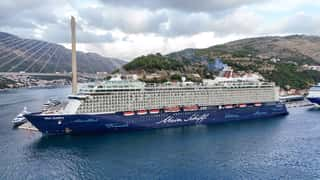
The majority of cruise ships visiting Hvar must anchor in the bay, requiring a 10-minute tender ride to the Riva quay which places you directly in the town's dense pedestrian center. Situated in Central Dalmatia, this island destination is roughly 75 minutes by catamaran from the city of Split and about 1 hour by boat from the neighboring island of Brač. You are entering one of the most aesthetically preserved maritime towns on the Adriatic Sea, but the logistical reality is sharp. Most visitors spend their first hour wandering aimlessly around the waterfront cafes where prices are 40% higher than the backstreets. It is well established that the morning rush for the Spanish Fortress begins precisely at 10:30 AM; if you are not at the ticket gate by 9:45 AM, expect to wait 20 minutes in direct sun. The walk from the tender dock to the main square is 120 steps. This destination rewards the early riser who heads uphill immediately and punishes those who wear flimsy footwear on the polished, slippery limestone streets. Hvar serves exclusively as an ocean cruise port, as the surrounding waters of the Adriatic Sea are too deep for traditional river vessels. Realistically, you can see the main historical core in 4 hours, but an 8-hour call is required if you intend to visit the interior lavender fields or the Pakleni Islands.
Hvar — Port Overview
History
Hvar rose to prominence in the 4th century BC when Greek colonists from Paros founded Pharos (modern-day Stari Grad), but the Hvar Town you see today is a masterpiece of Venetian maritime strategy. Between 1420 and 1797, the Republic of Venice transformed the town into their primary winter port for the Adriatic Sea fleet. This era of 'Serenissima' dominance gave the city its iconic Gothic and Renaissance palaces, built from the same shimmering white Brač stone used for the White House in Washington. A pivotal moment occurred in 1571 when an Ottoman naval raid almost razed the town; the residents fled to the fortress above, which saved the population but left the city to burn. Following this reconstruction, Hvar became a cultural pioneer, opening one of Europe's first public theaters in 1612 inside the massive Arsenal building. You can still see the original 17th-century stage today, a testament to a time when fishermen and aristocrats shared the same cultural space. During the 19th century, under Austrian rule, the island transitioned from a military outpost to a health retreat, laying the foundations for the high-end tourism that defines the island now. Every step you take on the polished limestone of St. Stephen's Square is a walk across six centuries of Venetian and Austrian naval history, physically etched into the facades of the surrounding merchant homes.
The Verdict
The clients who get the most from Hvar are those who arrive with a plan and the flexibility to adapt to the heat. This guide reflects information gathered from managing over 5,000 itineraries, fact-checked by J. Richard and destination partners in Central Dalmatia are noted. Excursions that guarantee a return to the ship can be tailored to your mobility, interests, and pace, so missing departure is never a concern. No two travelers want the same day ashore, especially in a destination as multi-layered as this Adriatic gem.
Things to Do & See in Hvar
| Attraction | Type | Address | Phone | Hours | Website | Admission |
|---|---|---|---|---|---|---|
| St. Stephen's Square (Pjaca) | Landmark | Trg Svetog Stjepana, 21450, Hvar | +385 21 741 059 | Open 24 hours | gethvar.com | Free |
| The Arsenal and Public Theatre | Cultural Site | Trg Svetog Stjepana 42, 21450, Hvar | +385 21 741 059 | Daily 9:00 AM – 9:00 PM | mdc.hr | EUR €10.00 |
| Franciscan Monastery | Museum | Šetalište put Križa 1, 21450, Hvar | +385 21 741 193 | Daily 10:00 AM – 12:00 PM and 5:00 PM – 7:00 PM | Not available | EUR €5.00 |
| St. Stephen's Cathedral | Historical Site | Trg Svetog Stjepana, 21450, Hvar | +385 21 741 026 | Daily 9:00 AM – 1:00 PM and 5:00 PM – 8:00 PM | Not available | Free |
| Spanish Fortress (Fortica) | Landmark | ul. biskupa Jurja Dubokovica bb, 21450, Hvar | +385 21 742 742 | Daily 8:00 AM – 9:00 PM (Summer) | Not available | EUR €10.00 |
St. Stephen's Square (Pjaca) · Landmark
FreeThis 4,500-square-meter plaza is the largest square in Dalmatia and serves as the social heart of Hvar. Notably, most people stay on the southern side; the northern edge near the palaces offers more shade and better photography angles. The square was originally a deep bay that was filled in to connect two parts of the town, which is why it feels so expansive. You'll notice the ground is paved with polished limestone that has a glass-like finish from centuries of use. It is flanked by the Cathedral, the Arsenal, and various 15th-century palaces. Don't just walk through it; stop at the stone well in the center and imagine it as the gathering point for Venetian sailors in the 1600s. It is the perfect place to start your day, provided you arrive before the heat reflects off the white stone. It offers a genuine sense of the island's history as a maritime crossroad of the Adriatic Sea.
Trg Svetog Stjepana, 21450, Hvar ·+385 21 741 059 ·Open 24 hours ·gethvar.com
The Arsenal and Public Theatre · Cultural Site
EUR €10.00The Arsenal is one of the most important historical buildings in Croatia. Originally built in the 14th century to house the island's war galley, it was later expanded under Venetian rule. Its most remarkable feature is the theatre on the first floor, which opened in 1612—making it one of the first indoor public theaters in Europe. Unlike most theaters of the time, this was open to all social classes, a radical concept in the 17th century. The restoration is meticulous, based on observations during the 2021 reopening. You can see the original frescoed boxes and the semi-circular stage which still hosts occasional performances. The building also houses the Gallery of Contemporary Art, but the real draw is the architecture itself. Standing on the balcony of the theater gives you a unique view over the main square. It is a quiet, contemplative space that feels worlds away from the party atmosphere of the waterfront. It demonstrates the sophisticated cultural life that existed on Hvar long before it became a luxury yachting destination.
Trg Svetog Stjepana 42, 21450, Hvar ·+385 21 741 059 ·Daily 9:00 AM – 9:00 PM ·mdc.hr
Franciscan Monastery · Museum
EUR €5.00Located on a quiet point south of the main town, this monastery was founded in 1461 as a retreat for sailors. It is best known for its museum which houses a staggering 16th-century painting of 'The Last Supper' by Matteo Ponzoni. It is well established that the artist purposely painted the figures to be life-sized to make the monks feel they were dining with the apostles. The cloister is one of the most beautiful in Dalmatia, featuring a Renaissance well and intricate stone carvings. It's a place of immense peace. You'll also find a small library with rare incunabula (early printed books). The monastery sits right on the edge of the Adriatic Sea, and the sound of waves hitting the stone walls is the only noise you'll hear. It provides a necessary counterpoint to the busy Riva. The walking time from the tender dock takes about 8 minutes, making it an easy addition to even the shortest port call. It is a must-see for anyone interested in the intersection of art, religion, and maritime history.
Šetalište put Križa 1, 21450, Hvar ·+385 21 741 193 ·Daily 10:00 AM – 12:00 PM and 5:00 PM – 7:00 PM ·Not available
St. Stephen's Cathedral · Historical Site
FreeThe Cathedral of St. Stephen stands on the foundations of a 6th-century Christian church, though the current structure is a mix of 16th and 17th-century styles. Its four-story bell tower is a masterpiece of Dalmatian stonework, with each level becoming more intricate as it rises. Inside, the church is cool and dark, housing eleven baroque altars crafted by Venetian masters. Visitors should spend time at the main altar to see the choir stalls from 1572, which were carved by local craftsmen after the Ottoman raid. The Cathedral Treasury contains an impressive collection of silver liturgical vessels and vestments embroidered with gold thread. You will also see the remains of St. Prosper, whose relics were brought to Hvar in the 19th century. The atmosphere inside is one of quiet devotion, contrasting sharply with the commerce of the square outside. It is the spiritual anchor of the island and has survived centuries of conflict and change. For those who appreciate ecclesiastical art, the Santacroce polyptych in the north aisle is a world-class work that warrants a close look.
Trg Svetog Stjepana, 21450, Hvar ·+385 21 741 026 ·Daily 9:00 AM – 1:00 PM and 5:00 PM – 8:00 PM ·Not available
Spanish Fortress (Fortica) · Landmark
EUR €10.00Constructed in the 16th century with help from Spanish engineers (hence the name), this fortress is the crowning jewel of Hvar's skyline. It is well established that the view from the western bastion is the single most photographed spot in Croatia. The fort served as a vital sanctuary in 1571 when the residents fled here to escape the Ottoman fleet. You can walk along the high ramparts, explore the damp dungeons, and visit the small museum of maritime artifacts. You will find that while it is scenic, the incline is roughly 15 degrees in some sections. The reward is a 360-degree view of Hvar Town, the Pakleni Islands, and the island of Vis in the distance. The fortress also has a small cafe with some of the best-priced (and coldest) water in town. It is the best place to understand the strategic importance of Hvar as a guardian of the Adriatic Sea. Even if you aren't a history buff, the sheer scale of the stone walls and the breeze at the top make the effort worthwhile.
ul. biskupa Jurja Dubokovica bb, 21450, Hvar ·+385 21 742 742 ·Daily 8:00 AM – 9:00 PM (Summer) ·Not available
Eating & Drinking in Hvar
Hvar's culinary identity is defined by its isolation and the surrounding Adriatic Sea. The standout dish is 'Gregada,' a deceptively simple stew of white fish, potatoes, onions, and high-quality olive oil. Unlike the more common 'Brudet,' it is not tomato-based, letting the freshness of the fish speak for itself. You must try the local 'Bogdanuša' white wine; its name literally translates to 'given by God,' and it is grown almost exclusively on the island's UNESCO-protected Stari Grad Plain. For something stronger, look for 'Travarica,' a potent herb-infused grappa that locals use as both an aperitif and a medicine. You'll find authentic street food at the 'Pekara' (bakery) behind the main square—order a 'Burek' with cheese for a few Euros. One honest note: tourists expect Hvar to have a massive 'lobster and champagne' culture due to the yachts, but locals traditionally eat much humbler meals centered on wild greens and salted sardines. Seek out the konobas in the back alleys for the genuine version of Dalmatian hospitality.
| Place | Address | Phone | Hours | Website | Price range |
|---|---|---|---|---|---|
| Konoba Macondo | ul. Marije Maričić 7, 21450, Hvar | +385 21 742 850 | Daily 12:00 PM – 11:00 PM | €35.00–€50.00 (~$40.00–$58.00 USD) | |
| Dalmatino | Sveti Marak 1, 21450, Hvar | +385 21 743 009 | Daily 11:00 AM – 12:00 AM | dalmatino-hvar.com | €40.00–€60.00 (~$46.00–$69.00 USD) |
| Backdoor Beach Bar | ul. biskupa Jurja Dubokovica 28, 21450, Hvar | Daily 10:00 AM – 2:00 AM; Happy Hour 5:00 PM – 7:00 PM | €12.00–€18.00 (~$14.00–$21.00 USD) |
Konoba Macondo
€35.00–€50.00 (~$40.00–$58.00 USD)Situated in a narrow stone alley in the Groda district, Macondo is a haven for traditional Dalmatian cooking. Order the Gregada—it is the signature dish of the island, made with the daily catch from the Adriatic Sea. The service is professional and less rushed than the waterfront spots. The main downside is that the seating is very tight and the alley can get warm in July. It is a favorite among destination partners for its consistency.
ul. Marije Maričić 7, 21450, Hvar ·+385 21 742 850 ·Daily 12:00 PM – 11:00 PM
Dalmatino
€40.00–€60.00 (~$46.00–$69.00 USD)Dalmatino successfully blends traditional ingredients with modern presentation. They are famous for their truffle pasta and high-quality steaks, which provide a nice break if you've had too much fish on the cruise. You should book ahead, as it is one of the most popular spots in town. The atmosphere is vibrant and the staff will often give you a complimentary local grappa at the end of the meal. It is arguably the most consistent upscale dining experience in Hvar.
Sveti Marak 1, 21450, Hvar ·+385 21 743 009 ·Daily 11:00 AM – 12:00 AM
Backdoor Beach Bar
€12.00–€18.00 (~$14.00–$21.00 USD)Located a short walk past the Franciscan Monastery, this bar offers a stunning view of the sunset over the Adriatic Sea without the pretension of the Riva clubs. It is the right place for a drink because it feels like the old Hvar—wooden stools, good music, and the smell of salt air. Locals come here to escape the cruise crowds and the drinks are made with fresh, local herbs.
ul. biskupa Jurja Dubokovica 28, 21450, Hvar ·Daily 10:00 AM – 2:00 AM; Happy Hour 5:00 PM – 7:00 PM
Getting There & Around
The historic core of Hvar is entirely pedestrianized, meaning your primary mode of transport once off the tender is walking. For those wishing to visit the Spanish Fortress without the steep hike, a taxi from the Dolac station costs roughly €15.00 (~$17.00 USD) one way. Uber does not operate reliably on the island; instead, use the local 'Taxi Hvar' app if you need to pre-book. It is best to avoid renting a bicycle for use within the town center due to the stairs and crowds, but bikes are excellent for exploring the coastal path toward Stari Grad. Renting a small 5hp motorboat is the standard way to reach the Pakleni Islands independently; these cost approximately €60.00 (~$69.00 USD) plus fuel for a full day. One insider tip: the local bus to Stari Grad departs from the station behind the main square and offers a spectacular view of the island's interior for just €4.00 (~$4.50 USD), a fraction of the cost of a private tour.
Itineraries & Sample Walks
4-Hour Shore Excursion in Hvar
St. Stephen's Square & Cathedral
9:00 AM (45 min)
This is one of the largest and oldest squares in Dalmatia. The 16th-century Cathedral of St. Stephen anchors the eastern end. Look for the 'Hvar measure' on the stone well, used for centuries to verify grain quantities.
- Directly from the tender dock; walk 100 meters north. (Free)
- Entry: Free (Cathedral entry €3.00) (Free (~$3.50 USD))
- Go inside the Cathedral and look for the 'Polyptych of the Apostles' by the Venetian master Girolamo da Santacroce; most visitors only look at the bell tower.
The Arsenal & Historical Theatre
10:00 AM (60 min)
The ground floor is a former shipyard for Venetian galleys, while the upper floor houses Europe's oldest public theater from 1612. The theater has been beautifully restored and still feels intimate and alive.
- Located on the south side of the main square. (Free)
- Entry: €10.00 (~$11.50 USD)
- The original 1819 stage scenery is often kept in a side room—ask the attendant if you can see the 'Napoleonic flats' if they aren't on display.
Franciscan Monastery & Museum
11:15 AM (45 min)
A serene 15th-century monastery with a beautiful cloister. It houses a famous 8-meter-wide painting of 'The Last Supper' by Matteo Ponzoni. The gardens are remarkably quiet compared to the square.
- Walk south along the Riva for 8 minutes. (Free)
- Entry: €5.00 (~$6.00 USD)
- Check out the 300-year-old cypress tree in the garden; it's a local landmark that survived centuries of storms on the Adriatic Sea.
Lunch Recommendation
Konoba Macondo
While the Riva restaurants focus on speed, Macondo is a slow-food institution in the Groda district. It uses fish caught that morning from the Adriatic Sea.
Order: Hvar Gregada (traditional fish stew with potatoes), Grilled Octopus with local capers
ul. Marije Maričić 7, 21450, Hvar, Croatia
Cost: €35.00–€50.00 (~$40.00–$58.00 USD)
8-Hour Full Day Experience in Hvar
Spanish Fortress (Fortica)
8:30 AM (90 min)
Built on the site of an ancient Illyrian settlement, this fort saved the population from the Ottomans in 1571. The panoramic view of the Pakleni Islands is the defining image of Hvar.
- Uphill walk from the square following the 'Fortica' signs. (Free)
- Entry: €10.00 (~$11.50 USD)
- Descend into the old dungeons—they are remarkably well-preserved and provide a chilling contrast to the sunny views above.
Getting back to the ship
To ensure a safe return, you should be at the tender quay no later than 75 minutes before your ship's scheduled all-aboard time. This allows for the 15-minute crossing and the potential for a 30-minute queue during the final rush. If you are at the Spanish Fortress, allow 25 minutes for the descent to the Riva. A taxi from the upper town to the quay costs €15.00 (~$17.00 USD) and takes 10 minutes, but they cannot drop you at the water's edge. If you miss the final tender, you must contact the port agent immediately (details are on your daily ship program). The ship will not hold for independent passengers. You will likely need to take a private speedboat to the ship's next port—typically Split or Dubrovnik—which can cost upwards of €500.00 (~$575.00 USD).
Weather & Best Time to Visit Hvar
Weather & What to Pack
Cruise season: April through October
18°C–30°C (64°F–86°F). Very dry summers with high UV index and low humidity.
What to wear: Light linen or cotton clothing is essential for the heat. You must wear shoes with a rubber sole and good tread; the limestone streets are as slippery as glass when polished by crowds. Bring a hat and high-SPF sunscreen for the unshaded Fortress climb. Note that Hvar Town enforces a strict dress code: no walking in swimwear or shirtless—fines reach €500 (~$575 USD).
Weather risks: The 'Bura' (north wind) can occasionally create choppy seas in the bay, making tender operations difficult or leading to port cancellations. Extreme heat in July/August often leads to the closure of the upper Fortress trails for fire safety.
May and October offer the best balance of manageable temperatures and lower crowds, though the Adriatic Sea may be too cold for swimming until mid-June.
| Season | Conditions | Hazards | Affected areas | Visitor advice |
|---|---|---|---|---|
| Summer (June–August) | Intense sun with temperatures regularly exceeding 32°C (90°F) and very high humidity. | The polished limestone of St. Stephen's Square and the 'Pjaca' becomes incredibly slick even without rain due to decades of foot traffic. The steep climb to the Fortress creates a significant heat exhaustion risk. | The Spanish Fortress path, the main town square, and the unshaded coastal paths to the beach clubs. | Wear shoes with excellent grip, not flip-flops. Complete the Fortress climb before 10:00 AM. Always carry water; there are no fountains on the uphill trail. |
| Shoulder Season (May and September) | Pleasant temperatures between 20°C–25°C (68°F–77°F) with occasional sudden rain showers. | Wet limestone in Hvar is comparable to ice. A light drizzle makes the descent from the Fortress and the steps in Groda extremely treacherous. | All stone stairways in the Groda district and the tiled area in front of the Arsenal. | If it rains, stay on the level parts of the Riva or inside the Arsenal. Do not attempt the Fortress descent until the stone has begun to dry. |
Practical Information
Cultural etiquette
Locals greet each other with a firm handshake and direct eye contact; between friends, two kisses on the cheeks are common. You should always greet a shopkeeper with a polite 'Dobar dan' (Good day) when entering. Dining is a slow affair; you will never be brought the check until you specifically ask for it, as it is considered rude to rush a guest. Splitting a 'Gregada' between two people is perfectly normal and often encouraged due to the portion size. Photography is generally allowed everywhere except inside the Benedictine Monastery and during active church services—always look for the 'No Camera' sign. Queueing in Croatia can be a bit more 'fluid' than in the US; be assertive but polite when waiting for a tender. Tipping is not mandatory but 10% is the standard for good service in restaurants; for taxis, rounding up to the nearest Euro is sufficient. One common misunderstanding: cruise passengers often think the 'afternoon quiet' (Pauza) means the town is lazy. In reality, it is a cultural necessity for locals to escape the midday Adriatic Sea heat; respect this by keeping noise levels down in residential alleys between 2 PM and 5 PM.
Mistakes to Avoid
| Mistake |
|---|
Wearing flip-flops for the hike to the Spanish Fortress. |
Waiting until the last 45 minutes to take the tender back to the ship. |
Walking through the town square in swimwear or without a shirt. |
Ordering 'Fish by the Kilo' without checking the price. |
Practical tips
Croatia uses the Euro (EUR). While major restaurants and shops accept credit cards, smaller konobas, lavender stalls, and water taxis are strictly cash-only. Always carry at least €50.00 in small bills. Tipping 10% is the norm for a sit-down meal. Five essential phrases: 'Hvala' (Thank you), 'Molim' (Please), 'Živjeli' (Cheers), 'Dobar dan' (Good day), and 'Gdje je...?' (Where is...?). Beware of the 'Menu Price Scam' at waterfront bars where fish is priced 'per kilo' rather than per portion—always ask for the weight before ordering. Dress code: you must cover your shoulders and knees to enter the Cathedral. The best time to visit the Spanish Fortress is 8:30 AM; you'll have the site to yourself for 45 minutes before the organized tours arrive. Finally, never walk barefoot on the stone—the polished limestone is deceptively slippery.
Cruise Lines Visiting Hvar
Port of Call














Why Book With Waterways Cruise?
Four decades of expertise, one dedicated advisor, and every detail handled, from your front door to the gangway and back.
Personal Service — Your Own Cruise Concierge
Tailor-Made — 100% Custom-Built
Expertise — 40+ Years in Travel
Price Watch — Book With Total Confidence
Signature Sailings
All Cruise Lines at Hvar (A–Z)
Nearby Ports


FAQ — Hvar
Can I swim near the cruise tender dock?
You cannot swim at the Riva due to heavy boat traffic, but a 10-minute walk south past the Franciscan Monastery leads to the public pebble beaches of Krizna Luka. Alternatively, a 15-minute walk north leads to the Bonj 'les bains' area. Both offer crystal clear Adriatic Sea water and are free to access, though sunbed rentals at Bonj can cost €40.00 (~$46.00 USD) or more. The southern route for a more local is recommended, quiet experience.
Is there a public lift or elevator to the Spanish Fortress?
No, there is no lift or elevator to the Fortress. The only way to reach the top is by a 20-30 minute uphill hike on a zigzagging path with many stairs, or by taking a taxi. A taxi from the station behind the main square takes about 8 minutes and costs roughly €15.00 (~$17.00 USD) one way. If you have mobility issues, the taxi is the only realistic option to see the view.
How much is the fine for walking in swimwear in Hvar Town?
The town of Hvar strictly enforces a fine of up to €500.00 (~$575.00 USD) for walking through the historic center in a swimsuit or €600.00 (~$690.00 USD) for shirtless walking. There are large signs at the entrance to the main square. Always put on a cover-up or shirt before leaving the beach or stepping off your boat. Local wardens have been observed issuing fines to unsuspecting tourists during peak season.
Where can I see the famous Agave lace being made?
The Agave lace is made exclusively by the Benedictine nuns at their monastery in the Groda district. You cannot watch them make it as they are a cloistered order, but you can visit their small museum to see the finished masterpieces and purchase small pieces. The museum is a 5-minute walk from the square up several flights of stairs. It is one of the most authentic and rare souvenirs you can find in Croatia.
Are there any sandy beaches in Hvar Town?
No, there are no sandy beaches in or immediately around Hvar Town. The coastline is comprised of limestone rocks, concrete sunbathing platforms, or small pebble beaches. The water is exceptionally clear because of this lack of sand. If you require sand, you must take a boat to the Pakleni Islands or a bus to the town of Jelsa on the other side of the island, though even there the sand is coarse.
Is it safe to drink the tap water in Hvar?
Yes, the tap water in Hvar is perfectly safe and actually quite high in quality, sourced from the mainland. You will see several historic stone wells in the town; these are decorative, but the modern public fountains are potable. Bringing a reusable bottle will save you roughly €4.00 (~$4.50 USD) per bottle compared to buying water at the Riva cafes.
How do I get to the lavender fields from the cruise port?
The famous lavender fields are located in the interior of the island, specifically near the village of Brusje and Velo Grablje. They are not within walking distance. You must take a 15-minute taxi (€25.00 / ~$29.00 USD) or rent a scooter. Note that the lavender blooms in June and is harvested in July; if you visit in August or September, you will see the plants but not the purple color.
What is the 'Hvar measure' in the main square?
The 'Hvar measure' is a small stone block with a rectangular hollow located near the central well in St. Stephen's Square. In the Venetian era, it was used as the official island standard for measuring grain and salt during trade. It is a subtle piece of history that most visitors walk past without noticing. It represents the town's long history as a regulated maritime trading hub.
Does Hvar have an ATM that doesn't charge high fees?
Most ATMs on the Riva charge a 'convenience fee' of €4.00–€6.00 for foreign cards. To avoid this, use the ATMs belonging to major national banks like PBZ, OTP, or Zagrebačka Banka, located in or just off the main square. Always choose 'Decline Conversion' and let your home bank handle the exchange rate to save roughly 5-7% on the transaction cost.
Can I visit the Blue Cave on a 6-hour port call?
Avoid trying to visit the Blue Cave (Biševo) on a 6-hour call. The boat ride takes 75-90 minutes each way, and the wait to enter the cave can be 2 hours or more in summer. You risk missing your ship. Instead, book a private speedboat to the Pakleni Islands, which is only 15 minutes away and offers a guaranteed return-to-ship timing.
Fact-checked and co-written by J. Richard, Founder, Waterways Cruise, with the Waterways Cruise Content Team.
Published May 19, 2026 · Last updated November 2, 2026
This guide is researched and reviewed by our editorial team, but prices, hours, and availability change often. Confirm current details directly with venues, excursion operators, and your cruise line before you travel.