Rovinj Cruise Port
Port of Rovinj - Veliki Molo


Rovinj, Croatia Port
UN/LOCODE HRROV Port of call Homeport
Rovinj Cruise Port Location
| Port Details | |
|---|---|
| Country | Croatia |
| UN/LOCODE | HRROV |
| Contact | |
| Address | Obala Pina Budicina 1, 52210, Rovinj, Croatia |
| Port phone | +385 52 814 166 |
| Website | www.port-rovinj.hr |
| Geography | |
| Coordinates | 45.08110, 13.63850 |
| Accessibility | |
| Accessible | Limited |
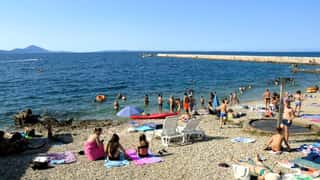
The cruise terminal at Veliki Molo drops you exactly 250 meters from the heart of the historic center, making this one of the most accessible 'pier-to-palace' walks in the Mediterranean. Located on the western coast of the Istrian Peninsula in northern Croatia, Rovinj serves as a premier ocean cruise port for small and mid-sized luxury vessels navigating the crystal-clear waters of the Adriatic Sea. You are positioned roughly 35 km (22 miles) north of Pula, famous for its Roman Arena, and 35 km south of the seaside town of Poreč, home to the UNESCO-listed Euphrasian Basilica—both reachable in roughly 45 minutes by road. It is worth knowing that while the port is geographically convenient, the 'Rovinj Cobblestone' is a unique operational hazard; centuries of footsteps have polished the local limestone to a glass-like finish that is notoriously slippery even in dry weather. Visitors often report that the steep 15-minute climb to the Church of St. Euphemia is the highlight of the day, but only for those with sturdy footwear and stable mobility. This destination rewards the early riser who explores the backstreets before the midday heat and the day-tripper crowds from Pula arrive. Conversely, it punishes those who wait until the afternoon to climb the hill or who attempt the limestone stairs in leather-soled shoes. You are visiting a place that was an island until 1763, and that sense of separation from the mainland still defines the intimate, tightly packed atmosphere of the town today.
Rovinj — Port Overview
History
Rovinj was originally an island settlement founded by Illyrian tribes before becoming a Roman town known as Arupinium. Its definitive character, however, was forged during more than 500 years of Venetian rule between 1283 and 1797. This era transformed the city into a strategic bastion for the Republic of Venice, serving as a vital naval base and trade link in the Adriatic Sea. You can still see the Lion of St. Mark—the symbol of Venice—carved into the Balbi's Arch, which was built in 1679 to replace the old town gate. The city's most significant architectural shift occurred in 1763 when the narrow channel separating the island from the mainland was filled, officially connecting the historic center to the Istrian coast. During the 18th century, the city grew significantly in wealth and population, leading to the massive reconstruction of the Church of St. Euphemia in 1736. The 60-meter bell tower was modeled directly after St. Mark's Campanile in Venice, a deliberate architectural nod to the city’s imperial masters. Following the fall of Venice, Rovinj became part of the Austro-Hungarian Empire, which introduced the tobacco industry and established the city as a center for marine biology and tourism. When you walk through the Old Town today, you are essentially moving through a 17th-century Venetian fortress that has been continuously inhabited for four centuries, preserved by its island-turned-peninsula geography.
The Verdict
The clients who get the most from Rovinj are those who arrive with a plan and the flexibility to adapt to the local pace. This guide has been fact-checked by J. Richard and the Waterways Cruise editorial team. No two travelers want the same day ashore.
Things to Do & See in Rovinj
| Attraction | Type | Address | Phone | Hours | Website | Admission |
|---|---|---|---|---|---|---|
| Rovinj Heritage Museum | Museum | Trg Maršala Tita 4, 52210, Rovinj | +385 52 816 720 | Tue-Sun 10:00 AM – 6:00 PM | muzej-rovinj.hr | EUR €5.00 |
| Cathedral of St. Euphemia | Historical Site | Garibaldi ul. 18, 52210, Rovinj | +385 52 815 615 | Daily 9:00 AM – 6:00 PM | zupajupic-rovinj.com | Free |
| Balbi's Arch | Landmark | Trg Maršala Tita, 52210, Rovinj | Open 24 hours | Free | ||
| Golden Cape (Zlatni Rt) Park Forest | Natural Feature | Zlatni Rt, 52210, Rovinj | Open 24 hours | natura-histrica.hr | Free | |
| Batana Eco-Museum | Cultural Site | Obala Pina Budicina 2, 52210, Rovinj | +385 52 812 593 | Daily 10:00 AM – 1:00 PM / 7:00 PM – 10:00 PM (Seasonal) | batana.org | EUR €5.00 |
Rovinj Heritage Museum · Museum
EUR €5.00Housed in a 17th-century Baroque palace that once served as the residence of the Venetian praetors, this museum is the essential starting point for understanding Rovinj. While most visitors stay outside to photograph the clock tower, it is a good idea to step inside to see the architectural detail of the palace itself. The museum manages to bridge the gap between archaeological finds from the Roman era and contemporary Croatian art. You will find a wealth of information on the city's maritime history, including the development of the tobacco factory that once drove the local economy. The ground floor often hosts rotating exhibitions of local Istrian artists, providing a more curated experience than the galleries on Grisia Street. You will find that travelers appreciate the cool, quiet atmosphere here during the peak of summer disembarkation. It provides the historical context that makes the subsequent walk through the Old Town much more meaningful.
Trg Maršala Tita 4, 52210, Rovinj ·+385 52 816 720 ·Tue-Sun 10:00 AM – 6:00 PM ·www.muzej-rovinj.hr
Cathedral of St. Euphemia · Historical Site
FreeDominating the skyline of Rovinj, this Baroque masterpiece was built between 1725 and 1736 on the site of an earlier early Christian church. The 60-meter bell tower, a direct imitation of St. Mark's in Venice, is topped by a bronze statue of Saint Euphemia that acts as a weather vane. Inside, the church is surprisingly airy and light compared to many Italian Baroque structures. The legendary sarcophagus of the saint is the focal point of local pilgrimage; according to local lore, it arrived mysteriously on the shore in the year 800. It is a good idea to spend time on the surrounding plateau even if you don't enter the church. The views across the Rovinj archipelago and the Adriatic Sea are the finest in Istria. It is worth noting that the church maintains a strict dress code: shoulders and knees must be covered. This is the spiritual heart of the city and the point from which all of Rovinj's medieval streets radiate downward like a stone web.
Garibaldi ul. 18, 52210, Rovinj ·+385 52 815 615 ·Daily 9:00 AM – 6:00 PM ·zupajupic-rovinj.com
Balbi's Arch · Landmark
FreeErected in 1679 on the site of the former main town gate, Balbi's Arch serves as the symbolic threshold between the modern waterfront and the ancient Venetian core. Named after Daniel Balbi, the Venetian governor at the time, the arch is a textbook example of Baroque civic architecture. It features the winged Lion of St. Mark holding an open book, which traditionally indicated that Venice was at peace when the structure was built. The walking distance from the cruise pier is 220 meters, making it the most logical first stop for any independent traveler. The arch is more than just a gate; it is a monument to the city's endurance. Note the dualistic carvings of the 'Turk' and the 'Venetian' heads, which reflected the complex geopolitical tensions of the 17th-century Adriatic. Most visitors walk through it in seconds, but visitors should stop to look at the coat of arms of the Balbi family on the upper frieze. It is the architectural punctuation mark that begins your journey into Rovinj's medieval past.
Trg Maršala Tita, 52210, Rovinj ·Open 24 hours
Golden Cape (Zlatni Rt) Park Forest · Natural Feature
FreeOriginally conceived in the 1890s as part of a grand resort project that was never completed, the Golden Cape is now one of the most important park forests in the northern Adriatic. It covers over 50 hectares and features a stunning mix of native holm oaks and exotic species like cypress, Aleppo pines, and Douglas firs. You will find that the seaside promenade is entirely flat, making it the best option for those who want to experience the Istrian coast without climbing the Old Town hills. The air here is noticeably cooler and scented with pine resin and sea salt. For active travelers, this is the best place in Rovinj to rent a bike or take a swim in the clear waters of Lone Bay. Travelers often report that the contrast between the stone-heavy town and the lush green forest was the highlight of their trip. It is a place of genuine tranquility that feels worlds away from the cruise ship crowds.
Zlatni Rt, 52210, Rovinj ·Open 24 hours ·www.natura-histrica.hr
Batana Eco-Museum · Cultural Site
EUR €5.00This museum is more than an exhibition; it is the soul of Rovinj's fishing community. Dedicated to the 'batana'—a traditional flat-bottomed wooden boat used by local fishermen for centuries—the museum has been entered into the UNESCO Register of Good Safeguarding Practices. You will see how these boats were constructed without blueprints, passed down through oral tradition. The museum uses multimedia brilliantly to show the 'bitinada'—a unique form of polyphonic singing where the singers imitate the sounds of instruments to accompany the lead vocalist. The visitor experience here and found it are one of the most high-impact 'short stops' in the city. It connects the beautiful harbor you see from your ship to the real, working lives of the people who built it. If you visit in the evening, you may see the batana boats being rowed out of the harbor with lanterns, a reenactment of traditional night fishing. It is a compact, passionate testament to a way of life that is slowly disappearing.
Obala Pina Budicina 2, 52210, Rovinj ·+385 52 812 593 ·Daily 10:00 AM – 1:00 PM / 7:00 PM – 10:00 PM (Seasonal) ·www.batana.org
Eating & Drinking in Rovinj
Istria is a culinary crossroads where Venetian seafood traditions meet the rustic flavors of the Balkan interior. The regional identity is defined by the white and black truffles found in the Motovun forest and the world-class extra virgin olive oil that consistently wins international awards. You must try 'Fuži' or 'Pljukanci'—hand-rolled pastas that are the heart of every Istrian menu. Unlike coastal Dalmatia, which is dominated by grilled fish, Rovinj's cuisine features 'Pršut' (dry-cured ham) that is air-dried by the bura wind and 'Boškarin' (autochthonous Istrian ox) beef. To drink, ask for 'Malvazija Istarska', a crisp, floral white wine that is the perfect companion to the local seafood. For reds, the 'Teran' is the local heavy-hitter, known for its deep ruby color and high tannins. Keep in mind that for the most authentic experience, skip any restaurant with a laminated picture menu on the harbor. Instead, look for a 'Konoba'—a traditional tavern—tucked into the side streets where locals actually eat. One honest note: tourists often expect Italian-style pizza to be the local staple; while it is widely available, it does not reflect the complex, multi-layered heritage of the Istrian kitchen.
| Place | Address | Phone | Hours | Website | Price range |
|---|---|---|---|---|---|
| Monte | Montalbano 75, 52210, Rovinj | +385 52 818 120 | Daily 6:30 PM – 10:00 PM (Check for lunch availability in high season) | monte.hr | €120–€180 (~$138–$207 USD) |
| Konoba Tipico | Grisia ul. 45, 52210, Rovinj | +385 52 815 167 | Daily 11:30 AM – 11:00 PM | tipico.hr | €30–€50 (~$35–$58 USD) |
| Mediterraneo Bar | Ulica Svetoga Križa 24, 52210, Rovinj | Daily 10:00 AM – 12:00 AM | €8–€15 (~$9–$17 USD) |
Monte
€120–€180 (~$138–$207 USD)Tucked away at the top of the Old Town hill near the cathedral, Monte is a temple to Istrian ingredients reimagined with modern techniques. You will dine in a refined, minimalist space that feels far removed from the bustling harbor. The 'Blue' or 'Red' tasting menus are recommended to fully experience the chef's vision. The service is impeccably timed. The main downside is that reservations are mandatory weeks in advance, and the meal is a 3-hour commitment, which may not fit short port calls.
Montalbano 75, 52210, Rovinj ·+385 52 818 120 ·Daily 6:30 PM – 10:00 PM (Check for lunch availability in high season)
Konoba Tipico
€30–€50 (~$35–$58 USD)Located on the famous Grisia street, this konoba (tavern) is the perfect mid-climb stop. The focus here is on the 'Green Istria'—truffles, wild asparagus, and game—rather than just seafood. Order the fuži with truffles; it is the defining dish of the region. The atmosphere is warm and rustic. Honest limitation: the seating is quite tight, and it can get loud when full.
Grisia ul. 45, 52210, Rovinj ·+385 52 815 167 ·Daily 11:30 AM – 11:00 PM
Mediterraneo Bar
€8–€15 (~$9–$17 USD)This is the ultimate 'hidden' spot in Rovinj. You enter through a tiny door in a stone wall and find yourself on the rocks directly above the Adriatic Sea. There is no better place to sip a local Teranino while the waves crash feet away. The walk from the pier takes about 10 minutes—it’s the perfect end to an afternoon exploration. Be aware: there is no indoor seating.
Ulica Svetoga Križa 24, 52210, Rovinj ·Daily 10:00 AM – 12:00 AM
Getting There & Around
Once you disembark, you are in a strictly pedestrian-only zone. Walking is the only way to explore the Old Town. For those looking to see more of the coastline, it is best to rent a bicycle near the Lone Hotel for roughly €15.00 (~$17.50 USD) for 4 hours. The infrastructure along the Golden Cape (Zlatni Rt) is excellent for cycling with flat, shaded paths. Taxis and rideshare apps like Bolt operate outside the historic core, but they are of limited use if your goal is to see the main sights. Keep in mind that for a unique perspective of the peninsula from the Adriatic Sea, the local 'taxi boats' running to the islands of Sveti Andrija or Sveta Katarina are a better investment than a land-based taxi. These depart every hour from the Mali Mol (Small Pier) and cost roughly €10.00 (~$11.50 USD) for a round trip. Navigation tip: The street signs in Rovinj are bilingual (Croatian and Italian). If you get lost in the labyrinth, always walk 'downhill' and you will eventually hit the harbor ring road.
Itineraries & Sample Walks
4-Hour Shore Excursion in Rovinj
Balbi's Arch and Trg Maršala Tita
9:00 AM (30 min)
Start at the Venetian arch. Look for the two distinct heads on either side—one a Turk, one a Venetian. This is the official entrance to the historic core.
- 3-minute walk from the cruise pier.
- Entry: Free (Free)
- The town clock here features the Lion of St. Mark with an open book, symbolizing peace during its construction.
Grisia Street and Art Galleries
9:35 AM (60 min)
The most famous street in Rovinj. It’s an uphill climb lined with local artists. Take your time to step into the smaller courtyards.
- Walk through Balbi's Arch and turn left.
- Entry: Free (Free)
- Walk on the rougher side stones, not the polished center stones, to avoid slipping.
Cathedral of St. Euphemia
10:45 AM (45 min)
The summit of the town. Inside, the sarcophagus of St. Euphemia is the centerpiece. The views from the plateau are unparalleled.
- Continue to the top of Grisia street.
- Entry: Free (Free)
- The bronze statue of the saint on top of the bell tower rotates with the wind—locals use it as a weather vane.
Lunch Recommendation
Konoba Tipico
Unlike the seafood restaurants on the pier that rely on frozen tourist platters, Tipico uses local Istrian pasta (fuži) and seasonal truffles sourced from the nearby Motovun forest.
Order: Istrian Fuži with truffles, Slow-cooked beef in Malvazija wine sauce
Grisia ul. 45, 52210, Rovinj
Cost: €35.00 (~$40.00 USD)
8-Hour Full Day Experience in Rovinj
Old Town Exploration (Route as 4hr)
9:00 AM (150 min)
Follow the ascent to St. Euphemia and the descent via the backstreets of Svetog Križa for ocean views.
- 3-minute walk from pier
- Entry: Free (Free)
- Stop at the 'Casale' viewpoint for the most iconic photo of the harbor.
Batana Eco-Museum
11:45 AM (45 min)
Small but vital museum dedicated to the local fishing heritage and the unique flat-bottomed boats.
- 10-minute walk back to harbor
- Entry: €5.00 ($5.75)
- The museum is UNESCO-recognized for safeguarding intangible heritage.
Getting back to the ship
For an all-aboard time of 5:00 PM, you must leave the Church of St. Euphemia no later than 4:15 PM. The walk downhill is faster but requires extreme care due to the slippery stones. If you are at the Golden Cape (Zlatni Rt), allow a full 45 minutes to walk back to the Veliki Molo pier. Taxis are not reliable for 'last minute' returns as they cannot enter the pedestrian zone where you likely are. If you are running late, contact the port agent at +385 52 814 166. Be aware that the ship will not hold for independent travelers missing the final tender. A taxi to the next major port (Pula or Trieste) can cost over €200 (~$230 USD), and missing the ship here is a costly mistake given the limited transit alternatives.
Weather & Best Time to Visit Rovinj
Weather & What to Pack
Cruise season: April through October
18°C–28°C (64°F–82°F). Low rainfall in mid-summer; higher humidity in August.
What to wear: Light, breathable fabrics are essential. However, the most critical item is high-traction footwear (sneakers with rubber grip). Avoid flip-flops or smooth-soled sandals. Bring a hat and high-SPF sunscreen as the stone reflects UV rays intensely. A light scarf is required for entry into the Cathedral of St. Euphemia.
Weather risks: Sudden afternoon thunderstorms (nevera) can make the cobblestones dangerously slick in minutes. Heat advisories in July and August may limit the viability of the hilltop climb.
Spring (May) offers the clearest air and best visibility of the surrounding archipelago.
| Season | Conditions | Hazards | Affected areas | Visitor advice |
|---|---|---|---|---|
| Summer (June–August) | Hot and dry with temperatures frequently reaching 30°C (86°F) and high humidity reflecting off the stone. | Extreme heat exhaustion risk in the Old Town where stone buildings radiate heat. The limestone streets on Grisia and Montalbano become incredibly slick from sun tan lotion spills and dust. | Grisia Street, Church of St. Euphemia plateau, and the harbor promenade. | Wear shoes with high-traction rubber soles—no flip-flops for climbing the hill. Carry water as public fountains are scarce in the Old Town's upper reaches. |
| Shoulder Season (May, September–October) | Mild, pleasant weather with temperatures around 20°C–24°C (68°F–75°F). Occasional sudden rain showers. | Wet limestone in the Old Town is as slippery as ice. Even a light drizzle makes the descent from the cathedral dangerous for those with mobility issues. | All stone-paved streets in the historic core. | If it rains, stay on the lower harbor level or enter a museum. Do not attempt the steep descent from the cathedral until the stones are dry. |
Practical Information
Cultural etiquette
Locals in Rovinj are proud of their dual Croatian and Italian heritage. A simple 'Dobar dan' (Good day) or 'Buongiorno' will earn you significant goodwill. When greeting, a firm handshake with eye contact is the norm. In dining, meals are meant to be unhurried; do not expect the bill to be brought to your table automatically, as it is considered rude to rush a guest. Signal that you are finished by placing your cutlery parallel on the right side of the plate. Photography is generally welcomed, but avoid taking photos inside the Cathedral during mass or of local fishermen at work without a nod of permission. Queueing in Croatia is generally respectful, though in busy market areas, it can feel a bit more fluid—maintain your spot with confidence. Tipping is not as aggressive as in the US; 10% is standard for good service in restaurants, and rounding up to the nearest Euro is sufficient for taxis. One common mistake cruise passengers make is wearing swimwear or very revealing clothing into the historic Old Town or churches. Even in the heat, 'city dress' is expected once you leave the beach areas.
Mistakes to Avoid
| Mistake |
|---|
Wearing smooth-soled shoes or flip-flops for the Old Town climb. |
Eating lunch at the restaurants directly facing the Veliki Molo pier. |
Waiting until the afternoon to climb the bell tower. |
Missing the Batana Eco-Museum because of its small size. |
Practical tips
Croatia uses the Euro (EUR). While credit cards are widely accepted in restaurants and hotels, the Valdibora market and many small art galleries are cash-only. A 10% tip is standard for restaurant service. To earn goodwill, try 'Hvala' (Thank you) or 'Molim' (Please). Be wary of the 'Slippery Stone' scam where uncertified 'guides' offer to help elderly passengers up the hill for a high fee—politely decline. The dress code for the Cathedral is strict: cover your shoulders. The best time to visit the Cathedral of St. Euphemia is 9:00 AM, before the first large tender groups reach the summit. If you wait until 11:30 AM, you will be fighting for space on the plateau. Lastly, always keep a small bottle of water with you; the climb is short but intense in the midday sun.
Cruise Lines Visiting Rovinj
Port of Call











Why Book With Waterways Cruise?
Four decades of expertise, one dedicated advisor, and every detail handled, from your front door to the gangway and back.
Personal Service — Your Own Cruise Concierge
Tailor-Made — 100% Custom-Built
Expertise — 40+ Years in Travel
Price Watch — Book With Total Confidence
Signature Sailings
All Cruise Lines at Rovinj (A–Z)
Nearby Ports



FAQ — Rovinj
Are there ferries to the nearby islands for a quick swim?
Yes, frequent shuttle boats run to the islands of Sveti Andrija (Red Island) and Sveta Katarina. They depart from the Mali Mol (Small Pier) every hour. The journey to Sveta Katarina takes only 5 minutes and costs approximately €10.00 (~$11.50 USD) round trip. It is the fastest way for a cruise passenger to reach clean, rocky beaches and escape the town center's stone-heavy heat.
Where is the nearest pharmacy to the cruise tender pier?
The most convenient pharmacy is Ljekarna Jadreško, located at Ulica Pietra Coppo 6. This is a flat, 5-minute walk from the Veliki Molo tender drop-off. Most staff speak excellent English, and they can often assist with basic over-the-counter needs for sun relief or minor injuries sustained on the cobblestones. It is open from 7:30 AM most days, making it accessible even for early disembarkations.
Are shops and galleries in Rovinj open on Sundays?
During the cruise season (May-September), almost all shops, art galleries, and restaurants in the Old Town remain open on Sundays to accommodate visitors. However, the Valdibora market may have fewer vendors after 12:00 PM, and some local services outside the tourist core may be closed. The Cathedral of St. Euphemia remains open, though sightseeing is restricted during morning mass times (usually 9:00 AM and 11:00 AM).
Is the tap water safe to drink for filling my reusable bottle?
Yes, tap water in Rovinj and throughout Croatia is perfectly safe to drink and of high quality. You will find a public stone fountain in the main square (Trg Maršala Tita) where you can refill your bottle for free. This is highly recommended before starting the steep climb to the cathedral, as there are very few shops at the summit. Drinking the local water is a great way to stay hydrated without generating plastic waste.
Does Rovinj have luggage storage for passengers with late flights?
While the port terminal itself does not offer storage, the main Rovinj Bus Station (Autobusni kolodvor) has a reliable left-luggage service. It is a 10-minute flat walk from the tender pier. The cost is roughly €1.50 (~$1.75 USD) per hour per bag. This is the best option if you are disembarking in Rovinj and want to explore the town before heading to Pula Airport.
How much should I tip a private boat skipper for a tour?
If you rent a private boat for a trip to the Lim Fjord, a tip of 10% of the total charter price is considered generous and appropriate for good service. If the skipper provides an exceptional narrated tour or helps with mobility, €20–€30 (~$23–$35 USD) for a half-day trip is a standard mark of appreciation. Always tip in cash (EUR), as card machines for private charters rarely include a tip function.
Is there free Wi-Fi available for navigating the Old Town?
The city offers a 'Rovinj Free Wi-Fi' network that covers the harbor and the main square. However, the signal rarely reaches into the narrow, stone-walled alleys of the Old Town. You should download an offline map of Rovinj via Google Maps before you leave the ship. This ensures you can find your way through the labyrinth without relying on a patchy signal that often fails when the port is full of cruise passengers.
Which local olive oil brands are the most authentic to buy?
Look for the 'Istarska Bjelica' or 'Buža' varieties. Top-tier producers with shops in Rovinj include Ipša, Chiavalon, and Mate. A 250ml bottle of award-winning Istrian oil typically costs between €15.00 and €25.00 (~$17.50–$29.00 USD). Authentic oils will have a harvest date and a 'Protected Designation of Origin' (PDO) seal on the bottle. Avoid unlabeled oils sold in plastic bottles at the roadside for the best quality.
What is the emergency number for the Tourist Police in Rovinj?
Croatia does not have a separate 'Tourist Police' force, but the general emergency number is 112. For non-emergencies specifically involving the police, you can dial 192. Most operators speak English and are well-versed in assisting cruise passengers with lost documents or minor thefts. The local police station is located at Ulica Domenica Pergolisa 3, about 15 minutes walking from the pier.
What is the typical cost for a 4-hour bicycle rental?
A standard city bike or mountain bike costs approximately €15.00 (~$17.50 USD) for 4 hours. E-bikes are increasingly available and cost roughly €30.00–€40.00 (~$35.00–$46.00 USD) for the same period. This is an excellent investment for visiting the Zlatni Rt park, as the flat paths allow you to cover much more ground than walking. Several rental kiosks are located along the Obala Vladimira Nazora promenade.
Fact-checked and co-written by J. Richard, Founder, Waterways Cruise, with the Waterways Cruise Content Team.
Published May 19, 2026 · Last updated November 2, 2026
This guide is researched and reviewed by our editorial team, but prices, hours, and availability change often. Confirm current details directly with venues, excursion operators, and your cruise line before you travel.