Mormugao Cruise Port
The cruise terminal at Mormugao sits 35 km (22 miles) from the historic heritage district of Old Goa, a journey that takes 60 to 75 minutes by taxi and costs approximately ₹2,800 (~$31.00 USD) for a round-trip hire. Located on the Konkan coast in the state of Goa, western India, this industrial port serves as the primary gateway for ocean cruise itineraries exploring the Indian subcontinent. You should realistically expect a day defined by transit logistics; the distance between the Arabian Sea docks and the primary cultural sites means you will spend at least two hours of your port call in a vehicle. Independent travel often requires firm negotiation skills at the terminal gate, according to frequent visitor reports. The port is roughly 30 km (18 miles) south of the capital, Panjim, and 110 km (68 miles) north of the Karnataka state border. Nearby, the city of Vasco da Gama is only 5 km (3 miles) away, though it offers little for the cultural traveler compared to the UNESCO sites of Old Goa or the Latin Quarter of Fontainhas. This destination rewards the patient traveler who prioritizes architectural history over beach relaxation; it punishes those who underestimate the unpredictable traffic congestion on the Zuari Bridge.
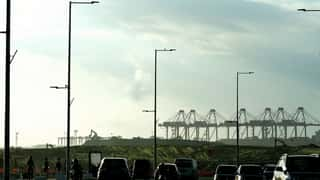
Mormugao Port Cruise Terminal


Mormugao, India Port
Goa UN/LOCODE INMRM Port of call
Mormugao Cruise Port Location
| Port Details | |
|---|---|
| Country | India |
| Region | Goa |
| UN/LOCODE | INMRM |
| Contact | |
| Address | Mainland Headland, Mormugao, Goa 403803, India |
| Port phone | +91 832 252 1100 |
| Website | mptgoa.gov.in |
| Geography | |
| Coordinates | 15.38914, 73.81491 |
| Accessibility | |
| Accessible | Limited |
The cruise terminal at Mormugao sits 35 km (22 miles) from the historic heritage district of Old Goa, a journey that takes 60 to 75 minutes by taxi and costs approximately ₹2,800 (~$31.00 USD) for a round-trip hire. Located on the Konkan coast in the state of Goa, western India, this industrial port serves as the primary gateway for ocean cruise itineraries exploring the Indian subcontinent. You should realistically expect a day defined by transit logistics; the distance between the Arabian Sea docks and the primary cultural sites means you will spend at least two hours of your port call in a vehicle. Independent travel often requires firm negotiation skills at the terminal gate, according to frequent visitor reports. The port is roughly 30 km (18 miles) south of the capital, Panjim, and 110 km (68 miles) north of the Karnataka state border. Nearby, the city of Vasco da Gama is only 5 km (3 miles) away, though it offers little for the cultural traveler compared to the UNESCO sites of Old Goa or the Latin Quarter of Fontainhas. This destination rewards the patient traveler who prioritizes architectural history over beach relaxation; it punishes those who underestimate the unpredictable traffic congestion on the Zuari Bridge.
Mormugao — Port Overview
History
Mormugao rose to prominence following the Portuguese conquest of Goa in 1510, led by Afonso de Albuquerque. While the 'Golden Goa' of the 16th century was centered further inland at Velha Goa (Old Goa), the natural deep-water harbor of Mormugao became a vital strategic asset for the Portuguese Estado da Índia. By the late 17th century, recurring epidemics and threats from the Maratha Empire forced the Portuguese to consider Mormugao as a secondary capital, leading to the construction of the Mormugao Fort in 1624. A pivotal shift occurred in 1843 when the capital was officially moved to Panjim (Nova Goa), yet the port remained the economic lifeblood for trade across the Arabian Sea. The modern infrastructure you see today was largely shaped by the Anglo-Portuguese Treaty of 1878, which commissioned the West of India Portuguese Guaranteed Railway. This rail link connected the port to the Indian hinterland, transforming it into a major hub for manganese and iron ore export. Following the 1961 Annexation of Goa by India (Operation Vijay), the port was integrated into the Indian Republic. Today, the juxtaposition of massive bulk carriers and luxury cruise ships reflects a century of industrial evolution that successfully preserved the distinct Luso-Indian cultural identity found in the nearby towns.
The Verdict
At Mormugao, the people who do best are the ones who arrive with a plan and the flexibility to adapt it to the local pace. This guide has been fact-checked by J. Richard and the Waterways Cruise editorial team. Excursions that guarantee a return to the ship can be tailored to your mobility, interests, and pace, so missing departure is never a concern. No two travelers want the same day ashore. Goa is a place of 'Susegad'—relaxation—but your logistics must be precise.
Things to Do & See in Mormugao
| Attraction | Type | Address | Phone | Hours | Website | Admission |
|---|---|---|---|---|---|---|
| Panaji Municipal Market | Tourist Attraction | Dayanand Bandodkar Marg, Panaji 403001 | +91 832 222 4132 | 7:30 AM – 8:00 PM Daily | Not available | Free |
| Se Cathedral | Historical Site | Velha Goa, Goa 403402 | +91 832 228 4710 | 7:30 AM – 6:30 PM Daily | Not available | Free |
| Basilica of Bom Jesus | Historical Site | Old Goa Road, Velha Goa 403402 | +91 832 228 5790 | 9:00 AM – 6:30 PM (Sundays open at 10:30 AM) | bomjesus.org | Free |
| Fontainhas Heritage District | Cultural Site | Fontainhas, Panaji, Goa 403001 | Public area, best during daylight hours | Not available | Free | |
| Fort Aguada | Landmark | Fort Aguada Road, Candolim, Goa 403515 | 9:30 AM – 6:00 PM Daily | Not available | USD ₹300 |
Panaji Municipal Market · Tourist Attraction
FreeThe Panaji Municipal Market is the sensory heart of the capital. Unlike the tourist-facing stalls in Old Goa, this is where the city actually eats. You will find stacks of local Alphonso mangoes (in season), mounds of fresh chilies, and the famous Goan chorizo sausages hanging in coils. Walking the entire complex takes approximately 45 minutes. Look for the 'Cashew' corner near the entrance; Goa is famous for them, but the market offers far better prices than the airport or the port terminal. The vendors are generally polite, but you will find that a firm 'no thank you' is necessary for the persistent spice hawkers. This is the best place to witness the Luso-Indian blend in daily life, as local grandmothers in Western floral dresses haggle alongside women in traditional silk saris. It delivers an authentic, un-sanitized glimpse of Goan commerce.
Dayanand Bandodkar Marg, Panaji 403001 ·+91 832 222 4132 ·7:30 AM – 8:00 PM Daily ·Not available
Se Cathedral · Historical Site
FreeAs the largest church in Asia, the Se Cathedral is a monument to Portuguese ambition. Completed in 1619, its Tuscan exterior is imposing, though it famously lost one of its twin towers to a lightning strike in 1776, giving it the asymmetrical look it has today. Inside, the 15 altars are masterpieces of gilded woodcarving. You will notice that the main altar, dedicated to St. Catherine of Alexandria, is best viewed from the center aisle to appreciate the massive scale of the Corinthian pillars. This site provides a quieter, more contemplative experience than the Basilica of Bom Jesus across the road. The cathedral was built to commemorate the victory of the Portuguese over a Muslim army, and the architecture reflects that triumphalist era. It delivers a profound sense of scale that most travelers do not expect to find in rural India.
Velha Goa, Goa 403402 ·+91 832 228 4710 ·7:30 AM – 6:30 PM Daily ·Not available
Basilica of Bom Jesus · Historical Site
FreeThis is the most famous church in Goa, housing the mortal remains of St. Francis Xavier. Unlike the whitewashed cathedrals nearby, the Basilica’s exposed red laterite stone gives it a raw, ancient feel. The interior is a riot of Baroque ornament, centered on a massive gilded altarpiece. The highlight is the tomb of the saint, a gift from the Grand Duke of Tuscany, which is a masterpiece of silver and marble. The consistent feedback from visitors is that the spiritual energy of the space is palpable, regardless of one's faith. Do not rush the walk along the side aisles; the floor is paved with the tombstones of Portuguese nobility. It is a dense, high-impact site that delivers the essential 'Old Goa' experience in a single stop.
Old Goa Road, Velha Goa 403402 ·+91 832 228 5790 ·9:00 AM – 6:30 PM (Sundays open at 10:30 AM) ·www.bomjesus.org
Fontainhas Heritage District · Cultural Site
FreeFontainhas is the soul of Luso-Indian Goa. Named after the 'Fountain of Phoenix' that once supplied the area's water, this district was established in the late 18th century. The architecture is strictly regulated: houses must be repainted every year after the monsoon in vibrant shades of yellow, blue, or maroon. Walking here feels like stepping into a Mediterranean village, but with tropical plants spilling over the walls. The primary loop is about 1.2 km (0.75 miles). Make sure to look at the street signs—many are still in Portuguese. This neighborhood is the antidote to the industrial chaos of the Mormugao terminal. It delivers an intimate, quiet, and deeply aesthetic experience that is often considered a highlight.
Fontainhas, Panaji, Goa 403001 ·Public area, best during daylight hours ·Not available
Fort Aguada · Landmark
USD ₹300Built in 1612 to guard against Dutch and Maratha invasions, Fort Aguada was the most prized Portuguese fortress in India. Its name comes from 'Agua' (water), as a freshwater spring within the fort provided water to ships that stopped by. The 4-story lighthouse is the oldest of its kind in Asia. While the views of the Arabian Sea are spectacular, the transit time from Mormugao (nearly 3 hours round trip) may make this a difficult choice for a standard port call. If you go, you are choosing military history and ocean views over the heritage of Old Goa. The fort provides a sense of the immense scale of Portuguese maritime defense. It delivers dramatic coastal scenery, but at a high cost of transit time.
Fort Aguada Road, Candolim, Goa 403515 ·9:30 AM – 6:00 PM Daily ·Not available
Eating & Drinking in Mormugao
Goan cuisine is a unique collision of Portuguese techniques and tropical Indian ingredients. The defining element is the use of vinegar (introduced by the Portuguese) alongside coconut and tamarind. You must try 'Xacuti,' a complex curry made with 21 roasted spices and grated coconut, which is significantly richer than standard Indian curries. To drink, 'Cashew Feni' is the regional spirit; it has a pungent, fruity aroma and is technically a GI-tagged product unique to Goa. For a non-alcoholic specialty, ask for 'Sol Kadi,' a refreshing pink drink made from kokum fruit and coconut milk that serves as a digestive. Street food is best found near the Miramar Beach stalls, specifically 'Gadbad' ice cream. An honest note: most tourists expect 'Vindaloo' to be the hottest curry on the menu, but in Goa, it is traditionally more about the vinegar-garlic tang than pure chili heat. Locals eat their main meal at midday, often centered on a piece of fried fish and a bowl of unpolished red rice.
| Place | Address | Phone | Hours | Website | Price range |
|---|---|---|---|---|---|
| Mum's Kitchen | 854, Martins Building, Dayanand Bandodkar Marg, Panaji 403001 | +91 98221 75556 | 11:00 AM – 11:00 PM Daily | mumskitchengoa.com | ₹1,500–₹2,000 (~$16.50–$22.00 USD) |
| Viva Panjim | H. No. 178, 31st January Road, Fontainhas, Panaji 403001 | +91 832 242 2405 | 11:00 AM – 3:30 PM, 7:00 PM – 11:00 PM | ₹800–₹1,200 (~$9.00–$13.50 USD) | |
| Joseph Bar | Gomes Pereira Road, Altinho, Panaji 403001 | +91 98231 65715 | 11:00 AM – 11:00 PM (Happy hour 4:00 PM – 7:00 PM) | ₹400–₹700 (~$4.50–$7.50 USD) |
Mum's Kitchen
₹1,500–₹2,000 (~$16.50–$22.00 USD)Order the Kingfish Peri-Peri; it is the definitive Goan seafood experience. This restaurant avoids the 'tourist-heat' trap, serving spice levels that are authentic to the region. The limitation is the service speed—it is slow because everything is made to order, so allow at least 90 minutes for lunch.
854, Martins Building, Dayanand Bandodkar Marg, Panaji 403001 ·+91 98221 75556 ·11:00 AM – 11:00 PM Daily
Viva Panjim
₹800–₹1,200 (~$9.00–$13.50 USD)Located in a 150-year-old family home, this is the most atmospheric lunch spot in the Latin Quarter. The tables are cramped and it can get loud, but the Cafreal is legendary. It is best to sit in the small outdoor alley if the weather permits.
H. No. 178, 31st January Road, Fontainhas, Panaji 403001 ·+91 832 242 2405 ·11:00 AM – 3:30 PM, 7:00 PM – 11:00 PM
Joseph Bar
₹400–₹700 (~$4.50–$7.50 USD)This is where to try Feni, the potent local spirit made from cashews. Most guides tell you to buy it at the port—don't. Try it here, mixed expertly by Gundu, the legendary bartender. It's standing-room only on the sidewalk most evenings, providing the best local 'vibe' in the city.
Gomes Pereira Road, Altinho, Panaji 403001 ·+91 98231 65715 ·11:00 AM – 11:00 PM (Happy hour 4:00 PM – 7:00 PM)
Getting There & Around
Once you leave the terminal, the primary way to move between heritage sites is via private taxi or an organized tour. Walking between neighborhoods like Panjim and Old Goa is impossible due to the 10 km (6 mile) distance and lack of continuous sidewalks. For the city of Panjim, the local bus network is extensive and cheap—roughly ₹15–₹30 (~$0.20–$0.35 USD) per trip—but can be confusing for first-time visitors as routes are not clearly marked in English. The 'Goa Miles' app is recommended, the state's official rideshare service, which offers fixed pricing that is often 30% lower than street taxis, though wait times can be 15+ minutes. Uber and Ola do not currently operate in Goa due to local taxi union restrictions. If you are comfortable on two wheels, scooter rentals are available in Vasco for about ₹500 (~$5.50 USD) per day, but the chaotic traffic on the NH66 highway makes this a high-risk option for cruise passengers. A city-specific tip: if you take a local bus from Panjim to Old Goa, look for buses labeled 'Ponda' or 'Old Goa' at the main KTC Bus Stand.
Itineraries & Sample Walks
4-Hour Shore Excursion in Mormugao
Old Goa Heritage Complex
8:30 AM (120 min)
Focus your time on the Basilica of Bom Jesus and the Se Cathedral. The Basilica houses the relics of St. Francis Xavier in a silver casket. Look for the 'Golden Bell' in the Se Cathedral—it is one of the largest in Asia and has a distinct tone that could once be heard across all of Goa.
- Taxi from Mormugao Terminal via NH66 (₹2,500 (~$28.00 USD) round trip)
- Entry: Free (Free)
- Enter the Se Cathedral first to avoid the mass of tour groups that usually start at the Basilica across the road.
Viceroy’s Arch
11:00 AM (30 min)
This arch was rebuilt in 1954 and historically stood as the gateway through which every new Portuguese Governor-General entered the city. It is often missed by tourists who stay in the main church square.
- 5-minute walk from Se Cathedral (Free)
- Entry: Free (Free)
- Walk through the arch toward the Mandovi River to see the old pier ruins, providing a quieter view of the water body.
Lunch Recommendation
Mum's Kitchen
This restaurant is dedicated to preserving traditional Goan-Portuguese family recipes. Unlike the generic hotels, they use authentic spices and methods that locals actually recognize as 'mother's cooking.'
Order: Prawn Curry with Red Rice, Chicken Xacuti
854, Martins Building, Dayanand Bandodkar Marg, Panaji 403001
Cost: ₹1,500 (~$16.50 USD)
8-Hour Full Day Experience in Mormugao
Old Goa (Churches)
8:30 AM (150 min)
Complete the 'Rome of the East' circuit including the Basilica of Bom Jesus, Se Cathedral, and the Church of St. Cajetan.
- Taxi from Mormugao Terminal (₹3,200 (~$35.50 USD) for 8-hour hire)
- Entry: Free (Free)
- The Archaeological Museum behind the Se Cathedral is often empty and houses a massive portrait of Alfonso de Albuquerque.
Fontainhas (Latin Quarter)
11:30 AM (90 min)
Walk the loop from the General Post Office to the Chapel of St. Sebastian. This is the most photogenic area of the state.
- 15-minute taxi from Old Goa (Included in day hire)
- Entry: Free (Free)
- Look for the small shell windows (made of oyster shells) on the traditional houses; they were used before glass was common.
Getting back to the ship
To guarantee your return before all-aboard, you must depart Panjim city centre no later than 2 hours before the scheduled departure time. If your ship sails at 6:00 PM, your 'all-aboard' is 5:30 PM; you should be in a taxi by 3:30 PM. The average taxi fare for the return leg is ₹1,500 (~$16.50 USD) if hired as a one-way trip, though a round-trip hire is more common. The primary risk is the Zuari Bridge; if an accident occurs on this narrow span, traffic stops completely. If you are running late, contact the port agent immediately (number provided on your daily program). The ship will not hold for independent travelers. Missing the ship in Mormugao usually requires a 12-hour drive or a domestic flight to Mumbai or Cochin to rejoin the vessel, a process that is both expensive and logistically grueling.
Weather & Best Time to Visit Mormugao
Weather & What to Pack
Cruise season: October to April
25°C–33°C (77°F–91°F); very high humidity (60–80%); almost no rainfall from December to March.
What to wear: Lightweight, breathable cotton or linen is essential to manage the humidity. A modest dress code is required for churches—shoulders and knees must be covered. Sturdy is recommended, closed-toe walking shoes due to the dusty and uneven streets in Old Goa. A hat and polarized sunglasses will help combat the glare from the whitewashed cathedrals and the Arabian Sea.
Weather risks: Extreme heat advisories are common in March and April. Sudden pre-monsoon thunder showers in October can temporarily flood the low-lying roads of Panjim.
December and January are the most comfortable months, with lower humidity and cooler evening breezes from the sea.
| Season | Conditions | Hazards | Affected areas | Visitor advice |
|---|---|---|---|---|
| Peak Cruise Season (November–February) | Dry, sunny days with low humidity and temperatures ranging from 25°C to 32°C (77°F–90°F). | Intense UV exposure on the open plazas of Old Goa. The laterite stone steps of Fort Aguada can be uneven and dusty, increasing trip risks. | The exposed walk between the Se Cathedral and the Basilica of Bom Jesus; the ramparts of Fort Aguada. | Wear high-SPF sunscreen and a wide-brimmed hat. Dehydration is the primary medical issue observed among cruise guests, even with the sea breeze from the Arabian Sea. |
| Shoulder Season (October and March–April) | High humidity and temperatures climbing toward 35°C (95°F). Occasional pre-monsoon squalls. | Sudden downpours make the smooth basalt floors of the churches extremely slippery. Steam rising from hot asphalt after rain can cause heat exhaustion. | Interior church floors; Panjim city sidewalks; the gangway at the terminal. | Carry an umbrella for both sun and rain. Plan all outdoor walking for before 10:30 AM and use air-conditioned transport for the remainder of the day. |
Practical Information
Cultural etiquette
Goans are generally laid-back, but the influence of Portuguese Catholicism means social norms are slightly more formal than in Northern India. A polite nod or 'Hello' is standard; 'Bom Dia' (Good Day) still earns massive goodwill from older residents in Fontainhas. When dining, splitting dishes is common and accepted. Tipping is expected: 10% in restaurants is the standard for good service. A common cultural misunderstanding cruise passengers make is wearing swimwear or very short shorts into the churches of Old Goa; this is deeply offensive to locals who consider these active places of worship, not just museums. Always cover your shoulders and knees. In markets, queueing is more of a 'suggestion' than a rule; you must be assertive or you will be bypassed. Photography is usually permitted in the church yards but strictly forbidden inside the Basilica during mass. Finally, always ask for permission before photographing local residents in Fontainhas; they are people in their homes, not exhibits.
Mistakes to Avoid
| Mistake |
|---|
Staying at the port-side 'duty free' market for the first hour. |
Underestimating the Zuari Bridge traffic. |
Trying to combine North Goa beaches and Old Goa churches. |
Ordering 'standard' Indian food like Butter Chicken. |
Practical tips
The local currency is the Indian Rupee (INR). Credit cards are accepted at major hotels and boutiques in Panjim, but the markets, local buses, and most taxis are strictly cash-only. Always carry small denominations (₹100 and ₹500 notes). Tipping for a taxi driver who has spent the day with you is typically ₹200–₹300 (~$2.25–$3.50 USD). Five words to earn goodwill: 'Namaste' (Greeting), 'Dhanyavad' (Thank you), 'Pao' (Bread - local staple), 'Susegad' (The Goan concept of relaxed contentment), and 'Kitem' (What?). A specific scam at the Mormugao port involves drivers claiming the Se Cathedral is 'closed for a private event' to divert you to an expensive spice plantation where they get a commission; check with the ship's desk, as the cathedral is rarely closed. Dress code for Old Goa: long trousers or skirts and shirts with sleeves. Best crowd-avoidance strategy: arrive at Old Goa at least 30 minutes before the first large cruise bus, typically by 8:45 AM, and visit the Se Cathedral first.
Cruise Lines Visiting Mormugao
Port of Call




Embarkation / Disembarkation
Why Book With Waterways Cruise?
Four decades of expertise, one dedicated advisor, and every detail handled, from your front door to the gangway and back.
Personal Service — Your Own Cruise Concierge
Tailor-Made — 100% Custom-Built
Expertise — 40+ Years in Travel
Price Watch — Book With Total Confidence
Signature Sailings
All Cruise Lines at Mormugao (A–Z)
Nearby Ports


FAQ — Mormugao
Can I use US Dollars to pay for a taxi at the pier?
While some drivers will accept USD, they will do so at a very poor exchange rate, often costing you 20% more. It is significantly better to withdraw ₹3,000 (~$33.50 USD) from an ATM or use a currency exchange counter to have Indian Rupees. It is worth noting that drivers often claim they have no 'change' for large USD bills, forcing you to overpay. For a guaranteed fixed-price experience, book your return-to-ship excursion.
Is it safe to drink the tea or coffee at local stalls in Panjim?
Yes, provided the water has been boiled. Local 'Chai' is made by boiling milk, water, and tea leaves together, making it safe for visitors. However, you must avoid any iced drinks or fresh fruit juices from street vendors, as the ice is often made from non-potable water. For a safe local experience, a reputable cafe like 'Confeitaria 31 de Janeiro' in Fontainhas can be visited, where a coffee costs roughly ₹120 (~$1.50 USD).
Do I need a visa to disembark at Mormugao?
Yes, all cruise passengers must have a valid Indian visa. Most travelers use the e-Tourist Visa (e-TV). You must have this printed and ready before you reach the immigration hall at the terminal. Some cruise lines handle a 'collective landing permit,' but this varies by nationality and line. Check your specific cruise documents 60 days before sailing.
How much should I negotiate for a 6-hour taxi hire?
The 'official' rate card usually lists 6 hours for approximately ₹2,800 (~$31.00 USD), but drivers will often ask for ₹4,500 (~$50.00 USD). A fair compromise for an air-conditioned car and a driver who speaks English is ₹3,200 (~$35.50 USD). Do not pay the full amount upfront; pay half at the midpoint and the remainder once you are safely back at the port gates.
Are there any good beaches within 15 minutes of the port?
The closest beach is Bogmalo, which is about 15 minutes by taxi. It is a decent, crescent-shaped beach with several shacks, but it is not the 'pristine' Goa you see in brochures. If you have only 3 hours, Bogmalo is your only viable beach option. For a more secluded experience, you would need at least 6 hours to reach the southern beaches like Arossim or Utorda.
What is the best thing to buy if I only have ₹1,000 left?
A pack of Zantye’s roasted salted cashews and a small hand-painted 'azulejo' tile from a Panjim gift shop. These are authentic to Goa, easy to pack, and represent the dual cultural heritage of the region. Total cost will be approximately ₹950 (~$10.50 USD). Avoid the cheap 'pashminas' sold near the churches; they are almost always synthetic blends from North India.
Is the Naval Aviation Museum worth the trip?
Only if you are a military history enthusiast. It is located very close to the airport and the port (15 mins), making it a good 'last-minute' stop if you have an hour before all-aboard. It contains 13 decommissioned aircraft. Entry is ₹100 (~$1.10 USD). For the average cultural traveler, however, the time is better spent in Old Goa.
How long does it take to walk through the Basilica of Bom Jesus?
The actual walk through the interior takes about 20 minutes. However, the queue to see the casket of St. Francis Xavier can add 30-45 minutes during peak hours. If you also wish to see the modern art gallery and the gift shop, allow 75 minutes total for the Basilica stop. Most visitors spend a total of 2.5 hours in the Old Goa heritage zone.
Are there many mosquitoes in the heritage sites?
During the day, mosquitoes are not a major issue in the open plazas of Old Goa. However, if you are visiting the lush gardens or the spice plantations inland, they are prevalent. Use a repellent with at least 20% DEET. Most cruise lines provide repellent, but you should apply it before you leave the ship, especially if you have sensitive skin.
Can I take a local ferry at Mormugao?
There is a local ferry from Vasco to Dona Paula, but it is a basic commuter service and often unreliable for cruise passengers with tight schedules. It offers great views of the Arabian Sea but can take 45 minutes each way with waiting time. It is a good idea to stay with your hired vehicle to ensure you can bypass any ferry delays.
Fact-checked and co-written by J. Richard, Founder, Waterways Cruise, with the Waterways Cruise Content Team.
Published May 19, 2026 · Last updated November 2, 2026
This guide is researched and reviewed by our editorial team, but prices, hours, and availability change often. Confirm current details directly with venues, excursion operators, and your cruise line before you travel.