| Cruise line | Azamara Cruises |
|---|---|
| Ship | Azamara Quest |
| Duration | 31 nights |
| Port calls | 26 |
| Year built | 2000 |
| Guests | 794 |
| Cabins | 361 |
| Crew | 408 |
| Length | 181 m |
| Beam | 25 m |
| Cruising speed | 18.0 kn |
Loading map…
31 nights · Spain · Departs Barcelona (Spain) · Visiting Marseille, Monte Carlo, Livorno, Civitavecchia-Rome, Sorrento, Catania, Crotone, Kotor, Koper, Venice, Zadar, Sibenik, Korcula Island Croatia, Dubrovnik, Corfu Island, Souda-Chania, Piraeus-Athens, Chios Island, Istanbul, Canakkale, Thessaloniki, Volos, Syros Island, Patmos Island, Nafplio · Aboard Azamara Cruises on the Azamara Quest

Image courtesy of Azamara Cruises ©
| Cruise line | Azamara Cruises |
|---|---|
| Ship | Azamara Quest |
| Duration | 31 nights |
| Port calls | 26 |
| Year built | 2000 |
| Guests | 794 |
| Cabins | 361 |
| Crew | 408 |
| Length | 181 m |
| Beam | 25 m |
| Cruising speed | 18.0 kn |
Barcelona is a Mediterranean port city built on Roman foundations, with Gothic lanes and striking modernist architecture. La Rambla runs from Plaça de Catalunya towards the waterfront and the old town. Gaudí’s Sagrada Família and Park Güell show the city at its most distinctive. Set aside time for a market lunch and a walk through El Born, where medieval streets meet lively cafés. Barcelona’s beaches offer a welcome pause between visits.
Marseille is France’s oldest city, founded by Greek settlers around 600 BC, and it still faces the Mediterranean with confidence. Begin at the Vieux-Port, where fishing boats share the waterfront with cafés and ferries bound for nearby islands. Climb to Notre-Dame de la Garde for sweeping views, or explore Le Panier’s narrow lanes and lively squares. The Calanques’ limestone coves lie beyond the city; local markets bring Provençal flavors closer.
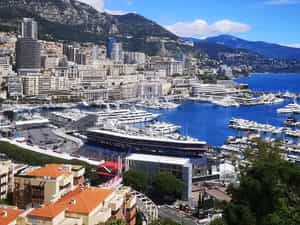
Monte Carlo makes a striking first impression, with superyachts in Port Hercule and the Alps rising behind the coast. A short walk leads to Casino Square, where Belle Époque architecture frames the famous casino and designer boutiques. For a quieter contrast, climb to Monaco-Ville for the Prince’s Palace, cathedral and views across the harbor. The principality is compact and easy to explore on foot, though its steep streets reward comfortable shoes.
Livorno rewards those who look beyond the cruise terminal. Its canals, built in the style of Venice, wind through historic Venezia Nuova. The seafront promenade leads to Terrazza Mascagni, where black-and-white paving frames the sea. At Mercato Centrale, locals shop beneath a vast iron-and-glass roof. Try cacciucco, the city’s rich fish stew. Florence and Pisa are within reach, but Livorno merits time of its own.
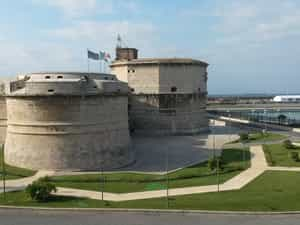
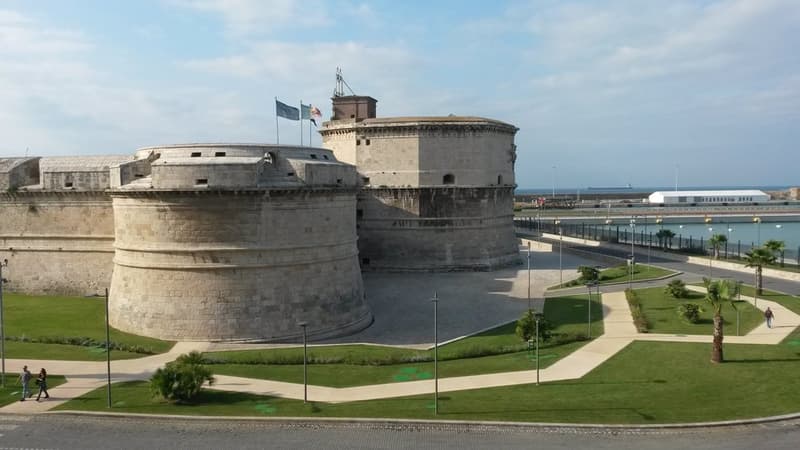
Your ship docks at Civitavecchia, Rome’s seaport, about 50 miles northwest of the capital. Rome’s great monuments are within reach, but the port town rewards a closer look. Walk the waterfront to Forte Michelangelo, a 16th-century fortress begun under Pope Julius II; explore the old streets and market. Prefer a quieter day? The town’s seafront and nearby beaches offer an easy change of pace. Choose Rome for art and antiquity, or Civitavecchia for coastal life beyond the terminal.
Sorrento rises above the Bay of Naples, facing Mount Vesuvius across water busy with ferries. From here, ferries connect with Capri, while the town rewards a slower day among old lanes, churches, and sea-view terraces. Follow the scent of citrus to shops selling Sorrento lemons, locally made limoncello, and finely crafted marquetry. Then pause over lunch: the region’s seafood and Campanian produce are best enjoyed without hurry.
Mount Etna sets the scale in Catania, where black lava stone gives the Sicilian city a character unlike any other. Rebuilt after the 1693 earthquake, its Baroque heart is part of the UNESCO-listed Val di Noto. Begin at Piazza del Duomo, then follow Via Etnea toward cafés, churches and views of the volcano. At La Pescheria, the fish market, Sicily’s daily life is on full display, best sampled before lunch.
Crotone puts ancient Magna Graecia within easy reach of Calabria’s Ionian coast. Greek settlers founded Croton in the eighth century BC, and Pythagoras later taught here. In the old town, narrow lanes lead to the 16th-century Castle of Charles V and the cathedral. At Capo Colonna, the last standing column marks Hera Lacinia’s ancient sanctuary. The headland opens to broad Ionian views.
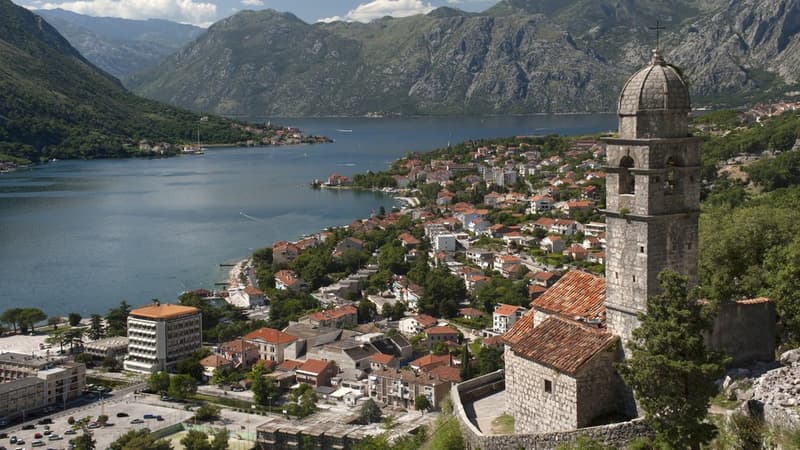
At the head of Montenegro’s Bay of Kotor, the old town sits beneath steep mountains. Enter through the Sea Gate and follow stone lanes to St Tryphon’s Cathedral. Venetian-era walls frame squares, churches, and cafés within a compact UNESCO-listed center. For a broader view, climb toward San Giovanni Fortress; the steps are demanding. Take water and allow time for the ascent, especially in summer heat. From the harbor, the bay’s changing light makes a memorable arrival and departure.
Koper rewards travellers who step ashore ready to explore on foot. Slovenia’s principal seaport opens onto a compact old town shaped by centuries of Venetian rule. At Tito Square, the Praetorian Palace and the cathedral’s bell tower frame a handsome introduction to the city. Beyond its stone lanes, the Istrian hinterland offers vineyards, olive groves and Karst landscapes. Stay awhile: Koper’s quiet confidence is part of its appeal.
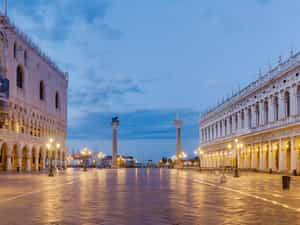
Arrive in Venice by water, where the lagoon’s canals replace ordinary streets. St Mark’s Basilica and Doge’s Palace anchor the celebrated Piazza San Marco. Take a vaporetto along the Grand Canal, then explore a quieter neighborhood on foot. Confirm your ship’s terminal and transfer arrangements before setting out; cruise access varies. Near Rialto, the market and bridge offer a lively glimpse of the city’s trade. Give yourself time to leave the main routes and follow smaller canals.
Zadar pairs a compact old town with a clear Adriatic setting. Roman streets, Venetian gates and medieval churches tell the story of a city shaped by centuries of trade. On the seafront, the Sea Organ turns waves into music through stone pipes. Nearby, the Sun Salutation gathers solar energy and shines after dark. Beyond the walls, Nin’s salt pans and the island-dotted coast reward a closer look.
Šibenik pairs a working waterfront with a medieval centre climbing the hillside. The Cathedral of St James, a UNESCO World Heritage site, was built entirely from stone. From St Michael’s Fortress, take in broad views across the islands, then explore the cafés and narrow lanes below. Four historic fortresses speak to the city’s strategic past. Krka National Park is a rewarding excursion inland.
Korčula rises from the Adriatic on an island famed for vineyards, clear coves and stone villages. Inside the old walls, narrow streets fan out in a fishbone pattern. Follow them past Venetian Gothic façades to St Mark’s Cathedral and the town’s small squares. Beyond the harbor, island wineries pour local Grk and Pošip, while swimming coves reward a longer stay.
Spend a day inside Dubrovnik’s UNESCO-listed Old Town, best explored on foot. Walk the city walls for close views of fortifications, roofs, and harbor. Then follow Stradun to Rector’s Palace and the Franciscan monastery. Book wall access in advance during busy months, and start early in summer. Mount Srđ offers a higher view, reached by cable car or road. Leave time for side lanes; their quieter corners reveal the city’s daily rhythm.
At the head of Montenegro’s Bay of Kotor, the old town sits beneath steep mountains. Enter through the Sea Gate and follow stone lanes to St Tryphon’s Cathedral. Venetian-era walls frame squares, churches, and cafés within a compact UNESCO-listed center. For a broader view, climb toward San Giovanni Fortress; the steps are demanding. Take water and allow time for the ascent, especially in summer heat. From the harbor, the bay’s changing light makes a memorable arrival and departure.
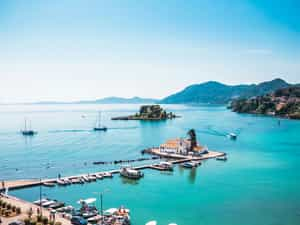
Corfu rewards visitors who look beyond the beach resorts. Its Old Town, a UNESCO World Heritage site, bears the marks of centuries of Venetian rule. Walk the arcaded Liston, then climb to the Old Fortress for views across the rooftops and Ionian Sea. Beyond town, cypress-lined roads lead to Paleokastritsa’s coves, while the Achilleion palace recalls an imperial past. Allow time for lunch; Corfiot cooking pairs Ionian seafood with Italian and Greek influences.
Souda Bay places you within easy reach of Chania, one of Crete’s most compelling historic towns. A short drive leads to Chania’s Venetian harbour, with its lighthouse, waterfront cafés and narrow lanes. On the Akrotiri peninsula, monasteries and coastal views share the landscape with the Allied war cemetery overlooking Souda Bay. Make time for Cretan cooking, distinguished by fine olive oil, local cheeses and wild herbs.
Piraeus is Athens’ working harbour, not a resort port—and that is its appeal. From here, the capital’s ancient landmarks are within reach, while the waterfront keeps its own busy, distinctly Greek character. Visit the Archaeological Museum of Piraeus, then linger over grilled fish in Mikrolimano, a small harbour lined with tavernas. Metro connections make central Athens straightforward. Or stay near the water and watch ferries depart for the islands.
Chios lies in the eastern Aegean, a short crossing from Turkey, yet it feels distinctly its own. Its chief distinction is mastic, the aromatic resin harvested in southern villages and prized since antiquity. In Pyrgi, geometric black-and-white façades turn ordinary streets into an open-air gallery. Visit the 11th-century Nea Moni, a UNESCO-listed monastery, and study its Byzantine mosaics. Back in Chios Town, stroll the waterfront and sample local mastic liqueur.
Istanbul makes a compelling first impression: minarets rise above the Bosphorus, while ferries cross between Europe and Asia. On the historic peninsula, Hagia Sophia, the Blue Mosque and Topkapi Palace place centuries of empire within walking distance. Istanbul rewards curiosity beyond its landmarks. Browse the Grand Bazaar, linger over Turkish coffee, then take a ferry to the Asian shore. Allow time for traffic and queues; the city’s scale is part of the experience.
Çanakkale stands on the Asian shore of the Dardanelles, where Europe and Asia face each other across a busy strait. Its waterfront cafés, ferry traffic and Ottoman-era Çimenlik Castle offer a direct introduction to the city’s maritime past. Across the water, Gallipoli’s battlefields and memorials recall the 1915 campaign, while ancient Troy lies about 30 kilometres south. Both make compelling excursions, but leave time to walk the promenade and watch ferries cross the strait.
Thessaloniki rewards travelers who look beyond the waterfront. Greece’s second-largest city layers Roman, Byzantine and Ottoman history into a lively modern center. Walk the seafront to the White Tower, then explore Byzantine churches and monuments recognized by UNESCO. The Roman Rotunda and Arch of Galerius reveal the city’s imperial past. Make time for Ladadika’s tavernas and Modiano Market, where northern Greek flavors take the lead.
Volos sits at the head of the Pagasetic Gulf, with Mount Pelion rising behind the city. Its waterfront cafés and lively tsipouradika serve the local ritual of tsipouro with small plates. The Archaeological Museum displays finds from Thessaly, including rare Neolithic objects. Beyond town, Pelion villages offer stone mansions, shaded squares and mountain paths. Take the historic narrow-gauge railway through the hills, or follow the coast to clear-water beaches.
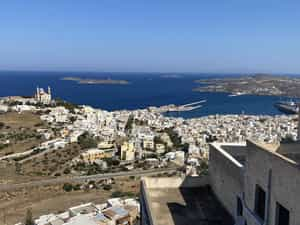
Above Ermoupoli’s busy harbor, Áno Sýros keeps the quieter face of Syros. Its medieval lanes climb toward the Catholic Cathedral of Saint George, past whitewashed houses and small tavernas. Go on foot in shoes with grip, pausing for views across the Aegean and down to the neoclassical capital. This is a place for unhurried exploring, not a beach day.
Patmos, a small Dodecanese island, pairs a quiet harbour with a remarkable religious history. From Skala, a winding road climbs to Chora, where whitewashed lanes lead to the Monastery of Saint John. Nearby, the Cave of the Apocalypse recalls the tradition that John received the visions behind Revelation. These UNESCO-listed sites reward a visit; beaches and waterfront tavernas offer a gentler counterpoint.
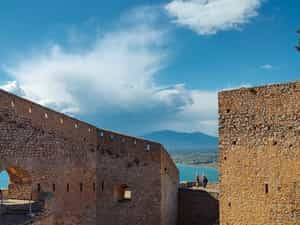
Nafplion is the Peloponnese at its most inviting: a seafront town shaped by Venetian, Ottoman and Greek histories. In the old quarter, cobbled lanes lead to Syntagma Square, lined with historic façades and cafés. Above the rooftops, Palamidi Fortress commands the view; offshore, Bourtzi guards the harbor. Come ashore for a compact, walkable city, then linger over lunch beside the water.
Piraeus is Athens’ working harbour, not a resort port—and that is its appeal. From here, the capital’s ancient landmarks are within reach, while the waterfront keeps its own busy, distinctly Greek character. Visit the Archaeological Museum of Piraeus, then linger over grilled fish in Mikrolimano, a small harbour lined with tavernas. Metro connections make central Athens straightforward. Or stay near the water and watch ferries depart for the islands.
Published August 31, 2026
Last updated October 11, 2026
Author: J. Richard
Good to know: Prices are quoted per person based on double occupancy and include all applicable taxes and fees. Availability and prices can change quickly, so please continue through the booking process to confirm the latest availability and pricing before you pay.
We work hard to make sure everything on this website is accurate and up to date. However, some information may be incomplete or inaccurate, including details supplied by third parties or otherwise outside our control, and we cannot be held responsible for such errors. We work with 41 cruise line operators, that are providing cruises on 585 ships visiting 1,731 ports across 7,194 unique cruises, creating 13,822 itineraries. This is a great deal of data to continually update daily from our suppliers. If a pricing error, misrepresentation, or omission occurs, we reserve the right to adjust the pricing, correct the information, or cancel or decline any booking made in error, with notice to you. Thank you for your understanding!