Sweden Cruise from Stockholm to Reykjavík — 25 Days

24 nights · Sweden · Departs Stockholm (Sweden) · Visiting Helsinki, Tallinn, Riga, Gdynia-Gdansk, Karlskrona, Szczecin, Warnemunde-Rostock, Kalundborg, Kiel, Copenhagen, Maloy, Trondheim, Leknes-Gravdal, Harstad, Hammerfest, Honningsvag, Alta, Tromso, Isafjordur, Reykjavik · Aboard Oceania Cruises on the Oceania Insignia

Oceania Cruises logo
Cruise lineOceania Cruises
ShipOceania Insignia
Duration24 nights
Port calls21
Departures1 sailings
From fare$8,549 per person
Year built1998
Guests803
Cabins349
Crew372
Length180 m
Beam25 m
Cruising speed18.0 kn
  1. Day 1

    Stockholm, Sweden

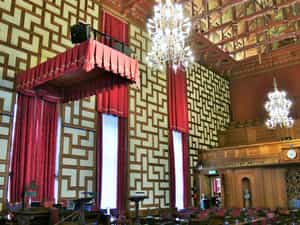
    Stockholm rewards the curious with a capital spread across 14 islands, where Lake Mälaren meets the Baltic Sea. From the waterfront, ferries and bridges lead to Gamla Stan’s narrow lanes, the Royal Palace, and the Nobel Prize Museum. Visit the Vasa Museum to see a 17th-century warship recovered from the harbor. Then pause for coffee in a city where water, design, and history shape everyday life.

  2. Day 2

    Helsinki, Finland

    Helsinki is a compact capital where Nordic design, sea air and neoclassical grandeur meet within easy reach of the harbour. Begin at Senate Square, framed by the white Helsinki Cathedral and elegant buildings shaped by architect Carl Ludvig Engel. At the Old Market Hall, Finnish rye bread, smoked fish and seasonal berries offer a taste of local life. With time to spare, take the ferry to Suomenlinna, a UNESCO-listed sea fortress spread across six islands.

  3. Day 3

    Tallinn, Estonia

    Step ashore in Tallinn, where medieval towers rise above a Baltic capital built for curious walkers. Within the UNESCO-listed Old Town, cobbled lanes lead to merchant houses, church spires and Town Hall Square. Climb Toompea for views across red roofs and the Gulf of Finland; explore cafés and galleries beyond the walls. Tallinn rewards a day on foot, with history close at hand and a distinctly modern pulse.

  4. Day 5

    Riga, Latvia

    Riga rewards a day ashore with a compact UNESCO-listed Old Town and one of Europe’s richest Art Nouveau districts. Begin at the House of the Blackheads, then follow cobbled lanes to Riga Cathedral and the riverfront. Across the canal, Alberta Street displays ornate façades that made the city a landmark of early twentieth-century design. For local life, browse Riga Central Market, set in former Zeppelin hangars near the Daugava.

  5. Day 6

    Gdynia-Gdansk, Poland

    Gdańsk pairs a Hanseatic waterfront with a history that shaped modern Europe. Follow the Royal Route to the Long Market, where Neptune’s Fountain anchors the old town. St Mary’s Church rises above streets rebuilt after the Second World War. At the European Solidarity Centre, learn how the 1980 shipyard strike helped weaken communist rule. Amber shops and waterfront cafés offer an easy pause between landmarks.

  6. Day 7

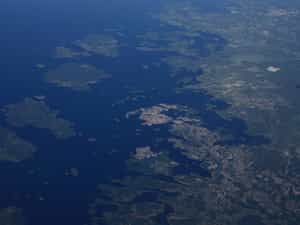
    Karlskrona, Sweden

    Arrive in Karlskrona and Sweden’s naval story comes into sharp focus. Founded in 1680 as a strategic naval base, the city spreads across islands in the Blekinge archipelago. Its UNESCO-listed Naval Port preserves shipyards, fortifications and the traditions of a working fleet. On land, handsome Stortorget and the Admiralty Church reward an unhurried walk, while the Naval Museum traces centuries of seafaring. Here, history is not staged; it remains part of the harbor’s daily life.

  7. Day 8

    Szczecin, Poland

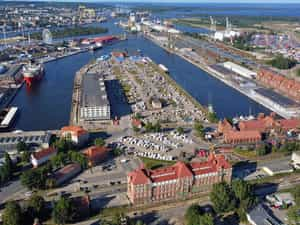
    Szczecin rewards travelers who look beyond Poland’s familiar capitals. Set on the Oder River, it is a historic port with broad boulevards and an easygoing waterfront. Begin at Wały Chrobrego, the riverside terrace, where grand civic buildings frame views across the working harbor. Then visit the Pomeranian Dukes’ Castle or the striking white Philharmonic, both reminders of a city rebuilt with purpose. Allow time for a café and a walk through the compact old town.

  8. Day 9

    Warnemunde-Rostock, Germany

    Warnemünde brings the Baltic close, with sandy beaches and a working harbour beside the cruise pier. Follow the Alter Strom, where fishing boats share the waterway with cafés and old captains’ houses. Climb the 1898 lighthouse for a clear view over the coast, or catch a train to Rostock’s brick Gothic centre. This is a port best explored at your own pace.

  9. Day 10

    Kalundborg, Denmark

    Kalundborg invites you into Højbyen, its medieval upper town, where history is part of the street scene. The 12th-century Church of Our Lady is a striking landmark, crowned by five towers—a rare sight in Denmark. Nearby, timber-framed houses and narrow lanes preserve the character of old West Zealand. At the harbor, working boats and broad coastal views offer a reminder that this remains a living port.

  10. Day 11

    Kiel, Germany

    Kiel faces the Baltic at the western end of Kiel Fjord, where Germany’s great ship canal begins. This working maritime city rewards a waterfront stroll, with ferries, sailboats and cargo ships sharing the harbor. From central cruise berths, the old town, St. Nicholas Church and City Hall are within easy reach. For a closer look at naval history, take the short trip to Laboe’s memorial and preserved U-boat.

  11. Day 12

    Copenhagen, Denmark

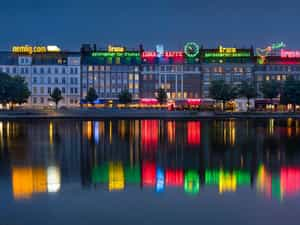
    Copenhagen is best explored at street level, where royal history meets modern design. At Nyhavn, colorful harbor-front houses frame canal tours; nearby Amalienborg Palace is the monarch’s winter residence. Christiansborg Palace combines Denmark’s parliament with historic royal rooms, while Christianshavn’s canals reveal a quieter side. Pause for smørrebrød, the open-faced rye-bread staple, and explore the city’s design shops before returning to port.

  12. Day 14

    Maloy, Norway

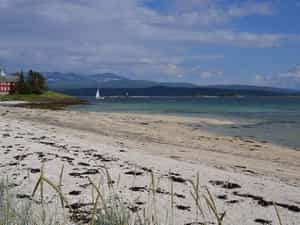
    At Norway’s western edge, Måløy is a working harbour town where fishing remains central to daily life. The Måløy Bridge links Vågsøy island with the mainland, while the open Atlantic shapes the town’s brisk, salt-aired character. Nearby, the sea has sculpted Kannesteinen into a striking stone mushroom. Refviksanden, a broad beach of pale sand, rewards a short coastal outing. The 1941 British commando raid left a lasting mark on Måløy’s history.

  13. Day 15

    Trondheim, Norway

    Trondheim rewards a shore day on foot, from its harbour to Norway’s most important medieval cathedral. Founded in 997, it grew around Nidaros Cathedral, Norway’s national shrine above Saint Olaf’s tomb. Cross the Old Town Bridge into Bakklandet, where timber warehouses and cafés line the Nidelva River. Continue along the waterfront for museums, shops and restaurants, with fjord views nearby. Its compact centre makes the city’s history and waterfront easy to explore in one day.

  14. Day 16

    Leknes-Gravdal, Norway

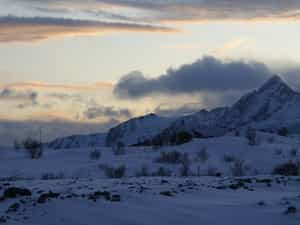
    At Leknes–Gravdal, the Lofoten Islands reveal their drama at close range: steep peaks, sheltered inlets and fishing villages. On Vestvågøy, red rorbuer and seasonal cod-drying racks recall the trade that shaped these islands. Visit the Lofotr Viking Museum at Borg, where a reconstructed chieftain’s hall brings the region’s Norse past to life. Then follow the coast to white-sand beaches and viewpoints, where Arctic light transforms the landscape by the hour.

  15. Day 17

    Harstad, Norway

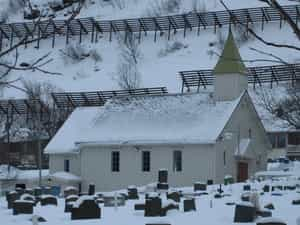
    Harstad sits on Hinnøya, Norway’s largest island, where the Vågsfjord opens toward the Vesterålen islands. Begin at Trondenes, a striking medieval stone church with a history reaching back to the 13th century. Nearby, the Trondenes Historical Centre and the immense Adolf Gun reveal the region’s wartime past. From the harbour, explore the town’s waterfront or set out for mountain scenery and island roads. Summer brings the midnight sun; in winter, dark skies may reward patient visitors with northern lights.

  16. Day 18

    Hammerfest, Norway

    At 70°39′ north, Hammerfest is among the world’s northernmost towns, set on Norway’s Arctic coast. Its harbour welcomes fishing vessels and the coastal express, carrying travellers through stark northern scenery. Visit the Museum of Reconstruction to learn how the town was destroyed during the German retreat in 1944, then rebuilt. By the waterfront, the Meridian Column commemorates the Struve Geodetic Arc, now a UNESCO World Heritage site.

  17. Day 19

    Honningsvag, Norway

    Honningsvåg sits on Magerøya, above the Arctic Circle, where fishing boats share the harbour with expedition ships. From here, a road crosses open tundra to the North Cape plateau, about 35 kilometres away. At 71° north, the light becomes the main event: midnight sun in summer, polar night in winter. Walk the small town, then seek king crab, coastal views and stories of life near Europe’s edge.

  18. Day 20

    Alta, Norway

    Alta is a small town in Norway’s far north, set at the head of Altafjord. Its position beneath the auroral oval draws winter visitors hoping to see the northern lights. At the Alta Museum, UNESCO-listed rock art offers a glimpse of life here as far back as 7,000 years ago. In summer, long daylight opens the Finnmark plateau to walks and scenic drives. Sámi traditions, including reindeer husbandry, shape the wider region.

  19. Day 21

    Tromso, Norway

    Tromsø puts the Arctic within easy reach, yet its cafés, galleries and university give the city a lively, modern pulse. Set on an island above the Arctic Circle, it is linked to the mainland by a bridge and tunnel. Visit the Polar Museum and the Arctic Cathedral. Ride the Fjellheisen cable car for views across mountains and sea. In winter, the northern lights may appear overhead.

  20. Day 24

    Isafjordur, Iceland

    Ísafjörður is the Westfjords’ principal town, set between a sheltered harbor and steep, often snow-streaked mountains. Walk its compact center to see colorful timber houses, then visit the Westfjords Heritage Museum in the historic harbor district. Its exhibits trace the fishing trade that shaped life along Iceland’s remote western coast. Beyond town, dramatic fjord scenery unfolds along winding roads. With a full day ashore, consider the drive to Dynjandi, one of the region’s most striking waterfalls.

  21. Day 25

    Reykjavik, Iceland

    Reykjavík is a capital with one foot in the wild. The Atlantic frames the city, volcanic mountains rise on the horizon, and geothermal water warms its pools. Start at Hallgrímskirkja, whose tower commands broad views, then walk down to the harbor and Harpa concert hall. Cafés, design shops, and museums make the compact center easy to explore on foot. Beyond town, geysers and waterfalls make a striking day trip; return for a soak in a neighborhood pool.

Oceania Insignia Cruises

Published August 28, 2026
Last updated October 3, 2026
Author: J. Richard


Cruise Disclosure

Good to know: Prices are quoted per person based on double occupancy and include all applicable taxes and fees. Availability and prices can change quickly, so please continue through the booking process to confirm the latest availability and pricing before you pay.

We work hard to make sure everything on this website is accurate and up to date. However, some information may be incomplete or inaccurate, including details supplied by third parties or otherwise outside our control, and we cannot be held responsible for such errors. We work with 41 cruise line operators, that are providing cruises on 585 ships visiting 1,731 ports across 7,194 unique cruises, creating 13,822 itineraries. This is a great deal of data to continually update daily from our suppliers. If a pricing error, misrepresentation, or omission occurs, we reserve the right to adjust the pricing, correct the information, or cancel or decline any booking made in error, with notice to you. Thank you for your understanding!