Luxor Cruise Port
Luxor Corniche River Cruise Moorings


Luxor, Egypt Port
UN/LOCODE EGLXR Port of call Homeport
Luxor Cruise Port Location
| Port Details | |
|---|---|
| Country | Egypt |
| UN/LOCODE | EGLXR |
| Contact | |
| Address | Corniche El Nile, Luxor, Egypt |
| Port phone | +20 95 2372015 |
| Website | Not available |
| Geography | |
| Coordinates | 25.69800, 32.63900 |
| Accessibility | |
| Accessible | Limited |
The primary Nile river cruise terminals in Luxor are stretched along the Corniche, often requiring a 15-to-20-minute walk or a 5-minute taxi ride costing approximately 150–200 EGP (~$3.00–$4.00 USD) to reach the city center. Located in Upper Egypt, roughly 670 km (416 miles) south of Cairo, Luxor serves as the world’s preeminent river cruise port on the River Nile. It is the critical midpoint for itineraries traveling between Cairo and Aswan, positioned 3.5 hours north of Aswan and 1.5 hours south of the Dendera Temple complex. A day here offers an unparalleled density of New Kingdom monuments, but the experience is physically demanding. Keep in mind that midday temperatures regularly exceed 40°C (104°F) from May through September, often making outdoor sightseeing after 11:00 AM counterproductive. You can realistically see the highlights of both the East and West Banks in a single day, but only if you depart the ship by 7:30 AM to beat the massive bus convoys arriving from the Red Sea resorts. This destination rewards the early riser and the strategically prepared; it punishes those who lack a plan for managing heat and aggressive local street vendors. Waterways Cruise clients consistently report that success in Luxor depends on rigid timing rather than spontaneity.
Luxor — Port Overview
History
Known as Thebes during the New Kingdom (1550–1070 BC), Luxor rose to prominence as the religious and political capital of the Egyptian Empire. Its strategic position on the River Nile allowed the Pharaohs to control trade routes between sub-Saharan Africa and the Mediterranean. The city’s history is defined by the 18th, 19th, and 20th Dynasties, when rulers like Amenhotep III and Ramses II transformed the East Bank into a massive complex of temples dedicated to the god Amun-Ra. Simultaneously, they developed the West Bank into a vast necropolis, burying royalty in the Valley of the Kings to protect their tombs from the grave robbery that plagued the Giza pyramids. A pivotal moment in modern history occurred on November 4, 1922, when Howard Carter discovered the nearly intact tomb of Tutankhamun (KV62), sparking a global fascination with Egyptology that remains the primary driver of Luxor’s economy today. Visitors can still see the physical manifestation of this transition from ancient capital to modern tourist hub at the Luxor Temple, where a 13th-century mosque (Abu Haggag) was built directly on top of the ancient Egyptian columns. The modern city is effectively built upon the ruins of the ancient one, with the 3-kilometer Sphinx Avenue recently unearthed and reopened in 2021, physically reconnecting the Karnak and Luxor temple complexes just as they were 3,000 years ago.
The Verdict
Luxor is a destination that rewards those who arrive with a clear plan and the flexibility to adapt to the heat. Richard. Success in this port is about timing—beating the Red Sea crowds and managing your energy in the Upper Egyptian sun. A fully customized Luxor itinerary including private Egyptologists and air-conditioned transport can be arranged, ensuring a view of the highlights at your own pace with a guaranteed return-to-ship.
Things to Do & See in Luxor
| Attraction | Type | Address | Phone | Hours | Website | Admission |
|---|---|---|---|---|---|---|
| Luxor Museum | Museum | Corniche el-Nile, Luxor | +20 95 2370505 | 9:00 AM – 4:00 PM and 5:00 PM – 9:00 PM Daily | egymonuments.gov.eg | USD 300 EGP |
| Luxor Temple | Historical Site | Center City, Luxor | +20 95 2373970 | 6:00 AM – 10:00 PM Daily | egymonuments.gov.eg | USD 400 EGP |
| Karnak Temple Complex | Historical Site | Karnak, Luxor | +20 95 2372233 | 6:00 AM – 5:30 PM Daily | egymonuments.gov.eg | USD 450 EGP |
| Valley of the Kings | Historical Site | West Bank, Luxor | 6:00 AM – 4:00 PM Daily | egymonuments.gov.eg | USD 600 EGP | |
| Mortuary Temple of Hatshepsut | Historical Site | Deir el-Bahari, West Bank, Luxor | 6:00 AM – 5:00 PM Daily | egymonuments.gov.eg | USD 360 EGP |
Luxor Museum · Museum
USD 300 EGPLuxor Museum is widely considered one of the best-curated museums in Egypt. Unlike the chaotic Egyptian Museum in Cairo, this facility is spacious, well-lit, and climate-controlled—a vital refuge during a hot port call. The collection focuses on artifacts found in the Theban area, including the magnificent 'Luxor Cachette' of statues discovered beneath the floor of Luxor Temple in 1989. It is recommended to head straight to the New Wing to view the two royal mummies, presented with a level of dignity and silence not found elsewhere. The display of the gilded head of a cow goddess from Tutankhamun's tomb is a highlight. Most visitors walk past the intricately carved stone stelae in the garden; take five minutes to examine the details of the hieroglyphs, which remain remarkably sharp after three millennia. It is the most comfortable and accessible cultural site in the city, providing a necessary historical context before you step into the sun-drenched ruins of the temples.
Corniche el-Nile, Luxor ·+20 95 2370505 ·9:00 AM – 4:00 PM and 5:00 PM – 9:00 PM Daily ·egymonuments.gov.eg
Luxor Temple · Historical Site
USD 400 EGPLocated in the heart of the city, Luxor Temple was built primarily by Amenhotep III and Ramses II. Unlike other temples dedicated to gods, this was the site of the Opet Festival, where the king's divine spirit was renewed. The walking distance from the main cruise moorings is just under 800 meters. The entrance is marked by a massive pylon and a single 25-meter pink granite obelisk; its twin is now in the Place de la Concorde in Paris. As you walk through the Great Colonnade, look for the detailed reliefs of the Opet procession on the walls. One of the most fascinating aspects is the 'sanctuary of Alexander the Great,' where the Macedonian conqueror is depicted in the traditional dress of a Pharaoh. For the best experience, visit after 6:00 PM when the crowds have returned to their ships for dinner. The yellow glow of the lights against the limestone columns creates an atmosphere that feels truly ancient.
Center City, Luxor ·+20 95 2373970 ·6:00 AM – 10:00 PM Daily ·egymonuments.gov.eg
Karnak Temple Complex · Historical Site
USD 450 EGPKarnak is the largest religious building ever constructed. It was built, dismantled, and expanded over a period of 1,500 years by more than 30 different Pharaohs. The centerpiece is the Great Hypostyle Hall, a forest of 134 massive sandstone columns, the largest of which are 21 meters high. Even with hundreds of other tourists, the sheer scale of the columns is humbling. Consider walking to the far rear of the complex to see the Temple of Ptah; it is rarely visited and contains a hauntingly beautiful statue of the lion-headed goddess Sekhmet. Be prepared for 'Temple fatigue' here; the detail is overwhelming. Look up at the tops of the columns in the main hall to see the original red, blue, and yellow paint that has survived for over 3,000 years because it was protected from the sun. Note that there is almost no shade in the outer courtyards; bring your own umbrella for portable shade.
Karnak, Luxor ·+20 95 2372233 ·6:00 AM – 5:30 PM Daily ·egymonuments.gov.eg
Valley of the Kings · Historical Site
USD 600 EGPThe Valley of the Kings is the ultimate burial ground for the New Kingdom's Pharaohs. There are 63 known tombs, but only a rotating selection of about 8–10 are open to the public at any given time. Your standard ticket allows you to choose three. KV2 (Ramses IV) is recommended for its high ceilings and KV11 (Ramses III) for its unique secular scenes of ancient kitchens and harpers. The colors inside these tombs are not restorations; they are the original pigments of ochre, malachite, and lapis lazuli. The highlight for many is the Tomb of Seti I (KV17), but it requires a very expensive 'extra' ticket (approx. $35 USD) and is only worth it for true aficionados. Be aware that the descent into the tombs is humid and can feel claustrophobic. If you suffer from respiratory issues, the dust in some of the deeper tombs can be irritating. Always carry your ticket with you, as it is punched at the entrance of each individual tomb.
West Bank, Luxor ·6:00 AM – 4:00 PM Daily ·egymonuments.gov.eg
Mortuary Temple of Hatshepsut · Historical Site
USD 360 EGPThe Temple of Hatshepsut at Deir el-Bahari is a masterpiece of ancient architectural symmetry. Carved directly into the sheer limestone cliffs, it consists of three massive terraced levels. Hatshepsut was one of the few female Pharaohs, and the temple was designed to legitimize her rule. Look for the reliefs on the second level that tell the story of her divine birth. After her death, her successor Thutmose III attempted to erase her from history, and you can still see where her name and image were chiseled out of the stone—a literal ancient 'cancel culture.' The site is extremely exposed; there is no shade whatsoever once you leave the visitor center. Waterways Cruise clients consistently rate this as the most beautiful temple for photography but the most difficult to endure during the heat of the day. The climb to the top terrace offers a panoramic view across the Nile valley that helps you understand the ancient Egyptian concept of the 'Black Land' (fertile) vs. the 'Red Land' (desert).
Deir el-Bahari, West Bank, Luxor ·6:00 AM – 5:00 PM Daily ·egymonuments.gov.eg
Eating & Drinking in Luxor
Luxor's culinary identity is rooted in Upper Egyptian (Saidi) traditions, which are heartier and use more local grains than the Mediterranean-influenced food of Cairo. The defining dish is 'Molokhia,' a jute leaf soup served with rabbit or chicken, but Luxor is specifically known for its 'Hamam Mahshi' (stuffed pigeon). To drink, try 'Karkadeh,' a cold, deep-red hibiscus tea that is a natural blood-pressure regulator and incredibly refreshing in the heat. For a local experience, head to the 'Souq Al-Ansar' behind the Luxor Temple to find fresh 'Aish Merahrah' (flatbread with fenugreek seeds) sold by street vendors. Tourists often expect to find 'standard' Middle Eastern falafel, but in Luxor, it is called 'Ta'ameya' and is made with dried fava beans instead of chickpeas, giving it a greener, fluffier interior. Avoid tap water at all costs, even for brushing teeth; stick to bottled brands like Baraka or Hayat, which are available at every street kiosk for roughly 15 EGP (~$0.30 USD).
| Place | Address | Phone | Hours | Website | Price range |
|---|---|---|---|---|---|
| Al-Sahaby Lane Restaurant | Sahabi Lane, East Bank, Luxor (near Luxor Temple) | +20 100 523 2514 | 11:00 AM – 11:00 PM Daily | alsahabylane.com | 400–600 EGP (~$8.35–$12.50 USD) |
| Sofra Restaurant & Cafe | 90 Mohamed Farid Street, Luxor | +20 95 2359752 | 12:00 PM – 11:00 PM Daily | sofra.com.eg | 350–500 EGP (~$7.30–$10.50 USD) |
Al-Sahaby Lane Restaurant
400–600 EGP (~$8.35–$12.50 USD)Al-Sahaby Lane offers a rooftop dining experience with a direct view of the Luxor Temple's pylons. While it has become popular with tourists, the quality of the traditional Egyptian cuisine remains high. This is the place to try 'Camel Burger'—the meat is lean and tastes similar to high-quality beef but with a slightly sweeter finish. If you want a more traditional Upper Egyptian dish, order the 'Hamam Mahshi,' a pigeon stuffed with seasoned cracked wheat (freekeh). The service can be slow during peak hours (1:00–2:30 PM), so arrive early. Be aware that the restaurant is in a pedestrian lane; you will have to walk 100 meters from the main road. No alcohol is served here, but the fresh lemon-and-mint juice is excellent for rehydrating after a morning at the temples.
Sahabi Lane, East Bank, Luxor (near Luxor Temple) ·+20 100 523 2514 ·11:00 AM – 11:00 PM Daily
Sofra Restaurant & Cafe
350–500 EGP (~$7.30–$10.50 USD)Set in a beautifully restored 1920s house, Sofra is the most atmospheric restaurant in Luxor. The interior is decorated with antique Egyptian furniture, copper lanterns, and colorful tiles. Order the Tagine Lahma; the beef is slow-cooked until it falls apart and is seasoned with a unique blend of local spices that avoid the heavy grease found in cheaper establishments. Most visitors skip the 'Mezze' (appetizer) platter, which is a mistake; their baba ghanoush and tahini are made fresh daily. The rooftop terrace is lovely in the winter, though the indoor rooms are cooler in the summer. It is about a 10-minute walk from the Luxor Temple, away from the river, providing a much-needed break from the intensity of the Corniche.
90 Mohamed Farid Street, Luxor ·+20 95 2359752 ·12:00 PM – 11:00 PM Daily
Al-Sahaby Lane Restaurant
Al-Sahaby Lane offers a rooftop dining experience with a direct view of the Luxor Temple's pylons. While it has become popular with tourists, the quality of the traditional Egyptian cuisine remains high. This is the place to try 'Camel Burger'—the meat is lean and tastes similar to high-quality beef but with a slightly sweeter finish. If you want a more traditional Upper Egyptian dish, order the 'Hamam Mahshi,' a pigeon stuffed with seasoned cracked wheat (freekeh). The service can be slow during peak hours (1:00–2:30 PM), so arrive early. Be aware that the restaurant is in a pedestrian lane; you will have to walk 100 meters from the main road. No alcohol is served here, but the fresh lemon-and-mint juice is excellent for rehydrating after a morning at the temples.
Try: Camel Burger, Hamam Mahshi (Stuffed Pigeon)
Sofra Restaurant & Cafe
Set in a beautifully restored 1920s house, Sofra is the most atmospheric restaurant in Luxor. The interior is decorated with antique Egyptian furniture, copper lanterns, and colorful tiles. Order the Tagine Lahma; the beef is slow-cooked until it falls apart and is seasoned with a unique blend of local spices that avoid the heavy grease found in cheaper establishments. Most visitors skip the 'Mezze' (appetizer) platter, which is a mistake; their baba ghanoush and tahini are made fresh daily. The rooftop terrace is lovely in the winter, though the indoor rooms are cooler in the summer. It is about a 10-minute walk from the Luxor Temple, away from the river, providing a much-needed break from the intensity of the Corniche.
Try: Tagine Lahma (Beef stew with onions), Moza Bel Khudar (Lamb shank with vegetables)
Getting There & Around
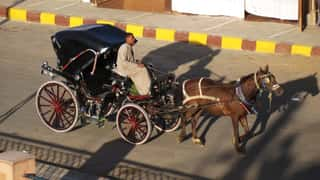
Once you leave the ship, walking is viable for the East Bank, but a taxi or pre-arranged driver is essential for the West Bank. Taxis do not use meters for tourists; you must agree on a price before starting the engine. Expect to pay around 600–800 EGP (~$12.50–$16.50 USD) for a half-day West Bank tour including waiting time. Calèches (horse-drawn carriages) are ubiquitous but often problematic due to aggressive pricing and animal welfare concerns; it is a good idea to use taxis instead. The local 'National Ferry' (Baladi Ferry) crosses the River Nile every 15 minutes for 5 EGP (~$0.10 USD) and is the most authentic and fastest way to reach the West Bank for independent travelers. Uber does not operate in Luxor; however, the Careem app (the regional equivalent) is functional but has limited car availability compared to Cairo. A navigation tip often missed: if walking along the Corniche, stay on the river-side sidewalk to avoid the majority of the street touts who congregate on the city-side of the road.
Getting back to the ship
The latest safe time to depart the West Bank for a return to an East Bank mooring is 90 minutes before all-aboard. While the ferry takes only 5 minutes, 'river traffic' or ferry mechanical issues can cause delays. A taxi back from the West Bank via the bridge takes 25–30 minutes and costs approx. 350 EGP (~$7.30 USD). If you are running late, call the ship's emergency number (on your daily program). Most river cruise ships will not hold departure for independent travelers as they have strict lock-timing windows on the Nile. Missing the ship in Luxor usually means taking a 3.5-hour taxi to Aswan to catch up with the vessel, which will cost upwards of $100 USD and cause you to miss the scenic sailing through the Esna Lock.
Weather & Best Time to Visit Luxor
Weather & What to Pack
Cruise season: September to May
Winter (Dec–Feb): 8°C–22°C (46°F–72°F). Shoulder (Mar–May/Sept–Nov): 20°C–35°C (68°F–95°F). Low humidity, virtually no rain.
What to wear: Wear loose, breathable natural fabrics (linen/cotton). Long sleeves and pants provide better protection against the sun than shorts. Sturdy, closed-toe walking shoes are essential for the rocky terrain of the West Bank. Bring a wide-brimmed hat and a lightweight scarf for sun protection. In winter, temperatures drop sharply at sunset; a light jacket is necessary for evening temple visits. Respectful dress (shoulders and knees covered) is expected at all sites.
Weather risks: Extreme heat is the primary risk. Sandstorms (Khamaseen) can occur in late spring, causing visibility issues and respiratory discomfort. Morning fog on the River Nile occasionally delays ferry crossings in winter.
The 'sweet spot' for Luxor is November through February, when daytime temperatures are pleasant for walking, though crowds are at their peak.
Practical Information
Cultural etiquette
In Luxor, the most important cultural convention is 'Baksheesh' (tipping). It is not just for good service; it is a social redistribution system. Expect to tip temple guards (20 EGP) if they point out a specific detail, or bathroom attendants (10 EGP). When greeting, a simple nod and 'Salam' are appropriate. Avoid the common cruise passenger mistake of wearing revealing clothing in the city center; while the temples are accustomed to tourists, walking through the local souq in short-shorts or tank tops is considered disrespectful and will attract unwanted attention. During meals, use your right hand for eating; the left is traditionally considered unclean. If you are invited for tea by a shopkeeper, it is a social gesture—if you don't intend to buy, it is better to politely decline with 'La Shukran' (No thank you). Photography is a sensitive issue; never photograph military installations, bridges, or police officers. In tombs, tripods are forbidden without an expensive commercial permit.
Mistakes to Avoid
| Mistake |
|---|
Visiting the West Bank in the late morning. |
Accepting a 'free' gift or a 'help' from a temple guard. |
Buying 'Ancient' artifacts in the Souq. |
Not bringing enough water to the West Bank. |
Practical tips
Cash is king in Luxor. While hotels and large restaurants accept Visa/Mastercard, all temple entry tickets (purchased at the gate) and taxis are cash-only. Always carry small bills (10, 20, 50 EGP) for tipping and toilets. A 10% tip is standard in restaurants. Learn these five phrases: 'Salam' (Hello), 'Shukran' (Thank you), 'La Shukran' (No thank you—essential for touts), 'Min Fadlak' (Please), and 'Emshi' (Go away—only for extreme persistence). The most common scam is the 'Calèche bait-and-switch,' where a driver quotes 50 EGP for a ride and then claims it was '50 per person' or '50 USD' at the end. Always clarify 'Egyptian Pounds for everyone' before boarding. For religious sites, keep shoulders and knees covered. The best strategy to avoid crowds is 'The Reverse Route': visit the West Bank at 6:30 AM, lunch early at 11:30 AM, and visit the East Bank temples after 4:00 PM. This avoids the 10:00 AM – 2:00 PM peak when buses from the Red Sea flood the sites.
Cruise Lines Visiting Luxor
Port of Call



Embarkation / Disembarkation
Why Book With Waterways Cruise?
Four decades of expertise, one dedicated advisor, and every detail handled, from your front door to the gangway and back.
Personal Service — Your Own Cruise Concierge
Tailor-Made — 100% Custom-Built
Expertise — 40+ Years in Travel
Price Watch — Book With Total Confidence
Signature Sailings
All Cruise Lines at Luxor (A–Z)
Nearby Ports



FAQ — Luxor
Do I need to buy a photography pass for the Valley of the Kings?
As of late 2019, personal smartphone photography is generally included in your standard entry ticket for most tombs. However, using a professional DSLR or a tripod still requires a specific photography permit, which must be purchased at the main entrance gate for 300 EGP (~$6.25 USD). Note that some 'special' tombs, like Tutankhamun (KV62) and Seti I (KV17), still have strict no-photography rules even with a phone, enforced by guards. It is best to check the latest signage at the gate, as these rules change frequently with Ministry updates.
What is the real price of a Calèche (horse carriage) ride?
A fair price for a Calèche ride within the city center is 150–200 EGP (~$3.15–$4.15 USD) for the whole carriage, not per person. Drivers will often start by asking for 500 EGP or 50 USD. These carriages are best avoided due to frequent aggressive overcharging scams at the destination and concerns regarding the treatment of the horses. If you choose to take one, specify the price in Egyptian Pounds and confirm it covers everyone in the carriage before you sit down.
Can I use US Dollars to pay for temple tickets?
No. All Egyptian Ministry of Tourism and Antiquities sites (Karnak, Valley of the Kings, etc.) officially require payment in Egyptian Pounds or by credit card. Many ticket offices are now 'cashless' and only accept Visa or Mastercard. The success rate of using USD at kiosks is near zero. Ensure you have a chip-and-pin credit card or at least 2000 EGP in cash per person for a full day of sightseeing. Visitors should use the ATMs at the Luxor Corniche before head to the West Bank.
Is the Sound and Light show at Karnak worth staying for?
The Karnak Sound and Light show is a classic experience but is considered dated by modern standards. It involves walking through the temple in the dark followed by a seated narration. Tickets are approx. 500 EGP (~$10.50 USD). Unless you are a dedicated fan of dramatic lighting and historical narration, your time is better spent at the Luxor Temple, which is simply 'open' at night for regular walking. Feedback consistently shows that the 'regular' night-time illumination of Luxor Temple provides a better atmosphere for photography.
How do I get to the Valley of the Queens?
The Valley of the Queens is located on the West Bank, about a 10-minute drive from the Valley of the Kings. A taxi from the ferry terminal will charge approximately 200 EGP (~$4.15 USD) for a round trip. Most cruise passengers skip this, but it is home to the Tomb of Nefertari (QV66), which is widely considered the most beautiful tomb in Egypt. Note that entry to Nefertari’s tomb is very expensive—approx. 1400 EGP (~$29.15 USD) extra—and has a 10-minute time limit per visitor.
Is it safe to drink the tea offered by shopkeepers?
Generally, yes. The tea (Shay) is made with boiled water, which kills most pathogens. Accepting tea is a standard part of Egyptian hospitality and the bargaining process. However, if you are concerned about 'Pharaoh’s Revenge' (stomach upset), it is perfectly acceptable to politely decline with 'Shukran, ana kwayes' (Thank you, I am fine). You will find that the primary health risk in Luxor is heatstroke and dehydration, not the tea offered in shops.
What should I do if I am harassed by vendors?
Persistence is common in Luxor. The most effective response is a firm 'La Shukran' (No thank you) accompanied by a polite but steady walking pace. Do not stop to look 'just for a second' unless you intend to negotiate. If a vendor follows you, avoid making eye contact and continue your conversation with your companions. It is worth knowing that engaging in even a polite argument can be seen as an invitation to continue the pitch.
Are there public toilets at the temple sites?
Yes, there are public toilets at the Visitor Centers for Karnak, Luxor Temple, and the Valley of the Kings. They are usually 'squat' style or basic Western toilets and require a small baksheesh (5–10 EGP) to the attendant for toilet paper. It is a good idea to carry your own travel tissues and hand sanitizer, as soap is rarely provided. The cleanest facilities are found at the Luxor Museum or the major hotels like the Winter Palace.
How long is the hot air balloon ride?
The actual flight time is typically 45 to 60 minutes, depending on wind conditions. However, the total experience takes about 3 hours, starting with a 4:30 AM pickup from your ship and a motorboat crossing to the West Bank. You will usually be back at your ship by 7:30 or 8:00 AM, just as breakfast is ending. Book to ensure you are with a reputable operator with modern safety equipment.
Where can I find a good local SIM card?
The most reliable provider is Vodafone. There is a Vodafone store on Mansour Street, a 10-minute walk from the Luxor Temple. You will need your passport to register the SIM. A 20GB data package costs approximately 300 EGP (~$6.25 USD). Avoid buying SIM cards from small kiosks on the Corniche, as they are often 'pre-activated' and may stop working after a few hours. Having your own data is highly recommended for using navigation apps and checking current EGP exchange rates.
Fact-checked and co-written by J. Richard, Founder, Waterways Cruise, with the Waterways Cruise Content Team.
Published May 19, 2026 · Last updated November 2, 2026
This guide is researched and reviewed by our editorial team, but prices, hours, and availability change often. Confirm current details directly with venues, excursion operators, and your cruise line before you travel.