Kom Ombo Cruise Port
The walk from the Nile River cruise berths to the Temple of Kom Ombo takes exactly five minutes on a paved but sandy incline of approximately 150 metres (490 feet). Located in the Nile Valley of Upper Egypt, this site is one of the most operationally straightforward stops on any river cruise itinerary, yet it punishes those who mistime their visit. Most ships dock here for only 2 to 3 hours, often in the late afternoon to coincide with the temple’s dramatic evening illumination. It is worth noting that arriving 15 minutes before the standard group disembarkation time allows you to bypass the ‘market gauntlet’ that separates the ship from the temple entrance. Kom Ombo is situated roughly 45 km (28 miles) north of Aswan, about a 1-hour drive, and 145 km (90 miles) south of Luxor. This is a primary river cruise port on the Nile River, serving vessels navigating the historic waters between the High Dam and the Valley of the Kings. Be aware that while the site is compact, the uneven Ptolemaic stones require sturdy footwear. This destination rewards the curious observer with unique medical reliefs and punishes the unprepared with aggressive souvenir vendors and intense desert heat.
Kom Ombo East Bank Berths


Kom Ombo, Egypt Port
Aswan Port of call
Kom Ombo Cruise Port Location
| Port Details | |
|---|---|
| Country | Egypt |
| Region | Aswan |
| Contact | |
| Address | Riverside Promenade, Kom Ombo, Aswan Governorate, Egypt |
| Port phone | +20 97 231 0211 |
| Website | egymonuments.gov.eg |
| Geography | |
| Coordinates | 24.47669, 32.94626 |
| Accessibility | |
| Accessible | Limited |
The walk from the Nile River cruise berths to the Temple of Kom Ombo takes exactly five minutes on a paved but sandy incline of approximately 150 metres (490 feet). Located in the Nile Valley of Upper Egypt, this site is one of the most operationally straightforward stops on any river cruise itinerary, yet it punishes those who mistime their visit. Most ships dock here for only 2 to 3 hours, often in the late afternoon to coincide with the temple’s dramatic evening illumination. It is worth noting that arriving 15 minutes before the standard group disembarkation time allows you to bypass the ‘market gauntlet’ that separates the ship from the temple entrance. Kom Ombo is situated roughly 45 km (28 miles) north of Aswan, about a 1-hour drive, and 145 km (90 miles) south of Luxor. This is a primary river cruise port on the Nile River, serving vessels navigating the historic waters between the High Dam and the Valley of the Kings. Be aware that while the site is compact, the uneven Ptolemaic stones require sturdy footwear. This destination rewards the curious observer with unique medical reliefs and punishes the unprepared with aggressive souvenir vendors and intense desert heat.
Kom Ombo — Port Overview
History
Kom Ombo, known in ancient times as Pa-Sobek or 'The Estate of Sobek,' rose to strategic prominence during the Ptolemaic Dynasty between 180 BC and 47 BC. Its position on a high dune overlooking a bend in the Nile River made it a natural control point for trade routes heading toward Nubia and the gold mines of the Eastern Desert. Unlike traditional Egyptian temples dedicated to a single deity, Kom Ombo was constructed as a 'double temple.' The southern half was dedicated to Sobek, the crocodile god of fertility and creator of the world, while the northern half honored Haroeris, also known as Horus the Elder, the solar god of victory. This architectural symmetry reflects a unique era of religious diplomacy and regional stability. During the Roman period, particularly under Emperor Trajan, the site saw significant expansion, including the addition of the famous medical reliefs which depict some of the earliest known surgical instruments. One specific event that shaped the site's modern appearance was the catastrophic flooding and earthquake activity in the 19th century, which destroyed the temple's pylon and outer courtyard. Today, the most visible connection to this history is the Nilometer, a circular well used by ancient priests to measure the river’s height and calculate the year’s taxes, which remains perfectly preserved near the temple’s northwestern corner.
The Verdict
In Kom Ombo, the visitors who come away happiest are the ones who arrive with a plan and the flexibility to adapt it. This guide has been fact-checked by J. Richard and the Waterways Cruise editorial team. Excursions that guarantee a return to the ship can be tailored to your mobility, interests, and pace, so missing departure is never a concern. No two travelers want the same day ashore, especially in a place as historically dense as the Nile Valley.
Things to Do & See in Kom Ombo
| Attraction | Type | Address | Phone | Hours | Website | Admission |
|---|---|---|---|---|---|---|
| The Crocodile Museum | Museum | Northern end of Temple Precinct, Kom Ombo, Egypt | +20 97 231 0211 | 7:00 AM – 8:00 PM Daily | egymonuments.gov.eg | USD Included in temple ticket |
| The Medical Reliefs | Historical Site | Rear Outer Corridor, Temple of Kom Ombo, Egypt | 7:00 AM – 8:00 PM Daily | egymonuments.gov.eg | USD EGP 600 | |
| The Nilometer | Landmark | Northwestern Terrace, Temple of Kom Ombo, Egypt | 7:00 AM – 8:00 PM Daily | egymonuments.gov.eg | Included in temple ticket | |
| Sanctuary of Sobek and Haroeris | Cultural Site | Central Inner Temple, Kom Ombo, Egypt | 7:00 AM – 8:00 PM Daily | egymonuments.gov.eg | Included in temple ticket | |
| The Chapel of Hathor | Historical Site | South Side of Temple Courtyard, Kom Ombo, Egypt | 7:00 AM – 8:00 PM Daily | egymonuments.gov.eg | Included in temple ticket |
The Crocodile Museum · Museum
USD Included in temple ticketThe Crocodile Museum at Kom Ombo is a striking modern addition to the ancient site, providing a necessary context for the temple’s dual dedication. Inside, you will find a dark, atmospheric gallery where over 20 mummified Nile crocodiles are showcased under dramatic spotlights. These creatures were once worshipped as incarnations of the god Sobek and were raised in a sacred pond within the temple grounds. Visitors often report that the level of preservation is staggering—you can still see the individual scales and teeth on specimens that are over 2,000 years old. The museum also displays rare Roman-era clay coffins and stelae dedicated to the reptilian deity. It serves as an essential cool-down spot during the heat of the day. Most visitors walk past the small display of 'Crocodile Statues' at the entrance; look closely, as these are actually votive offerings from ancient pilgrims seeking protection from river attacks. The visit offers a visceral connection to the primal fears and religious awe of the ancient Egyptians who lived alongside these predators in the Nile River.
Northern end of Temple Precinct, Kom Ombo, Egypt ·+20 97 231 0211 ·7:00 AM – 8:00 PM Daily ·egymonuments.gov.eg
The Medical Reliefs · Historical Site
USD EGP 600Located on the interior of the back wall of the outer corridor, these reliefs are the primary reason many travelers visit Kom Ombo. They depict a collection of medical instruments including scalpels, bone saws, suction cups, and dental tools that look surprisingly similar to modern equipment. This section of the temple functioned as a hospital and place of healing, where pilgrims would come to be treated by priest-physicians. It is worth knowing that these are the only such depictions in all of Egypt. When you stand before them, the precision of the carving is remarkable; you are looking at the foundational evidence of Western medicine carved 2,100 years ago. You will find that most visitors follow their guide in a counter-clockwise direction; if you go clockwise upon entering the temple, you can reach these reliefs while the groups are still at the front gate. Expect a profound sense of the sophistication of Ptolemaic science. Do not just look at the tools; look at the two goddesses sitting on birthing chairs nearby—it is a rare and intimate glimpse into ancient maternal care.
Rear Outer Corridor, Temple of Kom Ombo, Egypt ·7:00 AM – 8:00 PM Daily ·egymonuments.gov.eg
The Nilometer · Landmark
Included in temple ticketThe Nilometer at Kom Ombo is one of the best-preserved examples in the Nile Valley. This deep, circular well was connected to the Nile River by a series of underground pipes. Ancient priests would monitor the rising water levels during the annual flood to predict the success of the harvest. A 'good' flood meant prosperity, while a 'low' flood signaled famine—and the priests used these measurements to set the tax rates for the coming year. It was the ultimate intersection of religion, science, and government. According to the Aswan Regional Tourism Authority, this specific Nilometer was used well into the Roman era. Looking down into the dark shaft, you see the ancient measurement scales carved into the stone walls. It is a stark reminder that life in this desert depended entirely on the whims of the river. Most visitors walk past it on their way to the museum, but it is worth a 10-minute stop to appreciate the engineering. The experience provides a tangible link to the agricultural heartbeat of ancient Egypt.
Northwestern Terrace, Temple of Kom Ombo, Egypt ·7:00 AM – 8:00 PM Daily ·egymonuments.gov.eg
Sanctuary of Sobek and Haroeris · Cultural Site
Included in temple ticketThe dual sanctuary is the theological heart of the temple. Unlike any other temple in Egypt, the entire structure is split down the middle. Everything on the left was for Haroeris (the falcon god), and everything on the right was for Sobek (the crocodile god). This perfect symmetry extends to the two identical entrances and the two parallel sanctuaries. In the center of each sanctuary once stood a sacred boat used for processions. Standing in the middle of the dividing line, you can see how the ancient architects balanced the worship of two very different powers—the sky and the water. You will find that the hieroglyphs here are particularly deep-cut, designed to be read in the flickering light of oil lamps. Most visitors fail to notice that the carvings on the Sobek side are subtly different in style from the Haroeris side, reflecting the work of different artisan guilds. Expect a sense of the complex religious balancing act of the Ptolemaic kings.
Central Inner Temple, Kom Ombo, Egypt ·7:00 AM – 8:00 PM Daily ·egymonuments.gov.eg
The Chapel of Hathor · Historical Site
Included in temple ticketThe Chapel of Hathor is a small but exquisitely carved structure located just outside the main temple pylon. Though dedicated to the goddess of love and joy, its primary modern draw is the display of mummified crocodiles that was housed here for decades before the new museum was built. Even with the mummies moved, the chapel remains significant for its high-quality Ptolemaic reliefs. You can clearly see the goddess Hathor receiving offerings from the Emperor. Travelers following this route have reported that this chapel feels more intimate and 'sacred' than the large, echoing halls of the main temple. It is a perfect example of a 'mammisi' or birth house style of architecture. This stop gives you a moment of quiet reflection away from the main temple crowds. Do not miss the carvings on the exterior walls, which show the goddess with her signature cow ears, a symbol of her nurturing nature.
South Side of Temple Courtyard, Kom Ombo, Egypt ·7:00 AM – 8:00 PM Daily ·egymonuments.gov.eg
Eating & Drinking in Kom Ombo
The culinary identity of Kom Ombo is rooted in the fertile silt of the Nile Valley. Regional dishes are dominated by 'Sugar Cane'—the area’s primary crop. You must try fresh-pressed cane juice (Asab) from a village stall; it is vastly superior to the bottled versions found elsewhere. Another local specialty is 'Fesikh' (fermented mullet), though it is worth knowing that this is an acquired taste and often risky for travelers; stick to the 'Shamsi' bread, which is sun-leavened and has a sourdough-like tang unique to Upper Egypt. For drinks, the local Hibiscus tea (Karkadeh) is served either piping hot or ice-cold and is believed to lower blood pressure. One honest note: tourists often expect 'Mediterranean' Egyptian food like you find in Alexandria, but the food here is 'Sa'idi' (Upper Egyptian)—heartier, heavier on okra and lentils, and served with thick, sun-baked breads that locals use as a spoon. Seek out the genuine Sa'idi stew in the village to understand how the people of the south actually eat.
| Place | Address | Phone | Hours | Price range |
|---|---|---|---|---|
| Sobek Cafeteria | Entrance Plaza, Kom Ombo Temple, Egypt | 8:00 AM – 8:00 PM Daily | EGP 350–500 (~$7.00–$10.00 USD) | |
| Al-Noba Village Restaurant | Main Road, 1km from Temple, Kom Ombo, Egypt | +20 100 123 4567 | 12:00 PM – 10:00 PM | EGP 250–400 (~$5.00–$8.00 USD) |
| The Sun Deck Bar (Onboard Your Ship) | Nile River Berths, Kom Ombo, Egypt | Until 11:00 PM | EGP 200–300 (~$4.00–$6.00 USD) |
Sobek Cafeteria
EGP 350–500 (~$7.00–$10.00 USD)Order the mezze platter and a fresh 'Lemon with Mint'—it is the quintessential Egyptian refreshment. The cafeteria is located on a raised terrace overlooking the Nile River, providing a perfect vantage point to watch the ships dock. While the food is standard tourist fare, it is prepared with high turnover, ensuring freshness. One honest limitation is the service speed; it can be very slow when three ships dock at once, so don't eat here if you have less than 45 minutes before all-aboard.
Entrance Plaza, Kom Ombo Temple, Egypt ·8:00 AM – 8:00 PM Daily
Al-Noba Village Restaurant
EGP 250–400 (~$5.00–$8.00 USD)This is where you find the genuine 'taste of the south.' The beef tagine is slow-cooked until it melts, flavored with cumin and coriander sourced from the Aswan markets. The atmosphere is colorful and traditional, with Nubian geometric patterns on the walls. It is worth the 5-minute carriage ride if you want to escape the 'cruise bubble.' However, the setting is very rustic and lacks air conditioning.
Main Road, 1km from Temple, Kom Ombo, Egypt ·+20 100 123 4567 ·12:00 PM – 10:00 PM
The Sun Deck Bar (Onboard Your Ship)
EGP 200–300 (~$4.00–$6.00 USD)Because Kom Ombo village has no formal cocktail bars or licensed establishments, the best place for a drink is the sun deck of your own vessel. As the temple lights up at night, the view from the ship is unparalleled. Order a cold Stella beer or a glass of Egyptian 'Omar Khayyam' wine. It is the only place in Kom Ombo where you can enjoy an alcoholic drink while watching the Nile River flow past the floodlit Ptolemaic ruins.
Nile River Berths, Kom Ombo, Egypt ·Until 11:00 PM
Getting There & Around
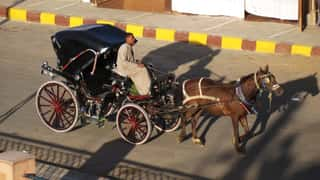
The primary mode of transport in Kom Ombo is walking. Once you disembark on the Nile River bank, the temple is directly in front of you. For those wishing to visit the village or the railway station, horse-drawn carriages (hantours) are the standard local taxi. A ride into the village should cost no more than EGP 100 (~$2.00 USD), though drivers will ask for triple. Uber does not operate here, and there is no formal rideshare app. Bicycles are not recommended due to the heavy dust and lack of safe cycling infrastructure. Be aware that the most effective navigation tip is to follow the 'loop'—enter through the ticket gate, walk clockwise around the temple, visit the Crocodile Museum last, and then exit through the souq. Most guides omit the fact that the souq is a one-way funnel; once you enter the market path to return to the ship, it is very difficult to turn back to the temple without a new ticket.
Itineraries & Sample Walks
4-Hour Shore Excursion in Kom Ombo
Temple of Kom Ombo
4:30 PM (90 min)
Focus on the medical reliefs on the back wall of the outer corridor. You'll see depictions of birthing chairs, scalpels, and dental tools. You will find that the lighting is best just before the sun dips below the horizon.
- Walk 150m uphill from the ship's gangway. (Free)
- Entry: EGP 600 ($12.00)
- Head to the back wall first. Most crowds linger at the entrance pylon; by starting at the rear, you'll have the surgical reliefs to yourself for 15 minutes.
The Crocodile Museum
6:00 PM (45 min)
A modern, climate-controlled facility housing over 20 mummified crocodiles found in the nearby necropolis. The display of ancient eggs and the wooden sarcophagi for the reptiles is hauntingly beautiful.
- Walk 50m north from the temple exit. (Free)
- Entry: Included in temple ticket (Free)
- The museum is strictly no-photography without a special permit (usually EGP 300 / ~$6.00 USD). Keep your phone in your pocket to avoid aggressive intervention by guards.
Lunch Recommendation
Sobek Cafeteria & Restaurant
It is the only reliable sit-down option near the temple with clean facilities and a direct view of the Nile River. Skip the village cafes which may have questionable hygiene for Western stomachs.
Order: Mixed Grill (Lamb and Kofta), Fresh Lemon with Mint juice
Temple Entrance Plaza, Kom Ombo, Egypt
Cost: EGP 400 (~$8.00 USD)
8-Hour Full Day Experience in Kom Ombo
Temple of Kom Ombo (Morning Visit)
8:00 AM (120 min)
Enjoy the temple in the cooler morning air without the afternoon cruise convoys. Use this time to descend into the Nilometer well.
- Walk from berth. (Free)
- Entry: EGP 600 ($12.00)
- Look for the astronomical ceiling in the hypostyle hall; many visitors forget to look up.
Kom Ombo Local Souq
10:30 AM (90 min)
This is the real market where locals buy produce and textiles. It is far more authentic than the tourist shops near the temple.
- 10-minute walk or 2-minute hantour ride. (EGP 100 (~$2.00 USD))
- Entry: Free (Free)
- Buy fresh dates here; they are significantly cheaper and higher quality than anything in the tourist stalls.
Gebel el-Silsila (Excursion)
2:00 PM (180 min)
The ancient sandstone quarry that provided the stone for almost all major Egyptian temples. Visit the Speos of Horemheb, a rock-cut temple.
- Private boat transfer (Feluccas or motorboats). (EGP 1500 (~$30.00 USD))
- Entry: EGP 300 ($6.00)
- This site is only accessible by water and is rarely visited by large groups. It is the definition of a Nile 'hidden gem.'
Getting back to the ship
The latest safe departure from the temple entrance to guarantee a return before all-aboard is 15 minutes before the scheduled time. The walk is downhill and takes less than 5 minutes. If you have ventured into the village, allow 20 minutes for a hantour return, as the train crossing can occasionally cause delays. Taxis are unreliable for short returns; walking is always faster. If you are running late, contact the port agent number provided on your ship's daily program. Nile cruisers operate on a strict lock schedule and will not hold for late passengers, as missing a lock slot can delay the ship by 12 hours. If you miss the ship, you will need to take a private taxi to Aswan or Edfu (approx EGP 1500 / ~$30.00 USD) to rejoin at the next berth.
Weather & Best Time to Visit Kom Ombo
Weather & What to Pack
Cruise season: September through May
Days range from 24°C to 35°C (75°F–95°F). Rainfall is almost zero. Humidity is extremely low, making the heat feel less oppressive but increasing dehydration risk.
What to wear: Wear lightweight, breathable linen or cotton. A wide-brimmed hat and polarized sunglasses are essential to combat the glare from the Nile River and the sandstone. Sturdy, closed-toe walking shoes are a must for the uneven temple floors. Sandals are not recommended due to the hot sand and sharp stone edges. For evening visits, a light sweater is necessary as desert temperatures drop fast after dark.
Weather risks: Khamasin winds (sandstorms) can occur in March and April, causing low visibility and respiratory discomfort. Excessive heat in May and September can lead to shortened site hours.
December and January offer the most comfortable temperatures for walking, though they are also the busiest months.
| Season | Conditions | Hazards | Affected areas | Visitor advice |
|---|---|---|---|---|
| Summer (May–September) | Intense, dry desert heat with temperatures regularly exceeding 40°C (104°F). Humidity is extremely low. | The exposed sandstone of the temple reflects heat, creating a 'pizza oven' effect. Dehydration and heat exhaustion are significant risks on the open temple platform. | The main temple courtyard and the walk from the gangway. | Limit your shore time to under 90 minutes. Drink 500ml of water before leaving the ship and wear a wide-brimmed hat. Skip the village walk and stay within the shaded temple corridors. |
| Winter (October–April) | Pleasant daytime temperatures ranging from 20°C to 28°C (68°F–82°F), but dropping sharply after sunset. | The sandstone steps can become slippery if a rare desert rain occurs. The main hazard is the rapid temperature drop at dusk. | The riverside promenade and the temple's outdoor terraces. | Bring a light pashmina or jacket for the evening light show. This is the peak season, so expect heavy queues at the Crocodile Museum entrance. |
Practical Information
Cultural etiquette
In Kom Ombo, locals greet with a firm handshake and a slight nod; among men, a double cheek kiss is common. Tourists should stick to a polite 'As-salamu alaykum' and a handshake. Dining is a social contract; never use your left hand to pass food or eat, as it is considered unclean. Photography is a sensitive issue—never take photos of the sugar factory or the police checkpoints without permission, as it can lead to equipment confiscation. In the souq, locals do not queue in the American sense; they use a system of 'presence' where the loudest or most persistent gets served. Navigation requires firm but polite 'La, Shukran' (No, thank you) to vendors. Tipping (Baksheesh) is expected for everything—EGP 20 (~$0.40 USD) for a restroom attendant and 10% for a restaurant meal. A common mistake cruise passengers make is thinking that a vendor’s persistence is 'hostility'; it is simply their livelihood in a competitive market. Smile, say no, and keep walking without stopping.
Mistakes to Avoid
| Mistake |
|---|
Spending the first hour at the pier-side stalls instead of heading directly to the temple. |
Forgetting to carry a small bottle of water from the ship. |
Neglecting to look at the ceiling in the Hypostyle Hall. |
Engaging in long negotiations for a hantour (carriage) without a clear destination. |
Practical tips
The local currency is the Egyptian Pound (EGP). While major souvenir shops and the ticket office accept Visa and Mastercard, the local souq and village hantours are strictly cash-only. Always carry small denominations (EGP 10, 20, 50) for tips and minor purchases. Tipping is the oil that runs the Nile Valley; expect to pay EGP 20 for any minor service. To earn goodwill, use these phrases: 'Shukran' (Thank you), 'Affuan' (You're welcome), 'Inshallah' (God willing), and 'Habibi' (My friend). The most common scam is the 'gift'—a vendor hands you a scarf as a 'present,' then demands payment once you've walked away. Never accept an item into your hands unless you intend to buy it. Dress code for the temple is respectful: shoulders and knees should be covered, though a headscarf is not required for women. The best crowd-avoidance strategy is to stay in the Crocodile Museum for the first 30 minutes after your ship docks, letting the massive groups finish their temple intro before you head out to the reliefs.
Cruise Lines Visiting Kom Ombo
Port of Call


Why Book With Waterways Cruise?
Four decades of expertise, one dedicated advisor, and every detail handled, from your front door to the gangway and back.
Personal Service — Your Own Cruise Concierge
Tailor-Made — 100% Custom-Built
Expertise — 40+ Years in Travel
Price Watch — Book With Total Confidence
Signature Sailings
All Cruise Lines at Kom Ombo (A–Z)
Nearby Ports




FAQ — Kom Ombo
Is there a specific dress code for the Kom Ombo temple?
While there is no legal dress code for the archaeological site, visitors should cover shoulders and knees out of respect for local Sa'idi culture. Lightweight linen trousers and a t-shirt are ideal. Avoid short shorts or tank tops, which will draw unwanted attention in the village and souq. A wide-brimmed hat is more functional than a fashion statement here; the sun reflects intensely off the sandstone. For evening visits, temperatures on the Nile River bank drop to 15°C (59°F), so a light pashmina or jacket is essential for the return walk. Closed-toe shoes are recommended to protect against hot sand and sharp stone thresholds.
Can I use US Dollars at the Kom Ombo ticket office?
No, the official government ticket office for the Temple of Kom Ombo strictly requires payment in Egyptian Pounds (EGP) or by credit card. As of mid-2026, the entry fee is approximately EGP 600 (~$12.00 USD). While some souvenir vendors in the 'gauntlet' will accept USD, you will receive a terrible exchange rate and likely no change. It is worth using the ATM at the temple entrance to withdraw local currency. For a hassle-free experience, book a guaranteed return-to-ship excursion, where all entry fees are pre-paid and managed by your guide, allowing you to bypass the ticket queue entirely.
Is the Crocodile Museum included in the temple entrance fee?
Yes, your entrance ticket to the Temple of Kom Ombo includes access to the Crocodile Museum located at the northern edge of the site. You do not need to purchase a separate ticket, but you must keep your temple ticket stub as it will be scanned at the museum entrance. The museum is a short 50-metre (165-foot) walk from the temple exit. Most groups only spend 15 minutes here, but at least 30 minutes are recommended to see the mummified eggs and the Roman-era sarcophagi. Note that photography inside the museum requires an additional 'mobile phone photography' permit which costs approximately EGP 300 (~$6.00 USD).
How far is the walk from the Nile cruise ship to the temple?
The distance is approximately 150 metres (490 feet). Once your ship's gangplank is lowered onto the Nile River bank at Kom Ombo, you simply walk up a paved but somewhat steep ramp directly to the temple ticket office. It is a 5-minute walk for most passengers. This makes Kom Ombo the most accessible temple on the Nile cruise route, as it requires no bus, taxi, or carriage transfer. However, if you have severe mobility issues, the incline can be taxing. A private assistant to help with manual wheelchair navigation up this ramp can be arranged if pre-booked 48 hours in advance.
Are there public restrooms available at the temple site?
Yes, there are two primary restroom locations. The most modern and cleanest facilities are located inside the Crocodile Museum building. There is also a set of restrooms near the main ticket office. Expect to pay a small 'baksheesh' (tip) of approximately EGP 10 (~$0.20 USD) to the attendant, who will provide a few squares of toilet paper. It is best to carry your own travel tissues and hand sanitizer. Access to the museum restrooms is flat and wheelchair-friendly, while the ones near the ticket office involve several steps. For the highest comfort, it is best to use the facilities on your ship before disembark for the 2-hour tour.
What is the best time of day to see the medical reliefs?
The medical reliefs are located in the rear outer corridor of the temple. The best time to see them is in the late afternoon, roughly 60 to 90 minutes before sunset. During this time, the sun is low enough to cast long shadows that make the shallow carvings of scalpels and surgical tools pop with clarity. Once the sun sets and the floodlights take over, the reliefs are still visible but lose some of their depth. To avoid the heaviest crowds, try to reach this back wall within the first 15 minutes of arriving at the site, before the large tour groups finish their introductory briefing at the front pylon.
Can I take a horse-drawn carriage to the temple?
Technically yes, but it is unnecessary. The horse-drawn carriages (hantours) wait at the top of the ramp near the ticket office to take people into the village or to the railway station. They cannot drive down to the ship's gangway or enter the temple grounds. If you want a carriage experience, take one for a 20-minute loop through the local village after you see the temple. This should cost about EGP 100 (~$2.00 USD). Be aware that drivers can be very persistent; a firm 'No' is required if you prefer to walk.
Is the water in Kom Ombo safe to drink?
Absolutely not. Under no circumstances should you drink tap water in Kom Ombo or anywhere in the Nile Valley. This includes using it to brush your teeth or accepting ice in drinks at local village cafes. Only drink sealed, bottled water, which is widely available at the kiosks near the temple entrance for about EGP 30 (~$0.60 USD). Most river cruise ships provide unlimited bottled water; it is a good idea to take two bottles per person for a standard 2-hour temple visit.
What is the 'Market Gauntlet' and how do I navigate it?
The 'Market Gauntlet' refers to the one-way path of souvenir stalls you must walk through to exit the temple and return to your ship. The vendors are very aggressive and will try to drape scarves over your shoulders or place items in your hands. The best strategy is to walk at a steady pace, wear sunglasses to avoid direct eye contact, and repeat 'La, Shukran' (No, thank you) politely but firmly. If you stop to look at an item, be prepared for a 10-minute negotiation. If you truly want to shop, wait until you are 30 minutes from your all-aboard time to ensure you don't get stuck.
Are there ATMs available at the Kom Ombo port?
There is one reliable ATM located just outside the main entrance to the Temple of Kom Ombo, near the ticket office. It accepts most international Visa and Mastercard debit cards. However, during peak cruise season (December-January), it can occasionally run out of cash due to high demand. There are no ATMs directly on the riverbank where the ships dock. It is a good idea to withdraw sufficient Egyptian Pounds in Luxor or Aswan before arrive in Kom Ombo. A comprehensive financial guide for Nile travelers can be provided in advance for assistance with currency and local logistics.
Fact-checked and co-written by J. Richard, Founder, Waterways Cruise, with the Waterways Cruise Content Team.
Published May 19, 2026 · Last updated November 2, 2026
This guide is researched and reviewed by our editorial team, but prices, hours, and availability change often. Confirm current details directly with venues, excursion operators, and your cruise line before you travel.