Esna Cruise Port
The Temple of Khnum is located 200 meters (650 feet) from the Nile River cruiser docking points, a five-minute walk through the local Al-Qaysariyya market. Situated in the Luxor Governorate of Upper Egypt, this river cruise port serves as a mandatory transit point for vessels navigating the locks between Luxor (55 km / 34 miles north) and Edfu (60 km / 37 miles south). While scheduled times vary, most vessels spend three to five hours in the Esna area during the lock transit, allowing for a focused visit to the Greco-Roman temple. Keep in mind that the primary challenge here is the high level of vendor interaction in the market walk between the ship and the temple entrance. This is a gritty, authentic agricultural town, not a manicured tourist resort. It rewards those interested in deep archaeological detail and traditional textile craftsmanship, but it punishes travelers seeking modern infrastructure or a hassle-free walk. You cannot realistically visit the surrounding desert sites in a standard lock-transit window; your day is defined by the temple basin and the immediate bazaar. According to the Egyptian Ministry of Tourism, the site's unique value lies in its 9-meter (30-foot) depth below the modern street level, a physical testament to centuries of Nile River silt accumulation.
Esna River Cruise Docks


Esna, Egypt Port
Qena Port of call
Esna Cruise Port Location
| Port Details | |
|---|---|
| Country | Egypt |
| Region | Qena |
| Contact | |
| Address | Al-Corniche Street, Esna, Luxor Governorate, Egypt |
| Port phone | +20 95 250 0300 |
| Website | www.egymonuments.gov.eg |
| Geography | |
| Coordinates | 25.29336, 32.55402 |
| Accessibility | |
| Accessible | Limited |
The Temple of Khnum is located 200 meters (650 feet) from the Nile River cruiser docking points, a five-minute walk through the local Al-Qaysariyya market. Situated in the Luxor Governorate of Upper Egypt, this river cruise port serves as a mandatory transit point for vessels navigating the locks between Luxor (55 km / 34 miles north) and Edfu (60 km / 37 miles south). While scheduled times vary, most vessels spend three to five hours in the Esna area during the lock transit, allowing for a focused visit to the Greco-Roman temple. Keep in mind that the primary challenge here is the high level of vendor interaction in the market walk between the ship and the temple entrance. This is a gritty, authentic agricultural town, not a manicured tourist resort. It rewards those interested in deep archaeological detail and traditional textile craftsmanship, but it punishes travelers seeking modern infrastructure or a hassle-free walk. You cannot realistically visit the surrounding desert sites in a standard lock-transit window; your day is defined by the temple basin and the immediate bazaar. According to the Egyptian Ministry of Tourism, the site's unique value lies in its 9-meter (30-foot) depth below the modern street level, a physical testament to centuries of Nile River silt accumulation.
Esna — Port Overview
History
Esna, known to the Ancient Egyptians as Ta-Senet and to the Greeks as Latopolis, rose to prominence during the 18th Dynasty, though the visible ruins date primarily from the Ptolemaic and Roman periods (180 BC to 250 AD). The city was historically the capital of the Third Nome of Upper Egypt and a critical junction for caravan routes connecting the Nile Valley to the Western Desert and Sudan. The strategic importance of the Nile River at this bend made it a wealthy trading hub for grain, livestock, and linen. The Temple of Khnum, dedicated to the ram-headed potter god who fashioned humans on his wheel, underwent its most significant expansion under Ptolemy VI. Following the Roman conquest, emperors including Claudius and Vespasian added their own cartouches to the Hypostyle Hall, which is the only portion of the temple excavated today. For centuries, the temple was buried under the debris of the growing city; houses were built directly on top of its roof until French archaeologist Auguste Mariette began the first serious excavations in 1843. Today, you can still see the remains of 19th-century mud-brick houses clinging to the edges of the excavation pit, illustrating the dramatic contrast between the ancient sacred ground and the medieval urban expansion that nearly swallowed it forever.
The Verdict
The travelers who get the most from Esna are the ones who arrive with a plan and the flexibility to adapt to the Nile’s rhythm. This guide has been fact-checked by J. Richard and the Waterways Cruise editorial team. Excursions that guarantee a return to the ship can be tailored to your mobility, interests, and pace, so missing departure is never a concern.
Things to Do & See in Esna
| Attraction | Type | Address | Phone | Hours | Website | Admission |
|---|---|---|---|---|---|---|
| Esna Lock & Barrage | Landmark | Nile River, Esna, Egypt | 24 hours | Not applicable | Free | |
| Al-Qaysariyya Market | Cultural Site | Market District, Esna, Egypt | 8:00 AM – 8:00 PM | Not applicable | Free | |
| Temple of Khnum | Historical Site | Basin Road, Esna, Egypt | +20 95 250 0012 | 7:00 AM – 5:00 PM | egymonuments.gov.eg | USD 150 EGP |
Esna Lock & Barrage · Landmark
FreeThe Esna Lock is the technical heartbeat of any Nile cruise. As your vessel approaches the massive concrete barrage, you'll feel the ship slow to a crawl to enter the narrow chamber. The lock system, modernized in the 1990s, bypasses the older 1908 British-built barrage. Watching the water level drop 8 meters (26 feet) while you stand on the deck is a visceral reminder of the engineering required to tame the Nile River. You will notice that the best vantage point is the very front of the Sun Deck. The experience is accompanied by the chaotic but festive shouts of local merchants in small wooden boats, who sell brightly colored galabeyas by throwing them up several stories to passengers. It is a spectacle of engineering and culture that defines the rhythm of the journey. Don't just watch the gates; look at the historic barrage nearby, which still controls the irrigation for much of the surrounding farmland. This is a rare moment where you feel the sheer power of the river being harnessed by human hands.
Nile River, Esna, Egypt ·24 hours ·Not applicable
Al-Qaysariyya Market · Cultural Site
FreeWalking through Al-Qaysariyya is like stepping back into a 19th-century trade hub. This is not a polished tourist mall; it is a living, breathing market where the scent of cumin and woodsmoke fills the air. The market is historically famous for its textiles, particularly the hand-woven cotton and heavy linens used for traditional Egyptian attire. You'll pass stall after stall of fabrics stacked to the ceiling in every imaginable color. The market stretch is approximately 400 meters of pure sensory immersion. While the vendors are persistent, they are also part of the Esna experience. It is a good idea to look for the older shops with wooden counters, where the quality of the 'Egyptian Long Staple' cotton is superior. This market provides the best opportunity to buy a custom-fitted galabeya for the 'Egyptian Night' party many ships host. It's a place where a polite 'La, Shukran' (No, thank you) goes a long way. The architecture here is equally fascinating, with many houses featuring traditional mud-brick construction and decorated doorways that haven't changed in a century. It's the most authentic market experience on the Nile.
Market District, Esna, Egypt ·8:00 AM – 8:00 PM ·Not applicable
Temple of Khnum · Historical Site
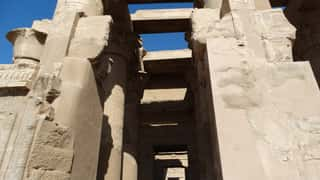
USD 150 EGPThe Temple of Khnum is a masterpiece of Greco-Roman architecture hidden in plain sight. Because it sits 9 meters below the modern city, you only realize its scale when you reach the edge of the pit. The Hypostyle Hall contains 24 massive columns, each standing 13 meters high, topped with distinct floral and leaf capitals. What makes this site essential is the ongoing restoration of the ceiling. For centuries, soot and bird droppings obscured the artwork, but recent cleaning has revealed a vibrant astronomical map of the heavens, including the signs of the zodiac and the constellations as seen by the ancients. Visitors have been stunned to see 2,000-year-old reds, blues, and yellows that look as if they were painted last year. The inscriptions here are some of the latest examples of formal hieroglyphs, created at a time when the ancient religion was slowly being eclipsed by Christianity. You'll see Roman emperors like Trajan and Hadrian depicted in the traditional garb of Pharaohs, a fascinating political bridge between two empires. The cool air inside the hall is a welcome relief from the Upper Egyptian sun. It is a dense, detail-rich site that rewards those who take the time to look up.
Basin Road, Esna, Egypt ·+20 95 250 0012 ·7:00 AM – 5:00 PM ·www.egymonuments.gov.eg
Eating & Drinking in Esna
The culinary identity of Esna is rooted in the agricultural traditions of Upper Egypt. Unlike Cairo, where international influences are heavy, Esna remains focused on 'Baladi' (country) food. The regional specialty is 'Esh Shamsi' or sun bread—a thick, sourdough-style loaf that is fermented in the sun rather than a kitchen. It has a unique texture and a tangy flavor you won't find in Lower Egypt. To drink, you must try the Karkade (hibiscus tea), which is grown in the nearby desert oases; it is served either piping hot or ice-cold and is believed to regulate blood pressure in the heat. Street food here is dominated by Ta'ameya (Egyptian falafel made with fava beans instead of chickpeas), which is greener and fluffier than its Levantine cousin. Tourists often expect to find hummus and kebabs everywhere, but in Esna, locals primarily eat plant-based stews like 'Molokhia' (jute leaf soup) and lentils. For the genuine version, head to the small stalls at the northern edge of the Al-Qaysariyya market, where the food is cooked in large clay pots over open flames.
| Place | Address | Hours | Price range |
|---|---|---|---|
| Local Ahwa (Souk Square) | Opposite the Temple Entrance, Esna | 6:00 AM – 10:00 PM | 30-60 EGP (~$0.50-$1.20 USD) |
| Nile View Terrace | Corniche Road, near the Lock | 10:00 AM – Sunset | 150-250 EGP (~$2.90-$4.80 USD) |
| The Corniche Tea Stall | North of the Floating Docks, Esna | Sunset is the peak time | 20-40 EGP (~$0.40-$0.80 USD) |
Local Ahwa (Souk Square)
30-60 EGP (~$0.50-$1.20 USD)Sit on a wooden bench under a burlap awning and order a fresh hibiscus tea. While not a restaurant in the American sense, you can often buy fresh, hot falafel (ta'ameya) from the vendor next door and eat it here. It's loud, dusty, and perfectly authentic. One honest limitation: hygiene standards are basic, so stick to hot tea and cooked items.
Opposite the Temple Entrance, Esna ·6:00 AM – 10:00 PM
Nile View Terrace
150-250 EGP (~$2.90-$4.80 USD)A simple open-air cafe overlooking the river. Order the grilled fish, caught locally, and watch the ships queue for the lock. It's the best place in town to understand the scale of the Nile's traffic. The service is slow, but the view is the best in Esna.
Corniche Road, near the Lock ·10:00 AM – Sunset
The Corniche Tea Stall
20-40 EGP (~$0.40-$0.80 USD)This is where locals gather to smoke shisha and watch the river. There is no alcohol, as Esna is a traditional town, but the mint tea is world-class. It's the perfect place to decompress after the market walk before re-boarding your ship.
North of the Floating Docks, Esna ·Sunset is the peak time
Getting There & Around
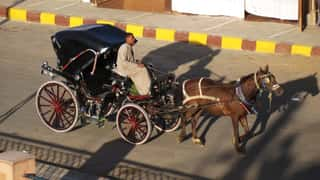
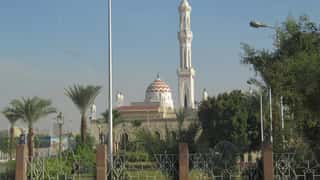
The primary way to move around Esna is on foot. The city is compact, and the distance between the Nile River docks and the major sites is negligible. For those who find the walk tiring, horse-drawn carriages (caleches) are the local 'taxi' and cost approximately 50 EGP (~$1.00 USD) for a short trip to the market. Tuk-tuks are also prevalent for the same price. Uber does not operate here, and there is no public transit system suitable for visitors. Bike rentals are not available and would be impractical in the crowded, unpaved alleys of the bazaar. One navigation tip: the town is oriented along the river; as long as you can see the Nile, you can find your ship. The market alleys can be disorienting, so look for the minaret of the Al-Amari Mosque as a landmark to find your way back to the main gate.
Itineraries & Sample Walks
4-Hour Shore Excursion in Esna
Temple of Khnum
9:00 AM (60 min)
Descend 9 meters into the Greco-Roman Hypostyle Hall. This is the only portion of the temple currently visible. Look specifically at the ceiling; recent restoration by an Egyptian-German team has uncovered vivid astronomical charts and zodiac signs. The detail on the columns, including depictions of Roman emperors dressed as Pharaohs, is exceptional.
- Walk from the ship through the market gate.
- Entry: 150 EGP (~$2.90 USD)
- Walk to the very back wall of the interior to see the 'crypt' entrance and the unique inscriptions depicting the ritual of the net.
Al-Qaysariyya Market
10:15 AM (45 min)
Browse the famous textile stalls of Esna. This is one of the few places in Egypt where you can find traditional hand-printed fabrics and high-quality cotton Galabeyas. Unlike the tourist bazaars of Cairo, these shops serve local villagers, providing a more authentic glimpse into Upper Egyptian life.
- Walk directly out of the temple entrance.
- Entry: Free (Free)
- Look for the weavers' workshops tucked into the side alleys where you can watch manual looms in action.
Esna Lock Viewing
11:15 AM (60 min)
Return to the ship's Sun Deck to watch the technical process of transiting the lock. Local vendors in small rowboats often 'toss' tablecloths and towels onto the ship's deck for sale—a unique Nile tradition. The lock drops or raises the ship approximately 8 meters.
- Walk back to the ship.
- Entry: Free (Free)
- Stay on the port side of the ship (left when facing the bow) for the best view of the historic 1908 barrage during the approach.
Lunch Recommendation
Local Tea House (Ahwa) Experience
There are no fine-dining restaurants in Esna; this is the authentic local way to rest. It provides a front-row seat to the daily rhythm of the town.
Order: Karkade (Hibiscus Tea), Shai (Mint Tea)
Main Souk Square, Esna
Cost: 50 EGP (~$1.00 USD)
8-Hour Full Day Experience in Esna
Temple of Khnum
8:30 AM (90 min)
Detailed study of the astronomical ceiling and the later Roman additions.
- Walk from dock.
- Entry: 150 EGP (~$2.90 USD)
- Ask your guide to point out the 'Pharaoh' with Roman features on the north-east column.
Wakalat al-Gidawi
10:30 AM (45 min)
An 18th-century Ottoman caravanserai used by traders on the trans-Saharan routes. It is a rare example of non-temple architecture in the region.
- Walk 2 minutes north.
- Entry: Free (Free)
- Observe the intricate wood lattice-work (mashrabiya) on the upper windows.
Getting back to the ship
The latest safe departure time from the Temple of Khnum to guarantee return before all-aboard is 30 minutes before your ship's scheduled lock slot. Most ships stay for 2–3 hours. If you miss the ship, it will likely be in the lock chamber; you can technically meet it at the other side of the lock (a 15-minute walk or tuk-tuk ride north), but this is stressful and non-guaranteed. Taxis are not reliable for long distances; the only way out is a private car to Luxor, which costs around 1,500 EGP (~$29.00 USD). If you are running late, contact the Port Authority at +20 95 250 0300. Passengers who miss the ship in Esna face the difficult task of reaching the ship at its next stop in Edfu, which requires a 90-minute desert drive.
Weather & Best Time to Visit Esna
Weather & What to Pack
Cruise season: September through May
15°C to 30°C (59°F to 86°F). Extremely low humidity, virtually no rainfall, and frequent bright sunshine.
What to wear: Lightweight, breathable cotton or linen clothing is essential. A wide-brimmed hat and polarized sunglasses are necessary for the intense glare off the limestone. Closed-toe shoes are strongly recommended due to the dusty and uneven terrain of the market. Women should ensure shoulders and knees are covered when walking through the town to respect local customs.
Weather risks: Dehydration is the primary risk; the dry air masks how much you are perspiring. Afternoon dust storms (Khamasin) can occur in late spring, reducing visibility at the lock.
December and January offer the most comfortable temperatures for the temple climb but are the most crowded months.
| Season | Conditions | Hazards | Affected areas | Visitor advice |
|---|---|---|---|---|
| Summer (May–September) | Intense dry heat often exceeding 40°C (104°F) with high UV exposure. | The stone surfaces in the Temple Basin absorb heat, creating an oven-like effect with poor air circulation. Dust in the market can cause respiratory irritation. | The open-air steps leading down to the Temple of Khnum and the unshaded riverfront docks. | Disembark as early as possible. Wear a wide-brimmed hat and carry a fan. Limit market browsing to 15 minutes to avoid heat exhaustion. |
| Winter (November–February) | Warm, pleasant days around 22°C (72°F) with cool, crisp evenings. | Low-light levels in the temple interior make uneven stone flooring difficult to see. Morning fog can occasionally delay Nile River lock transits. | The interior floor of the Hypostyle Hall and the lock entry channels. | A light jacket is necessary for early morning or late evening. Bring a small flashlight to see the details of the carvings in the darker corners of the temple. |
Practical Information
Cultural etiquette
In Esna, the local greeting is a polite 'Salam Alaykum' accompanied by a slight nod or placing your right hand over your heart. While men may shake hands, avoid initiating physical contact with local women unless they offer first. Dining is communal, and the right hand must always be used for eating or passing items, as the left is considered impure. Photography is generally welcome at the temple, but you must never photograph military installations or the lock infrastructure, as this can lead to equipment confiscation. In the town, always ask 'Mumbkin sura?' (May I take a photo?) before photographing people, especially women or children. Queueing is a flexible concept in the market; be firm but polite to maintain your place. Tipping (bakshish) is an integral part of the economy; have small 10 and 20 EGP notes ready for temple attendants who show you 'secret' carvings or for restroom staff. A common misunderstanding cruise passengers make is thinking that firm bargaining is rude; in reality, it is expected, but it should always be done with a smile and a sense of humor. Walking through town in shorts or sleeveless tops is considered disrespectful; covering up earns immediate goodwill.
Mistakes to Avoid
| Mistake |
|---|
Spending the entire time browsing the market and only leaving 15 minutes for the temple. |
Wearing sandals or open-toed shoes for the walk. |
Not looking up at the Temple of Khnum ceiling. |
Buying 'saffron' in the bazaar thinking it is a bargain. |
Practical tips
Cash is king in Esna. While the temple ticket office may accept cards, the market and local transport are 100% cash-only. Ensure you have a supply of small 10, 20, and 50 EGP notes; vendors often claim to have no change for large 200 EGP bills. A standard tipping norm for a 1-hour guided walk is 100-200 EGP per group. To earn goodwill, learn these phrases: 'Shukran' (Thank you), 'Aiwa' (Yes), 'La' (No), 'Bikam?' (How much?), and 'Yalla' (Let's go). Watch for the 'accidental guide' scam: a local may start walking with you and explaining sites, then demand payment; a firm 'No thank you' early on prevents this. Dress code for the temple requires modesty: no tank tops or short shorts. The best crowd-avoidance strategy is to stay in the temple for the last 20 minutes of your allotted time, as most ship groups rush back to the market early. Always carry a bottle of water from the ship; the local water is not potable and the market heat is deceptive.
Cruise Lines Visiting Esna
Port of Call


Why Book With Waterways Cruise?
Four decades of expertise, one dedicated advisor, and every detail handled, from your front door to the gangway and back.
Personal Service — Your Own Cruise Concierge
Tailor-Made — 100% Custom-Built
Expertise — 40+ Years in Travel
Price Watch — Book With Total Confidence
Signature Sailings
All Cruise Lines at Esna (A–Z)
Nearby Ports




FAQ — Esna
How long does the ship stay in Esna?
Most Nile cruises stay for 3 to 5 hours. This time is determined by the ship's assigned slot in the lock queue. Be aware that this window is ample for a thorough 60-minute visit to the Temple of Khnum and 45 minutes of market browsing. If a private excursion is booked, direct coordination with the ship's captain can ensure return to the gangway 30 minutes before the lock transit begins.
Is the Esna Lock open every day?
Yes, but it closes for maintenance twice a year, typically for two weeks in June and December. During these times, passengers are usually transferred between ships by road. The lock transit time takes about 45 minutes once the ship is inside the chamber. For guaranteed return-to-ship logistics during maintenance periods, consult the advisors before your departure.
Is it safe to walk through the Esna market alone?
Yes, Esna is safe for solo travelers, but expect significant verbal attention from vendors. There is a strong police presence due to the lock's strategic importance. It is best to walk with a purpose and maintain a friendly but firm 'No thank you.' For a hassle-free experience, a private local escort to navigate the bazaar lanes for you can be provided in advance.
Can I use US Dollars in the Esna market?
Yes, most vendors accept USD, but you will receive a poor exchange rate and change in EGP. It is best to carry small denominations like $1 and $5 bills. However, for the 150 EGP temple entrance, an Egyptian Pound or a credit card is usually required. Carrying at least 500 EGP (~$9.50 USD) in small notes is the most efficient way to handle tips and small purchases.
What is the best thing to buy in Esna?
Hand-woven Egyptian cotton. The Al-Qaysariyya market is the textile capital of the Nile. Look for heavy cotton towels or custom-tailored galabeyas. Prices here are measured to be 40% lower than in Luxor for comparable quality. Avoid the 'saffron' and stick to textiles or dried hibiscus flowers.
Are there many stairs at the Temple of Khnum?
Yes, there are approximately 50 steep stone stairs to reach the temple floor. Because the temple sits 9 meters below the modern street, there is no way to see the interior without the descent. There are no ramps or elevators. For passengers with limited mobility, visitors should view the temple from the rim of the basin near the ticket office.
Why is the temple in a pit?
Over 2,000 years, the Nile's annual floods deposited silt, and the city's residents built new houses on top of old ones. By the 19th century, the temple was completely buried. It was only excavated in the 1840s, leaving the surrounding city 9 meters higher than the ancient foundations.
Is there a dress code for Esna?
Yes. Esna is a traditional, conservative town. Both men and women should cover their shoulders and knees. This is not just a sign of respect; it also protects you from the intense sun and dust of the market. Women wearing a light scarf often report fewer unwanted interactions from vendors.
Can I take photos inside the temple?
Yes, but you usually need to purchase a photography permit at the ticket office if you are using a professional DSLR camera. Cell phone photography is currently free in most Egyptian temples, but rules change frequently. Never take photos of the police or the lock infrastructure.
Is there Wi-Fi at the Esna docks?
No. There is no public Wi-Fi in the port area. Most passengers rely on their ship's satellite connection, which works while docked. If you need urgent connectivity, a few local cafes in the market offer basic Wi-Fi for the price of a tea.
Fact-checked and co-written by J. Richard, Founder, Waterways Cruise, with the Waterways Cruise Content Team.
Published May 19, 2026 · Last updated November 2, 2026
This guide is researched and reviewed by our editorial team, but prices, hours, and availability change often. Confirm current details directly with venues, excursion operators, and your cruise line before you travel.