Singapore Cruise from Singapore to Civitavecchia — 55 Days

55 nights · Singapore · Departs Singapore (Singapore) · Visiting Klang, Penang Island Malaysia, Langkawi Island Malaysia, Phuket, Colombo, Cochin, Mumbai, Dubai, Abu Dhabi, Salalah, Jeddah, Aqaba, Safaga, Suez Canal, Alexandria, Kusadasi, Istanbul, Canakkale, Kavala, Thessaloniki, Lesbos Island, Izmir, Bodrum, Heraklion, Santorini Island, Mykonos Island, Piraeus-Athens, Gythion, Igoumenitsa, Kotor, Dubrovnik, Valletta, Messina, Salerno, Civitavecchia-Rome · Aboard Oceania Cruises on the Oceania Vista

Oceania Cruises logo
Cruise lineOceania Cruises
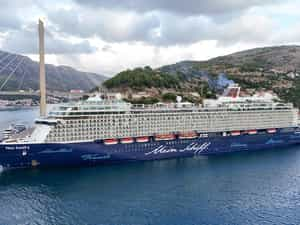
ShipOceania Vista
Duration55 nights
Port calls36
Departures1 sailings
From fare$36,399 per person
Year built2023
Guests1469
Cabins613
Crew800
Length251 m
Beam32 m
Cruising speed20.0 kn
  1. Day 1

    Singapore, Singapore

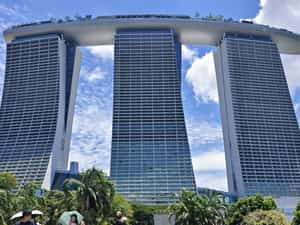
    Singapore rewards the curious with a rare mix of order, energy and invention. Within a short ride of the waterfront, explore Chinatown’s shophouses, Little India’s temples and Kampong Glam’s Malay heritage. Follow pepper crab and satay aromas into a hawker centre, where local cooks make a persuasive case for lunch. For a quieter hour, Gardens by the Bay pairs dramatic Supertrees with cool conservatories and views across Marina Bay.

  2. Day 2

    Klang, Malaysia

    Port Klang is Malaysia’s busiest seaport and the practical gateway to Kuala Lumpur, about 40 kilometres inland. Stay nearby to explore Klang’s royal history and lively Little India. Follow the scent of bak kut teh, the peppery pork-and-herb soup that made the town famous. Or head to Kuala Lumpur for grand mosques, markets and city views; allow extra time for traffic.

  3. Day 4

    Penang Island Malaysia, Malaysia

    Penang is Malaysia at its most layered, where Malay, Chinese, Indian and colonial influences meet on a compact island. In George Town, follow UNESCO-listed streets past painted shophouses, temples and historic clan jetties. Order char kway teow or assam laksa; the island’s hawker food is reason enough to linger. When the heat rises, ride the funicular up Penang Hill for cooler air and sweeping views across the strait. Here, the pleasures are close together, yet never feel hurried.

  4. Day 5

    Langkawi Island Malaysia, Malaysia

    Langkawi makes a rewarding port of call, with beaches, rainforest and striking geology nearby. Its UNESCO Global Geopark is known for ancient rock formations, limestone karsts and mangrove forests. Ride the cable car up Gunung Mat Cincang for views across the archipelago and the Andaman Sea. By boat, explore Kilim Karst Geoforest Park, where tidal waterways thread between cliffs and mangrove roots. Pantai Cenang offers a broad beach and cafés, while duty-free shops provide a convenient final stop.

  5. Day 6

    Phuket, Thailand

    Phuket rewards a little planning: Thailand’s largest island combines lively beaches with a compact, characterful old town. In Phuket Town, pastel Sino-Portuguese shophouses and cafés offer a quieter counterpoint to the resort coast. Visit Wat Chalong, the island’s best-known Buddhist temple, or take a boat into the limestone scenery of Phang Nga Bay. Choose your day carefully: distances are substantial, and traffic can make short journeys slow.

  6. Day 9

    Colombo

    Colombo is Sri Lanka’s commercial capital, set between the Indian Ocean and the Kelani River. Its streets move from colonial facades and Buddhist temples to modern cafés, markets, and leafy residential avenues. Visit Gangaramaya Temple, browse the Pettah bazaar, or follow the Galle Face promenade at sunset. Colombo rewards curiosity, but traffic matters; choose a few neighborhoods for your day.

  7. Day 11

    Cochin, India

    Kochi rewards curious travellers with a rare blend of living history and coastal life. Its harbour has drawn traders for centuries, leaving Portuguese, Dutch and British traces across Fort Kochi. Watch Chinese fishing nets rise against the Arabian Sea, then explore Mattancherry Palace and its celebrated murals. Nearby Jew Town offers spice shops and the Paradesi Synagogue, dating to 1568. Allow time for a ferry ride: water remains the most revealing way to understand this working port.

  8. Day 13

    Mumbai, India

    Mumbai greets you at full volume: ambitious, layered and unmistakably alive. From the Gateway of India, the waterfront opens onto a city shaped by trade, migration and cinema. Colonial façades stand beside markets, temples and modern towers. Visit Chhatrapati Shivaji Maharaj Terminus, a UNESCO-listed railway landmark, then wander Colaba’s busy lanes. Irani cafés and coastal seafood offer a delicious introduction to Mumbai’s distinctive food culture.

  9. Day 16

    Dubai, UAE

    Dubai makes a striking first impression, but its older quarters reward a slower look. Visit Al Fahidi’s wind-tower lanes, then cross Dubai Creek by abra to see the city’s trading heritage. Elsewhere, the Burj Khalifa rises above Downtown, while the Gold and Spice souks bring color and commerce to Deira. Choose your day deliberately: Dubai’s distances are considerable, and summer heat can make outdoor sightseeing demanding.

  10. Day 18

    Abu Dhabi, UAE

    Abu Dhabi pairs the confidence of a modern capital with the measured pace of the Gulf. At the Sheikh Zayed Grand Mosque, white marble, intricate mosaics and vast courtyards make a visit memorable. The Louvre Abu Dhabi brings world art beneath Jean Nouvel’s striking, latticed dome. Along the Corniche, a waterfront promenade opens views across the city’s islands and calm blue water.

  11. Day 21

    Salalah, Oman

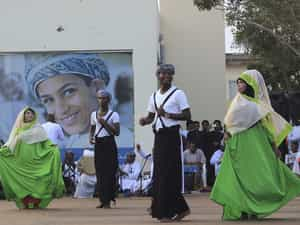
    Salalah reveals a different side of Oman, shaped by monsoon, mountains and the ancient frankincense trade. From June to September, the khareef brings mist and rain to the Dhofar mountains, turning their slopes green. At Al Baleed, UNESCO-listed ruins tell the story of frankincense commerce; the souq brings its aromatic resin into the present. Set aside time for the coastal road or a drive inland; the landscape changes quickly beyond the port.

  12. Day 25

    Jeddah

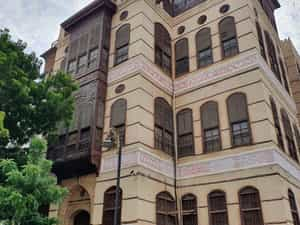
    Jeddah meets the Red Sea with the confidence of a city built on trade. Beyond its modern waterfront, Al-Balad preserves coral-stone merchants’ houses and narrow lanes shaped by centuries of commerce. Look for carved wooden balconies, lively souks and the old city’s UNESCO-listed architecture. This is a Red Sea port with a past still visible at street level.

  13. Day 27

    Aqaba, Jordan

    Jordan’s only seaport, Aqaba opens onto the Red Sea and its coral reefs. It also sits within reach of Petra’s carved façades and Wadi Rum’s sandstone valleys. Snorkel or dive among vivid marine life, then return to explore the Ottoman-era fort and waterfront souks. A compact centre makes it easy to combine a waterfront stroll with the Aqaba Archaeological Museum, beside the fort.

  14. Day 28

    Safaga, Egypt

    Safaga is a working Red Sea port, with little to detain you at the quayside. Its value is access to Luxor, roughly 220 kilometres inland. At Karnak, the Valley of the Kings, and Hatshepsut’s temple, ancient Thebes becomes tangible. Prefer the coast? Safaga’s clear waters invite diving and snorkelling, while steady winds attract water-sports enthusiasts. Choose your day before leaving the ship; long road journeys make improvisation costly.

  15. Day 29

    Suez Canal, Egypt

    Few waterways alter a voyage as decisively as the Suez Canal. Cutting through Egypt’s desert, this 120-mile route links the Mediterranean with the Red Sea, avoiding the long passage around Africa. Opened in 1869, the canal has no locks, and ships cross it in convoy. From deck, watch banks of sand, passing freighters, and the changing light over Great Bitter Lake. Ismailia offers a glimpse of the canal’s history, while Port Said and Suez mark its northern and southern gateways.

  16. Day 31

    Alexandria, Egypt

    Alexandria rewards travellers who look beyond its famous name. Founded by Alexander the Great, Egypt’s Mediterranean city brings Greek, Roman and modern histories to a lively waterfront. The Bibliotheca Alexandrina recalls the ancient library, while Roman catacombs reveal a city shaped by many cultures. Leave time for seafood beside the harbour and a walk along the Corniche. Here, the past remains part of daily life.

  17. Day 34

    Kusadasi, Turkey

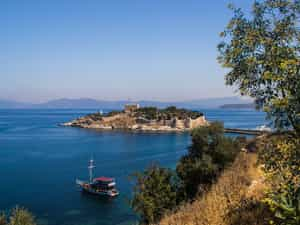
    Kuşadası puts the Aegean within reach, with a lively waterfront and one of Turkey’s most celebrated ancient cities nearby. Ephesus lies about 20 kilometres inland, where marble avenues lead to the Library of Celsus and Great Theatre. Back in town, browse the bazaar, then follow the causeway to Pigeon Island and its historic fortress. The harbour-facing promenade offers an easy place to linger over the Aegean light.

  18. Day 35

    Istanbul, Turkey

    Istanbul makes a compelling first impression: minarets rise above the Bosphorus, while ferries cross between Europe and Asia. On the historic peninsula, Hagia Sophia, the Blue Mosque and Topkapi Palace place centuries of empire within walking distance. Istanbul rewards curiosity beyond its landmarks. Browse the Grand Bazaar, linger over Turkish coffee, then take a ferry to the Asian shore. Allow time for traffic and queues; the city’s scale is part of the experience.

  19. Day 37

    Canakkale, Turkey

    Çanakkale stands on the Asian shore of the Dardanelles, where Europe and Asia face each other across a busy strait. Its waterfront cafés, ferry traffic and Ottoman-era Çimenlik Castle offer a direct introduction to the city’s maritime past. Across the water, Gallipoli’s battlefields and memorials recall the 1915 campaign, while ancient Troy lies about 30 kilometres south. Both make compelling excursions, but leave time to walk the promenade and watch ferries cross the strait.

  20. Day 38

    Kavala, Greece

    Kavala climbs from its harbor to the walled peninsula of Panagia, with Mount Symvolo behind it. Explore the old quarter’s stone lanes, the 16th-century aqueduct and Muhammad Ali’s early-19th-century Imaret. Along the waterfront, tobacco warehouses recall the trade that shaped the city. Order fresh fish, or take a regular ferry to Thasos, where beaches offer an easy island escape.

  21. Day 39

    Thessaloniki, Greece

    Thessaloniki rewards travelers who look beyond the waterfront. Greece’s second-largest city layers Roman, Byzantine and Ottoman history into a lively modern center. Walk the seafront to the White Tower, then explore Byzantine churches and monuments recognized by UNESCO. The Roman Rotunda and Arch of Galerius reveal the city’s imperial past. Make time for Ladadika’s tavernas and Modiano Market, where northern Greek flavors take the lead.

  22. Day 40

    Lesbos Island, Greece

    Lesbos is Greece’s third-largest island, yet its pleasures feel distinctly local. In Mytilene, the island’s capital, neoclassical houses rise above a harbor watched over by a medieval castle. Visit the Archaeological Museum, then follow the waterfront into lanes scented with coffee and grilled fish. Beyond town, olive groves lead to seaside villages and Plomari, famed for ouzo. The western Petrified Forest, a UNESCO Global Geopark, reveals a landscape unlike the Aegean’s familiar blue-and-white postcard.

  23. Day 41

    Izmir, Turkey

    İzmir brings the Aegean within easy reach of a lively, modern Turkish city. Kordon’s waterfront promenade, cafés and ferries set an easy pace. Nearby, Kemeraltı Bazaar’s lanes reveal mosques, courtyards and centuries of trade. At the Agora of ancient Smyrna, Roman columns rise amid the city’s everyday bustle. İzmir also makes a practical gateway to Ephesus, one of the eastern Mediterranean’s most remarkable archaeological sites.

  24. Day 42

    Bodrum, Turkey

    Bodrum brings the Aegean within reach: a handsome harbor, whitewashed houses and the Crusader-built Castle of St Peter. Its Museum of Underwater Archaeology displays finds recovered from ancient shipwrecks. Explore ancient Halicarnassus, whose Mausoleum was one of the Seven Wonders of the Ancient World. Then settle at a waterfront table for grilled fish and a view across the bay.

  25. Day 43

    Heraklion, Greece

    Heraklion is Crete’s capital, with treasures beyond its city walls. At Knossos, about five kilometres south, palace ruins reveal the scale of Minoan life. The Heraklion Archaeological Museum brings that world into focus through frescoes, jewellery and its celebrated Snake Goddess figurines. In town, Venetian walls and the harbour’s Koules fortress frame cafés, markets and a lively waterfront. Crete’s olive oil, local cheeses and generous island cooking reward a pause between visits.

  26. Day 44

    Santorini Island, Greece

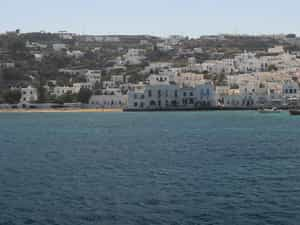
    Few Greek islands make an entrance like Santorini, where whitewashed villages crown a volcanic caldera above the Aegean. Most cruise ships anchor offshore, and tenders land at the old port below Fira. Ride the cable car, or climb the steps, to reach the island’s capital and its celebrated views. Beyond Fira, Oia’s blue domes, the archaeological site of Akrotiri, and volcanic wines reward a longer day ashore.

  27. Day 45

    Mykonos Island, Greece

    Mykonos rewards an early start: whitewashed lanes, blue-domed churches and waterfront cafés are quieter before the cruise crowds arrive. In Little Venice, old captains’ houses lean over the Aegean, while the island’s windmills stand above the harbor. Beyond town, beaches range from lively Psarou to the broad sands of Elia. Take a short boat ride to Delos, where ancient sanctuaries and marble streets mark one of Greece’s great archaeological sites.

  28. Day 46

    Piraeus-Athens, Greece

    Piraeus is Athens’ working harbour, not a resort port—and that is its appeal. From here, the capital’s ancient landmarks are within reach, while the waterfront keeps its own busy, distinctly Greek character. Visit the Archaeological Museum of Piraeus, then linger over grilled fish in Mikrolimano, a small harbour lined with tavernas. Metro connections make central Athens straightforward. Or stay near the water and watch ferries depart for the islands.

  29. Day 47

    Gythion, Greece

    Gythion gives you a gentler gateway to the southern Peloponnese, where the Mani begins in stone and sea. Once Sparta’s seaport, this harbor town faces the water with neoclassical houses, fishing boats, and café-lined quays. Walk to Marathonisi, the islet linked by a causeway, or follow the coast to Mavrovouni’s long beach. From here, the Mani’s tower villages and the caves of Diros make rewarding excursions. Choose Gythion for an unhurried introduction to a rugged, less-traveled corner of Greece.

  30. Day 48

    Igoumenitsa, Greece

    Igoumenitsa is western Greece’s working gateway, where ferries link the mainland with Corfu and Italy. Beyond the port, Epirus rewards a longer look. Ancient Dodona, one of Greece’s oldest oracles, lies inland. Along the coast, Parga and Sivota offer waterfront lanes, sheltered coves and clear Ionian water. Use Igoumenitsa as more than a transit stop; its setting opens a quieter route into Greece’s mountainous northwest.

  31. Day 49

    Kotor, Montenegro

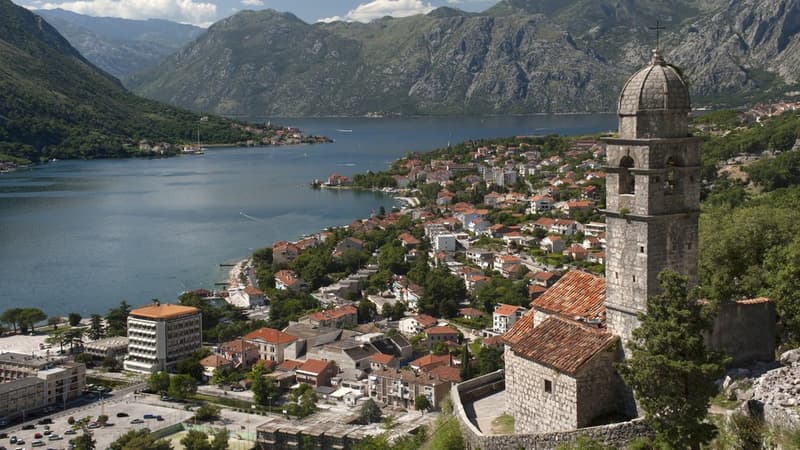
    At the head of Montenegro’s Bay of Kotor, the old town sits beneath steep mountains. Enter through the Sea Gate and follow stone lanes to St Tryphon’s Cathedral. Venetian-era walls frame squares, churches, and cafés within a compact UNESCO-listed center. For a broader view, climb toward San Giovanni Fortress; the steps are demanding. Take water and allow time for the ascent, especially in summer heat. From the harbor, the bay’s changing light makes a memorable arrival and departure.

  32. Day 50

    Dubrovnik, Croatia

    Spend a day inside Dubrovnik’s UNESCO-listed Old Town, best explored on foot. Walk the city walls for close views of fortifications, roofs, and harbor. Then follow Stradun to Rector’s Palace and the Franciscan monastery. Book wall access in advance during busy months, and start early in summer. Mount Srđ offers a higher view, reached by cable car or road. Leave time for side lanes; their quieter corners reveal the city’s daily rhythm.

  33. Day 52

    Valletta, Malta

    Valletta makes a powerful first impression, its honey-coloured walls rising above Grand Harbour. Founded by the Knights of St John in 1566, Malta’s compact capital rewards exploration on foot. Enter St John’s Co-Cathedral for Caravaggio’s monumental paintings, then follow Republic Street to cafés, palaces and the Upper Barrakka Gardens. From the terraces, watch ferries cross the harbour and look towards the Three Cities. Allow time for steep lanes and quiet side streets.

  34. Day 53

    Messina, Italy

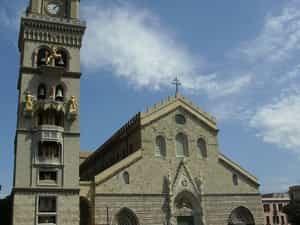
    Messina faces Calabria across the narrow Strait of Messina, with mainland Italy visible from its waterfront. At noon, figures move across the cathedral’s clock tower, a daily spectacle best seen from the square. Nearby, Montorsoli’s 16th-century Fountain of Orion rewards a closer look. Excursions reach Taormina and Mount Etna, but Messina’s compact center also merits an unhurried walk.

  35. Day 54

    Salerno, Italy

    Salerno puts southern Italy within easy reach, with ferries and roads leading toward the Amalfi Coast. Yet the city rewards a closer look: its old lanes gather around the handsome Duomo di San Matteo. Inside, bronze doors and a richly decorated crypt recall Salerno’s medieval importance as a center of learning. Climb to Arechi Castle for broad views across the Gulf, or venture inland to the Greek temples at Paestum.

  36. Day 55

    Civitavecchia-Rome, Italy

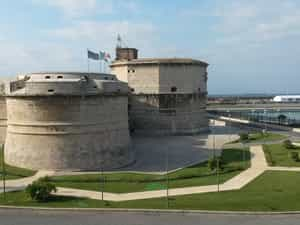
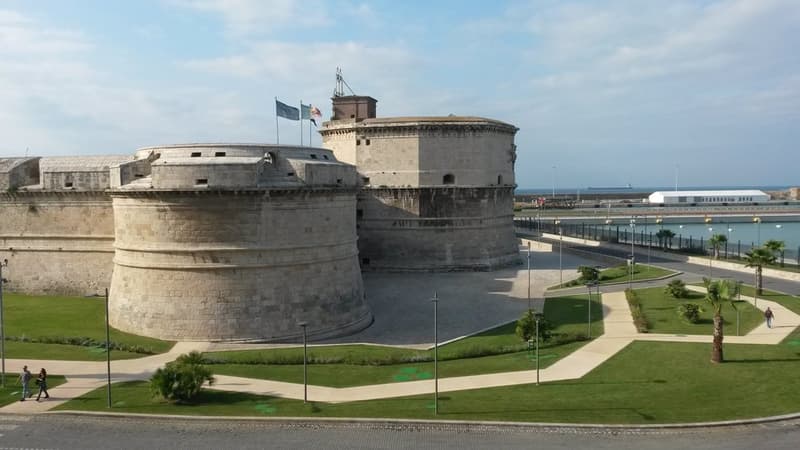
    Your ship docks at Civitavecchia, Rome’s seaport, about 50 miles northwest of the capital. Rome’s great monuments are within reach, but the port town rewards a closer look. Walk the waterfront to Forte Michelangelo, a 16th-century fortress begun under Pope Julius II; explore the old streets and market. Prefer a quieter day? The town’s seafront and nearby beaches offer an easy change of pace. Choose Rome for art and antiquity, or Civitavecchia for coastal life beyond the terminal.

Oceania Vista Cruises

Published September 22, 2026
Last updated October 3, 2026
Author: J. Richard


Cruise Disclosure

Good to know: Prices are quoted per person based on double occupancy and include all applicable taxes and fees. Availability and prices can change quickly, so please continue through the booking process to confirm the latest availability and pricing before you pay.

We work hard to make sure everything on this website is accurate and up to date. However, some information may be incomplete or inaccurate, including details supplied by third parties or otherwise outside our control, and we cannot be held responsible for such errors. We work with 41 cruise line operators, that are providing cruises on 585 ships visiting 1,731 ports across 7,194 unique cruises, creating 13,822 itineraries. This is a great deal of data to continually update daily from our suppliers. If a pricing error, misrepresentation, or omission occurs, we reserve the right to adjust the pricing, correct the information, or cancel or decline any booking made in error, with notice to you. Thank you for your understanding!